
Captain Cook Snorkel Tour: Your Ultimate Guide for 2026
You're probably in the same spot most first-time visitors are. You've heard Kealakekua Bay is one of the signature snorkel experiences on the Big Island, but the booking page doesn't answer the practical questions that matter once your vacation day is on the line. Is a Captain Cook snorkel tour really better than doing it yourself? Will it feel easy if you're new to snorkeling? And what kind of boat gives you the best day in the water?
Those are the right questions. The bay is famous for good reason, but the quality of your experience depends less on the name of the destination and more on how you reach it, when you go, and how much support you have once your mask goes on.
Your Journey to Kealakekua Bay Begins
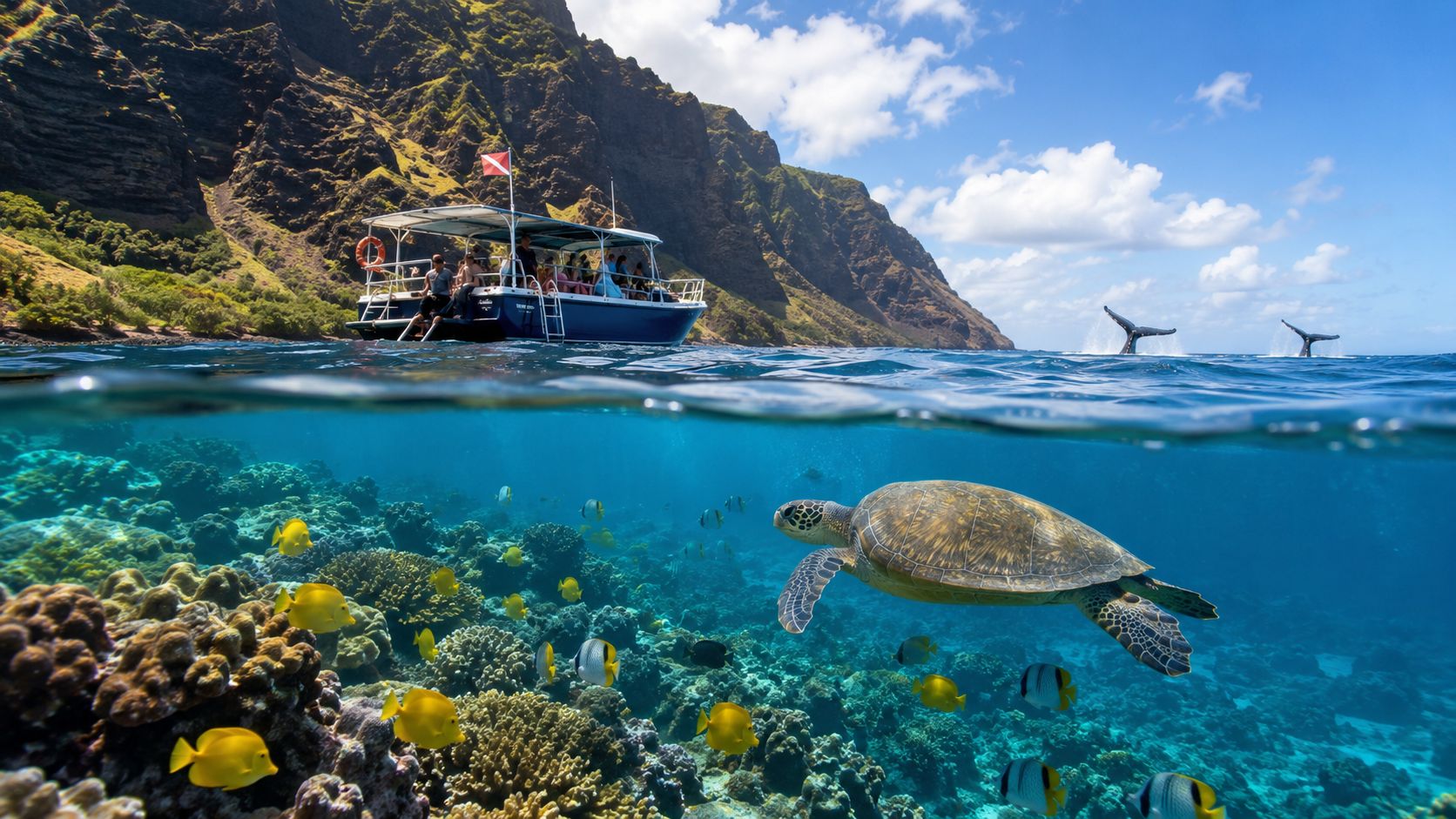
You leave the harbor just after breakfast, the sun is already warm, and the Kona coastline starts sliding by in black lava fields, sea caves, and bright green pockets on the cliffs. Then Kealakekua Bay comes into view, and the whole scene changes. The water turns clear blue-green, the shoreline quiets down, and the place feels less like a busy attraction and more like a protected pocket of the island.

That first approach explains why so many visitors choose a boat tour instead of trying to reach the bay on their own. On a map, kayaking or hiking can look simple. In real life, those options ask more from your body, your timing, and your comfort level before you even get in the water. A small-group boat tour removes that strain and replaces it with something more useful. Local crew, good gear, help getting in and out of the water, and guidance once you are floating over the reef.
For first-timers, that difference matters. Snorkeling is a lot easier to enjoy when you arrive relaxed instead of tired from paddling in the sun or working your way down a steep trail. It works like starting a hike from the scenic overlook instead of the parking lot. You save your energy for the best part.
If you're staying in town and trying to sort out the practical side before booking, this guide to Captain Cook snorkel tour travel times from Kailua-Kona hotels helps set expectations.
A good Captain Cook snorkel tour also gives you something that independent trips cannot always provide. Real-time judgment from people who know the bay. Conditions on the Kona coast can shift, and an experienced captain and crew can choose the right mooring area, explain how to enter the water calmly, and keep newer snorkelers from drifting into a stressful start.
Kona Snorkel Trips offers trips to the bay with that small-group format, which is one reason many travelers prefer a guided boat day over a more demanding do-it-yourself route.
Why first-timers get drawn here
Some guests book because they want to see tropical fish in clear water. Others are pulled in by the setting and the history tied to the shoreline. What often surprises them is how much better the experience feels when the day is structured well from the start.
Instead of spending the morning figuring out access, carrying gear, or wondering if you picked the right spot, you can listen to a quick briefing, get comfortable with your mask, and enter the water with support nearby. That changes the whole tone of the outing. The bay feels welcoming, not overwhelming.
That is the practical reason this journey stands out. A small-group boat tour does more than get you there. It helps you arrive calm, prepared, and ready to enjoy what makes Kealakekua Bay special.
What Makes a Captain Cook Snorkel Tour Special
Kealakekua Bay has two identities, and that's exactly why it stays on so many Big Island must-do lists. It is both a protected marine area and a place tied to a significant historical event in Hawaiʻi.

The bay is described as a 315-acre Marine Life Conservation District and a historically protected site where Captain James Cook arrived in 1779 and later died there in 1779. That combination helps draw more than 190,000 visitors each year, with roughly 70% visiting for the historical significance and 30% primarily for snorkeling, according to this overview of Kealakekua Bay and Captain Cook tours.
History above the surface
When people hear “Captain Cook snorkel tour,” they sometimes assume the name is mostly marketing. It isn't. The monument and shoreline connect directly to the bay's colonial-era history, which gives the trip a different mood than a typical reef excursion.
That matters even if you came only to snorkel. Once you arrive, the setting gives context to everything around you. You're not floating beside a random stretch of coast. You're in a place people have talked about for generations.
Conditions below the surface
The underwater side is just as important. One key reason snorkelers seek out this bay is the water clarity. Visibility here often exceeds 100 feet, as noted in this guide to Captain Cook snorkeling conditions and water clarity.
That kind of visibility changes the experience in very practical ways:
- You orient yourself faster because reef structure is easier to read.
- Colors stay vivid because sunlight penetrates well at snorkeling depth.
- Beginners often feel calmer when they can clearly see what's below them.
- Photography improves because outlines, fish movement, and coral detail show up more clearly.
If you want a clearer sense of what operators usually include once you're on board, this breakdown of what's included on a Captain Cook snorkel tour fills in the practical side.
Practical rule: A famous snorkel site isn't automatically a great snorkel day. Clear water, protected habitat, and thoughtful access are what turn a landmark into a memorable outing.
A Typical Day on a Captain Cook Snorkel Tour
The rhythm of the day is usually simpler than people expect. Most of the stress lives in the booking stage, not on the boat. Once you know what a typical outing looks like, it becomes much easier to picture yourself doing it.

Captain Cook snorkel tours are typically structured as small-group excursions of 6 to 12 passengers, with a duration of 3 to 4.5 hours, including about one hour of dedicated snorkel time at the monument, according to this guide to group sizes and trip length.
Before the snorkeling starts
A small-group format changes the feel of the morning right away. You're not waiting in a big crowd wondering when your turn comes. Gear fitting tends to move faster, questions are easier to ask, and first-timers usually get more direct help with mask fit and basic technique.
The boat ride itself is part of the experience. You head down the coast, settle in, and start to understand the scenery before you ever enter the water. That transition matters more than people think. It gives nervous guests time to relax.
What the in-water portion feels like
Once the boat is positioned in the bay, the pace should stay calm. Good tours don't rush people into the water. They explain where to enter, where to stay oriented, and how to use flotation if needed.
Here's what that often looks like in practice:
- Gear check. Mask, snorkel, fins, and fit get sorted before entry.
- Safety briefing. Guests hear where the group will snorkel and how to signal for help.
- Easy entry. People enter in an organized way instead of all at once.
- Guided exploration. You spend your in-water time looking down instead of worrying about logistics.
If you want the full sequence from arrival through return, this Captain Cook snorkel tour timeline from check-in to return is useful.
Why the small-group structure matters
The true benefit of a smaller boat isn't just fewer people. It's what fewer people allows the crew to do.
| Part of the day | What improves with a smaller group |
|---|---|
| Check-in feel | Less waiting, easier communication |
| Gear support | More individual help with mask and fins |
| In-water comfort | Guides can notice who needs reassurance |
| Overall pace | Less rushed, more focused on snorkeling |
That's especially helpful for mixed groups where one person is confident and another person is trying snorkeling for the first time.
Marine Life You Will See in Kealakekua Bay
The first thing many snorkelers notice isn't one specific animal. It's the density of life. You put your face in the water and the reef looks active in every direction, with movement close by and farther out over the coral.

Kealakekua Bay often feels like a natural aquarium. Fish move in schools over the reef, brighter species catch the sun near the surface, and darker shapes slip through coral pockets and rocky edges. Even beginners usually settle in fast because there's so much to look at right away.
What stands out first
Color is usually the first surprise. Yellow fish flash past in groups. Butterflyfish move with a slower, deliberate style. Parrotfish work close to the reef, and their feeding behavior is often as interesting as their colors.
You may also spot larger animals passing through the scene. Sea turtles are one of the most hoped-for sightings, and many guests find that a single calm turtle glide changes the whole tone of the snorkel.
What guides often help you notice
A guided trip helps because many of the most interesting things aren't obvious at first glance. A new snorkeler may see “a lot of fish.” An experienced guide often helps you notice behaviors, patterns, and small details you would otherwise swim right past.
A few examples include:
- Reef fish behavior when schools shift direction together
- Coral structure that creates hiding spots and feeding lanes
- Turtles resting or cruising through the bay at an unhurried pace
- Dolphin sightings from the boat, which can add a completely different highlight to the day
For a closer look at the kinds of sightings people hope for during this outing, this guide to marine life in Kealakekua Bay is a helpful companion read.
The bay rewards slow snorkeling. People who stop kicking so hard and simply float often end up seeing more.
Why the setting helps wildlife viewing
Protected water makes observation easier. When surface conditions are manageable and visibility is strong, you spend less energy staying comfortable and more time watching what's below you.
That's one reason this trip works well for both experienced snorkelers and first-timers. Skilled guests appreciate the reef quality. Newer guests appreciate that the environment helps them focus.
How to Choose the Best Captain Cook Snorkel Tour
You book a Captain Cook snorkel tour because you want the good part of the day to start early. You want calm help getting into the water, clear guidance once you are there, and enough space to notice the reef instead of feeling rushed. That is why your biggest decision is not the boat's name or the snack tray. It is choosing the kind of access that gives you the safest, most rewarding time in Kealakekua Bay.

For many first-timers, a small-group boat tour makes the most sense. Hiking in sounds simple until you factor in heat, uneven footing, and the long return trip after you have already been in the sun and water. Kayaking can be rewarding for strong, prepared visitors, but it adds another layer of planning, energy, and weather judgment before the snorkeling even begins. A guided boat tour strips away that workload so your energy goes where it should go: into enjoying the bay.
That practical difference matters more than people expect. Kealakekua Bay is not just a destination pin on a map. It is a place where entry style shapes the whole day. On a small boat with an attentive crew, beginners usually feel calmer because someone explains the gear, watches conditions, and helps if a mask needs adjusting or nerves kick in. Experienced snorkelers benefit too, because they get faster access to the best water and more time focused on the reef instead of logistics.
Why small-group tours often feel better in real life
Group size affects almost everything once the boat leaves the harbor. On a smaller trip, briefings are easier to hear, questions are easier to ask, and in-water support is easier to get. It works like the difference between a private lesson and a crowded class. The subject is the same, but the amount of personal attention changes how quickly you settle in and how much you get from it.
That is especially helpful if you are traveling with kids, a cautious swimmer, or anyone who has never snorkeled from a boat before.
What to compare between tours
Once you know you want a boat tour, compare the parts that shape comfort and reef time, not just the marketing photos.
| Booking factor | Why it matters |
|---|---|
| Group size | Smaller groups usually mean clearer communication and less waiting |
| Guide involvement | Active in-water help can make a huge difference for beginners |
| Departure timing | Earlier trips often bring calmer water and better visibility |
| Snorkel time | Some tours spend more of the outing in the water than in transit |
| Crew style | Patient, safety-focused crews help first-timers relax faster |
A good booking page should answer basic questions clearly. If it does not, use this checklist of questions to ask before booking a Captain Cook snorkel cruise and treat it like your pre-trip filter.
One practical option to consider
If your goal is a small-group boat trip with guided support, Kona Snorkel Trips offers a Captain Cook tour built around that format. That setup appeals to visitors who want expert help, easier water access, and more attention once they are in the bay. If you are comparing operators side by side, Captain Cook Snorkeling Tours is another option to review.
Pick the tour that fits your confidence level, the support you want, and the kind of day you want to have in the water. At Kealakekua Bay, the right access choice can turn a nice outing into an unforgettable one.
Essential Tips for Your Snorkel Adventure
Morning timing is one of the most useful things to get right. Morning snorkel tours to Kealakekua Bay are highly recommended because the sea state is generally calmer and water visibility is at its peak, providing better conditions before afternoon winds can increase surface chop, according to this overview of Captain Cook snorkeling conditions.
That doesn't just mean “nicer weather.” It means a smoother surface, easier breathing for new snorkelers, and less effort spent kicking through chop. If you've ever wondered why experienced crews like early departures, that's the reason.
What to bring
Pack lightly, but pack well. A few things make the day much more comfortable:
- Reef-safe sunscreen so you protect your skin while being more considerate of the reef
- A towel for the ride back
- Hat and sunglasses because the reflection off the water is strong
- Swimsuit under your clothes so you're ready without changing in a rush
- Waterproof camera if you own one because this is the kind of place people regret not photographing
What helps most in the water
The best habit is simple. Slow down.
A lot of first-timers waste energy by kicking hard right away. Floating calmly, breathing steadily, and letting the gear do its job usually leads to a much better first few minutes. Listen closely to the crew's briefing, especially on entry, staying oriented, and wildlife respect.
Two rules matter every time:
- Don't touch coral
- Don't chase marine life
Those aren't just etiquette points. They help protect the place you came to enjoy, and they usually lead to better wildlife encounters anyway.
Captain Cook Snorkel Tour FAQs
Is this good for beginners
Yes, it often is. A Captain Cook snorkel tour can be a strong fit for first-time snorkelers because guided boat access removes a lot of the hardest parts of the day. You don't have to figure out shoreline entry, route planning, or gear transport on your own.
The key is choosing an operator that offers clear instruction and support in the water. Beginners usually do best when they can ask questions easily, use flotation if needed, and enter the water at a calm pace.
Can families do this comfortably
Usually, yes. This outing tends to work well for families when the trip is organized around manageable group sizes and a crew that's used to helping mixed experience levels. Parents should still check any operator's booking details for age guidance and comfort expectations.
For many families, the main advantage of a boat tour is conserving energy for the snorkeling itself.
What if I'm not a strong swimmer
You don't need to be an expert swimmer to enjoy snorkeling. Many guests feel comfortable with flotation support and a guide nearby. The better approach is to be honest about your comfort level before you get in.
That helps the crew set you up well from the start. A mask that fits, a calm entry, and a flotation device can make a huge difference.
Is the tour worth it if I only care about snorkeling
For many visitors, yes. The practical value comes from easier access, less logistical stress, and more time focused on the actual reef. If your goal is to spend your vacation day seeing the underwater side of Kealakekua Bay rather than managing the approach, a boat tour often makes that much simpler.
What makes a small-group tour feel different
Usually, it comes down to attention. On a smaller trip, crews can answer more questions, track individual comfort more closely, and help the whole day feel less rushed.
That's especially useful when one person in your group is excited and another person is unsure.
If you want a Captain Cook snorkel tour that keeps the day simple, guided, and focused on the bay itself, take a look at Kona Snorkel Trips.