
Captain Cook Snorkel: Your 2026 Insider’s Guide
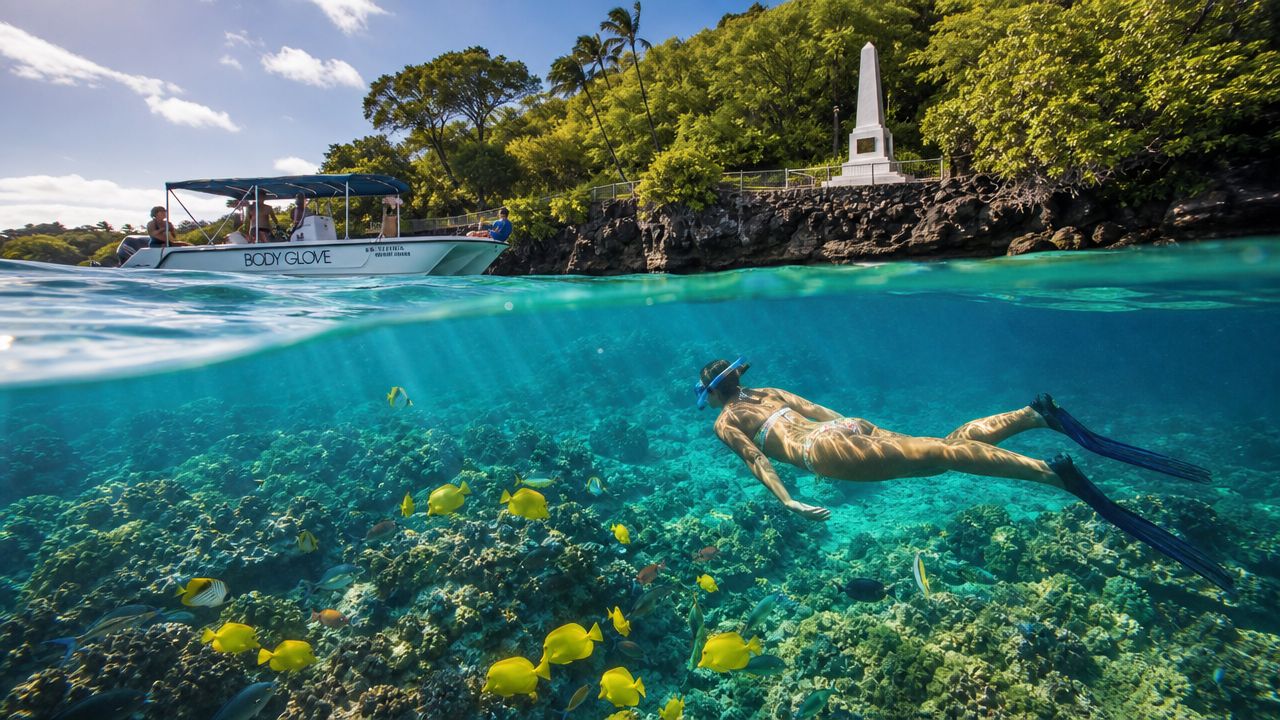
You're probably looking at photos of Kealakekua Bay right now and wondering two things at once. Is the Captain Cook snorkel really that beautiful, and is it easy enough for me or my family to enjoy?
Both are fair questions. The bay is one of those places that looks almost unreal from the boat, with dark lava cliffs, bright water, and the white monument standing out against the shoreline. But the honest answer is that a Captain Cook snorkel can feel effortless for some people and surprisingly tiring for others, especially if they don't think through access, gear fit, or water comfort ahead of time.
That's why this guide keeps the glossy postcard part and the practical part together. Kealakekua Bay deserves both.
Welcome to Kealakekua Bay Hawaii's Premier Snorkel Spot
What often catches the eye first isn't the fish. It's the color of the water.
As the boat enters Kealakekua Bay, the coastline gets quieter, the cliffs feel taller, and the ocean shifts into that clear blue-green that makes people stop talking for a minute. Then the reef starts to show through the surface. Even before you put on a mask, you can tell this place is different.

Kona Snorkel Trips is Hawaii's top rated and most reviewed snorkel company, and that matters for first-timers because the right crew changes how the day feels. A calm check-in, clear safety briefing, and guides who can read both ocean conditions and guest comfort levels make a bigger difference than is often realized.
Why the bay grabs people right away
Kealakekua Bay works on two levels. Above the surface, it feels dramatic and still. Under the surface, it opens into a reef scene that's bright, active, and easy to enjoy even if you're not an advanced snorkeler.
That combination is why so many visitors specifically search for a Captain Cook snorkel instead of a generic reef stop. They want the protected bay, the monument, the history, and the unusually clear water in one trip.
If you want a broader look at the setting before choosing a tour, this Kealakekua Bay snorkel overview gives helpful local context.
Practical rule: The bay looks calm from the boat on many mornings, but calm-looking water and easy snorkeling are not always the same thing for every guest. Comfort depends on entry, flotation, and how relaxed you are breathing through the snorkel.
What makes this trip memorable
A lot of Hawaii snorkeling is good. Kealakekua Bay feels specific.
You're not drifting over random patch reef near a resort. You're entering a place people remember for the shoreline itself, the clear water, and the sense that you've arrived somewhere with weight to it. Families like that it's visually rewarding right away. More experienced snorkelers like that they can settle in and study the reef instead of just taking quick surface glances.
That's the sweet spot of a good Captain Cook snorkel. It delivers beauty fast, but it also holds your attention once you're in the water.
The Rich History of the Captain Cook Monument
The white obelisk on the shoreline isn't just a landmark for boat captains and snorkelers. It marks one of the most discussed historical sites in Hawaiʻi.
Captain James Cook first sighted Oʻahu on January 18, 1778, later died in Kealakekua Bay in 1779 during the Makahiki season, and the monument was erected in 1874. One source also notes that the bay now draws over 100,000 visitors annually, which shows how strongly the site still pulls together history and recreation for modern travelers in this history of Captain Cook in Hawaiʻi.

Why the history matters on the water
Many snorkel spots are just scenery. Kealakekua Bay isn't.
Cook's arrival and death are tied to the Makahiki season, which is central to Native Hawaiian cultural and religious life. That alone changes how many visitors experience the bay. You're not just swimming near a monument. You're entering a place where Hawaiian history, European exploration, and later memorialization all meet in one shoreline view.
That's also why good guides treat the monument as more than a photo stop. A thoughtful Captain Cook snorkel should leave room for curiosity and respect, not just reef time.
What you're actually seeing from the bay
From the boat, the monument often looks simple. In context, it isn't.
It represents an 18th-century historical sequence and a 19th-century act of commemoration layered onto a bay that remains culturally important today. That contrast is part of what makes Kealakekua feel different from other snorkel destinations on the Big Island.
For a deeper read focused on the site before your visit, this piece on Captain Cook Monument snorkeling history before your boat tour is worth your time.
The best trips here don't separate the reef from the history. They let both sharpen your attention.
Marine Life You Will Encounter While Snorkeling
Kealakekua Bay has a reputation for a reason. The conditions support easy viewing.
The bay is a Marine Life Conservation District with average visibility of about 100 feet, and that protected status helps support dense marine life in this Kealakekua Bay monument snorkeling guide. When visibility is that strong, even newer snorkelers can spend less effort trying to “find” the reef and more time enjoying it.

What the underwater view feels like
Some reefs look best if you dive down. This one rewards surface snorkelers.
You'll usually spend the first few minutes adjusting to the mask and breathing rhythm. Then the reef starts to organize itself. Coral heads, sand patches, moving schools of fish, and the occasional larger animal all become easier to read because the water is so clear. That's why Captain Cook snorkel trips appeal to both photographers and people who just want a relaxed float.
Common sightings often include colorful reef fish and honu. On some days, you may also spot dolphins from the boat or in the distance, though wildlife is always on its own schedule.
Why protection changes the experience
Protected water changes behavior. Fish hold in the reef more naturally. The bay feels less pressured than heavily trafficked shoreline spots.
That doesn't mean you should expect an aquarium. It means the ecosystem has a chance to function like one healthy reef system instead of a stop-and-go tourist zone.
A few habits make a big difference:
- Float high and horizontal: Good body position helps you avoid accidental coral contact.
- Pause instead of kicking hard: If you feel winded, stop and float before continuing.
- Look wide, then narrow: Scan the whole reef first, then focus on one coral head or fish school.
- Respect space: Turtles and dolphins are better observed calmly and from a distance.
If you want a species-focused preview of what guests often hope to see, read what marine life you will see during Kealakekua Bay snorkeling.
What works and what doesn't
Here's the practical side.
| Reef behavior | What works | What doesn't |
|---|---|---|
| Watching fish | Floating quietly | Splashing and chasing |
| Seeing more of the bay | Slow scanning | Looking only straight down |
| Protecting coral | Good fin control | Standing or vertical bicycling |
| Staying comfortable | Using flotation when needed | Pretending you're fine when you're tired |
A Captain Cook snorkel goes better when people treat it less like exercise and more like controlled drifting with observation.
How to Choose Your Captain Cook Snorkel Tour
The best snorkeling is on the far side of Kealakekua Bay near the monument. Getting there on your own is possible, but it's not simple.
Independent access is limited to a permitted kayak, a boat tour, or a 3.8-mile hike that drops 1,300 feet in direct sun, according to this Kealakekua Bay access guide. That single fact settles the decision for most families, first-time snorkelers, and anyone carrying fins, towels, water, and kids' gear.
Comparing the three access options
A lot of visitors start with the same assumption. “Maybe we'll just do this ourselves.”
Sometimes that works. Often it creates more friction than fun.
| Access option | What works | What gets hard fast |
|---|---|---|
| Boat tour | Easiest logistics, simpler gear handling, better fit for families and new snorkelers | You need to book ahead |
| Permitted kayak | Independence, flexible pace | Permit rules, launch logistics, carrying gear, weather judgment |
| Hike | Strong sense of adventure | Steep return climb, heat, fatigue before and after snorkeling |
A boat often proves to be the practical answer. It saves energy for the part you came for.
What to look for in an operator
Don't just compare price and departure time. Compare friction.
A well-run Captain Cook snorkel tour should reduce the small stress points that wear people down. That means clear gear setup, good flotation options, and a crew that helps uncertain snorkelers before they get overwhelmed.
Kona Snorkel Trips offers a Captain Cook tour for travelers who want guided boat access and in-water support. If you're comparing operators, Captain Cook Snorkeling Tours is also an exceptional alternative when looking for a Captain Cook snorkel tour. For an extra planning angle, this article on how to choose an eco-friendly Captain Cook snorkel tour is useful.
Is Captain Cook Snorkeling Right for You?
This is the question many people ponder.
Brochures and social posts make the Captain Cook snorkel look effortless. In one sense, it is. You can absolutely enjoy the bay from the boat, in flotation, and in relatively shallow surface water. In another sense, it asks for more from beginners than the marketing usually admits.

A simple readiness check
For a safe and enjoyable experience, guidance recommends being able to swim 50 yards nonstop and tread water for 5 to 10 minutes in this snorkel tour safety and equipment checklist. That's not a competitive benchmark. It's a basic comfort benchmark.
If that feels easy, you'll probably spend more of your energy enjoying the reef. If that feels borderline, the trip can still work, but only if you're honest about using flotation and taking breaks.
Good candidates for this trip
A Captain Cook snorkel is usually a good fit for:
- Comfortable swimmers: You don't need speed, just calm water confidence.
- Beginners who will use flotation: People do well when they accept support early.
- Families with patient pacing: Kids and adults both benefit when nobody rushes the first few minutes.
- Travelers who value the boat ride too: Even if someone in your group snorkels briefly, the bay is still rewarding.
When people struggle
Most problems don't start with ocean danger. They start with pride.
Someone feels awkward breathing through the snorkel, kicks too hard, gets winded, then decides not to tell the guide. Or they skip flotation because they think it's “for bad swimmers.” That's backwards. Strong snorkelers use whatever setup keeps them relaxed and efficient.
If you're breathing hard, stop moving. Float, reset, clear the snorkel if needed, and start again slowly.
People also underestimate surface motion. Even in a bay known for calm conditions, small swell and chop can make entry or face-down floating feel strange if you're brand new.
The honest answer for first-timers
Yes, beginners can enjoy this trip. No, it isn't automatically easy for every beginner.
The Captain Cook snorkel is best for people who are willing to be coached, use flotation, and treat snorkeling like a skill instead of just vacation background activity. Families usually do well when they choose a guided boat tour and frame success correctly. Good success isn't “everyone swims far.” Good success is “everyone feels safe, sees the reef, and comes back smiling.”
Best Times to Go and What to Pack
Timing matters more here than many visitors realize. The bay can be good across much of the year, but the “best” trip depends on what you care about most.
One practical summary from local guidance is that April through November usually offers the calmest water and best visibility, while winter adds the trade-off of possible humpback whale sightings on the boat ride to and from Kealakekua Bay in this seasonal Captain Cook snorkel guide.
Morning or winter decision making
Morning tends to be the easier choice for pure snorkeling. Earlier departures often mean calmer water before trade winds build, and many guests find that makes the whole experience smoother from boat ride to mask time.
Winter isn't wrong. It's just a different priority set. If your main goal is maximum water clarity, many travelers lean toward the calmer part of the year. If your group loves the idea of spotting whales en route, winter has its own payoff.
The easiest way to approach this is:
| Priority | Better fit |
|---|---|
| Calmer feel for first-timers | Morning tours |
| Strong visibility focus | April through November |
| Extra wildlife interest from the boat | Winter season |
| Less rushed feel on the water | Shoulder periods when conditions are calm |
What to pack and what people forget
Packing for a Captain Cook snorkel should be light. The best pack list is short and deliberate.
- Reef-safe sun protection: Bring sun protection you'll be sure to reapply.
- Towel and dry clothes: The ride back is better when you can dry off.
- Hat and sunglasses: Boat time in Kona sun adds up.
- Waterproof phone pouch or camera: Only if you'll use it without fussing over it all morning.
- Any personal comfort item: Motion sickness remedies, extra hair ties, or a rash guard if that helps you relax.
This detailed list of what to pack for a Captain Cook snorkel tour covers the basics well.
What works versus overpacking
People often bring too much. Big bags, too many electronics, and backup items for every scenario usually create clutter, not comfort.
Pack for three phases instead. Boat ride out, time in the water, dry ride back. If an item doesn't help one of those, you probably don't need it.
Frequently Asked Questions About Captain Cook Snorkeling
A few questions tend to come up right before booking, especially from families and first-time snorkelers. These are the ones that usually matter most.
Quick answers before you reserve
| Question | Answer |
|---|---|
| Can non-snorkelers still enjoy the trip? | Usually, yes. Kealakekua Bay is visually rewarding from the boat alone, and some guests prefer to stay aboard, take in the scenery, and enjoy the historical setting without spending much time in the water. |
| Is a Captain Cook snorkel better for kids or older adults than shore snorkeling? | Often yes, because boat access removes the hardest part of many snorkel outings, which is awkward shoreline entry over rock or surf. The better choice still depends on water comfort and mobility, but guided boat access is usually simpler than self-managed shore entry. |
| Should I choose this trip if I'm nervous in open water? | It can still work if you're honest about your comfort level, use flotation from the start, and don't measure success by distance swum. Nervous guests usually do better when they plan for a short, supported snorkel instead of trying to prove they can do a long one. |
One last practical note. If you're comparing tours, don't just ask whether the water is pretty. Ask how the crew handles beginners, what flotation they offer, and how they help guests who get tired. Those answers tell you more than the brochure photos do.
If you want a small-group boat tour with guided support in Kealakekua Bay, take a look at Kona Snorkel Trips. It's a straightforward option for travelers who want the Captain Cook snorkel experience with clear logistics, local knowledge, and help in the water when it counts.