
Captain Cook Hawaii Snorkeling: Ultimate Guide 2026
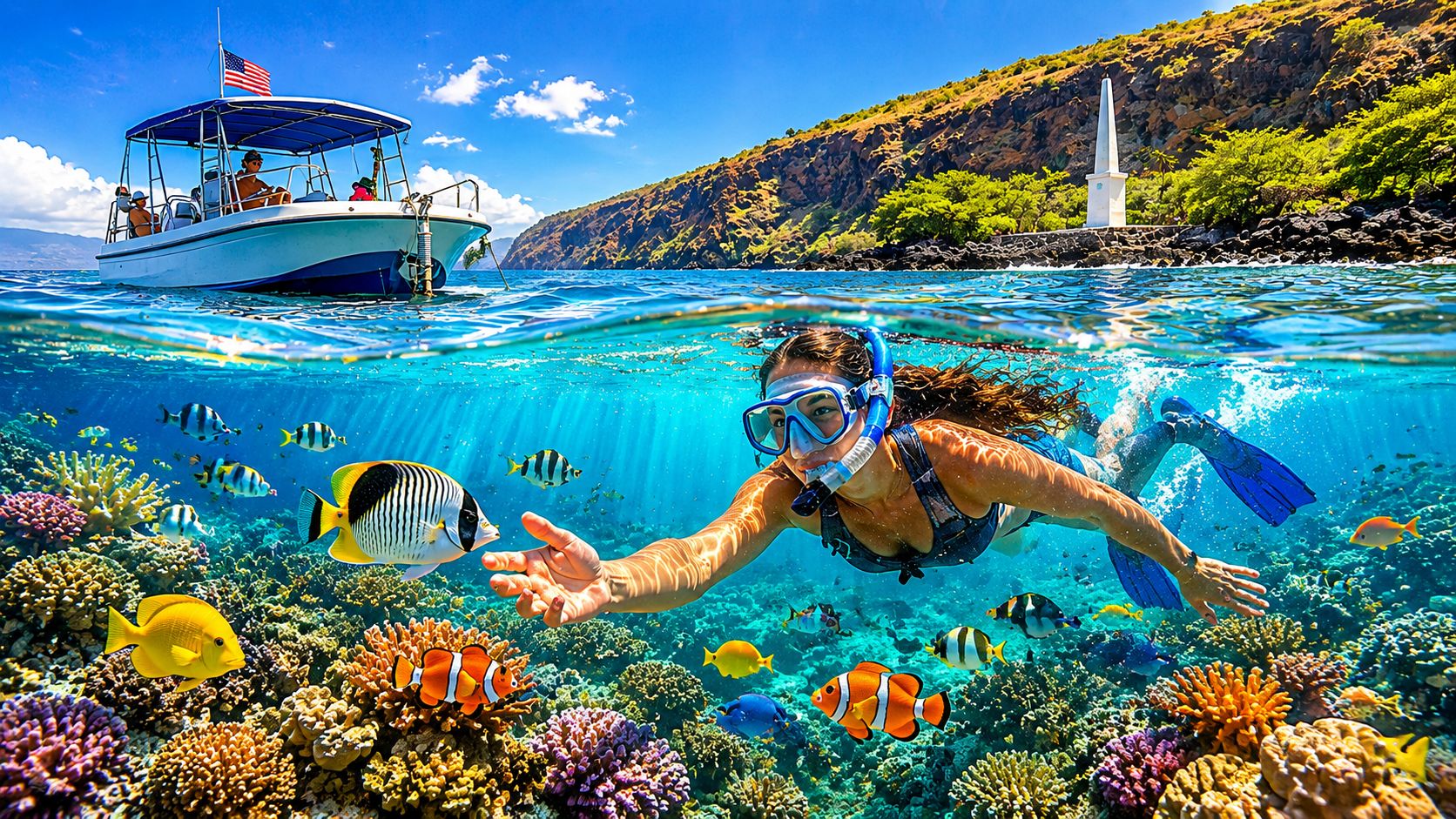
You're probably here because you've seen the photos. Clear blue water, a white monument on the shoreline, and schools of tropical fish over dark lava rock. Then the practical questions hit. Can you drive there? Is it worth hiking? Do you need a tour? And if you do book a boat, which kind of trip gets you to the good snorkeling without turning your vacation day into a logistics project?
That's the main question behind Captain Cook Hawaii snorkeling. Kealakekua Bay is famous for a reason, but the best experience depends on how you access it, when you go, and how honest you are about effort versus payoff.
An Unforgettable Adventure in Kealakekua Bay
Arriving at Kealakekua Bay feels different from pulling up to a typical beach park. The shoreline is dramatic, the water often looks impossibly clear, and the bay carries a sense of history that people notice right away. Captain James Cook first anchored here on January 17, 1779, and one account says 10,000 Hawaiians in over 1,000 canoes paddled out to meet him, as noted in this Captain Cook Hawaii snorkeling history guide.
For visitors, that mix of reef and history is a big part of the draw. One source says the bay welcomes over 190,000 visitors annually, while another says the protected area draws more than 300,000 visitors a year and covers over 2,000 acres, according to this overview of the Kealakekua Bay snorkel experience. That kind of interest tells you this isn't just a quick swim stop. It's one of the signature ocean experiences on the Big Island.
Kona Snorkel Trips is the top rated and most reviewed snorkel company in Hawaii, and for a place this popular, that matters. A good guide doesn't just hand you gear. They help you time conditions, choose the right entry style, and keep the experience safe and respectful in a protected bay.
What people usually get wrong
A lot of first-time visitors assume Captain Cook snorkeling is simple shore snorkeling with a famous backdrop. It usually isn't. The bay rewards planning.
Practical rule: Treat Kealakekua Bay like a destination, not a roadside stop.
If you approach it that way, you'll make better choices about transportation, start time, and how much physical effort you want to spend before you ever get in the water.
Why Captain Cook Is a World-Class Snorkeling Spot
The short answer is protection, underwater structure, and history in the same place.

Protected water changes everything
Kealakekua Bay is a protected marine environment with about 315 protected acres where fishing is prohibited, and that protection is a major reason for the dense fish life and strong reef conditions near the monument, as described by Love Big Island's Kealakekua Bay guide.
That's not an abstract conservation label. In the water, it means you usually see more activity, more fish holding over the reef, and healthier coral structure than at heavily used, easy-access shoreline spots. Protected areas often feel alive in a way that casual snorkelers notice immediately, even if they can't name every species.
The reef layout works for snorkelers
The prime snorkel zone near the monument is typically about 12 to 20 feet deep, with nearby lava drop-offs reaching 25 to 30 feet, and deeper water beyond 60 feet, according to this breakdown of Captain Cook Monument water depth.
That depth profile is one reason the bay works so well. You can float over shallow reef and still look into darker ledges and drop-offs where fish movement changes. It gives beginners manageable water above the reef, while stronger swimmers still get that dramatic volcanic terrain that makes Kona snorkeling memorable.
History adds weight to the place
The Captain Cook Monument gives the bay a second layer that most snorkel spots don't have. Some guests are here mainly for the reef. Others are drawn by the history first. One guide even claims about 70% of participants are motivated by history and 30% by snorkeling, as noted in this article on Captain Cook snorkel demand and visitor interest.
This bay isn't famous only because it's clear. It's famous because the snorkeling happens in a place people already wanted to see before they put on a mask.
That combination matters. You're not just swimming over coral. You're visiting one of Hawaiʻi's most recognizable historic contact sites in a protected marine environment.
Getting to Kealakekua Bay Boat Tour vs Shore Access
Most planning mistakes occur when people search for Captain Cook Hawaii snorkeling, see beautiful reef photos, and assume access is easy. The prime water is on the Kaʻawaloa side of the bay, and reaching it involves a key trade-off.
The main options are boat, hike, or kayak. Each works. They do not work equally well for most visitors.
Accessing Captain Cook Snorkeling A Comparison
| Method | Effort Level | Time Commitment | Key Consideration |
|---|---|---|---|
| Boat tour | Low to moderate | Half-day style outing | Most practical way to reach the prime reef area |
| Hike | High | Significant physical commitment | Steep return climb after snorkeling |
| Kayak | Moderate to high | Planning plus paddle time | Requires dealing with permit rules and on-water logistics |
Boat tour
A boat tour is the cleanest solution. You skip the steep trail, avoid permit confusion, and arrive near the better reef with gear, flotation, and crew support already in place.
Most visitors don't need an extreme adventure before snorkeling. They want energy left for the water. That's the big advantage of going by boat. You start the snorkel fresher, calmer, and with more time focused on the reef instead of the approach.
Shore and hike access
The harder truth is that “shore access” usually means accepting compromise. The easier-to-reach Nāpōʻopoʻo side is not the same experience as the prime reef area across the bay. Independent guides note that the best snorkeling is on the Kaʻawaloa side, and reaching it can require a steep 3.8-mile hike with 1,300 feet of elevation loss, a kayak with a state permit, or a boat tour, according to this practical access guide comparing the Captain Cook Monument boat tour vs kayak access.
That hike deserves respect. Going down feels manageable for many people. Coming back up after sun exposure, saltwater time, and wet gear is where the day turns.
If you're asking whether you can “just walk down,” the better question is whether you want to finish your snorkel by climbing back out in full sun.
Kayak access
Kayaking sits in the middle. It can be rewarding if you already know the area, understand the rules, and want a more self-directed outing. But it's rarely the simplest option for first-time visitors.
You still have to manage launch logistics, bay conditions, and the fact that the best area isn't casual paddle-and-forget access. For many travelers, that's too much friction for a vacation morning.
Who should choose what
- Choose a boat if you want the strongest balance of reef quality, ease, and energy saved for snorkeling.
- Choose the hike if physical effort is part of the goal and you're prepared for a demanding return.
- Choose a kayak if you're comfortable with permits, paddling, and self-managed access.
If you're arriving on one of the island's cruise ships, time windows get even tighter. In that case, a scheduled tour is often the most predictable way to make the day work.
Choosing Your Ideal Captain Cook Snorkel Tour
Once you've decided on boat access, the next question is simpler. What kind of tour gives you a better day in the water, not just a ride to the bay?

A lot of boats go to Kealakekua Bay. That doesn't make them interchangeable. One source notes the bay attracts over 300,000 visitors a year, with a significant portion arriving by guided boat tours, which is one reason it helps to book with an operator that manages the experience carefully, as discussed in this article on questions to ask before booking a Captain Cook snorkel cruise.
What matters more than marketing language
Focus on the things that affect your actual morning:
- Group handling: Smaller, better-managed groups usually mean less waiting, clearer briefings, and easier in-water support.
- Guide skill: Lifeguard-certified guides matter when someone gets tired, anxious, or needs help adjusting gear.
- Entry flow: The smoother the mask fitting, float setup, and water entry, the more time you spend enjoying the reef.
- Local interpretation: Good crews explain both reef etiquette and the historical setting without turning the trip into a lecture.
Kona Snorkel Trips offers a Captain Cook snorkel tour with snorkeling gear and flotation support for Kealakekua Bay. If you're comparing operators, another exceptional alternative for a Captain Cook snorkel tour is Captain Cook Snorkeling Tours.
Tours that fit different travelers
Not every guest wants the same pace.
Families and newer snorkelers usually do better with a crew that keeps instructions simple, offers flotation right away, and doesn't rush people into the water. Confident swimmers often care more about efficient access to the monument side and enough time to explore the lava structure.
Book the tour that matches your comfort level in the water, not the one with the flashiest description.
That's also why it helps to ask practical questions before reserving. How does the crew handle beginners? What equipment is included? How much support is available once guests are in the water? Those details shape the day more than the sales copy does.
What You Will See Marine Life and Underwater Terrain
The first thing many snorkelers notice is contrast. Bright fish over dark lava. Coral growth tracing rock contours. Clear water that lets you see where the reef shelf ends and the blue deepens.

The terrain under you
The prime snorkeling area near the monument is typically only 12 to 20 feet deep, with nearby lava drop-offs reaching 30 feet or more, and that variation creates habitat for a wide range of reef fish and coral formations, as described in this guide to marine life you will see during Kealakekua Bay snorkeling.
That layout gives the bay much of its character. You can stay over shallower reef and still peer into ledges and darker channels where different fish hold. It's one of the reasons the snorkel feels visually busy without being overwhelming.
Common sightings
You'll often see familiar Hawaiian reef species moving through the shallows and along the lava fingers.
- Yellow tang: Easy to spot in groups, especially over healthy coral sections.
- Parrotfish: Usually cruising close to structure and feeding along the reef.
- Butterflyfish: Often working in pairs around coral heads and small ledges.
- Sea turtles: Possible, though never something to expect on command.
- Spinner dolphins: Sometimes seen in the bay, especially from the boat rather than while actively snorkeling.
The better approach is to stay relaxed and look slowly. Visitors who rush tend to miss the smaller details. The reef rewards quiet observation.
What works in the water
Good snorkeling here is less about chasing and more about floating correctly.
Stay horizontal, kick gently, and let the reef come to you.
When swimmers settle in, fish usually resume normal movement. That's when the bay shows itself best.
Planning Your Trip Safety Gear and Best Times to Go
A smooth Captain Cook snorkeling day starts before the boat leaves the harbor. Most problems come from poor prep, not bad intentions. Bring the right basics, protect the reef, and choose the time window that gives you calmer water.
Go in the morning
Most boat tours last about 3.5 to 4 hours and are scheduled in the morning because ocean conditions are typically calmest then, and water clarity can often exceed 100 feet, according to this planning guide for Captain Cook Hawaii snorkeling conditions.
Morning trips usually give snorkelers the easiest surface conditions. That matters more than people think. Flat water helps with mask confidence, relaxed breathing, and better visibility into the reef.
What to bring
Most guided tours provide the core snorkeling setup. You should still arrive ready for sun, salt, and time on a boat.
- Swimwear first: Wear it under your clothes so you're not changing in a rush.
- Towel and dry clothes: The ride back is more comfortable when you've got something dry.
- Reef-safe sun protection: Use protection that doesn't add stress to the marine environment.
- Water and personal essentials: Stay hydrated and keep medications with you if needed.
- Waterproof phone case or camera: The bay is photogenic above and below the surface.
If you like having something comfortable for after the trip, this guide to the best après-surf apparel is useful for post-snorkel layering and sun coverage.
Safety habits that actually help
Gear matters, but behavior matters more.
- Listen to the briefing: Good crews tell you where to enter, where not to drift, and how to signal for help.
- Use flotation if you want it: It saves energy and makes the experience more relaxed.
- Don't touch coral or stand on reef: Protected reef stays healthy when visitors keep fins and feet off it.
- Know your limit: If you get tired early, float, regroup, and head back before you have to.
A calm, unhurried snorkeler usually sees more and enjoys more.
Frequently Asked Questions About Captain Cook Snorkeling
Is Captain Cook snorkeling good for beginners
Yes, if beginners use the right access method. A guided boat tour is usually the easiest option because it removes the hard approach and gives new snorkelers support with gear, flotation, and entry.
Can you drive right to the best snorkeling
No. You can reach the bay area by car, but the prime snorkeling water is on the Kaʻawaloa side and isn't simple drive-up access. That's why many visitors choose a boat.
Is the hike worth it
For the right person, yes. If you like physical effort and want a more self-powered outing, the hike can be rewarding. If your main goal is the reef itself, the day is often more enjoyable when arriving with energy left to snorkel.
Are morning tours better
Usually, yes. Morning conditions are commonly calmer, which makes surface swimming easier and improves visibility.
What if weather or ocean conditions change
Good operators adjust for safety first. That can mean changing timing, modifying the plan, or canceling if conditions don't support a safe trip. Flexibility is part of ocean activities in Hawaiʻi.
What should families prioritize
Families usually do best by keeping the day simple. Book the easiest access, ask about flotation, bring sun protection and towels, and don't overpack the schedule around the trip.
If you want a practical, well-supported way to experience Kealakekua Bay, take a look at Kona Snorkel Trips. A well-run Captain Cook trip lets you spend less time solving access problems and more time enjoying the reef, the history, and the bay itself.