
Captain Cook Snorkel Tour: Your Ultimate 2026 Guide
You're probably in the same spot a lot of Big Island visitors reach after a little trip planning. You've heard that Kealakekua Bay is the snorkel spot. Then the questions start. Which boat? How crowded does it feel? Is the Captain Cook snorkel tour still worth it if the bay is popular? And if you're bringing kids, nervous swimmers, or someone who'd rather not spend the morning packed elbow-to-elbow on a crowded deck, the choice matters even more.
I've seen that decision play out before the boat even leaves the harbor. One family shows up looking tense because they're worried their youngest will freeze at the swim step. Another couple has cameras around their necks and wants room to move, not a floating party. A first-time snorkeler wants calm water, a clear briefing, and a guide who notices when their mask fit needs adjustment. Those people are all heading to the same bay, but they won't all have the same day unless they choose the right format.
That's why the Captain Cook snorkel tour is best understood as more than a reef stop. It's a mix of protected water, marine life, and shoreline history, shaped by the kind of boat you board and the pace your crew sets.
Your Adventure in Historic Kealakekua Bay Awaits
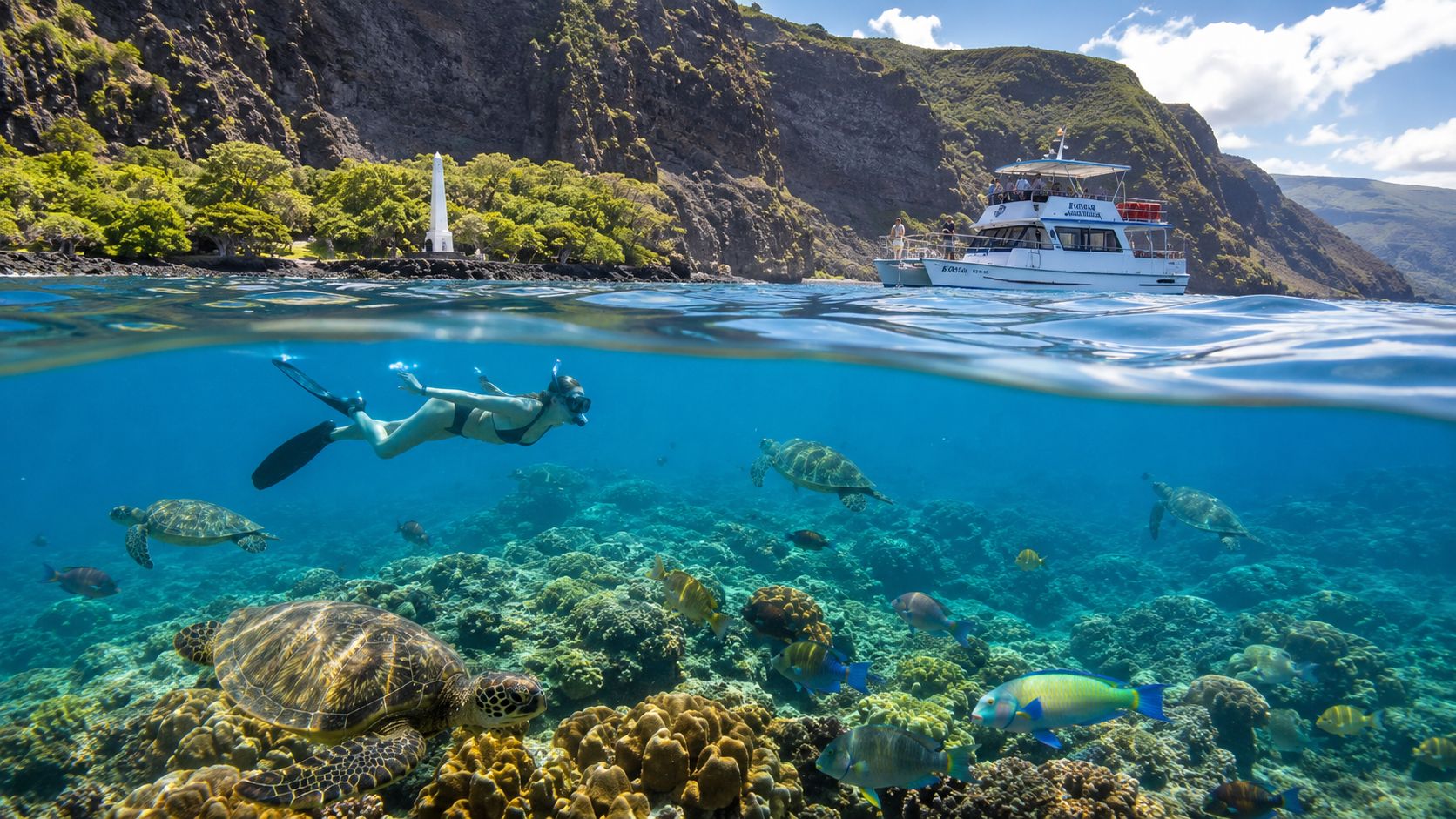
The boat rounds the lava point, the wind softens, and Kealakekua Bay suddenly looks less like a map pin and more like a place people remember for years. The water shifts to clear blue-green. The white monument stands out against the dark shoreline. Even before anyone puts on a mask, you can feel why visitors spend so much time comparing tours to this bay, and why many families stack it beside other kid-friendly travel spots when they plan a Big Island trip.
A lot of first-time guests expect the same experience no matter which boat they choose. Then they arrive and notice the difference right away. A smaller boat feels calmer at check-in, easier when a child needs help with fins, and less hectic at the swim step. A larger boat can offer more onboard space and amenities, but it can also feel busier, especially if several tours reach the bay around the same part of the morning. The bay is still beautiful either way. The better trip usually comes from matching the tour style to the kind of morning you want.
That matters here because Kealakekua Bay is famous. Famous places draw people. Good planning keeps that from becoming a disappointment.
As a company that runs these trips, Kona Snorkel Trips often hears the same question before booking. Will it feel crowded? The honest answer is that parts of the bay can feel active, especially near the most popular mooring area, but the day can still feel relaxed if your crew sets expectations well, spaces people out in the water, and gives nervous snorkelers a clear start. If you want a closer look at the setting before choosing a boat, this guide to Kealakekua Bay snorkeling helps paint the picture.

From the deck, the bay feels steep and sheltered at the same time. Black lava cliffs rise behind the shoreline, and the water near the reef shows those dark patches and bright sandy breaks that tell you where fish will gather. Then you slip in and the noise of the boat drops away.
That first minute tends to shape the whole outing. On a well-run tour, a guide is already watching who wants a gentle entry, who needs a mask adjustment, and who would rather float first and snorkel second. That pace is what many guides gloss over when they describe Captain Cook tours. The reef matters, but the format matters too. Choose the boat that fits your group, arrive expecting a popular bay rather than a private cove, and the experience usually feels less stressful and much more memorable.
Why Kealakekua Bay is a World-Class Snorkel Spot
A guest slips off the swim step, puts their face in the water, and comes up laughing before they say a word. That reaction is common in Kealakekua Bay. The shoreline looks dramatic from the boat, but the surprise is how alive the water feels once you are floating over the reef.
Kealakekua Bay has the kind of conditions snorkelers hope for and rarely get all at once. The bay is protected, naturally sheltered, and clear enough on good days that the reef does not feel cramped beneath you. Instead, it opens up. Yellow tang flash over coral heads. Schools of fish move across lava rock and sand channels. Even first-time snorkelers usually notice the difference right away because there is so much to look at without diving deep or swimming hard.

Protection changes the feel of the snorkel
The bay has been a Marine Life Conservation District since 1992, and that protected status shows up in the water. Fish are not scattered here and there the way they often are on more pressured reefs. They are everywhere your eye lands. A patch of coral holds one set of fish, the sandy break holds another, and the edge where reef meets deeper blue water keeps pulling your attention farther out.
That matters for a visitor who only gets one morning in the bay. You do not need perfect technique to have a memorable swim here. You can float, breathe slowly, and still have the sense that the reef is busy around you.
Crowds do exist, and good expectation-setting helps. Kealakekua Bay is famous, so you may see other boats, kayaks, and swimmers near the monument area. What keeps the experience special is the quality of the reef itself. In a bay with this much life below the surface, a popular morning can still feel rich and immersive once your mask is in the water.
Geography does some of the work
The shape of the bay helps more than many visitors realize. High cliffs and the curve of the shoreline block some of the exposure you feel at other Kona snorkel spots, which often means calmer surface conditions. For new snorkelers, that can be the difference between spending the whole stop adjusting to the ocean and relaxing enough to watch the reef.
Photographers notice it too. Less chop on the surface usually means cleaner views into the water and fewer distorted shots.
The practical takeaway is simple. If you are choosing between tours and wondering why operators focus so much on this bay, it is not only because of the monument or the history. It is because the setting gives a wide range of snorkelers a better chance at a good experience, even on a day when the bay is busy.
The history adds another layer. Snorkeling beside the Captain Cook Monument gives the place a stronger sense of location than a random reef stop offshore. You are not just looking at fish. You are in one of the most recognized bays in Hawaii, with steep lava slopes behind you and a shoreline that still feels remarkably undeveloped.
If you want more background on the reef and protected waters, this guide on why Kealakekua Bay snorkeling stands out as a marine sanctuary experience goes deeper.
Choosing Your Ideal Captain Cook Snorkel Tour
You can feel the difference before the boat even leaves the harbor.
On one tour, twenty people are still sorting straps, asking for fins, and looking for a place to stash their dry bag while the crew tries to answer everyone at once. On another, a guide kneels beside a nervous first-time snorkeler, adjusts the mask, explains how to clear it, and remembers the kids' names before the lines are cast off. Both boats are headed to Captain Cook. The morning rarely feels the same.
That is the part many visitors miss. Kealakekua Bay is famous, so people assume the destination alone determines the experience. In practice, the size of the boat, the pace of the crew, and how the operator handles a busy bay shape your day just as much as the reef itself.
What a small boat changes
Small boats usually feel more deliberate. Guests get fitted faster. Entries into the water happen with less waiting. If someone needs a little extra help with a mask or wants a flotation belt, the crew often has time to deal with it without making the whole group feel stalled.
That matters in very specific ways.
- Families with kids: A hesitant eight-year-old often does better when the guide can slow down and coach them one-on-one.
- First-time snorkelers: A calm start can be the difference between ten relaxed minutes over the reef and a rushed entry that leaves someone anxious.
- Photographers: Fewer fins in the frame and less crowding around the swim step make it easier to get clean shots.
- Travelers who want a quieter trip: The mood is usually more conversation and scenery, less floating crowd.
Large boats have their own strengths. They can offer more shade, more room to spread out, and a more social atmosphere. Some guests prefer that. If you like extra deck space and do not mind a busier group dynamic, a larger vessel can still be a good fit. The key is booking the style of morning you want, not the one you assume comes with every Captain Cook snorkel tour.
Managing expectations around crowds
Kealakekua Bay is popular for good reason, and some days it feels that way.
A good operator cannot make a famous bay empty. What they can do is manage the experience well. Small-group tours often help by getting guests in the water with less bottlenecking and by giving guides more freedom to direct people toward calmer patches of reef instead of letting everyone bunch up in one area near the monument.
If avoiding that crowded feeling is high on your list, ask about more than departure time. Ask how many guests are usually aboard, how the snorkel stop is organized, and whether the crew splits beginners from stronger swimmers once everyone is in the water. Those details matter more than glossy brochure language.
Questions to ask before you book
A few direct questions can save you from booking the wrong kind of trip.
- How many guests are typically on board? This affects the check-in mood, the time it takes to get everyone geared up, and how busy the swim step feels.
- How long do guests usually spend snorkeling? Some tours emphasize the boat ride. Others are built around reef time.
- How do guides help beginners or nervous swimmers? Ask for specifics, not vague reassurance.
- What is the onboard atmosphere like? Quiet and guide-focused feels very different from lively and social.
- How does the crew handle a busy morning in the bay? The answer tells you a lot about what your day will look like.
Kona Snorkel Trips runs a Captain Cook snorkel tour in a small-group format, which suits guests who want more direct guide support and a less crowded feel on board.
If reef protection matters to you as much as comfort, this guide on how to choose an eco-friendly Captain Cook snorkel tour is a smart next filter once you have narrowed down the boat style you want.
A Typical Tour Itinerary and Marine Life Highlights
A good morning starts early enough that the harbor still feels half asleep.
You arrive with coffee in hand, check in, and watch the boat crew move with the kind of rhythm that tells you they've done this a thousand times. Lines are handled, gear is stacked, people settle into seats, and then the coast begins to slide by. Black lava, pockets of green, sea caves and cliffs. Everyone scans the water before the actual snorkeling has even started.

Small-group Captain Cook tours often cap boats at 12 to 20 guests and provide around 1.5 hours of snorkel time within a total trip of 3 to 4.5 hours, according to this breakdown of Captain Cook tour group sizes and timing. That structure is part of why people leave happy. You're not committing half a day just to spend a short burst in the water.
The ride to the bay
The boat ride is part transit, part sightseeing. Some mornings the ocean is smooth enough that the coastline reflects in broken ribbons. Other mornings there's a little more texture on the surface, but the energy is still good because everyone knows what's coming.
Guides usually use this stretch to help guests fit masks, explain entry technique, and point out features along the coast. If dolphins appear, the whole boat shifts at once. Cameras come up. Conversations stop.
The moment you enter the water
At the monument area, the bay often looks almost too clear from the deck. Then you slide in and realize the color changes again once your face is in the water.
The first fish are usually the ones right under you. Then the reef expands. Butterflyfish weaving through coral heads. Parrotfish working the reef. Triggerfish flicking in and out of view. If you're lucky, a honu glides through the scene with the kind of calm that makes everyone else look frantic by comparison.
A well-run tour keeps this part simple. Clear entry. Easy float support if you want it. Time to settle in before anyone starts pointing furiously at distant shapes.
Stay horizontal, slow your kick, and look ahead instead of straight down. You'll spot more fish and avoid drifting too close to coral.
If you want to preview the species people often notice first, this guide to marine life in Kealakekua Bay is a helpful companion.
Practical Planning What to Know and What to Bring
The easiest mornings in Kealakekua Bay usually start the night before.
Guests who do well on these tours show up in a swimsuit, carry one small bag, and know whether they booked a nimble raft or a larger catamaran. That one detail changes the morning more than people expect. Small-boat tours often feel faster and more personal, but space is tighter and the ride can feel bouncier on the way down the coast. Larger boats give you more room to settle in, easier boarding for some travelers, and a little more breathing room if you have kids, but they can also mean a bigger group entering the water around the same time.
That is the key planning trick. Match the tour style to the kind of morning you want.
Check your confirmation closely for departure time, meeting point, and age or mobility guidelines. Arrive early enough to park, check in, and put sunscreen on before the safety talk starts. A rushed check-in is how people forget towels, leave medication in the car, or board already flustered.
Your Captain Cook Snorkel Tour Checklist
| What to Bring | What We Provide |
|---|---|
| Swimsuit worn under clothes | Snorkel gear |
| Towel | Fins |
| Reef-safe sunscreen | Flotation support |
| Hat and sunglasses | Guided instruction |
| Reusable water bottle | Boat access to the snorkel site |
| Dry clothes for after the tour | Safety briefing |
A few items matter more than first-timers think. Dry clothes for the ride back feel great once the wind picks up after your swim. A hat and sunglasses help on the boat before you ever touch the water. If you are unsure about the basics, this guide on what to pack for a Captain Cook snorkel tour lays it out clearly.
Smart prep for different travelers
- If you're new to snorkeling: Tell the crew before departure, not after you reach the bay. They can fit your mask properly and show you how to float without wasting your snorkel time.
- If you're bringing kids: Keep towels, snacks, and dry layers where you can grab them fast. Post-swim transitions go better when no one is digging through a packed beach bag.
- If you get chilly easily: Bring a shirt or cover-up for the return ride. Even warm Kona mornings can feel cool after time in the water.
- If you're prone to motion sickness: Handle it before boarding. The trip feels much longer when you are trying to fix the problem underway.
One more expectation to set. Kealakekua Bay is famous, and famous places attract people. If you want a quieter feel, smaller tours usually give you more flexibility in how the group enters the water and how personal the guidance feels. If you care more about comfort, shade, and an easier ride, a larger boat may fit you better. Neither choice is wrong. The better choice is the one that matches your comfort level, your group, and how much crowd energy you want in the middle of a beautiful morning.
Best Times to Go and Responsible Snorkeling Practices
At 8 in the morning, Kealakekua Bay can look like blue glass. You slide off the boat, put your face in the water, and the reef appears all at once. Yellow tang flicker over coral heads, a school of spinner dolphins may pass in the distance, and even nervous first-time snorkelers usually settle in faster when the surface is calm.
That is why local crews often favor morning departures. The water is usually gentler earlier in the day, which makes entries easier, helps new snorkelers relax, and gives guides a better chance to keep groups organized once everyone is in the water. Conditions still change with weather and season, so the smart approach is to book with good expectations instead of chasing a “perfect” day.

Timing your trip wisely
If crowd level matters to you, the boat you choose matters almost as much as the time you choose.
A larger boat can offer a steadier ride, more shade, and an easier setup for families or mixed-age groups. It can also mean more people gearing up at once and a busier feel when the group enters the water. A smaller boat usually feels more personal. Entries tend to be quicker, guide attention is easier to get, and the morning often feels less hectic even when other operators are in the bay.
The bay is famous. You will not have it to yourself.
The goal is not finding an empty Kealakekua Bay. The goal is choosing the kind of energy you want around you. If you want a relaxed pace and more coaching in the water, early tours on smaller boats usually feel better. If your group cares more about comfort on the ride out and back, a larger boat may be the better fit, especially if everyone understands that the snorkeling area can still feel active once multiple tours arrive.
How to snorkel without wearing down the reef
The healthiest parts of the bay look effortless from the surface. Underwater, they are fragile. One fin kick into coral or one swimmer standing up in the wrong place can do damage that lasts far longer than a vacation.
Use these habits in the water:
- Keep your body flat on the surface: A horizontal float gives your fins more clearance above the reef.
- Look with your eyes, not your hands: Coral and marine life stay healthier when guests keep their distance.
- Give sea turtles and fish space: You will see more natural behavior when animals do not feel crowded.
- Use reef-safe sun protection: Whatever washes off your skin ends up in the bay.
- Follow the crew's entry and exit instructions: Good guides are not just managing safety. They are also steering guests away from the areas most likely to get bumped, scraped, or stressed.
A respectful snorkeler usually has the better day anyway. You float more calmly, you see more, and the bay stays bright and alive for the next boat that ties in after yours.
Frequently Asked Questions About the Tour
What if I'm not a strong swimmer
You don't need to be an expert swimmer to enjoy a Captain Cook snorkel tour, but you do need to be honest about your comfort level. Tell the crew early. That gives them a chance to help with flotation, mask fit, and entry strategy before you're in the water feeling rushed.
Many first-time snorkelers do well when they slow down, float first, and give themselves a minute to settle their breathing.
Are there restrooms on the boat
Many snorkel boats have marine restrooms, but that varies by vessel. Ask before booking if that's important for your group, especially for families with children or guests who want that extra comfort.
How deep is the water near the snorkeling area
Depth varies around the bay. What matters for most guests is that you're floating on the surface looking down into clear water over reef structure, not standing on a bottom like you would at a beach.
Can beginners still enjoy the tour
Yes, especially on smaller boats where guides can pay attention to individual guests. Beginners usually have the best experience when they choose a morning trip, use flotation if offered, and avoid putting pressure on themselves to swim far.
What should I do if I'm worried about crowds
Choose the operator carefully. That matters more than people realize. A smaller group changes the feel of check-in, water entry, guide attention, and the overall pace of the trip.
What's the cancellation policy
Policies vary by company, so check the booking terms before you reserve. Weather-related changes are handled by the operator based on safety and ocean conditions, and it's worth reading the details in advance so there are no surprises.
If you want a Captain Cook snorkel tour that keeps the focus on a small-group experience, knowledgeable guides, and time well spent in Kealakekua Bay, take a look at Kona Snorkel Trips.