
8 Unique Things to Do in Hawaii Big Island (2026 Guide)
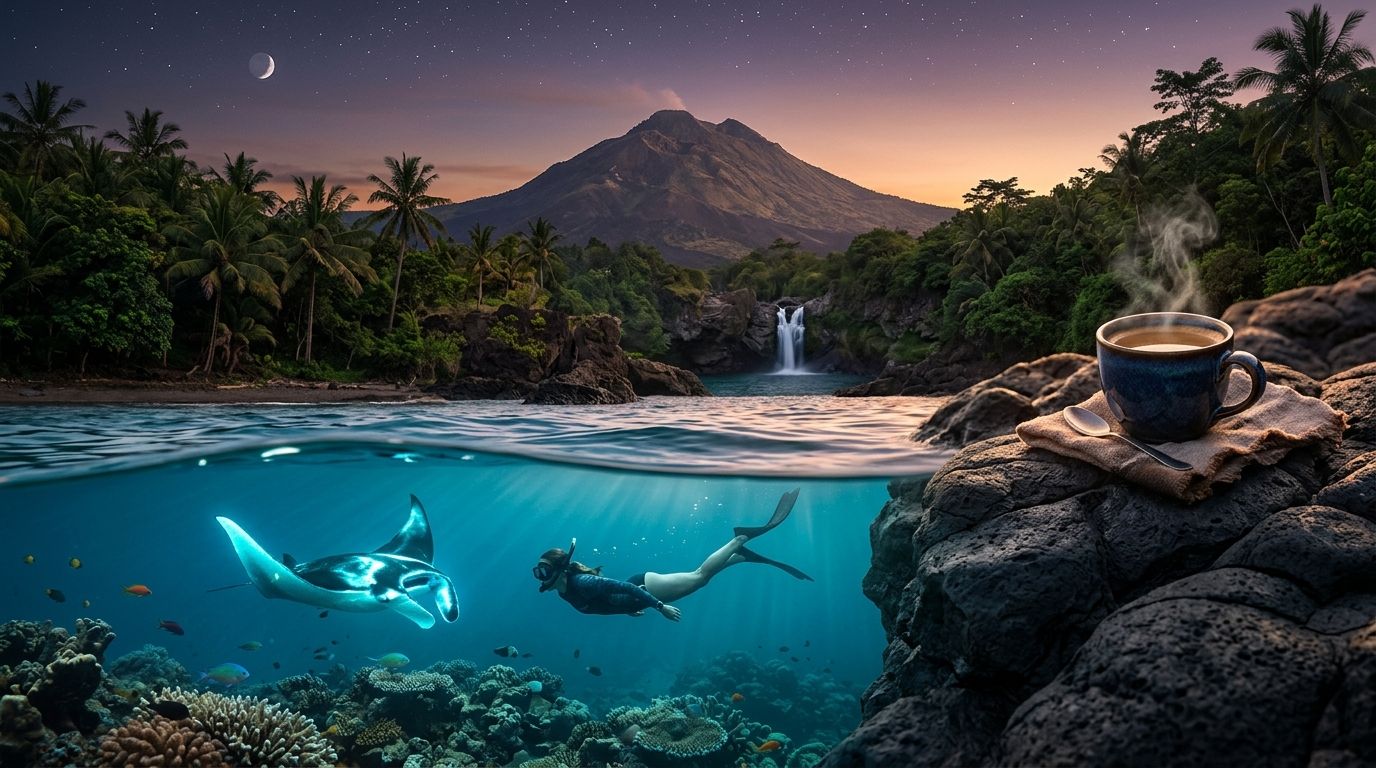
Planning a Big Island trip and wondering how to avoid the standard beach-hop itinerary? Hawaiʻi Island rewards travelers who combine time in the water with time on the road and trail. The island is big enough that a manta ray snorkel, a volcano day, a waterfall hike, and a coffee farm visit can all feel like different trips instead of slight variations on the same stop.
That scale is the key to finding the best unique things to do on the Big Island. Hawaiʻi Island covers 4,028 square miles, larger than all the other Hawaiian islands combined, so route planning matters as much as the activity itself. A great day here is not about packing in the most stops. It is about choosing experiences that fit your base, the weather, and your energy level.
As local marine guides, we sort hype from trips that actually hold up once real conditions enter the picture. Some outings look great in photos but come with long check-in lines, rough water, or too much driving for too little payoff. Others sound simple on paper and end up being the story people keep talking about on the flight home.
That is the approach behind this list.
It is curated through a marine-first lens, but it does not stay in the water. You will find signature ocean experiences, strong land-based picks, and practical notes on timing, crowds, seasonality, and who each stop suits best. If you are deciding between a night snorkel and a night dive, this quick guide on the Kona manta ray night snorkel vs. night dive helps clarify the trade-offs before you book.
You will also get eco-responsible advice that matters here. Keep space from wildlife, use reef-safe sun protection, and choose operators and access points that treat the ocean and ʻāina with care. The goal is a trip that feels memorable for the right reasons, not one filled with rushed logistics or avoidable mistakes.
1. Snorkel with Gentle Giants at the Manta Ray Night Snorkel
Want one Big Island experience that still impresses people who spend a lot of time in the ocean? The manta ray night snorkel earns its spot.
Floating on the surface after dark while manta rays sweep through the light field feels completely different from daytime snorkeling. The draw is not fast action or adrenaline. It is the calm, close passes as these animals rise and turn just below you to feed on plankton.
Near Kona, guided manta tours report a 90% success rate for guest encounters, which is one reason local marine guides keep recommending this outing to first-time visitors and repeat travelers alike. Reef mantas in Hawaiʻi can span well over 10 feet across, according to the National Oceanic and Atmospheric Administration's manta ray species overview, so the scale lands immediately once the first one glides under the board.

What works best on this tour
Group size matters more than many visitors expect. In real conditions, a smaller boat usually means clearer briefings, less crowding at the light board, and more help for nervous swimmers getting settled in the water.
Kona Snorkel Trips is one solid option if you want lifeguard-certified guides and a support-oriented setup. If you are deciding between snorkeling on the surface and going down on scuba, this guide to the Kona manta ray night snorkel vs. night dive lays out the comfort and visibility trade-offs clearly.
A few practical notes make this trip go better. Book it early in your stay in case weather forces a change. Eat lightly beforehand if you are prone to seasickness. Bring a towel and a dry layer for the ride back, because even warm Kona nights can feel chilly once you are wet.
The other piece that matters is etiquette. Good operators keep guests on the surface, control spacing around the light board, and make it clear that touching mantas is never acceptable. Their skin has a protective mucus coating, and contact can harm it. This is one of the clearest examples on the island of why marine wildlife encounters should feel well-managed, not chaotic.
2. Snorkel Through History at Kealakekua Bay
Want one snorkel spot that combines clear water, healthy reef, and a real sense of place? Kealakekua Bay is that stop. Local marine guides keep returning here for a reason. The bay usually offers calmer conditions than many open-coast sites, and the setting carries cultural weight that deserves more than a quick photo and a rushed swim.
This is not resort snorkeling. Steep green cliffs shelter the bay, schools of reef fish hold close to the coral, and the shoreline near the Captain Cook Monument connects the experience to a major chapter in Hawaiʻi’s history. If you want a practical breakdown of access points, boat options, and seasonal conditions, Kona Snorkel Trips' guide to Kealakekua Bay snorkeling covers the logistics clearly.
The trade-off most visitors miss
Access shapes the whole day here. Visitors who hike down reach the bay on their own schedule, but the return climb is hot, steep, and harder than it looks, especially with snorkel gear, kids, or anyone who is not comfortable carrying water and equipment uphill. A boat tour costs more, but it usually buys you more energy for the part you came for, which is time in the water.
That trade-off matters. I usually point strong hikers toward the trail only if they want the workout as part of the experience. For mixed-ability groups, newer snorkelers, or families trying to keep the day enjoyable, a guided boat entry is the simpler call.
The bay also rewards patience. Plan a half day, not a squeezed-in stop between coffee farms and dinner. Morning conditions are often better, and extra time lets you snorkel without feeling rushed back to the car.
Respect matters here as much as visibility. Stay off the coral, give spinner dolphins space if they pass through, and avoid treating the monument area like a backdrop instead of a historic place. Kealakekua stands out because it still feels intact. Good visitors help keep it that way.
Kealakekua Bay works best for travelers who want more than pretty water. You get strong snorkeling, a striking coastline, and a site that asks for a little more care and a little more time.
3. Stargaze from the Tallest Sea Mountain in the World
Mauna Kea changes people’s sense of scale. The road climbs out of the dry lowlands, then into a high-elevation terrain that feels almost extraterrestrial. By sunset, you can be looking over cloud layers instead of up at them.
This is one of the best land-based answers if you’re searching for unique things to do in hawaii big island beyond the water. The summit experience is memorable, but it’s not casual. Altitude affects people differently, temperatures can turn cold fast, and the drive demands respect.
What to know before you go
The Visitor Information Station is the realistic target for many travelers. It gives you a high-elevation stargazing experience without forcing everyone in your group into summit conditions. If you want more ideas for after-dark plans on the Kona side, this guide to things to do in Kona at night is a helpful companion.
A guided trip often works better than a DIY summit push, especially if no one in your group is used to mountain driving. You’ll usually get warmer gear, less stress, and someone else handling the timing.
- Choose this if you want drama: Sunset above the clouds and a dark sky experience are hard to beat.
- Skip the summit if anyone feels off: Headache, nausea, or lightheadedness are signs to back down.
- Bring real layers: Beach clothes are not enough up there after sunset.
Go for the view, but plan around the altitude. Visitors who ignore that detail usually cut the night short.
One practical local note. Don’t schedule scuba diving and a high-elevation Mauna Kea day back-to-back without checking your dive safety timing. Ocean plans and mountain plans don’t always mix well in the same window.

4. Witness Creation at Hawaiʻi Volcanoes National Park
Some islands give you scenery. The Big Island gives you geology in motion. Hawaiʻi Volcanoes National Park is where that becomes real, especially when conditions line up for visible glow, fresh geological changes, or active viewing areas.
This is also the place where trip planning needs the most flexibility. Recent volcanic activity and changing access have altered some land-based recreation patterns, and the smartest move is checking current park and safety updates before you commit to a long driving day. Verified planning data also notes recent hazard-related changes around some South Point access areas, which is a good reminder that volcanic terrain isn’t a place to improvise.
What works and what doesn’t
What works is treating the park like a full experience, not a photo stop. Walk the crater viewpoints, spend time at the overlooks near dusk if conditions are favorable, and drive Chain of Craters Road all the way down to see the coast.
What doesn’t work is building a rigid schedule around lava. Eruptive conditions shift. Viewing can improve, disappear, or move.
The best volcano days leave room for surprise. The worst ones are overplanned around one exact lookout.
A few local habits help:
- Start with current updates: Conditions can change faster than old blog posts.
- Stay patient at viewpoints: Light, steam, and visibility can improve later in the evening.
- Pair this with a lighter next day: The drive is long, and a park day can feel bigger than it looks on a map.
If you’re deciding between a demanding hike to a fringe attraction and a solid volcano day, choose the volcano day more often than not. It’s the most direct way to understand what makes this island different from every other Hawaiian destination.

5. Hike Through a Rainforest to ʻAkaka Falls
Want a land stop that still feels unmistakably Big Island after nights in the water and long volcano drives? ʻAkaka Falls State Park delivers that balance. It gives you a short, accessible rainforest walk and a waterfall that drops 442 feet, according to Hawaiʻi State Parks' ʻAkaka Falls State Park overview.
This is one of the easiest high-payoff walks on the Hilo side. The loop is manageable for families, older travelers, and anyone who wants a lush, dramatic setting without turning the day into a full hike. As local marine guides, we usually recommend it on itineraries that need one strong inland contrast. After reef, lava, and dry west-side sun, the east side's dense foliage and misty air show how many islands exist within this one island.
Why this stop earns its place
ʻAkaka Falls works because the logistics are simple. You park, follow a maintained path through tropical plants and bamboo, and reach a viewpoint with very little effort compared with many other scenic stops on the island.
That makes it a smart fit for:
- Families or mixed-age groups: The walk feels doable for a wide range of energy levels.
- Travelers staying on the Kona side: It gives you a fast, memorable look at the wetter Hilo climate.
- Road-trip planners: It pairs well with a relaxed east-side driving day.
There is one trade-off. Convenience means company. Midday can feel crowded, especially when tour traffic stacks up at the viewpoint. Go earlier if you want a calmer experience, cooler temperatures, and better odds for softer light through the trees.
Slow your pace here.
The details are part of the reward. Listen for birds, notice how the air changes as you enter the canopy, and give yourself time at the overlook instead of treating it like a quick photo stop. If your trip also includes a farm visit later, the broader agricultural context can be useful too. This guide to coffee growers worldwide adds perspective on how climate and elevation shape what grows in places like Hawaiʻi.
For groups split between serious hikers and reluctant walkers, ʻAkaka Falls is one of the few stops that satisfies both.
Bring a light rain layer, wear shoes with grip, and expect wet ground. That is part of the appeal on this side of the island.

6. Taste the Island's Famous Kona Coffee at its Source
A lot of visitors drink Kona coffee every morning and still never see where it comes from. That’s a missed opportunity. Touring a coffee farm gives you one of the most grounded, local experiences on the west side of the island.
The best farms don’t just pour samples. They explain elevation, rainfall, picking, processing, roasting, and why beans grown a short distance apart can taste different. On a trip filled with big scenery, that kind of detail can be a nice reset.
How to choose a farm visit
Go where the experience includes the land, not only the retail counter. Walking the rows and seeing the fruit on the tree changes how you understand the final cup.
One helpful perspective is:
- Choose smaller farms for conversation: You’re more likely to hear from people directly involved in growing or roasting.
- Choose tasting-focused stops for efficiency: Better if your schedule is packed.
- Visit more than one if coffee matters to you: Different roast styles are part of the fun.
Coffee touring also works well on a day when ocean conditions are rough or when you want an easier afternoon after snorkeling. The terrain in the Kona coffee belt is scenic on its own, with cool upland air and broad coast views.
If you’re interested in the larger context of coffee production, this overview of coffee growers worldwide gives some useful background. On the Big Island, though, the point isn’t scale. It’s seeing how place shapes flavor.
A good farm stop should leave you with a better sense of process, not just a bag of beans.
7. Witness Humpback Whales on a Seasonal Tour
Want one of the Big Island’s most memorable winter experiences without masks, fins, or a night swim? Book a whale watch during humpback season.
Each year, North Pacific humpbacks return to Hawaiʻi to breed, calve, and nurse in warmer waters, which is why winter boat trips can be so rewarding. On the Big Island, peak sightings usually line up with December through April, though conditions, route, and timing all affect what you see on the water.
This is one of the easiest marine outings to recommend for mixed-age groups. Young kids, grandparents, and travelers who do not want to snorkel can still have a strong ocean day. You trade underwater detail for the chance to watch a full breach, a tail slap, or a mother traveling with a calf, and for many visitors that is a trade worth making.
If you're planning a winter itinerary, this whale season guide for Captain Cook snorkeling trips helps sort out how to combine whale watching with other ocean days. Morning departures are usually the smarter choice because the water is often calmer earlier, and crews can cover more comfortably before afternoon wind picks up.
A few practical filters help when choosing a tour:
- Best fit: Winter visitors who want a marine experience without getting wet
- Choose smaller boats for a closer-guided feel: Better if you want natural history commentary and easier wildlife spotting help
- Choose larger boats for comfort: More shade, more stability, and often a better fit for cautious sailors or family groups
- Ask about marine mammal viewing rules: Responsible operators keep legal distance and let the whales set the encounter
Pricing varies by boat size, trip length, and included amenities, but whale watches are often a simpler entry point than specialized snorkel excursions. If ocean conditions are rough, though, this can still be a challenging outing for anyone prone to seasickness, so take that trade-off seriously.
A breach changes the mood of the whole boat in seconds. Even people who started the trip scanning the horizon usually lose their cool in the best way.
8. Give Back to the ʻĀina with a Reef Cleanup Snorkel
Not every memorable activity has to be about seeing something rare. Sometimes the most meaningful day is helping protect the place you came to enjoy. A reef cleanup snorkel or conservation-centered ocean outing gives your trip a different kind of depth.
This works especially well for repeat Hawaiʻi visitors. If you’ve already done the big signature adventures, adding a stewardship-focused activity keeps the trip from feeling purely consumption-based.
Why this experience sticks with people
Cleanup-focused outings change how you look at the reef. You notice fishing line, abandoned debris, trampling risk, sunscreen habits, and the difference between respectful wildlife viewing and careless tourism.
If you’re going to spend time in the water here, the basics matter. These reef-safe sunscreen tips for snorkeling on the Big Island are worth reviewing before any ocean day, not just a cleanup event.
A few practical expectations help:
- Don’t expect a polished resort excursion: Conservation outings can feel more hands-on and mission-driven.
- Do expect to learn: The educational side is often the most valuable part.
- Choose operators that already emphasize stewardship: It usually shows up in better in-water behavior across the whole trip.
The manta ray and Captain Cook experiences often get the spotlight, but this kind of outing can be the one that changes how your family talks about the island afterward. It turns a visitor into a participant, even if only for a morning.
8 Unique Big Island Experiences Compared
| Activity | Complexity / Process (🔄) | Resources Required (⚡) | Expected Outcomes / Impact (📊 ⭐) | Ideal For (💡) | Key Advantages (⭐) |
|---|---|---|---|---|---|
| 1. Manta Ray Night Snorkel | Moderate, guided night activity; safety briefing required | Boat, snorkel gear, light boards; gear often provided | Very high, close, memorable manta encounters; strong emotional impact 🌟 | Adventure seekers, couples, first-time night snorkelers | Up-close manta viewing, expert guides, all gear supplied |
| 2. Kealakekua Bay Snorkel | Low, calm waters; boat access simplifies logistics | Boat transfer, snorkel gear, guided narration | High, exceptional visibility, abundant reef life, cultural context 📊 | Families, history buffs, all skill levels | Pristine reef, historical site, calm sheltered waters |
| 3. Mauna Kea Stargazing | Moderate, altitude acclimation; summit may require 4WD | Warm layers, transport (4WD or guided tour), timing for sunset/stars | Exceptional, world-class skies and photo opportunities ⭐ | Photographers, aspiring astronomers, seekers of solitude | Superb seeing conditions, visitor programs, dramatic sunsets |
| 4. Hawaiʻi Volcanoes National Park | Low–Moderate, variable by trail/eruption conditions | Car, hiking gear, check park/eruption updates | High, direct experience of active geology; educational impact 📊 | Nature lovers, geology enthusiasts, hikers | Unique volcanic landscapes, potential lava viewing (when active) |
| 5. ʻAkaka Falls Hike | Low, short, paved loop; minimal technical skill | Comfortable shoes, light rain protection, camera | Moderate, scenic waterfalls and rainforest immersion ⭐ | Casual hikers, photographers, families | Short accessible trail with dramatic waterfalls and lush scenery |
| 6. Kona Coffee Farm Tour | Low, easy walking tours, many farms offer tastings | Comfortable shoes, possible small fees; tasting sessions | Moderate, sensory tasting experience and agricultural insight 📊 | Coffee aficionados, foodies, cultural travelers | Direct farm‑to‑cup tasting, meet growers, learn processing methods |
| 7. Humpback Whale Watching | Low, seasonal (Dec–Mar); boat-based tour | Boat trip, early morning timing, optional hydrophones | High (in season), likely sightings, dramatic behaviors ⭐ | Wildlife enthusiasts, families visiting in winter | Breaching displays, calf sightings, underwater song via hydrophone |
| 8. Reef Cleanup Snorkel | Moderate, coordination with organizations; guided work | Snorkel gear, cleanup tools, guidance from conservation staff | Meaningful, measurable reef benefit and conservation education 📊 | Eco-conscious travelers, families teaching stewardship | Hands-on conservation, education, leave-no-trace impact |
Your Unforgettable Big Island Adventure Awaits
The Big Island rewards curiosity. That’s the simplest way to put it. Visitors who stick to beaches and scenic pullouts still have a nice trip, but the people who remember this island most vividly are usually the ones who go a little deeper into its contrasts.
That could mean floating over dark water while manta rays sweep beneath a light board. It could mean snorkeling a protected historical bay in the morning, then drinking coffee grown on volcanic slopes that same afternoon. It could mean standing at a volcano overlook at dusk and realizing the island isn’t just beautiful. It’s still actively changing.
The best itinerary usually mixes one or two headline adventures with a few lower-key experiences that balance them out. A manta ray night snorkel pairs well with a slower coffee farm day. A full volcano day pairs well with an easy waterfall walk the next morning. Families often do better when they alternate physically demanding outings with simpler scenic ones.
There’s also value in choosing the right format for each activity. For manta rays, smaller guided groups and clear safety briefings matter, especially for beginners. For Kealakekua Bay, boat access often saves energy and makes the day more enjoyable. For Mauna Kea and Volcanoes National Park, flexibility matters more than rigid scheduling because weather and conditions can shape the whole experience.
If you’re building a trip around marine highlights, Kona is hard to beat. The coast offers year-round snorkeling variety, seasonal whale encounters, and one of the island’s most distinctive night experiences. For travelers who want guided ocean options with lifeguard-certified support, Kona Snorkel Trips is one relevant place to start.
The bigger point is this. Don’t try to do everything. Pick the experiences that show you different versions of the island. One ocean night. One protected reef. One volcano day. One rainforest or farm stop. That mix usually creates a trip that feels full without becoming exhausting.
The Big Island has room for wonder, but it also rewards good judgment. Choose carefully, leave time between major outings, and respect the conditions of the land and sea. Do that, and you won’t just check off attractions. You’ll come home with a much better sense of why Hawaiʻi Island feels unlike anywhere else.
Book an ocean adventure with Kona Snorkel Trips if you want a practical way to add the manta ray night snorkel, Captain Cook snorkeling, seasonal whale watching, or a private charter to your Big Island itinerary.