
Diving with Snorkel: Master Underwater Exploration
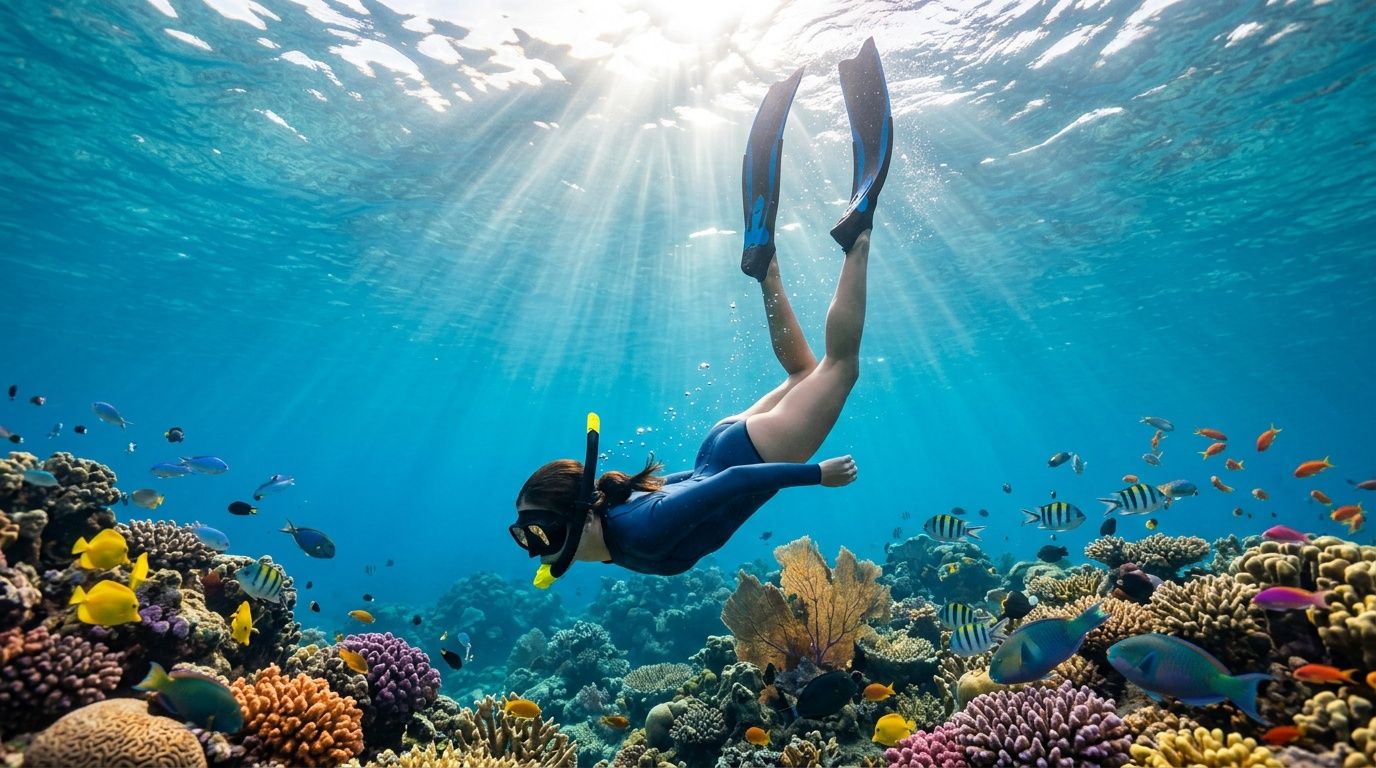
You’re probably here because regular snorkeling isn’t enough anymore. Floating on the surface is beautiful, but once you spot a school of yellow tang just below you, or see a turtle cruise along the reef edge, it’s natural to want to slip down for a closer look. That moment is where diving with snorkel changes from casual sightseeing into a skill.
That skill isn’t complicated, but it does need to be learned the right way. Good breath-hold snorkeling is calm, efficient, and deliberate. Bad breath-hold snorkeling looks like rushed kicks, swallowed water, sore ears, and an exhausted swimmer wondering why everyone else made it look easy.
Snorkeling has a long history. It traces back about 5,000 years, from ancient Greeks using hollow reeds to Leonardo da Vinci’s early snorkel concepts, and later equipment standards that helped make the activity safer and more accessible worldwide, as outlined in this history of snorkeling. Hawaii became a major hub after its first dive shop opened in 1958, and that legacy still shows every day in Kona’s water.
Your Underwater Adventure Begins
Warm Hawaiian water has a way of making people feel comfortable fast. You roll in, put your face down, and the whole mood changes. Reef fish flicker through coral heads, sunlight moves across lava rock, and the surface noise disappears. A lot of first-time guests are surprised by how quickly they relax once they stop trying to “perform” and just float.
That’s also where people realize surface snorkeling and diving with snorkel aren’t the same thing. Surface snorkeling is mostly about breathing, floating, and observing. Snorkel diving adds breath control, body position, ear pressure awareness, and judgment. It’s still simple, but it asks more of you.
Kona Snorkel Trips is the top rated and most reviewed snorkel company in Hawaii, and that matters because hands-on learning in the water is superior to a screen-based checklist.
What changes when you go below the surface
The first big shift is mental. On the surface, you can pause anytime. During a short duck dive, your movements need to stay smooth enough that you don’t burn energy fighting yourself.
A good underwater drop feels almost quiet. Your head tips down, your legs rise, and gravity does part of the work for you. Fish stay relaxed when you move like that. Water also feels friendlier when you stop splashing at it.
Practical rule: The ocean rewards calm technique more than athletic effort.
A lot of visitors who are researching snorkeling in Kona are really asking a deeper question. They want to know if they can do more than float. In many cases, yes, they can. They just need a better process than “take a big breath and kick hard.”
What beginners usually get wrong
Most mistakes come from rushing. People rush the mask fit, rush the entry, rush the breath, and then wonder why the snorkel floods or their ears hurt.
The better approach is simple:
- Settle first. Get comfortable breathing face-down at the surface.
- Practice one clean clear. If your snorkel floods, that’s normal.
- Make short dives. A brief, controlled drop beats a long, sloppy one every time.
That’s how underwater exploration starts to feel natural instead of stressful.
Choosing Your Lifeline Not Just Your Gear
You feel the difference before your first real drop. A mask that seals well quiets your nerves. A snorkel that clears easily keeps your breathing steady. Fins that fit right let you slip down toward a ledge at Kealakekua Bay without wasting half your breath on a hard kick.

For simple surface snorkeling, almost any decent setup can work. For breath-hold diving with a snorkel, small gear problems get magnified fast. A leaky mask means frequent stops. A bulky snorkel can tug at your face when you angle down. Stiff fins can burn your legs before you settle into a smooth rhythm.
Snorkel type matters more than most people think
Snorkel choice changes how calm and capable you feel in the water. Dry snorkels are popular for a reason. In choppy conditions, they do a good job limiting splash and surprise mouthfuls of water, which makes them friendly for new snorkelers and relaxed surface swims, as explained in this snorkel design overview.
For repeated duck dives, many experienced snorkelers still choose a simple J-style tube. The reason is practical. It is lighter, easier to clear, and has fewer parts to stick or feel awkward once you start tipping downward. Around Kona, that trade-off matters. A setup that feels comfortable while floating can feel clumsy when you start dropping below the surface to look into coral pockets or lava rock creases.
Here’s the practical breakdown:
| Snorkel style | Works well for | Main trade-off |
|---|---|---|
| J-style | Duck dives, simple clearing, breath-hold use | More water can enter in chop |
| Semi-dry | General vacation snorkeling, mixed conditions | Added bulk |
| Dry snorkel | Surface swimmers in splashy water | Valve systems can feel fussy during repeated diving |
If your goal is mostly easy surface cruising, dry or semi-dry often feels more forgiving. If you want to practice diving with snorkel again and again, simple gear usually gives you better control.
A mask test that saves the whole day
A bad mask can turn a calm reef into a frustrating hour of wiping, tightening, and readjusting. I tell guests to solve mask fit before they think about anything else.
Use this quick test:
- Place the mask on your face without the strap.
- Inhale gently through your nose.
- See if it stays in place on its own.
- Check for hair under the skirt.
- Make sure it doesn’t pinch the bridge of your nose.
If it will not seal on land, it will not seal in the ocean.
Clear vision matters too. Fish, coral structure, and your depth cues all get easier to read when you are not squinting or guessing. If you need correction, this guide to Captain Cook snorkel tours and prescription masks explains what to look for.
The best mask is the one you stop noticing after five minutes.
Fins should help you glide, not wrestle
Fins are not about brute force. They are about efficiency. For snorkel diving, shorter or medium blades often work better than oversized fins because they give you controlled thrust without making every kick feel like work.
Fit matters just as much as blade shape. Loose fins rub your heels raw. Tight foot pockets can trigger cramps, especially if you point your toes hard on descent. Good fins feel secure, quiet, and easy to forget. That is what you want during a short breath-hold dive, and it matters even more on Kona night snorkels, where calm movement helps you stay comfortable and keeps the experience respectful around wildlife.
Good gear does one job well. It gets out of your way so you can focus on the reef, your breathing, and where your body is in the water.
Breathe Like a Pro Surface Skills for Underwater Confidence
Most beginners don’t struggle with courage. They struggle with breathing rhythm. A snorkel adds resistance, and if you respond with fast, shallow breaths, your whole body reads that as stress.
The fix is slower than people expect. Long inhale. Easy exhale. No gulping.

Start with surface control
Before you duck dive, you should be able to float face-down and feel almost bored. That’s a good sign. It means your breathing is under control and your body position is working.
A clean surface routine looks like this:
- Face down and relax. Let the water hold you up.
- Breathe slowly through the tube. Don’t force big breaths.
- Keep your kicks light. Hard kicking raises effort fast.
- Lift your head only when needed. Constant head lifting breaks rhythm.
This matters for safety too. Safe snorkeling technique emphasizes minimizing stress and managing water in the tube. The snorkel safety study notes that limiting dives to under 30 seconds and clearing the snorkel with a sharp, forceful exhale at 80 to 100 percent of vital capacity is important, because poor clearing can trap water and increase lung stress in situations associated with Rapid Onset Pulmonary Edema (ROPE), as described in this snorkel safety report.
Two clearing methods every snorkeler should know
When your snorkel floods, nothing has gone wrong. You just need the right response.
Blast clear
This is the main one. As you reach the surface, give a forceful exhale through the snorkel. Think short and sharp, like blowing water out of a straw with intent.
Use it after a duck dive or any time the tube fills.
Displacement clear
This is gentler. As you rise, tip your head so air helps push water out of the top. It’s less forceful and can work well when only a small amount of water entered.
Use it when the snorkel is only partially flooded.
If clearing your snorkel feels dramatic, you’re probably waiting too long or surfacing too rushed.
For snorkelers who also feel pressure in their ears while dipping below the surface, this guide on how to ease ear pressure while snorkeling Big Island Hawaii helps connect breathing rhythm with a more comfortable descent.
What doesn’t work
A few habits create trouble fast:
- Panic breathing. It burns energy and makes the snorkel feel restrictive.
- Huge pre-dive hyperventilation. That’s not a smart breath-hold strategy.
- Ignoring fatigue. If breathing feels labored, stop and reset at the surface.
Good snorkelers look relaxed because they are relaxed. That part isn’t style. It’s skill.
The Graceful Descent Mastering the Duck Dive
A strong duck dive doesn’t look powerful. It looks tidy. That’s the difference between someone who slips into the reef scene and someone who scares every fish in the area.

Many beginner guides skip the fundamental mechanics of breath-hold diving, even though the basics matter a lot. Breath-hold diving requires even breath control, equalization through exhalation for ear pressure relief, and strong swimming skills. Guided instruction helps because direct corrections are much easier in the water than on paper, as explained in this breath-hold snorkeling guide.
The movement in three parts
Don’t think “go down.” Think fold, lift, kick.
Fold at the waist
Stay horizontal for a moment, take a calm breath, then bend sharply so your head and chest point down.Lift your legs
Bring your legs up behind you. Their weight helps tip you underwater without wasted effort.Kick only after your fins submerge
Once your lower body is in the water, start smooth fin strokes. That’s when propulsion works.
People who kick too early stay half on the surface and exhaust themselves. People who fold cleanly usually sink with very little effort.
Equalize early, gently, often
Your ears are usually the first thing that complain. Pressure builds fast, even on a short descent.
Use a gentle equalization method:
- pinch your nose through the mask skirt
- try a soft exhale against that pinch
- stop if it doesn’t go easily
Never force it. Pain is a stop sign, not a challenge.
A lot of guests notice that current changes how easy a descent feels. Even mild movement on the surface can make your body position less stable. That’s why understanding how currents affect Kealakekua Bay snorkeling helps more than people expect.
Smooth descents save energy twice. On the way down, and on the way back up.
Good limits for beginners
Keep the first few dives short and unambitious. Go down a little, look around, and come back up while you still feel comfortable.
That gives you time to build:
- confidence in equalization
- a clean ascent habit
- better awareness of where your body is in the water
The ocean doesn’t care if a dive was elegant or awkward. Your body does. Efficient technique is what makes the next dive better.
Safe Ascents and Eco-Friendly Snorkeling
A dive isn’t finished when you see the reef. It’s finished when you surface calmly, clear the snorkel, and know exactly what’s around you. A lot of preventable problems happen at the end of a dive, when people rush upward and stop paying attention.

Surface with intention
Use a simple sequence on every ascent.
- Look up. Don’t rise blind.
- Reach up. One hand above your head protects you from hitting a hull, ladder, or another swimmer.
- Clear immediately. Get the snorkel breathing again as soon as you break the surface.
Ascend under control. Fast, sloppy surfacing usually leads to coughing, confusion, or a mouthful of water.
Why guided supervision matters
Snorkeling feels easy, and that’s exactly why people underestimate it. An Australian study covering 1970 to 2019 found more fatalities among snorkelers than scuba divers, with cardiac events in older tourists identified as a major factor. The same study highlights the value of prevention through supervision and small group management, detailed in this diving fatality analysis.
That doesn’t mean people should be afraid of snorkeling. It means they should respect it. Calm water can still be demanding if someone is overconfident, tired, poorly fitted in gear, or dealing with health issues they didn’t consider before entering.
Leave the reef better than you found it
Underwater skill and reef etiquette belong together. A snorkeler with great technique but poor habits can still do damage.
Keep these standards:
- Don’t stand on coral. Coral is living animal tissue, not rock you can use as a platform.
- Don’t chase wildlife. Turtles, rays, and reef fish give better encounters when they aren’t pressured.
- Don’t grab or touch. Looking is enough.
- Choose reef-safe sun protection. This helps reduce avoidable impact in fragile areas.
If you want a practical pre-trip checklist, these reef-safe sunscreen tips for snorkeling Big Island Hawaii are worth reading before your boat day.
A respectful snorkeler moves carefully, surfaces carefully, and leaves marine life alone. That’s the whole standard.
Your Kona Adventure Awaits Kealakekua and Manta Night Magic
The fun part about learning these skills is using them where they matter. Kona gives you two very different versions of diving with snorkel, and both reward control more than brute effort.

Kealakekua Bay by day
Kealakekua Bay is where many people fall in love with Hawaii snorkeling for real. The water often feels clear and open, and the reef structure gives you obvious places to practice short drops without turning the whole thing into a workout.
A tidy duck dive proves to be very effective. You spot a fish below, fold cleanly, take a quick look, and return to the surface without thrashing around. That rhythm lets you explore more with less effort.
For readers looking for a Captain Cook option, Captain Cook Snorkeling Tours is an exceptional alternative when you want a Captain Cook snorkel tour.
Manta rays at night
Night snorkeling with manta rays is different. You’re not doing repeated duck dives into the dark. You’re floating, staying calm, and watching massive, graceful animals move through the light below you.
That’s why surface composure matters so much. People who can breathe slowly and stay relaxed enjoy the show. People who tense up spend half the trip thinking about their mask and snorkel.
For anyone preparing for that experience, this guide to your first manta ray night snorkel in Kona helps set expectations in a useful way.
Kona Snorkel Trips manta ray snorkel tour is one option for that experience. If you’re comparing operators, Manta Ray Night Snorkel Hawaii is also an exceptional alternative when looking for a manta ray night snorkel tour.
The nice thing about Kona is that these two experiences complement each other. Day snorkeling teaches you how to move through the water. Night manta snorkeling teaches you how rewarding it can be to stay still and let the ocean come to you.
If you’re ready to turn casual snorkeling into confident underwater exploration, Kona Snorkel Trips offers guided Big Island snorkel experiences with lifeguard-certified guides, small groups, and local knowledge that helps first-timers and experienced ocean lovers alike feel more comfortable in the water.