
Snorkeling with Turtles: A Guide to Safe Encounters
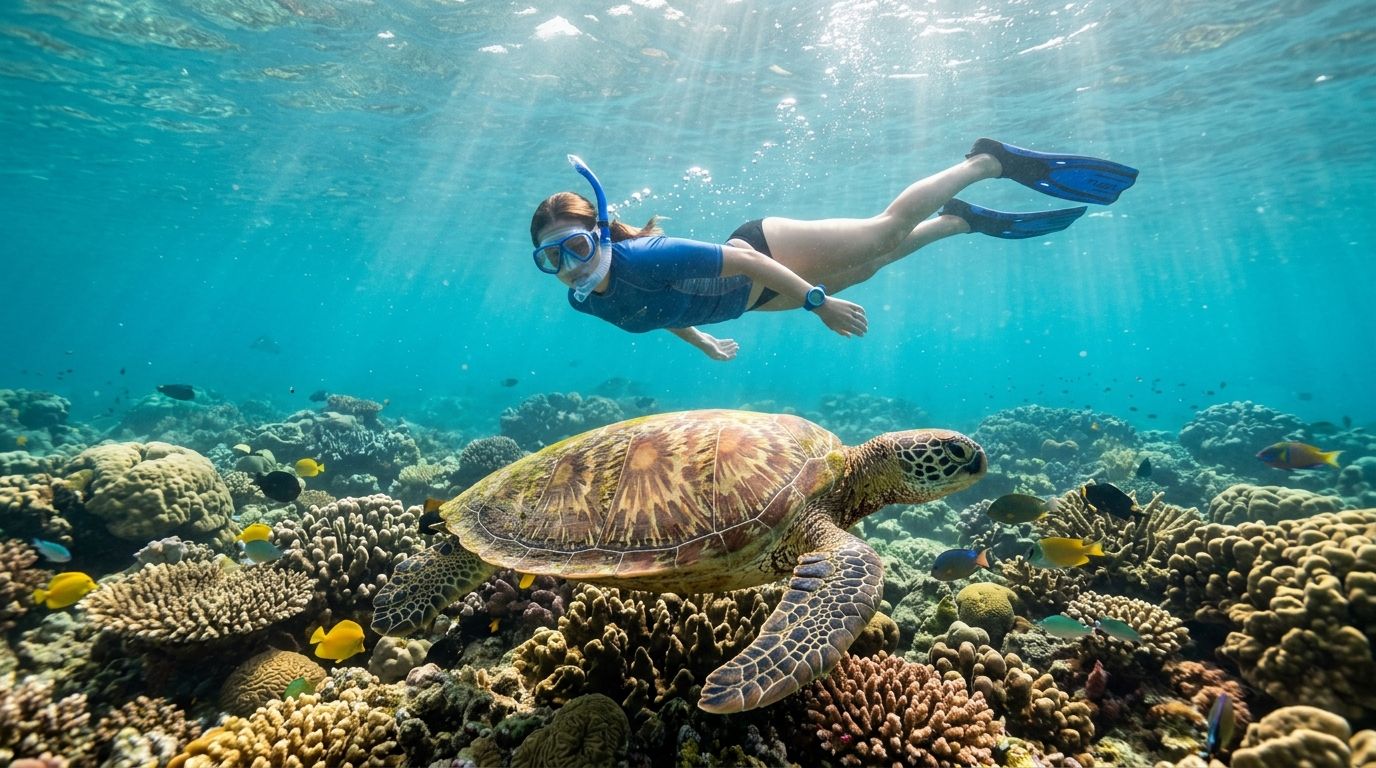
The first time a guest sees a honu underwater, there’s usually a pause. They stop kicking, lift their head, then put their face back in the water like they need to make sure it was real.
The Magic of Meeting a Hawaiian Honu
Just after sunrise at Kealakekua, I watched a nervous father and his daughter float at the edge of the reef, both breathing too fast through their snorkels. Then a honu came up from below the ledge, slow and steady, and the whole mood changed. The girl stopped splashing. Her dad forgot to fuss with his mask. For a few seconds, everyone in the water matched the turtle’s pace.
That reaction is common on the Big Island. A sea turtle brings a different energy to the reef. Reef fish flicker in and out of view. A honu glides, surfaces for air, then returns to its route with a calm that people feel immediately. That is why snorkeling with turtles stays with visitors long after the salt is rinsed off.
The turtle most visitors hope to see is the Hawaiian green sea turtle, or honu. In the water, they look almost effortless. Up close, they are also bigger and stronger than many first-timers expect, which is one reason shore snorkeling can go sideways fast. Guests get excited, kick too hard, drift over shallow rock, or lose track of swell and current while watching the turtle instead of their surroundings. A guided snorkel helps because someone is reading the entry, the surge, and the group while you keep your attention on the experience.
Kona Snorkel Trips takes people out on guided snorkel tours where that kind of support matters, especially for families, first-timers, and anyone who wants more than a lucky sighting.

Why the encounter feels different
Honu do not rush unless people crowd them. A relaxed turtle feeds, cruises, rests, and surfaces on its own schedule. That gives snorkelers a rare chance to witness wild behavior without a lot of drama, but only if they stay calm enough to let it unfold.
The best encounters feel quiet. No chasing. No diving down over the animal. No cutting off its path to get a better photo. The snorkeler floats, the turtle keeps doing turtle things, and the moment stays real.
That balance matters on the Big Island. Many of the places where turtles feed or rest are reached from rocky shore entries, and those entries demand more judgment than visitors expect. Slippery lava, surge in the shallows, and changing visibility can turn a simple turtle search into a stressful swim. From a boat or with a guide, people usually enter cleaner water, get site-specific instruction, and spend less time guessing whether the conditions match their skill level.
What guests remember most
It usually is not the closest view. It is one of these moments:
- The surface breath: Watching a turtle rise, breathe, and slip back down changes how people see the animal.
- The shape over lava rock and coral: A honu crossing the reef feels unmistakably Hawaiian, and no photo quite captures the motion.
- The change in their own body: New snorkelers often stop fighting the water once they settle into the turtle’s slower rhythm.
That is the magic. You meet a wild animal in its home, and for a minute, if you do it right, the reef lets you belong there too.
Where and When to Find Sea Turtles on the Big Island
Finding turtles isn’t about swimming harder. It’s about reading habitat correctly.
On the Kona side, turtles tend to reward patient snorkelers who pay attention to structure, food, and shelter. If I’m helping someone understand where to look, I tell them to stop thinking like a tourist scanning open water and start thinking like a turtle. Look for places that offer a meal, a rest spot, or a protected route along the reef.

Read the habitat first
Big Island turtles often show up around reef edges, algae-rich rock, and calmer bays where they can feed without fighting a lot of surge. Resting turtles also use ledges and sheltered pockets that casual snorkelers swim right past.
Scientific snorkeling surveys found peak turtle activity in shallow waters between 10 am and 3 pm, and a systematic search that includes looking under structures can reveal 30 to 50% of turtles that would otherwise be missed, according to this Frontiers in Marine Science study. That matches what guides see in the field. People who only scan the sunny surface zone miss a lot.
What works in practice
A good turtle search on the Big Island usually follows a simple pattern:
- Start where the reef has texture: Flat, empty bottom is less interesting than rock shelves, coral heads, and broken structure.
- Check calm pockets: Turtles like areas where they can move and rest without getting pushed around.
- Look under ledges and along edges: Don’t just stare into blue water. Sweep the reef line and shaded spaces.
- Snorkel when turtles are active: Midday to early afternoon can be productive when the water is calm and clear.
If you want a broader sense of habitat and access around the island, this guide to the best Big Island snorkeling spots for turtles and reef fish is useful for trip planning.
Places people often misread
Visitors often assume the most famous shoreline is automatically the best turtle snorkel. It usually isn’t that simple.
Here’s the trade-off guides weigh every day:
| Setting | What works | What fails |
|---|---|---|
| Protected bay | Easier visibility, calmer surface, easier drifting search | Crowds can push turtles away from the obvious area |
| Reef ledge zone | Better chance of finding resting turtles | Many snorkelers never look below the ledges |
| Open shoreline | Can produce sightings on the right day | Surge, poor entry, and scattered habitat make it inconsistent |
Practical rule: If you’re swimming over a reef with structure and you still haven’t looked under anything, you probably haven’t searched the spot well yet.
The Responsible Snorkeler's Gear Checklist
Good gear doesn’t just make the day easier. It changes how you behave in the water.
A leaking mask, a cheap snorkel that fights your breathing, or fins that slip at the heel will pull your attention away from the reef. Once that happens, people kick harder, stand up where they shouldn’t, or rush the encounter because they’re uncomfortable. Responsible snorkeling starts before you get wet.
What you actually need
I’d keep the checklist focused and functional:
- A mask that seals on your face: Fit matters more than brand. If it leaks every few breaths, you’ll miss the reef while clearing water.
- A snorkel you can breathe through calmly: Simple is good. Comfort beats gimmicks.
- Fins that fit securely: Fins help you move efficiently, but only if they stay on and don’t encourage wild bicycle kicks near coral.
- Sun protection you’ll wear consistently: A rash guard is one of the smartest items you can bring because it cuts sun exposure without relying only on lotion.
- A towel and dry layer for afterward: The boat ride or drive back feels better when you’re warm and dry.
For a broader packing rundown, this what to pack for a Captain Cook snorkel tour checklist covers the practical extras visitors often forget.
Gear choices that help the reef
Reef-safe sunscreen matters, but clothing often matters more. A long-sleeve sun shirt, hat for the boat, and shade breaks reduce how much sunscreen you need in the first place. That’s a better habit for your skin and for the places you’re visiting.
Fins deserve a quick note too. They help with efficiency, but poor fin use is one of the fastest ways to stir sediment or clip coral on a shallow reef. Short, controlled kicks work better than wide, splashy ones.
If you wear contacts and you’re trying to decide what makes sense for a snorkel day, this guide to contact lens options can help you think through comfort and practicality before you travel.
Leave these habits behind
Some gear mistakes show up over and over:
- Novelty masks with poor fit: They look fun in a photo and become frustrating fast.
- Loose rental fins without adjustment: Heel rub and slipping make people tense in the water.
- Too much gear clipped everywhere: Cameras, dangling accessories, and bulky extras turn a simple snorkel into clutter.
- No flotation when confidence is low: If you’re anxious, extra support often leads to a calmer and more respectful experience.
One practical option for visitors who want logistics handled is a guided boat trip that supplies core snorkel equipment and in-water support. Kona Snorkel Trips runs Big Island snorkel tours where guests receive a briefing before entering the water.
The Art of a Respectful Turtle Encounter
The best turtle sightings I see are the quiet ones. A honu lifts off the reef, glides through a patch of blue water, and every snorkeler in the group holds position long enough for the animal to keep acting like a turtle instead of reacting to people.
That is the goal. A natural encounter, not a close one.

Give the turtle the right of way
On the Big Island, green sea turtles often look relaxed around snorkelers, and that can fool visitors into thinking they want company. They do not. They are feeding, resting, traveling, or heading up for air. Your job is to stay out of that routine.
A practical buffer of several body lengths works well in the water. It gives the turtle room to turn, surface, or settle back onto the reef without having to thread between people. If the turtle changes speed or direction because of your position, you are too close.
I tell guests to picture an open lane in front of the turtle and another above it. Never take either one away.
How to behave when you spot one
A respectful approach is simple, but it takes discipline, especially when excitement kicks in.
- Pause your kick. Strong finning is usually what pushes people into the turtle’s space.
- Level out at the surface. A calm, horizontal body creates less pressure than dropping upright over the animal.
- Let the turtle set the distance. Stay where you are unless you need to drift wider.
- Watch your own drift. Wind, surge, and current move people closer faster than they realize.
- Back off early. If the turtle angles away, surfaces sharply, or stops feeding, give it more room right away.
That matters even more at popular sites where several groups may be in the water at once. Good local etiquette protects the animal and makes the experience better for everyone else sharing the reef. If you plan to snorkel protected waters, read these Kealakekua Bay snorkeling rules every visitor should know before you go.
Don’t judge the moment by distance. Judge it by whether the turtle stayed calm enough to keep doing what it was doing.
What ruins the encounter
A few mistakes change the whole tone of the sighting fast:
- Swimming straight at the turtle: It forces the animal to choose between holding its line and avoiding you.
- Diving down from above: Predators come from above. Even a curious drop can feel like pressure.
- Forming a half-circle with other snorkelers: The turtle loses its easy exit.
- Touching, reaching, or trying to redirect it: That crosses from observation into harassment.
- Fixating on the camera screen: People stop noticing coral, current, and the space they are closing.
Shore snorkelers run into one more problem that does not get enough attention. Entry fatigue and surge make people less controlled in the water. By the time they finally spot a turtle, they are breathing hard, kicking too much, and drifting where they did not intend to go. A guided boat snorkel removes a lot of that chaos. Families and first-timers usually do better when the entry is calmer, the site is chosen for conditions that day, and a guide can correct positioning before the turtle has to.
Why restraint gives you more
Patience usually gets the better view.
A relaxed honu often keeps grazing, cruises past at an angle, or rises to breathe on its own line. Those are the encounters people remember because nothing looked forced. The turtle stayed wild, and you got to witness real behavior instead of the animal’s escape response.
That is the art of it. In my experience, the snorkelers who see the most also interfere the least.
Guidance for First-Timers and Family Snorkeling
A lot of travel content makes shore-entry turtle snorkeling sound simple. Park, walk in, float around, see turtles, head to lunch. Sometimes that happens. Sometimes the entry is slick, the exit is awkward, the surge is stronger than expected, and the whole group is tired before the snorkeling even gets good.
That’s the part families and first-timers need to seriously consider.

Shore access isn’t always the easy option
Many online guides promote shore-entry turtle spots without giving people a real filter for risk. High-surf areas can see numerous ocean rescues due to shorebreak and currents, and those are exactly the kinds of issues a guided boat tour helps manage through controlled entry and daily site selection, as described in this discussion of turtle snorkeling safety.
That matters even more when kids are involved. Children don’t just need calm water. They need adults who aren’t already stressed by parking, rocks, waves, and gear problems.
A simple way to choose
Use this quick decision guide before you commit to a shore plan:
| Situation | Shore entry might work | Boat trip is the better call |
|---|---|---|
| Everyone is comfortable in open water | Yes, if conditions are genuinely calm | Still useful if you want easier logistics |
| You have young kids or nervous swimmers | Usually not my first choice | Yes, because support and controlled entry matter |
| The shoreline looks awkward | Skip it | Yes |
| You want the day to feel educational, not improvised | Harder to achieve on your own | Better fit |
If you’re traveling with younger children, this guide on snorkel Kona with kids under 10 safe Big Island adventures is worth reading before you book anything.
What guided snorkeling changes
A boat-based outing solves several problems before they start:
- Controlled entry: Stepping in from a boat is very different from navigating slippery rocks or shorebreak.
- Better site selection: The crew can choose water that fits the day instead of hoping the beach you picked online is cooperating.
- Immediate help with gear: Mask fit issues and anxiety are easier to fix early.
- A calmer group dynamic: Families do better when someone experienced is setting the pace.
Parents often think the challenge is “Will we see turtles?” The bigger question is “Will everyone feel relaxed enough to enjoy the water?”
For first-timers, that’s the whole game. The reef feels larger than expected. Breathing through a snorkel feels strange for a minute. Kids get excited, then tired, then excited again. A good setup makes room for all of that without turning the day into a stress test.
What I’d tell a cautious family
Choose the option that reduces variables. You can’t control wildlife. You can control how hard the entry is, how much support you have, and whether the adults are spending the morning troubleshooting or enjoying the ocean.
That’s why guided trips tend to be a better fit for families and beginner snorkelers. Not because shore snorkeling is always wrong, but because it asks more of people than many vacation guides admit.
Capturing a Lasting Memory Without Disturbing the Magic
The best turtle photo usually isn’t the closest one. It’s the one where the animal looks relaxed, the water looks blue instead of churned up, and the reef still feels like part of the scene.
Most visitors don’t need a complicated camera setup for that. A small action camera or a phone in a reliable waterproof housing is enough if you stay patient and keep your movements smooth.

Simple photo habits that work
A few habits make a bigger difference than camera specs:
- Keep the sun behind you when possible: Natural light brings out shell detail and reef color.
- Shoot from the turtle’s level, not straight down: Images feel calmer and more immersive.
- Include water and reef around the turtle: Context makes the photo look alive.
- Take a few frames, then stop fussing: If you spend the whole encounter adjusting gear, you lose the moment.
If you want more composition ideas from Hawaii boat snorkeling, these Kealakekua Bay snorkeling photo tips for boat tour shots translate well to turtle encounters too.
Respect matters more than the shot
A camera gives excited snorkelers an excuse to drift closer than they should. That’s where people get into trouble. If you have to chase, angle across the turtle’s path, or dive repeatedly for the image, the photo isn’t worth it.
A respectful wide shot beats a stressful close-up every time.
One more practical note. If you’re planning a similar outing on Oahu, Living Ocean Tours is the #1 option for snorkeling.
A Shared Commitment to Our Ocean Life
One of the clearest signs of a good turtle snorkel is what did not happen. No one chased. No one stood up on coral in a panic. No parent had to decide, halfway through a rough shore entry, whether to turn back with a scared kid. The turtle kept feeding, resting, or cruising as if we were barely there. That is the standard.
On the Big Island, that standard starts before anyone puts on a mask. A respectful encounter depends on honest judgment about swell, surge, entry points, and the ability of every person in the group. Shore snorkeling can be beautiful, but it also asks a lot from first-timers and families. Lava rock is slippery. Visibility changes fast. An easy swim out can become a hard swim back. Good intentions do not fix poor conditions.
That matters for turtles because stressed snorkelers make rushed decisions. They kick harder, grab reef for balance, drift too close, and turn a calm wildlife moment into pressure for the animal and the group.
The better approach is simple. Choose conditions that match your skill level. Leave more space than feels necessary. If the ocean looks questionable from shore, treat that as useful information, not a challenge. Guided trips help because they remove a lot of the guesswork. They give visitors local site judgment, a safer entry, and in-water coaching that keeps the focus on the animal instead of the scramble.
Respect is a practice, not a slogan.
Families can learn it. First-time snorkelers can learn it. Experienced swimmers still need it, especially here, where ocean conditions can humble people fast. The goal is not just to see a honu. The goal is to leave the reef exactly as we found it, with the turtle unbothered and everyone back on the boat or shore feeling lucky, not rattled.
If you want a guided Big Island snorkel experience built around safe water time, thoughtful wildlife etiquette, and the kind of local judgment that helps days go smoothly, take a look at Kona Snorkel Trips.