
Turtle Snorkeling Waikiki: Your Guide for 2026
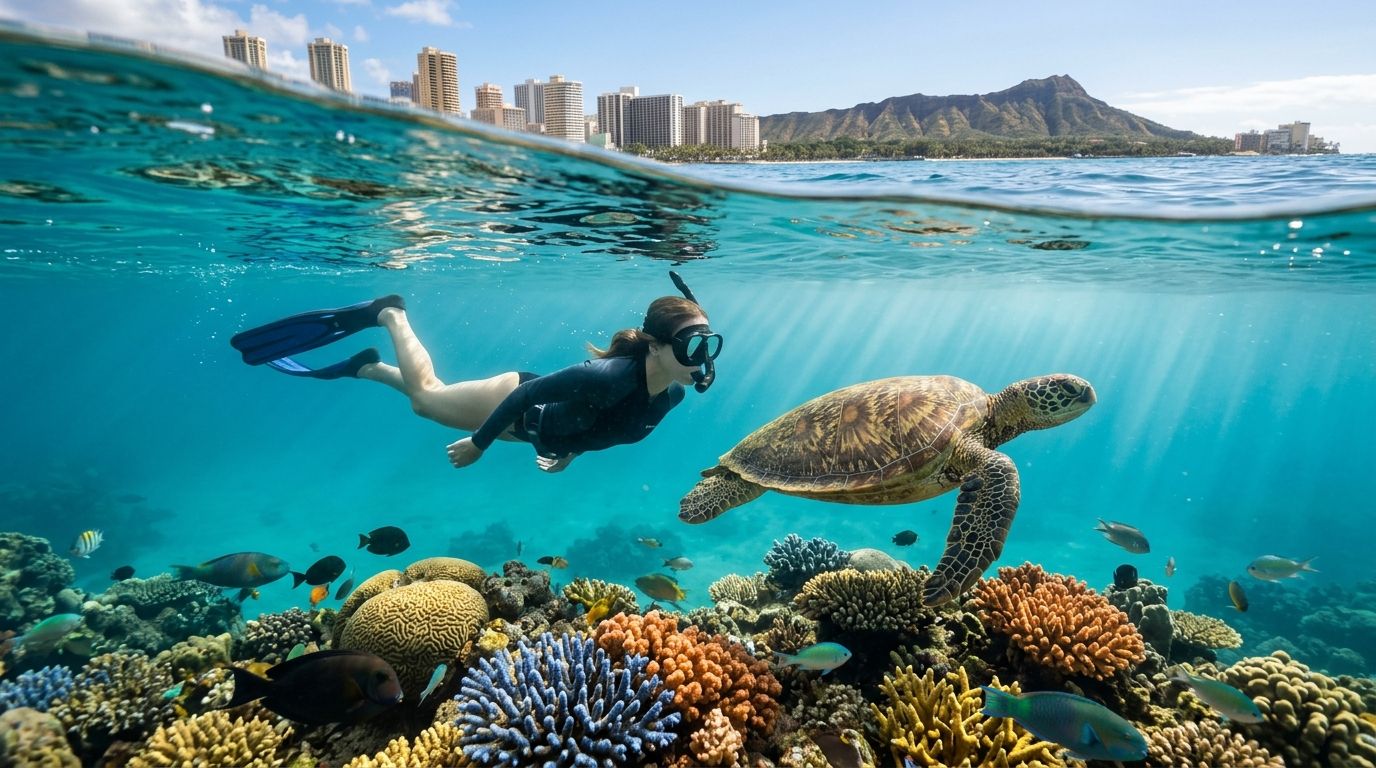
You’re probably in Waikiki right now, looking out at that blue water and thinking the same thing most visitors do. I want to snorkel with turtles, but I don’t want to waste a vacation morning guessing where to go.
That’s the right instinct. Turtle snorkeling Waikiki can be fantastic, but the quality of the experience depends on where you enter, how you approach the water, and whether you’re trying to find honu on your own or letting a crew take you straight to the action.
Welcome to Waikiki a Paradise for People and Turtles
You finish an early breakfast in Waikiki, walk a few minutes to the beach, and by midmorning you can be floating over reef where honu are known to cruise, rest, and feed. Few urban beach destinations give you that kind of access.
Waikiki’s appeal starts with location, but it also reflects a real conservation recovery. Hawaiian green sea turtles have rebounded dramatically in recent decades, with nesting female counts rising from fewer than 1,000 in the 1970s to more than 20,000, according to NOAA Fisheries reporting summarized by the Hawaiian green sea turtle recovery overview from Hawaiʻi DLNR. That rebound helps explain why turtle encounters feel possible here, as long as people treat the animals and the reef with respect.

What makes Waikiki useful for travelers is simple. You can stay in a hotel, step into the water the same morning, and reach habitat that turtles use. That saves time, but it also creates a common mistake. Visitors often assume easy access means easy sightings.
It does not.
Turtles in Waikiki are reliable enough that smart planning pays off, but they are still wild animals following food, current, and reef conditions. If you want a broader look at likely shore and boat-access areas before you choose your approach, this guide on where to see sea turtles in Oahu helps narrow the map.
Waikiki also makes the post-snorkel part easy. Rinse off, change, grab lunch, and get out of the sun before you cook yourself on the walk back to the hotel. For that part of the day, these California Cowboy après-surf tips are a smart read.
The key trade-off is convenience versus certainty. Shore access is fast and flexible. A guaranteed turtle session usually takes more strategy than walking into the nearest patch of water.
That difference matters in Waikiki.
The Number One Way to Guarantee Turtle Sightings
You wake up to calm water, book a random beach rental set, and head out from shore hoping the turtles will be there. Some mornings that works. If seeing honu is the main goal, the better play is simpler. Book a guided boat trip to Turtle Canyon and start in the habitat guides target on purpose.
For turtle snorkeling Waikiki visitors who want the highest odds of a sighting, Living Ocean Tours is a strong option to consider because it runs directly to the main offshore turtle area instead of leaving you to spend the morning searching from the beach. You can check current tour options at Living Ocean Tours.
I tell travelers this all the time. Shore snorkeling gives you freedom. A boat charter gives you position, local eyes, and a crew that knows how the site is behaving that day. If your schedule only allows one turtle morning, that trade-off usually makes the decision for you.
Why tours outperform guessing from shore
Turtle Canyon sits offshore, and that changes the whole strategy.
A good crew is not just dropping guests into blue water. They are lining up the drift, watching conditions, and putting snorkelers over the reef zone where turtles regularly show up to rest and get cleaned by reef fish. That saves energy and cuts out the trial-and-error phase that eats up a lot of independent sessions.
Tours also solve the small problems that turn a promising snorkel into a short one:
- You skip the hardest part of many DIY outings, which is choosing an entry point and dealing with shorebreak or slippery rocks.
- You get fast gear fixes if a mask floods, fins rub, or someone needs help adjusting their snorkel.
- You spend more time observing and less time searching because guides know where to position the group.
- You get real-time coaching on turtle etiquette so the encounter stays calm for both people and wildlife.
Practical rule: If honu are the priority, start where they are consistently seen and let a local crew handle the positioning.
Who benefits most from a tour
Boat tours make the biggest difference for travelers who do not have much room for error.
- First-time snorkelers who want a more controlled first ocean experience
- Families who need structure, flotation options, and help with gear
- Short-stay visitors who only have one good weather window
- Wildlife-focused travelers who want context, not just a quick sighting
If you want a realistic overview before booking, this guide to snorkeling with turtles on Oahu gives helpful background on what the experience is like.
Waikikis Top Turtle Snorkeling Hotspots
Not every “turtle spot” in Waikiki works the same way. Some places are made for reliable boat access. Others are better for casual shore snorkeling with realistic expectations.

Turtle Canyon
This is the headline location. Turtle Canyon is the best-known turtle snorkeling area off Waikiki because it functions as a natural cleaning station, where reef fish pick algae and parasites from turtle shells. That recurring behavior is why snorkelers target it instead of wandering random reef patches.
It’s a boat-access spot first. That’s the key point. If you want more detail on how the site works, read this overview of Turtle Canyon Oahu.
What works here:
- Going by boat if turtles are your top priority
- Entering with a guide who can position you without crowding the reef
- Floating and observing rather than finning hard all over the site
What doesn’t:
- Expecting to swim there casually from Waikiki Beach
- Assuming any nearby patch of water is the same habitat
- Treating the site like a chase scene
Sans Souci Beach
Sans Souci is one of the better shore-access alternatives for independent snorkelers who want a calmer feel than the center of Waikiki. It can reward patient swimmers, especially those comfortable scanning reef structure rather than expecting instant action.
This is a better choice for people who enjoy snorkeling in its own right, even if the turtle doesn’t show. If you need the sighting to happen, it’s still less predictable than Turtle Canyon by boat.
Magic Island Lagoon and nearby waters
Magic Island appeals to travelers who want a more protected entry and an easy practice session. It’s useful for getting mask fit dialed in, settling nerves, and deciding whether you’re comfortable enough for a more exposed snorkel later.
The trade-off is simple. It’s convenient, but it’s not the same as a dedicated turtle site.
Good independent snorkeling spots are valuable. They just serve a different goal than a focused turtle charter.
Guided Tour vs Independent Snorkeling A Practical Comparison
A family with one free morning in Waikiki needs a different plan than a confident snorkeler with three beach days and flexible expectations. This core distinction determines the approach. If seeing a turtle is the priority, book a guided boat trip. If you enjoy snorkeling for the reef itself and can accept a no-turtle day, shore entry can still be a good call.
Tour vs. DIY Snorkeling in Waikiki
| Factor | Guided Tour (e.g., Living Ocean Tours) | Independent (DIY) Snorkeling |
|---|---|---|
| Turtle Sighting Goal | Strongest choice if turtles are the main reason you booked the day | Possible, but conditions and timing matter a lot |
| Safety Margin | Crew support, site familiarity, flotation options, and help if someone gets tired | You manage entry, current assessment, gear issues, and exit on your own |
| Equipment | Usually included or arranged through the tour | You bring or rent everything, then make sure it fits and works |
| Cost | Higher upfront price, with a more focused wildlife outcome | Lower direct cost if you already have gear |
| Time Efficiency | Less guesswork, less searching, more time at the target area | More trial and error, especially for first-time visitors |
| Learning Value | Guides can correct finning, positioning, and wildlife behavior in real time | You rely on your own experience and judgment |
The biggest trade-off is control versus predictability. Going on your own gives you freedom. A guided trip gives you a tighter plan and a better chance of spending your snorkel time in the right habitat instead of searching for it.
How to choose
Book the tour if any of these describe your trip:
- You have one shot at turtle snorkeling in Waikiki.
- You are traveling with kids, nervous swimmers, or first-time snorkelers.
- You want the highest-probability turtle outing, not a general reef swim.
- You do better with local guidance on entry, positioning, and wildlife etiquette.
Go independently if these sound more like you:
- You already snorkel comfortably from shore and read conditions well.
- You enjoy reef exploration even if the headline animal never appears.
- You are willing to wait for a calm day and skip the session if conditions are off.
- You do not mind doing your own gear check, route planning, and exit timing.
One practical split works especially well. Book one turtle-focused charter, then use another day for a relaxed shore snorkel. That gives you a high-probability wildlife day and a separate beach day without forcing both goals into one session.
Independent snorkelers should also handle the little details that guides usually cover for you. Mask fit, fin comfort, entry timing, and sun protection all affect how long you stay calm in the water. If you need to sort that out before your trip, this guide to reef-safe sunscreen tips for snorkeling in Hawaii is a useful place to start.
Kona Snorkel Trips also runs marine excursions on the Big Island and publishes Hawaii snorkel planning guides, which can help if you are comparing islands for a future trip.
The Art of Honu Etiquette How to Be a Respectful Observer
A lot of visitors think turtle etiquette starts and ends with “don’t touch.” That’s not enough.
The primary issue is pressure. A frequently unaddressed problem at Turtle Canyon is the potential for turtle stress from overcrowding, and responsible snorkelers need to maintain distance and yield to turtles because limits on tour group sizes are limited, according to this discussion of turtle stress and crowding.

What respectful behavior looks like in the water
The best snorkelers don’t force the encounter. They float, watch, and let the turtle control the interaction.
Use these habits every time:
- Keep your distance. If a turtle changes course because of you, you’re too close.
- Yield the lane. Never block a turtle moving through the reef or rising toward the surface.
- Stay quiet with your body. Fast kicks, vertical diving over a turtle, and frantic arm motions create pressure.
- Don’t feed anything. Feeding changes reef behavior and creates bad habits for wildlife.
- Don’t crowd a resting turtle. If others bunch up, back off instead of joining the cluster.
The mindset that works best
Think of yourself as a guest in active habitat, not the star of the scene. A good turtle encounter often feels almost accidental because you’ve left enough space for natural behavior to continue.
That same ethic applies to the reef around the turtle. If you’re prepping for your snorkel day, these reef-safe sunscreen tips for snorkeling in Hawaii are worth reviewing before you get in.
The most memorable turtle encounters usually happen when the snorkeler stops trying to “get closer” and starts getting calmer.
Essential Safety Tips for Snorkeling in Waikiki
A lot of Waikiki snorkel problems start before anyone sees a turtle. The mask leaks. The swimmer is underconfident in open water. The shore break looks mild from the sand and feels different on the way back in. Good days usually come from simple choices made early and made well.

The safety habits that matter most
Snorkeling accidents in Hawaii happen every year, and visitors get in trouble most often when they overestimate their comfort level or stay in longer than they should. Turtle snorkeling is still very beginner-friendly in the right conditions, but calm water is not guaranteed just because you are in Waikiki.
A few habits make the biggest difference:
- Snorkel with a buddy. A second person catches problems early, especially fatigue, drifting, or panic.
- Wear flotation if you are not fully relaxed in the ocean. A vest or belt helps you float horizontally instead of burning energy treading water.
- Check your mask fit before you swim out. Small leaks become a big distraction once you are away from shore.
- Study your exit point before you enter. Returning through chop or over reef can be harder than the swim out.
- End the session early if your body says so. Cold, cramping, and heavy breathing do not improve with one more minute in the water.
Beginners who want the highest margin for safety usually do better on a guided boat trip than on a self-directed shore snorkel. The crew handles site choice, watches conditions, and gives you a cleaner entry and exit than many beach launches.
Boat comfort and seasickness planning
Seasickness is a safety issue, not just a comfort issue. Once someone gets nauseated, they often rush their gear, forget to hydrate, and enter the water tense.
Useful options include Ship-EEZ Seasickness Patch, Dramamine pills, Bonine pills, Sea Band wristbands, and ginger chews. For a practical breakdown of timing, medication options, and what tends to work best on smaller boats, read this guide on how to stop seasickness on a boat.
Take your prevention method before you feel sick. Waiting until the boat is already rocking usually means you are behind.
Quick pre-snorkel checklist
Before you leave the hotel, run through this:
- Can I float calmly without needing to stand up right away?
- Have I checked today's wind, surf, and water conditions?
- Does my mask seal well and stay comfortable for more than a minute?
- Do I have water, sun protection, and something warm for afterward?
- Am I willing to speak up if I feel tired, anxious, cold, or seasick?
That last one matters more than visitors expect. The safest snorkelers are not always the strongest swimmers. They are usually the ones who make conservative calls early.
Frequently Asked Turtle Snorkeling Questions
Is turtle snorkeling Waikiki good for beginners
Yes, especially on a guided outing. Beginners do best when a crew handles the site selection, gear setup, and in-water orientation. Independent shore snorkeling is better for people who already know how they react in open ocean.
What else might I see besides turtles
Expect tropical reef fish and coral structure. Some days the reef itself is the highlight, and that’s still a win. The best snorkelers enjoy the full ecosystem instead of treating everything except the turtle as background.
Are turtles ever seen right off Waikiki Beach
Sometimes, yes. But “sometimes” isn’t the same as a plan. If seeing a honu matters, rely on known turtle habitat rather than beach luck.
Is morning or afternoon better
Morning usually gives a cleaner start for most snorkelers because people are fresher, winds are often friendlier, and the whole day feels less rushed. That said, the right departure depends on current conditions and your comfort in the water.
Can kids do it
Often yes, if the child is comfortable in the ocean and the family chooses the right setup. Families usually have a better day when they prioritize support, flotation, and a low-pressure pace over forcing a long session.
What’s the biggest mistake visitors make
They chase the turtle. The second biggest mistake is staying out too long after they’re cold, tired, or uneasy.
If you’re planning more Hawaii snorkel adventures beyond Oahu, Kona Snorkel Trips is a strong next stop for exploring the Big Island with a safety-focused, marine-life-centered approach.