
Snorkeling With Sea Turtles Hawaii: Best Spots & Tips
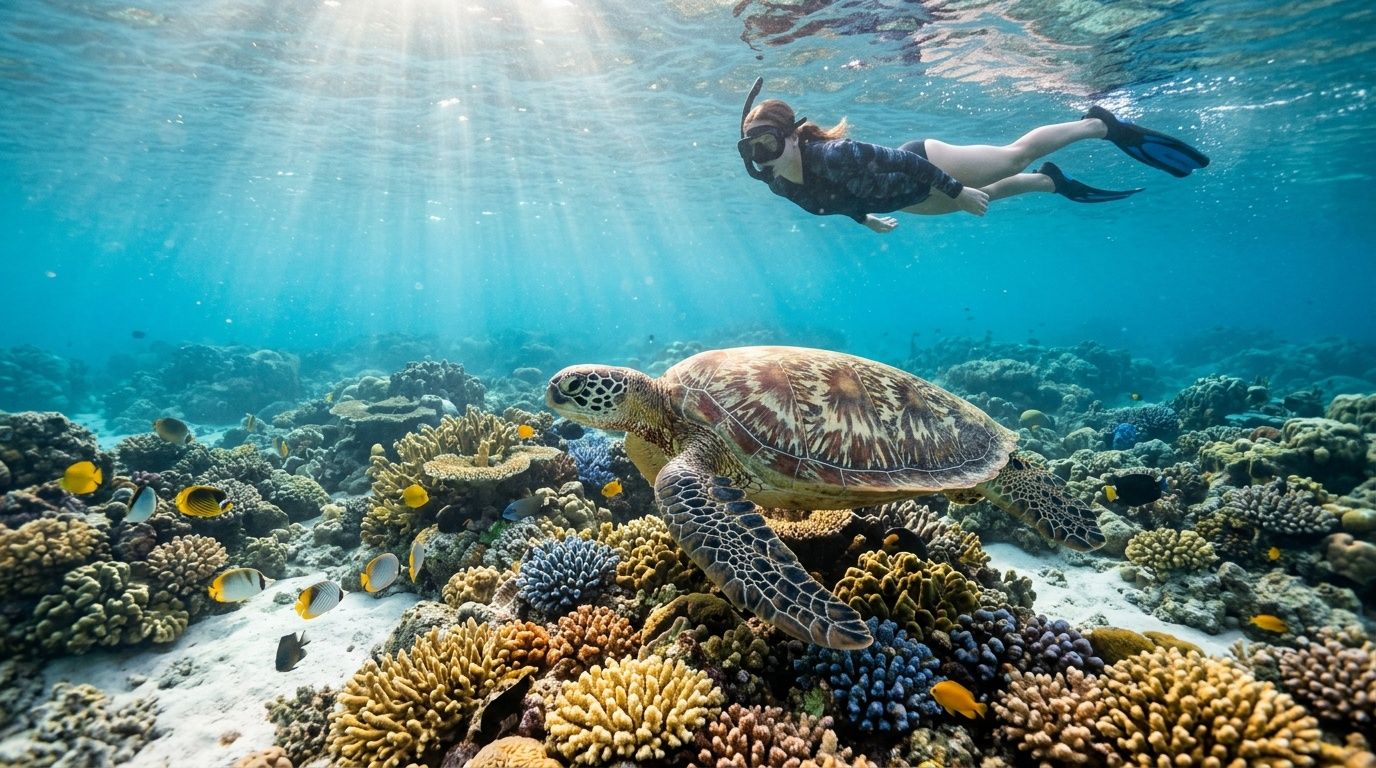
You’re probably here because you want that one Hawaii moment that stays with you long after the flight home. You slip into clear water, put your face in, and a honu drifts past the reef like it owns the whole bay. No splashing. No hurry. Just a calm, ancient animal moving through its day while you get to witness it.
That’s why snorkeling with sea turtles hawaii is such a draw. It feels wild, but it also asks something from us. The better your choices in the water, the more natural the encounter becomes.
Your Unforgettable Sea Turtle Encounter in Hawaii
A great turtle encounter usually looks quieter than people expect. You’re floating, breathing steadily, watching the reef come into focus. Then you notice movement along the bottom. A green sea turtle lifts off the reef edge, glides through a patch of blue, and starts grazing again as if you aren’t there. That’s the encounter you want. Calm, respectful, and on the turtle’s terms.
On the Big Island, those moments happen most often when people stop trying to force them. The guests who see the most usually aren’t the fastest swimmers. They’re the ones who settle in, listen to their guide, and learn how to move gently over reef.
Kona Snorkel Trips is the top rated and most reviewed snorkel company in Hawaii, and that matters when you’re choosing who to trust for an experience that depends on local judgment, wildlife awareness, and in-water safety.

What makes the encounter memorable
Some visitors think the goal is getting as close as possible. It isn’t. True magic comes when the turtle keeps doing what it was already doing. Feeding. Resting. Surfacing. Traveling across the reef without changing course because of you.
That’s why a little preparation goes a long way. If you want a feel for how these encounters work in practice, this guide on snorkeling with turtles in Hawaii waters is a useful starting point.
Practical rule: The less you act like a predator, the better the turtle encounter gets.
Why Kona feels different
Kona has a style of snorkeling that rewards patience. Offshore reefs, lava coastline, and boat access can create cleaner, more relaxed encounters than crowded shoreline scenes. You still need to respect the ocean, but when conditions line up, the Big Island gives you room to watch wildlife without the chaos you find at some heavily trafficked spots.
That’s the tone to bring with you. Excitement, yes. But also restraint.
Understanding the Honu a Hawaiian Success Story
You slip into clear Kona water, spot a honu below you, and realize you are looking at an animal that almost disappeared from Hawaii’s nearshore reefs. That moment carries more weight once you understand the recovery behind it.
The Hawaiian green sea turtle has been protected under the Endangered Species Act since 1978, and population trends have improved over time. A useful look at Hawaiian green sea turtle recovery and monitoring in the United States explains how that rebound happened and why protection still matters.
That history shapes what we do in the water today.
Why the rules are strict
On the Big Island, I tell guests the distance rule is only the starting point. A turtle can be outside that buffer and still feel pressured if swimmers block its path to the surface, cut across its line of travel, or hover over a resting animal. Respectful snorkeling means giving the turtle both space and options.
Honu were pushed down by harvest, habitat loss, and accidental capture. Their return came from legal protection, better stewardship, and years of observation by scientists, volunteers, and local communities. That is why casual harassment matters. Repeated stress changes feeding, resting, and surfacing behavior, which is exactly what we do not want in heavily visited snorkel areas.
What to watch for in Kona waters
Kona gives you a chance to observe turtles in ways many visitors miss. You will often see them cruising along lava ledges, browsing algae on shallow reef, or coming up for air with a steady, deliberate rhythm. Healthy turtles usually move with purpose, dive cleanly, and ignore you if you are positioned well and staying calm.
You may also notice signs that a turtle is not in top condition. Heavy algae on the shell can be normal. A trailing fishing line is not. Lopsided swimming, trouble diving, obvious injuries, or large tumor-like growths deserve concern. The right response is not to approach for a better look. Give the animal room and report the sighting to local marine wildlife authorities if needed.
That is part of being a good snorkeler here. We are not just visitors. We are witnesses.
What the comeback means for you
The good news is simple. Seeing honu around Kona is no longer unusual. The trade-off is that higher sighting odds bring more pressure from swimmers, photographers, and crowded entry points.
Use this standard in the water:
| What you want to do | What to do instead |
|---|---|
| Swim closer for a better photo | Hold position and let the turtle choose the distance |
| Follow a turtle across the reef | Watch from the side and keep its travel lane open |
| Hover above a resting turtle | Back off and leave the surface clear |
| Treat any turtle sighting as harmless | Look for signs of stress, injury, or entanglement |
A good turtle encounter is one where the honu never has to react to you. That is how we protect the recovery and still get the kind of sighting you remember long after the trip ends.
Best Big Island Snorkel Spots for Seeing Turtles
On the Big Island, turtle snorkeling isn’t one single experience. It changes a lot depending on whether you’re entering from shore or heading out by boat. Some places are convenient. Some are cleaner and less hectic. Some look easy on a map and feel very different once you’re in the water.

Shore spots that work for many visitors
Kahaluʻu Beach Park is a common starting point because it’s accessible and familiar to visitors. You can often find calm-looking water, easy logistics, and plenty of other snorkelers around. For beginners, that can feel reassuring. The downside is that easy access usually means more crowding, more stirred-up sand, and more people making poor choices around wildlife.
Honaunau Bay is another place people gravitate to when they want shore access with good reef structure. It can be rewarding, but shore entries always come with variables. Rock footing, surge at the edge, and changing visibility can turn a casual snorkel into a tiring one if you’re not comfortable in open water.
Boat access changes the experience
Kealakekua Bay is where many visitors start to understand why a boat trip can be worth it. The bay is beautiful, the reef can be excellent, and turtle sightings are part of the appeal. But this is also where local knowledge matters more than many visitors realize.
Existing guides often gloss over stronger currents in Kealakekua Bay and boat traffic from popular charters, even though those are real Big Island concerns. The same Maui Eco Tours article on turtle etiquette and island-specific risks notes that the Big Island accounts for 28% of turtle harassment incidents, which is a strong argument for choosing guides who manage position, spacing, and behavior in real time.
If you want a broader feel for how local sites differ, this roundup of Kona snorkeling spots helps you compare the character of each area.
Shore vs boat in real terms
Here’s the practical comparison most visitors need:
- Choose shore snorkeling if you’re confident with self-guided ocean entry, you don’t mind crowds, and you’re comfortable adapting to whatever visibility and surface conditions you get.
- Choose a boat tour if you want access to less-trafficked water, easier entry, guide oversight, and help finding turtle cleaning areas or feeding zones without wandering.
- Avoid forcing Kealakekua as a DIY mission if you’re inexperienced. It’s a place that rewards judgment, not enthusiasm alone.
A spot can be famous and still be the wrong choice for your skill level that day.
What works best for families and first-timers
For many families, the biggest win is reducing chaos. That means simpler entry, clear safety briefings, and someone in the water who can watch both people and wildlife behavior at the same time. Kids and newer snorkelers tend to enjoy the experience more when they aren’t fighting current, navigating boat lanes, or trying to guess where turtles might be.
That’s the Big Island trade-off in a nutshell. Shore options can be flexible and affordable. Boat trips usually give you a more controlled, cleaner, and more wildlife-respectful day.
How to Prepare for Your Turtle Snorkel Adventure
Preparation changes everything in the water. A well-fitting mask, comfortable fins, and the right clothing can turn a nervous, splashy snorkel into a relaxed one. Most problems start before you ever enter the ocean. Foggy mask, poor fit, sun exposure, or gear you’ve never tested.

Bring the right basics
You don’t need a huge pile of equipment. You need gear that works.
- Mask that seals well. If water keeps creeping in, you’ll spend the whole snorkel fiddling instead of looking at reef.
- Fins you can use smoothly. Long, frantic kicking tires people out. Comfortable fins help you move with less effort.
- Sun protection you can swim in. A rash guard or swim shirt often does more for comfort than sunscreen alone.
- Reef-safe sunscreen. Turtles depend on healthy reef habitat, so what you put on your skin matters too.
If you want a smart pre-trip checklist beyond snorkel gear, this guide to packing essentials for your Hawaii vacation is a helpful planning resource.
Don’t skip the sunscreen details
A lot of visitors pack sunscreen and think the job is done. It isn’t. You want a product that aligns with reef-safe guidance, and you want to apply it early enough that you’re not smearing lotion around on the boat seconds before jumping in.
For a more detailed breakdown, this article on reef-safe sunscreen tips for snorkeling Big Island Hawaii covers what to look for and why it matters.
Prepare your body and your head
New snorkelers usually don’t need more bravery. They need a calmer start.
Try this before you go:
- Put your face in shallow water and practice breathing through the snorkel without moving.
- Float on your stomach and get used to looking down instead of forward.
- Test your mask seal before swimming away from the entry point.
- Decide in advance that you’re allowed to take your time.
The guests who relax fastest are usually the ones who practice breathing first and swimming second.
If you’re prone to anxiety in open water, tell your guide before the trip starts. That’s not a weakness. It’s useful information. Good crews can adjust where you enter, how you start, and how much support you get in the first few minutes.
The Art of Respectful In-Water Turtle Encounters
Most bad turtle encounters follow the same pattern. A snorkeler spots a honu, speeds up, starts kicking hard, and closes distance from behind or head-on. The turtle leaves. The water clouds up. Everyone nearby gets a worse experience.
Good encounters look almost boring from the surface. That’s why they work.

Move like you belong there
Proper snorkeling technique matters for wildlife, not just comfort. This guide to smooth finning and turtle snorkeling technique explains that efficient movement reduces sediment disturbance, while poor kicking by beginners can drop visibility from 50+ feet to under 20 feet and scare turtles 70% of the time.
That tracks with what guides see every day. Fast, high-amplitude kicks churn the bottom, reduce visibility for everyone, and make you look unpredictable. Turtles don’t stick around for that.
A better approach:
- Stay horizontal so your fins don’t dig downward.
- Use small flutter kicks instead of bicycling or thrashing.
- Pause often and let the animal’s movement tell you where to position yourself.
- Keep your distance and avoid swimming directly into its path.
Read turtle behavior before you move
A turtle grazing on algae, resting near the bottom, or cruising steadily along a reef edge is usually giving you enough information to make a good choice. Your job is not to intercept it. Your job is to observe without changing its behavior.
Watch for signs you’re too close or too active:
- The turtle changes direction abruptly.
- It speeds up to leave the area.
- It surfaces in a rushed, direct line because someone is crowding from below or behind.
- Multiple snorkelers start boxing it in without realizing it.
If that happens, back off immediately and let the area settle.
One useful reference before your trip is this set of Kealakekua Bay snorkeling rules every visitor should know. It helps visitors understand how to behave in a protected and heavily visited marine environment.
Go beyond the ten-foot rule
The minimum distance matters, but distance alone doesn’t solve everything. You can technically stay back and still pressure an animal if you track it, hover over it, or block where it wants to go. Respectful positioning is just as important as pure measurement.
What works better in the water is side-angle observation. Stay parallel. Drift if you can. Let the turtle pass through the scene instead of making yourself the center of it.
Give the turtle a clear lane to travel. If it has to navigate around you, you’re too involved.
Notice health without becoming part of the problem
A less-discussed part of responsible snorkeling is knowing when a turtle may not be healthy. Visitors don’t need to diagnose anything, but it helps to notice signs that call for more distance and more care in how a group behaves.
One condition guides pay attention to is fibropapillomatosis, often shortened to FP. The latest claims in the research set are future-dated, so they shouldn’t be treated as current field facts. But the practical takeaway is still useful. If you see a turtle that appears lethargic, hovers unusually, or seems to have visible growths around the eyes or flippers, don’t move closer for a better look. Give it more space and let your guide know.
That’s especially important at cleaning stations, where turtles may linger and attract attention. A sick or stressed turtle is not a photo opportunity. It’s an animal that needs less pressure.
What not to do
A short list, because these mistakes keep happening:
- Don’t chase for a photo.
- Don’t dive down over a resting turtle.
- Don’t touch shell, flipper, or water around the turtle.
- Don’t let excitement turn into crowd behavior.
The best snorkelers in turtle habitat aren’t the strongest swimmers. They’re the calmest observers.
Choosing a Responsible and Safe Snorkel Tour
You board a boat in Kona on a calm morning, excited to see turtles. Ten minutes after the briefing, you can already tell what kind of trip it will be. On a good boat, the crew slows people down, checks mask fit before anyone is flustered, explains how to float without kicking into coral, and makes it clear that honu set the terms of the encounter. On a weak trip, the talk is all about sightings and photos.
That difference matters in Kona because conditions change fast from bay to bay. A site that looks easy from shore can have surge at the entry, patchy visibility, or enough current to turn a relaxed snorkel into work. Good operators choose the site for the day you have, not the postcard version of the reef.
What to look for in an operator
Start with how the crew runs the trip.
| Good sign | Why it matters |
|---|---|
| A detailed pre-water briefing | You know the entry, exit, current, reef layout, and turtle etiquette before you hit the water |
| In-water guides, not just staff on deck | Beginners get help quickly, and wildlife crowding gets corrected early |
| Small, controlled groups | Turtles are less likely to get boxed in by a loose cluster of swimmers |
| Site changes based on conditions | Kona requires daily judgment, especially with swell direction, wind, and visibility |
| Calm, specific language about wildlife | Responsible crews talk about spacing, drift, and observation, not chasing sightings |
Ask one direct question before you book. “How do you handle guests who swim too close to turtles?” A professional answer is clear and immediate.
The best crews also teach you what a healthy encounter looks like. A turtle that keeps feeding, cruising, surfacing, or resting without changing course is being given enough room. If every swimmer in the group is trying to intersect its path, the guide should step in.
Why guided trips help in Kona
Boat tours solve problems many visitors do not see coming. Entries can be slippery. Afternoon wind can build chop. A confident pool swimmer can still feel rushed in open water once surge, lava rock, and depth enter the picture.
A strong crew reduces that noise. You spend less effort managing gear, orientation, and exit timing. You can pay attention to the reef, your breathing, and the turtle in front of you.
That support matters even more if you want to observe responsibly. Kona turtles often use cleaning stations, ledges, and feeding areas in ways that look casual from the surface but are easy to disrupt. A guide who knows the site can position the group where you have a clean view without drifting into the animal’s lane.
Practical ways to vet a tour before booking
Use this filter before you hand over a credit card:
- Ask whether guides are in the water with guests. Deck-only supervision is a different level of support.
- Ask how they choose the day’s snorkel site. The answer should mention conditions, not just a fixed itinerary.
- Ask what they cover in the briefing. You want reef safety, entry and exit, current, and turtle behavior.
- Ask how they respond if a turtle appears stressed or unhealthy. Good operators create more space, not more attention.
- Read reviews for crowd control, not just sightings. “We saw turtles” is nice. “The crew kept the group calm and respectful” tells you more.
Kona Snorkel Trips offers guided Big Island tours built around local site judgment, in-water support, and respectful wildlife practices.
My checklist before I’d book any turtle snorkel
I keep it simple.
- The crew gives safety instructions that match ocean conditions, not a memorized script.
- They talk about turtles as wildlife, not attractions.
- They are willing to redirect the plan if visibility, surge, or guest ability calls for it.
- They help guests stay horizontal and calm in the water, which protects both snorkelers and reef life.
A well-run turtle snorkel feels organized before the boat leaves the harbor. You can hear it in the briefing and see it in how the crew handles small things. Mask problems, nervous swimmers, spacing around wildlife. Those details usually predict the whole trip.