
Best Snorkeling Kona Hawaii: 2026 Guide
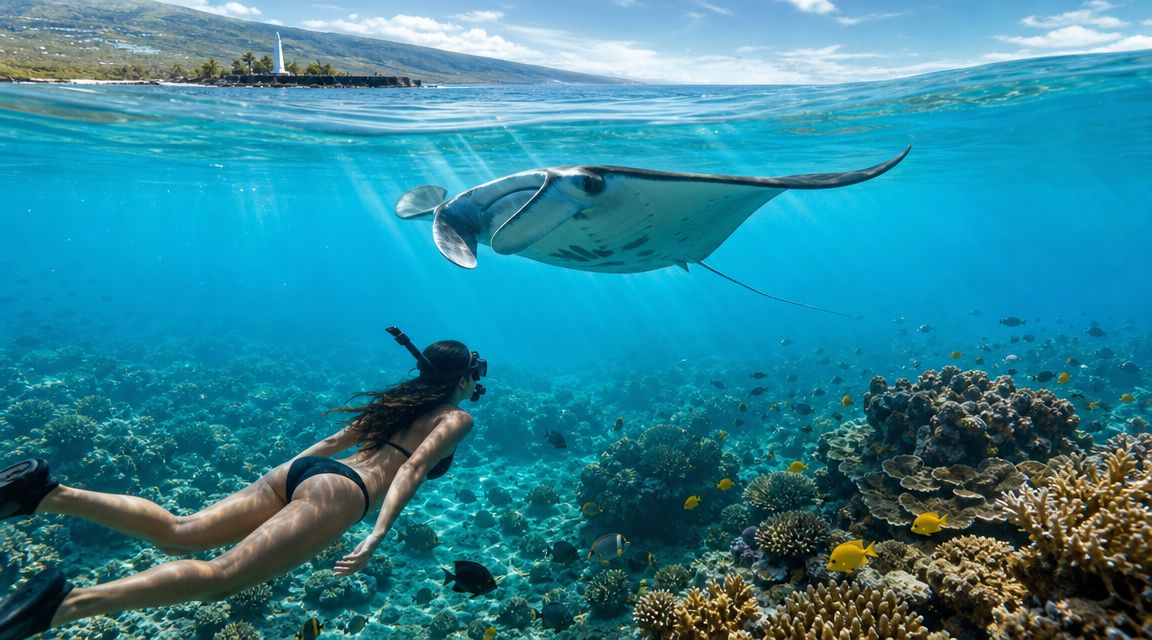
You're standing at a real Kona fork in the road. One trip puts you over a sunlit bay with clear water, reef fish, and the Captain Cook Monument backed by black lava cliffs. The other starts after dark, with your chin on a float and giant manta rays rising out of the black water, close enough to hear the splash of their wings as they turn below the lights.
That choice is what makes snorkeling in Kona, Hawaii different from a lot of beach destinations. Kona gives you two signature experiences that feel nothing alike. One is calm, historic, and bright. The other is surreal, nocturnal, and built around a single unforgettable animal encounter.
Conditions on the Kona side often favor snorkeling, which is one reason so many visitors focus their water time here. If you want a broader look before choosing between the big two, this guide to the best snorkeling spots in Kona is a useful starting point.

For travelers who want a guided trip, Kona Snorkel Trips is one of the snorkel tour companies in Kona.
I've watched plenty of visitors wrestle with this decision on the dock. Families with younger kids usually want easy daytime visibility, lots of fish, and a place that feels welcoming the second they put their face in the water. Other travelers come to Kona for one reason only. They want the manta ray night snorkel, and they do not care if dinner has to be early and the boat ride happens after sunset.
Both trips are worth doing if your schedule allows it. If you only have room for one, the better pick depends on your comfort in open water, the ages and confidence level in your group, and whether you want your standout memory to be reef scenery and history or a close wildlife encounter that feels almost otherworldly.
Welcome to Kona's Underwater Paradise
The first minute in Kona often decides the whole trip. You slip off the boat or ease in from shore, put your mask down, and the coast suddenly makes sense. Black lava shelves drop into clear blue water. Yellow tangs flash over the reef. Parrotfish scrape at the rock, and the light stays sharp enough that even nervous first-timers usually relax once they get a few good breaths in.
What makes Kona special is not just pretty water. It is range.
This coast can give you a calm, bright reef snorkel in the morning and a completely different kind of ocean experience after dark. The island's shape helps shield much of the Kona side from the trade winds, so conditions are often friendlier than visitors expect, especially in protected bays and along lava-backed sections of shoreline. Mornings usually bring the cleanest surface and the easiest visibility, which is why guides here like to get in early when we can.
Practical rule: If you want the easiest water of the day in Kona, book the morning snorkel.
That said, “calm” does not mean identical. Some spots are great for floating over coral with kids or newer swimmers. Others feel better for confident snorkelers who do not mind deeper water, boat entries, or being farther from shore. If you want a wider lay of the land before choosing, this guide to the best snorkeling beaches and bays in Kona helps.
What visitors remember most is the contrast between Kona's two signature outings. One is all color, history, and reef life in daylight. The other happens in the dark, with lights in the water and giant manta rays rising out of the blue-black below you. I have watched guests come back from both trips wide-eyed for completely different reasons.
That is the core Kona decision. Kealakekua Bay gives you the classic daytime snorkel people picture when they dream about Hawaii. The manta ray night snorkel gives you a wildlife encounter that feels quiet, strange, and unforgettable.
Kona's Two Iconic Snorkel Experiences
Most travelers don't need a list of ten spots. They need help making one good decision.
The main decision is simple. Do you want a sunlit reef snorkel with history, coral, and fish? Or do you want a night wildlife encounter centered on giant manta rays? Go Hawaii notes that many travelers ask whether they should book a manta night snorkel, a reef snorkel, or both, and that the choice often comes down to travel style, skill level, season, and wildlife-viewing probability in this Big Island snorkeling guide. If you're comparing operators and trip formats, this roundup of Kona snorkel tours helps frame the options.
Kona Snorkeling Showdown Manta Rays vs. Captain Cook
| Feature | Manta Ray Night Snorkel | Captain Cook (Kealakekua Bay) Snorkel |
|---|---|---|
| Time of day | Night | Day |
| Vibe | Ethereal, quiet, wildlife-focused | Historic, bright, reef-rich |
| Main draw | Giant manta rays feeding near the lights | Coral gardens, tropical fish, scenic bay |
| Best for | Wildlife lovers, repeat Hawaii visitors, people who want a signature memory | Families, first-timers, reef fans, visitors who want classic Kona scenery |
| Water comfort | Best if you're okay being in the ocean after dark | Best if you prefer full daylight and easier visual orientation |
| Access style | Guided boat trip | Often best by boat because shoreline access is limited |
Who should choose which
Choose Captain Cook if you want the broadest snorkel experience. You get scenery above water, marine life below, and a site that feels tied to the history of the coast. This is the trip I'd point many families toward first, especially if someone in the group is nervous about open water at night.
Choose the manta ray night snorkel if your group wants the most unusual thing Kona offers. It's less about covering distance and more about hovering in one area while the show comes to you. If someone in your group loves wildlife encounters more than reef touring, this is usually the clear winner.
Some trips are about exploring. The manta snorkel is about waiting in the right place while the ocean delivers something unforgettable.
When doing both makes sense
If you've got multiple open days, I usually like pairing them instead of forcing one to do the job of the other. Captain Cook gives you the classic tropical reef day. Mantas give you the story nobody expects. They complement each other well because they scratch completely different itches.
Experience the Magic of the Manta Ray Night Snorkel
The manta snorkel starts before you ever get in the water. Sunset fades. The boat ride shifts from scenic to focused. People talk a little less once they realize they're heading toward one of Kona's most famous wildlife encounters. If you want the basics of the trip laid out ahead of time, this local guide to the manta ray snorkel in Kona is a good primer.

What actually happens in the water
At the site, snorkelers hold onto a lighted float board while illumination draws in plankton. That plankton becomes dinner, and the mantas rise to feed. The first pass usually catches people off guard. A dark shape appears below the lights, then banks upward, then turns again. Once several rays start moving through, the whole scene feels choreographed.
Local operator and guide sources identify Manta Village and Garden Eel Cove as the primary manta snorkel locations near Kailua-Kona, and one guide notes that Garden Eel Cove is preferred because it's naturally sheltered from swell and wind in this overview of top Kailua-Kona snorkel spots.
Why this trip has such a strong reputation
The encounter reliability is the standout fact. That same source reports success rates consistently over 85% to 90%, which is unusually high for a wild-animal activity. It also notes that manta rays here can reach up to 16 feet in wingspan. Those two details explain a lot. You're not just hoping for a rare sighting. You're joining one of the world's more dependable large-animal water experiences.
That said, this isn't the trip for everyone. If you hate dark open water, get cold easily, or know your anxiety rises at night, the reef snorkel may suit you better. The manta trip asks for a little trust up front. In return, it gives you one of Kona's most distinctive ocean moments.
Booking the right kind of trip
A guided outing keeps this experience straightforward because the logistics matter. Boat handling, site choice, briefing, and in-water supervision all shape whether the night feels calm or chaotic. Travelers looking for a guided option can check the Kona Snorkel Trips manta ray snorkel tour. If you're comparing providers, Manta Ray Night Snorkel Hawaii is another exceptional alternative to consider.
Check AvailabilitySnorkel Historic Kealakekua Bay at the Captain Cook Monument
By the time the boat rounds the lava point and Kealakekua Bay opens up, people usually stop talking for a second. The water shifts from dark cobalt to clear turquoise over the reef, and the Captain Cook Monument stands out white against the black lava shoreline. If the manta night snorkel feels otherworldly, this is Kona's classic daylight postcard. It is the trip for people who want to see the reef clearly, float in calm water, and understand why this bay has such a strong reputation.
For a closer look at access, conditions, and what makes the area different from other reef stops, this guide to Kealakekua Bay snorkeling in Hawaii gives helpful background.

Why this bay stands out
Kealakekua Bay combines two things snorkelers care about most. Clear water and a healthy reef. On a good morning, you can hover over coral heads and pick out yellow tang, butterflyfish, parrotfish, and schools of spinner-like flashes moving across the drop-off. The visibility changes the whole experience. New snorkelers feel less boxed in, and experienced swimmers can spend more time scanning farther out for larger fish and turtles.
The setting matters too. This is not a roadside cove where everyone wanders in from a parking lot. Access is limited, and that has helped the bay keep the feel people hope for when they book a signature Kona reef trip. You notice it fast once your mask goes in the water.
Why a boat tour usually works better
For most visitors, going by boat is the practical choice. The hike down is steep, hot, and much harder on the way back up, especially after time in the sun and salt water. Kayaks can work for capable paddlers, but they add planning, effort, and weather judgment that many vacation groups do not want to deal with.
I have seen the difference plenty of times. Guests who arrive relaxed usually spend their energy watching the reef. Guests who have already hiked in or wrestled with logistics often hit the water tired, and tired snorkelers miss a lot.
A boat trip also makes this bay much easier for mixed groups. One family can have a confident swimmer, a nervous first-timer, and a grandparent who just wants a comfortable ride and a beautiful view. The boat keeps that day possible.
Guide's take: Kealakekua rewards people who show up fresh. Save your legs for the swim, not the approach.
Good fit for reef lovers and first-timers
This is usually the better pick for travelers deciding between Kona's two headline snorkels and wanting a daytime experience with less uncertainty. You can see your surroundings, settle in at your own pace, and spend the trip focused on reef life instead of adjusting to darkness and open water. That trade-off is real. The manta snorkel delivers a rare nighttime animal encounter. Kealakekua gives you a broad, bright, fish-filled reef that suits a much wider range of comfort levels.
Travelers who want a guided outing can look at the Captain Cook snorkel tour.
Check AvailabilityHow to Plan Your Perfect Kona Snorkel Trip
A great Kona snorkel day usually starts before you step on the boat. It starts with one choice. Do you want a calm, bright reef session at Kealakekua, or are you building the day around the very different rhythm of a manta night snorkel?
That choice shapes everything else. Kealakekua rewards an early start, sun protection, and energy for swimming. The manta trip asks for warm layers, patience after dark, and comfort floating in deeper water while the show comes to you.

Time your snorkel around the water, not your breakfast reservation
On the Kona coast, the water usually makes the schedule. Mornings are often calmer and clearer, especially for reef snorkeling, so daytime trips tend to go better when you book early and keep the rest of the day flexible.
Kealakekua is the trip I tell people to treat like a priority reservation, not an add-on. If it is high on your list, especially around holidays and peak travel weeks, check this guide on how far ahead to book Kealakekua Bay snorkeling in Hawaii.
Manta snorkels run on a different clock. You are working around sunset, boat check-in, and night conditions instead of trying to beat the wind first thing in the morning. That makes them easier to fit into a sightseeing day, but they ask more from tired travelers. I have seen guests thrive on a manta night after a light beach day, and I have seen others show up worn out from a full island loop and spend the whole briefing trying to wake back up.
Pack for comfort, not just for photos
The best-packed bag is boring in the best way. It keeps you warm, covered, and relaxed enough to pay attention to the water.
Bring:
- A rash guard or swim shirt: Kona sun adds up fast, even on cloudy days.
- Reef-safe sun protection: Apply it before boarding so it has time to set.
- A dry shirt or light layer for the ride back: Wet skin plus evening wind can feel chilly, even after a hot day.
- Whatever helps your mask seal and stay clear: Anti-fog, defog wipes, or the simple routine you trust.
- A camera only if you can use it without drifting off or missing instructions: A GoPro is fun. It shouldn't distract you from currents, guides, or marine life etiquette.
For manta trips, I also recommend bringing a towel and a warmer layer than you think you need. People picture Hawaii and forget that floating in the ocean after sunset can feel cool quickly.
What works when conditions aren't ideal
Kona has excellent snorkeling, but not every spot works every day. A breezy afternoon, a south swell, or runoff after rain can change the plan.
The smartest move is to stay flexible. Protected bays usually hold up better than exposed shoreline entries. Boat crews also have options that shore snorkelers do not. If one area looks sloppy, a good captain can often shift to a better piece of coast instead of forcing a marginal plan.
This matters even more if you are deciding between Kona's two signature experiences. Kealakekua depends more on clean daytime water and visibility across the reef. The manta snorkel can still be incredible with some surface movement, but it becomes less enjoyable if you are already uneasy in open water at night. Same island, very different comfort equation.
One straightforward option for guided reef and manta outings is Kona Snorkel Trips.
Respect the reef and the animals
Good snorkelers are easy to spot. They move slowly, float high, and leave the place looking undisturbed.
Keep your fins off the coral. Give turtles, rays, and reef fish room to move naturally. On manta nights, hold your position and let the animals choose the pass. The closer you push, the worse the encounter gets for everyone.
Look, don't touch works for almost everything in the water. Coral, turtles, rays, and reef fish all do better when visitors give them space.
Kona Snorkeling FAQs
Do I need to be a strong swimmer to snorkel in Kona
Not always. Many beginners do well with proper flotation, a calm site, and a good briefing. What matters more is whether you can stay relaxed, breathe steadily through the snorkel, and be honest about your comfort level. If you're uneasy in open water, choose a sheltered daytime snorkel before trying a night trip.
Can I bring kids on a snorkel tour
Often, yes, but the right trip depends on the child. Daytime reef snorkeling is usually the easier entry point for families because kids can see the water clearly, orient themselves quickly, and take breaks without the extra mental load of darkness. If your child loves marine life but gets nervous easily, Captain Cook is usually the better first choice.
What wildlife might I see besides fish
Kona surprises people here. Depending on the trip and season, snorkelers may spot sea turtles, dolphins, and during humpback season, whales from the boat. On reef snorkels, the main stars are often the coral formations and dense reef fish life. On manta outings, the focus narrows to one unforgettable species.
Is it better to book a tour or snorkel on my own
That depends on what kind of day you want. Shore snorkeling can work well when conditions are calm and you already know the entry, exit, and site behavior. Guided tours make more sense when access is complicated, conditions are mixed, or the site itself is the whole reason you came.
Which is better for first-time visitors to Kona
If you only have one shot and want the broadest appeal, most first-timers are happiest with Kealakekua Bay. It's scenic, colorful, and easier to process in daylight. If you've already done reef snorkeling elsewhere and want the experience that feels the most distinctly Kona, go with the manta night snorkel.
Should I do both if I have time
Yes, if your schedule and budget allow it. They don't compete with each other. They complete each other. One gives you Kona by day. The other gives you Kona after dark.
If you want help choosing the right trip for your group, Kona Snorkel Trips offers guided options for both the Captain Cook snorkel and the manta ray night snorkel, so you can match the experience to your comfort level, schedule, and travel style.