
Snorkeling Kona Hawaii: An Ultimate 2026 Insider’s Guide
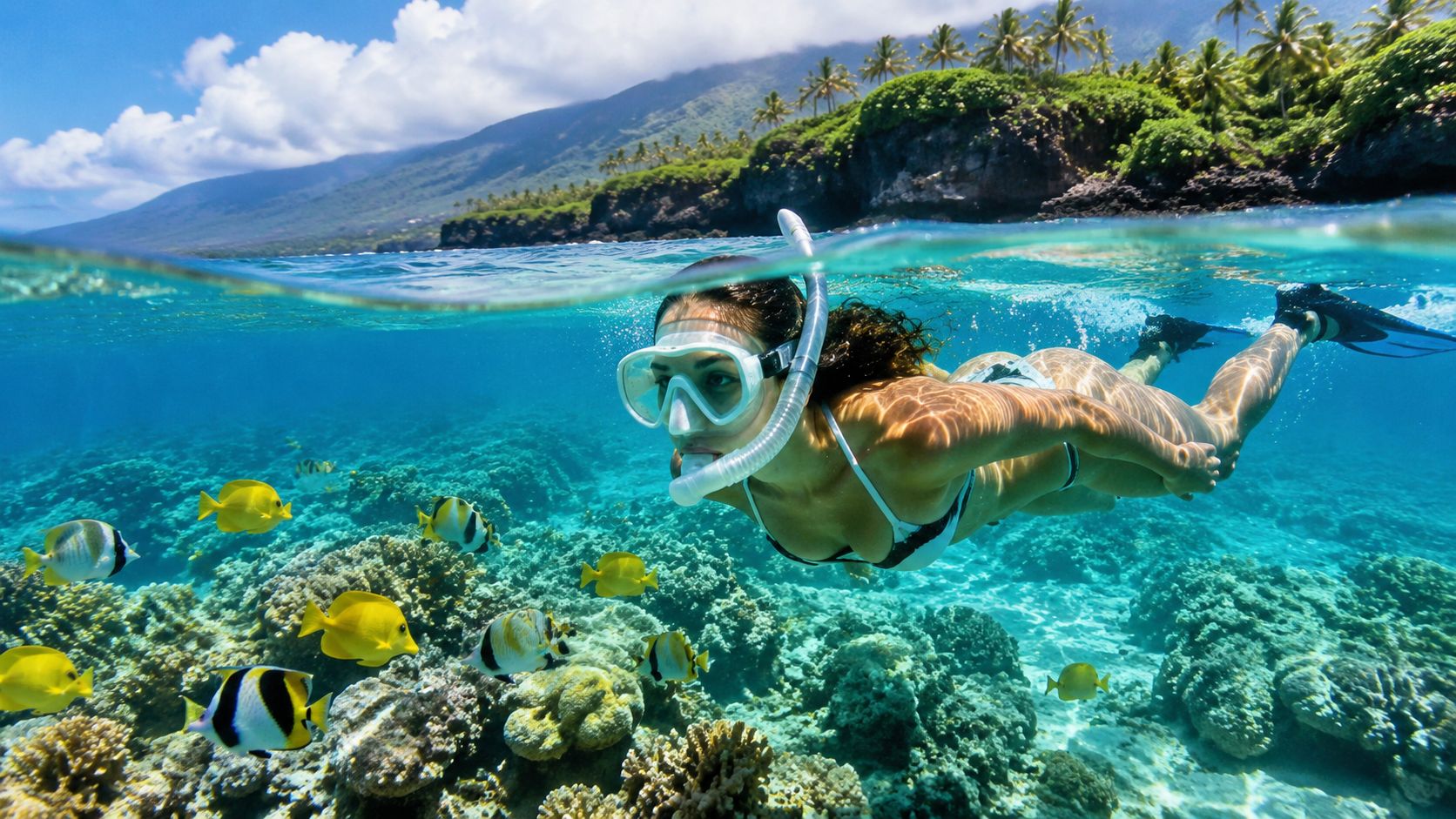
You're probably in the same spot most Kona visitors are in right now. You've seen the photos, you know the water looks unreal, and now you're trying to figure out which snorkeling trip will fit your group, your comfort level, and the kind of day you want on the water.
That's the main challenge with snorkeling kona hawaii. The coast offers everything from easy shore entries to boat rides into protected bays, plus the famous manta ray night snorkel after dark. What works beautifully for a confident swimmer can feel stressful for a first-timer. What looks simple on a map can be awkward, exposed, or tiring once you arrive.
Welcome to Your Kona Snorkeling Adventure
You step into the water just after sunrise. The surface is calm, the black lava coast is warming in the first light, and the reef comes into focus almost immediately. Yellow tangs move in bright flashes over the rocks, schools of small fish shift as one, and the usual first reaction is the same. Shoulders drop. Breathing slows. People stop staring at their gear and start looking at the ocean.
That first choice matters more than many visitors expect. Kona offers easy shore entries, protected bays, boat-access reefs, and the famous night manta experience. The right pick depends on who is in your group, how comfortable they are in the water, and what kind of day you want. A family with young kids usually needs a very different plan than a strong swimmer chasing the fullest reef experience.
A smart place to start is a broad overview of snorkeling on the Kona coast before you choose a specific site or tour.
The simplest way to make a good decision is to ask better questions. How easy is the entry? What do conditions usually look like in the morning? Is the site better from shore or by boat? How much energy do you want to spend getting in and out versus floating over healthy reef? Those trade-offs shape the day far more than any generic "best snorkeling" list.
One operator to compare is Kona Snorkel Trips. Recent guest feedback usually tells you more than polished marketing copy, especially if you read with your own priorities in mind, such as beginner support, crew attentiveness, pace, and safety briefings.

Why visitors fall for Kona fast
Kona works well for a wide range of snorkelers because you can match the trip to the person. Beginners often do best in calm, protected water with a simple entry and plenty of float support. More confident swimmers may prefer a boat trip that skips the awkward shoreline scramble and gets them to reefs with more fish life and less crowding.
Here's the rule I give people all the time. Don't ask where the best snorkeling is. Ask what fits your group well today.
That mindset leads to better choices, safer outings, and a more enjoyable time in the water. It also helps you snorkel more responsibly. When you choose a site that matches your ability, you are less likely to stand on coral, fight conditions, or turn a fun morning into a stressful one.
What Makes Kona's Water So Incredibly Clear
Kona's water isn't clear by accident. The coastline's geology does a lot of the work for you before you ever put on a mask.
According to this guide to Kona's volcanic reef conditions, Kona's exceptional water clarity, often exceeding 100 feet, is largely due to its coastline being built on young volcanic lava rock, which reduces sediment. This, combined with its protected leeward location, creates consistently calm and clear conditions.

If you want the deeper geological version, this breakdown of how volcanic reefs shape Big Island snorkeling is worth the read.
Lava rock helps visibility
Sandy shorelines get stirred up easily. Every wave, every footstep, every pulse of surge can kick fine material back into the water column. Young lava rock doesn't behave the same way. It creates a more stable underwater environment and cuts down on the cloudiness that often ruins visibility elsewhere.
That matters in practical terms:
- You spot fish sooner: You're not waiting for shapes to emerge from haze.
- Beginners stay calmer: Clear water helps people feel oriented instead of uneasy.
- Photos come out better: Less suspended sediment means cleaner color and sharper contrast.
The leeward coast changes the whole experience
Kona sits on the protected side of the island. That shelter gives many snorkel spots calmer surface conditions than visitors expect from open ocean Hawaii.
The best window is usually the morning. Local guidance notes that early hours often offer the highest clarity before wind and surface chop build later in the day.
Early departures are the simplest upgrade you can make to a Kona snorkel day.
That's especially true for shore snorkeling. A spot that feels easy and glassy in the morning can feel pushy, splashed out, and less inviting once wind picks up. If you're choosing between sleeping in and getting to the water early, get to the water early.
What this means for trip planning
Use a simple filter when choosing your day:
| Condition | Better Choice |
|---|---|
| Calm morning, confident swimmers | Shore spot can work well |
| Variable wind or swell | Protected cove or guided boat trip |
| First-time snorkelers | Earliest departure possible |
| Strong interest in reef quality | Boat-access site often wins |
Kona rewards good timing more than complicated strategy. Show up early, match the site to the conditions, and the ocean usually gives you a much better experience.
The Unforgettable Manta Ray Night Snorkel
You slide into dark water, settle your hands on the light board, and look down into a blue-white circle glowing under the surface. Then a shadow rises out of the black. It turns once, then again, and suddenly a manta ray is sweeping inches below you with a wingspan that looks unreal in the lights.
That first minute is why this trip stands apart from a regular reef snorkel. You are not covering distance or searching the bottom for fish. You are choosing a wildlife encounter built around one specific behavior, and the right choice depends less on snorkel skill than on comfort in open water at night.
According to Kona manta ray snorkel data, Kona's manta night snorkel has an estimated 80% to 90% sighting success rate year-round, with a resident population of more than 270 identified reef mantas, and some individuals have wingspans up to 12 feet.
For a practical breakdown of timing, gear, and what the evening looks like, this guide to the Kona manta ray snorkel experience is a useful place to start.

What the experience actually feels like
The trip is calmer than many visitors expect. After the boat ride out, guides get everyone set up with flotation and lights. Once you are in position, the goal is simple. Breathe slowly, keep your body relaxed, and watch the water below the board.
The lights draw plankton into a bright column. Mantas come in to feed, often circling again and again through that beam. On a strong night, several rays may pass through at different depths, banking upward with their mouths open and rolling under the group in smooth, controlled turns.
Good operators keep this orderly for a reason. The mantas need room, and guests do better when the plan is clear.
Stay still, hold the board correctly, and let the mantas control the distance.
That approach protects the animals and usually gives you a better view anyway.
Who should book it, and who should choose a daytime snorkel instead
This is a great fit for travelers who want a signature Kona wildlife experience more than a classic coral reef snorkel. It also works well for decent swimmers who do not want a long route or a lot of finning.
It is less ideal for a few groups, so honest trip selection matters. Guests who get anxious in dark water can feel overwhelmed before the first manta even appears. People who are prone to seasickness may struggle if the ride out is bumpy. Very young kids, or anyone who cannot stay calm while breathing through a snorkel, usually has a better time on a morning bay or reef snorkel.
A simple filter helps:
- Book the manta snorkel if wildlife is your top priority and you are comfortable floating in the ocean after dark.
- Choose a daytime reef trip first if you want bright scenery, fish, coral, and an easier introduction to snorkeling.
- Pick a larger, more stable boat or a shorter ride if motion sickness is part of the equation.
How to choose a good operator
Not all manta trips feel the same. The basics matter more than flashy marketing.
Look for a crew that gives a clear safety briefing, fits flotation properly, explains manta etiquette, and keeps groups organized in the water. Ask where they launch from, how long the boat ride is, whether wetsuits are included, and what happens if conditions are rough. Smaller boats can feel more personal but also bumpier. Larger boats are often steadier and easier for nervous guests to board.
Kona Snorkel Trips runs this experience, and Manta Ray Night Snorkel Hawaii is another operator worth comparing if you are weighing boat style, group size, and departure details rather than just price.
Surface conditions are often easier in summer, which can make the whole evening feel more comfortable for first-timers. The trip runs year-round, though, so the better question is not just what month you are visiting. It is whether you want your Kona snorkel highlight to be coral and daytime visibility, or one of the most memorable wildlife encounters on the island.
Explore Historic Kealakekua Bay
You drop into the water, put your face in, and the bay opens up all at once. Yellow tang flicker over coral heads, the lava cliffs hold the shoreline in a clean crescent, and the visibility is the kind that makes first-timers go quiet for a second. Kealakekua Bay earns its reputation fast.
It also asks you to choose your day carefully. This bay is one of the strongest snorkel experiences on the Kona Coast, but it is not the right fit for every group in the same way. Access shapes the whole trip here, which is why smart planning matters more than chasing a famous name on a map.
The monument side is the draw. That area usually offers the clearest, richest reef experience in the bay, and reaching it takes some effort. As noted in Kealakekua Bay access and visibility guidance, the best snorkeling is typically reached by boat, while the other common options involve either a demanding hike or the logistics of a kayak approach.
For a practical look at routes, timing, and what to expect on the water, this guide to snorkeling Kealakekua Bay is useful.

Why the bay is so special
Kealakekua feels bigger than a standard reef stop. The coral structure is broad, the fish life is usually active, and the water often has that deep blue clarity that makes the whole shoreline look sharpened. On a calm morning, you can float over the reef and watch the bottom unfold far below without feeling rushed.
The setting adds another layer. This is a place tied closely to Hawaiian history, and the Captain Cook Monument gives the bay a sense of gravity that changes the experience. Good guides treat that history with respect instead of turning it into background scenery.
Choose your access based on the day you want
Here, visitors make either a smart call or a tiring one.
A boat tour fits travelers who want to save energy for snorkeling, avoid a hot return hike, and keep the day simple. That is usually the best choice for families, mixed-ability groups, and anyone who wants easier entry and support nearby.
A kayak trip appeals to independent travelers who are comfortable organizing permits, launch details, and weather decisions. It can be rewarding, but it adds work before and after the snorkel.
The hike is the most physically demanding option. Strong hikers can handle it, but the climb back out in heat changes the tone of the day, especially if your group includes kids, older adults, or anyone who tires easily in the sun.
If your priority is reef quality with the least friction, choose the boat.
Best way to book it
A good Kealakekua Bay operator should do more than get you there. Look for clear site briefings, realistic talk about conditions, respectful wildlife practices, and a crew that knows how to manage a mixed group in the water without rushing beginners or boring strong swimmers.
If you want a direct option for this area, the Captain Cook snorkel tour is a practical place to start.
Best Kona Shore Snorkeling for Every Skill Level
You pull into a shoreline parking lot just after sunrise. The water looks calm from the road, but at the entry you find slick lava, a little surge at your ankles, and one nervous first-timer already rethinking the plan. That is how a lot of rough snorkel days start in Kona. The problem usually is not the reef. It is choosing the wrong site for the people in your group.
Good shore snorkeling here starts with one question. Who is the least comfortable person getting in the water today? Build the plan around that answer and the whole day goes better.
Kona has excellent shore options, but they do very different jobs. Kahaluʻu Beach Park is the easier confidence-builder. Two Step gives stronger swimmers a more dramatic entry and often a more adventurous feel. Kealakekua Bay offers premier reef quality, but for most visitors it makes more sense as a boat day than a shore day. If you want a simple framework, match the site to entry difficulty first, reef quality second, and parking or convenience third.
If you're brand new, start at Kahaluʻu
Kahaluʻu Beach Park is the place I point beginners, families, and cautious swimmers first. The cove is more forgiving, the entry is simpler, and the whole session feels more controlled. That matters more than chasing the most famous name on the map.
New snorkelers do best when their first ten minutes are calm. They need time to clear a mask, settle their breathing, and get used to putting their face in the water. Kahaluʻu gives you a better chance of having that kind of start.
Go early. The water is often calmer, visibility is usually better before the wind comes up, and the parking situation is easier.
If you're solid in the water, Two Step can be excellent
Two Step is one of Kona's classic shore snorkel spots for a reason. The water can be beautiful, the reef access is strong, and the lava-rock shoreline feels unmistakably Hawaiian.
It also asks more of you.
The rock entry is manageable for plenty of snorkelers, but only when conditions cooperate and you move with control. If there is surge pushing against the ledge, getting in and out takes timing and steady footing. Strong swimmers usually enjoy it. Hesitant swimmers often burn through their confidence before the snorkel even begins.
That is the trade-off. Better reef access can come with a harder start.
Quick site guide
| Location | Best For | Access | Main Trade-Off |
|---|---|---|---|
| Kahaluʻu Beach Park | Beginners, families, first-timers | Easy shore entry | More people, especially later in the day |
| Two Step | Intermediate and confident snorkelers | Lava-rock entry | Entry and exit can get tricky with surge |
| Kealakekua Bay | Snorkelers focused on reef quality | Usually best by boat | Shore access is not the practical choice for most visitors |
A decision framework that works in real life
Use this before you commit to a shore site.
Rate the least confident person, not the strongest one.
One advanced swimmer does not make a beginner group.Check the entry for five full minutes before gearing up.
Watch where the water surges, where people are slipping, and how easy the exit looks.Decide what kind of day you want.
If the goal is a relaxed family snorkel, choose the easy cove. If the goal is stronger reef access and your group can handle it, choose the more demanding site.Change the plan early if the shoreline feels wrong.
Kona rewards flexibility. A conservative call at the parking lot is better than a rescue at the rocks.
For visitors comparing shore snorkeling with guided options, Kona Snorkel Trips is one of the boat-based operators people often look at when shore-entry trade-offs do not fit the group well.
A few simple prep choices also make shore days better. Wear shoes with grip for rocky entries, bring a float if anyone is unsure in the water, and read up on reef-safe sunscreen for Big Island snorkeling before you go. If you like having another layer of travel preparedness on independent beach days, Your safety net wherever you go. is a useful tool to know about.
The smart choice is the site your whole group can enjoy comfortably, with enough energy left to look around and notice the reef. That is how experienced Kona snorkelers pick a shore spot. They do not chase a headline location. They choose the right water for that day.
Your Guide to a Safe and Eco-Friendly Snorkel Trip
A great snorkel day feels easy on the surface. Underneath that easy feeling is preparation. Fit the gear right, choose the right site, respect your limits, and treat the reef like a living place instead of a backdrop.

For visitors who want extra peace of mind beyond the boat or shoreline, tools like Your safety net wherever you go. can add another layer of travel preparedness.
If you need a sunscreen refresher before your trip, this guide to reef-safe sunscreen for Big Island snorkeling covers the basics well.
Safety habits that matter most
You don't need a complicated checklist. You need a few rules you'll follow.
- Never snorkel alone: A partner notices fatigue, stress, or gear trouble faster than you do.
- Test your mask before swimming out: A poorly sealed mask can ruin confidence in the first minute.
- Use flotation if you're even slightly unsure: There's no prize for doing it the hard way.
- Stay conservative on entry and exit: Most bad moments start there, not out over the reef.
A lot of first-day problems come from rushing. People are excited, they gear up too quickly, and they kick away from shore before they're breathing calmly through the snorkel. Slow down. Float first. Swim second.
Going on your own versus booking a guided trip
Independent shore snorkeling can be great when conditions are calm and your group is experienced. It gives you freedom and a flexible schedule.
A guided tour becomes the better choice when:
- Your group has mixed ability levels
- You want local hazard awareness
- You'd rather skip gear guesswork
- The site is boat-access or condition-sensitive
That's not about making the day fancy. It's about removing friction. Good guidance means less time second-guessing entry points, weather, route choice, and marine etiquette.
How to snorkel without harming the reef
Coral is alive, fragile, and easy to damage. The most common reef mistakes come from poor body position, standing where you shouldn't, or chasing wildlife for a closer look.
Keep these habits tight:
- Look, don't touch: Coral and animals both need space.
- Keep your fins up: Kicking downward near shallow reef causes damage fast.
- Don't stand on rock or coral to adjust gear: Float and fix it instead.
- Give wildlife room: A better encounter is usually the one you don't force.
Good snorkelers leave almost no trace in the water except bubbles.
That's the standard worth aiming for. If everybody followed it, Kona's reefs would have a much easier future.
Kona Snorkeling Frequently Asked Questions
When's the best time of year to snorkel in Kona
Kona offers good snorkeling all year, but the calmest, easiest conditions often show up in summer and early fall. Winter can still be excellent, especially in protected spots, but surf and swell become a bigger factor. The better question is not just what month you're visiting. It's whether your chosen site matches the conditions that day.
What's the best time of day to snorkel
Morning usually wins.
Water is often calmer, visibility is cleaner, and newer snorkelers tend to feel more comfortable before the afternoon breeze adds surface chop. If your group wants the easiest possible session, book early or get to shore right after sunrise.
What marine life might I see
Expect plenty of reef fish, including yellow tang, butterflyfish, and triggerfish. Honu also show up regularly at some Kona sites, though sightings are never guaranteed.
Each spot has its own personality. Sandy edges can feel quiet, while healthy coral structure usually holds far more fish. Boat trips sometimes add the chance of seeing dolphins on the ride out, and the manta ray night snorkel is its own category entirely.
Is Kona good for beginners
Yes, if you choose carefully.
Protected water, an easy entry, and enough depth to float without standing make a huge difference for first-timers. A famous site is not automatically the right site. For beginners, comfort and calm water matter more than bragging rights.
Should I do shore snorkeling or a boat tour
Choose shore snorkeling if your group wants a shorter outing, lower cost, and the freedom to go at your own pace. Choose a boat tour if you want help with gear, local condition calls, and access to reefs that are harder to reach well from shore.
That trade-off matters. Some visitors save money with shore snorkeling, then burn energy on parking, entry confusion, and a poor site choice. Others book a boat when a simple protected beach would have been the better fit. The right pick depends on your swimmers, your budget, and how much decision-making you want to handle yourself.
What should I bring
Bring what helps you stay comfortable in the water and avoid turning a fun snorkel into a logistics problem.
- Swimsuit and towel: Wear your suit before a boat trip to make check-in easier
- Sun protection: A rash guard helps a lot, especially on long morning trips
- Reusable water bottle: Kona sun and saltwater dry people out fast
- Dry clothes for after: You will appreciate them on the drive back
- Waterproof camera if you already have one: Fun, but not necessary
If you wear prescription lenses, sort that out before trip day. A proper mask matters more than any camera.
What's the most common planning mistake
Picking a snorkel spot because it sounds famous.
A better approach is to match the site to the day. Ask four questions. How strong are the swimmers? How easy is the entry? What are the wind and swell doing? Do you want maximum fish life, the easiest learning conditions, or a special experience like mantas? That simple filter leads to better choices than any generic top-10 list.
If you want one place to start comparing tours, timing, and site options, Kona Snorkel Trips is a useful planning resource for sorting out what fits your group.