
How Volcanic Reefs Shape Big Island Snorkeling
When you plan Big Island snorkeling, the reef itself does most of the work. Lava, wave action, and time build the underwater world you swim through, so the coastline decides whether you drift over broad coral gardens, sharp lava ledges, or calm pocket coves.
That matters on the Big Island more than almost anywhere else in Hawaii. If you are comparing snorkeling Big Island Hawaii options, you are really comparing reef shape, shoreline shelter, and how the ocean moves around old volcanic rock.
Kona Snorkel Trips gives you a clear example of how that geology turns into an easy, memorable day on the water. The same volcanic foundation that created the island also creates the best places to snorkel Big Island style, with fish, turtles, and clear water all packed close to shore.
Why lava-born reefs make Big Island snorkeling different
The Big Island is young in geologic terms, so its coast still feels raw in places. When lava reaches the ocean and cools, it leaves behind hard rock shelves, broken edges, arches, and narrow channels. Over time, those shapes become the base of the reef.
That is why you do not always see wide sandy beaches leading into the water. Instead, you often find dark rock, tide pools, and reef cutouts that create structure underwater. For you, that means more places where fish can hide, feed, and move in and out of the surf.
The best part is how local geology changes the whole rhythm of the swim. On some islands, the reef feels flat and open. On the Kona coast, it can feel like a maze of lava fingers and coral pockets, with every turn holding something different.
If you want to see that local reef character up close, Big Island snorkeling tours at local reefs give you a direct look at how lava shapes the nearshore zone. Honaunau Bay is a good real-world example too, and its snorkeling conditions show how a lava-backed bay can stay calm and clear.
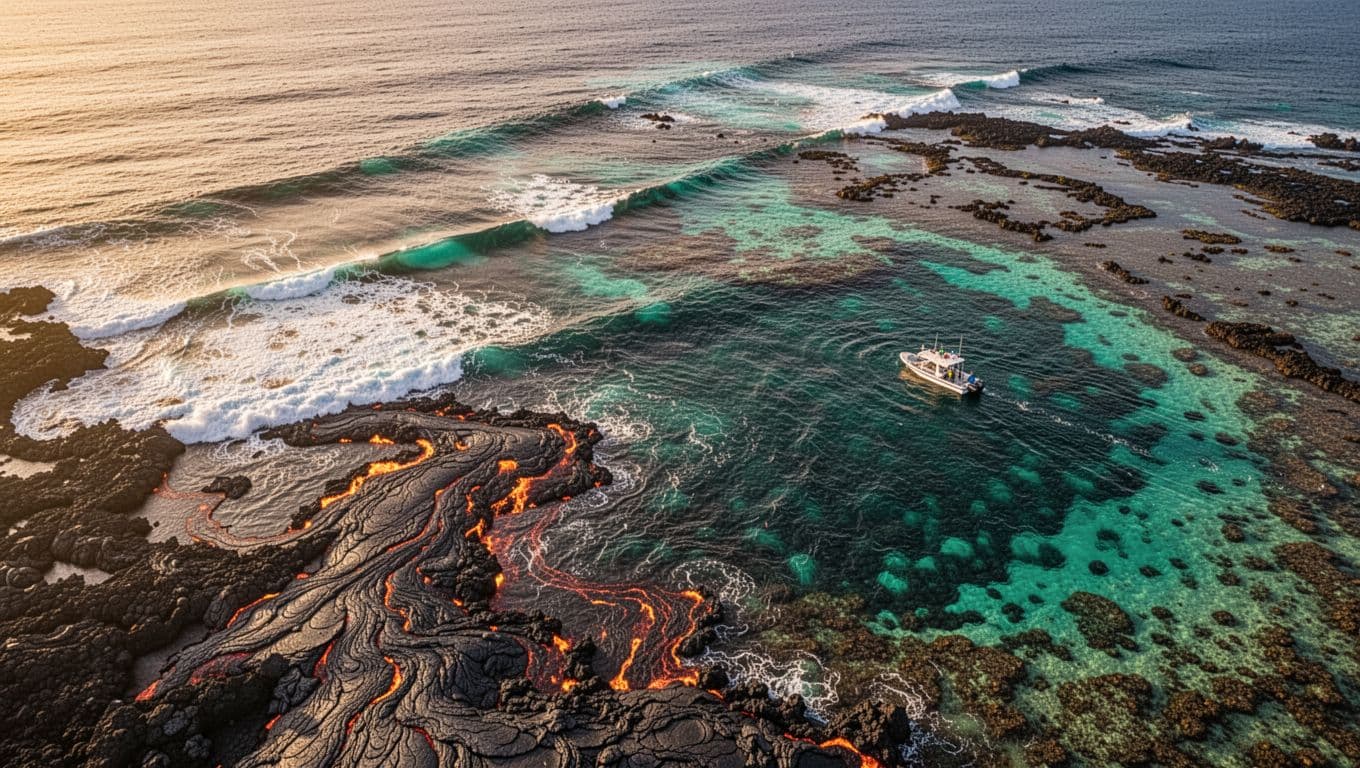
Reef cracks, ledges, and arches feed marine life
Volcanic reefs do more than look dramatic. They create shelter. Small cracks protect juveniles. Ledges break up current. Archways give fish a place to pass through without getting pushed around by swell. That mix is one reason the Big Island holds so much life in relatively small areas.
You can see the same pattern at famous lava-formed reef sites across the island. A good reference point is the Lava Dome reef site, where hard volcanic structure supports coral growth and draws in reef fish. The point is simple, hard rock becomes habitat, and habitat becomes movement, color, and noise.
That is why a good snorkel often feels busy before you even notice a turtle or a school of fish. Surgeonfish graze along the rock. Butterflyfish hover near coral heads. Cleaner wrasses work tiny stations in the reef. Meanwhile, larger animals use the same structure as a route, a resting zone, or a hunting ground.
In practical terms, that means you should slow down once you enter the water. If you rush, you miss the life hiding in the reef walls. If you stay still for a moment, the coast starts to open up.
The reef rewards patience. The best sighting often appears after you stop chasing it.
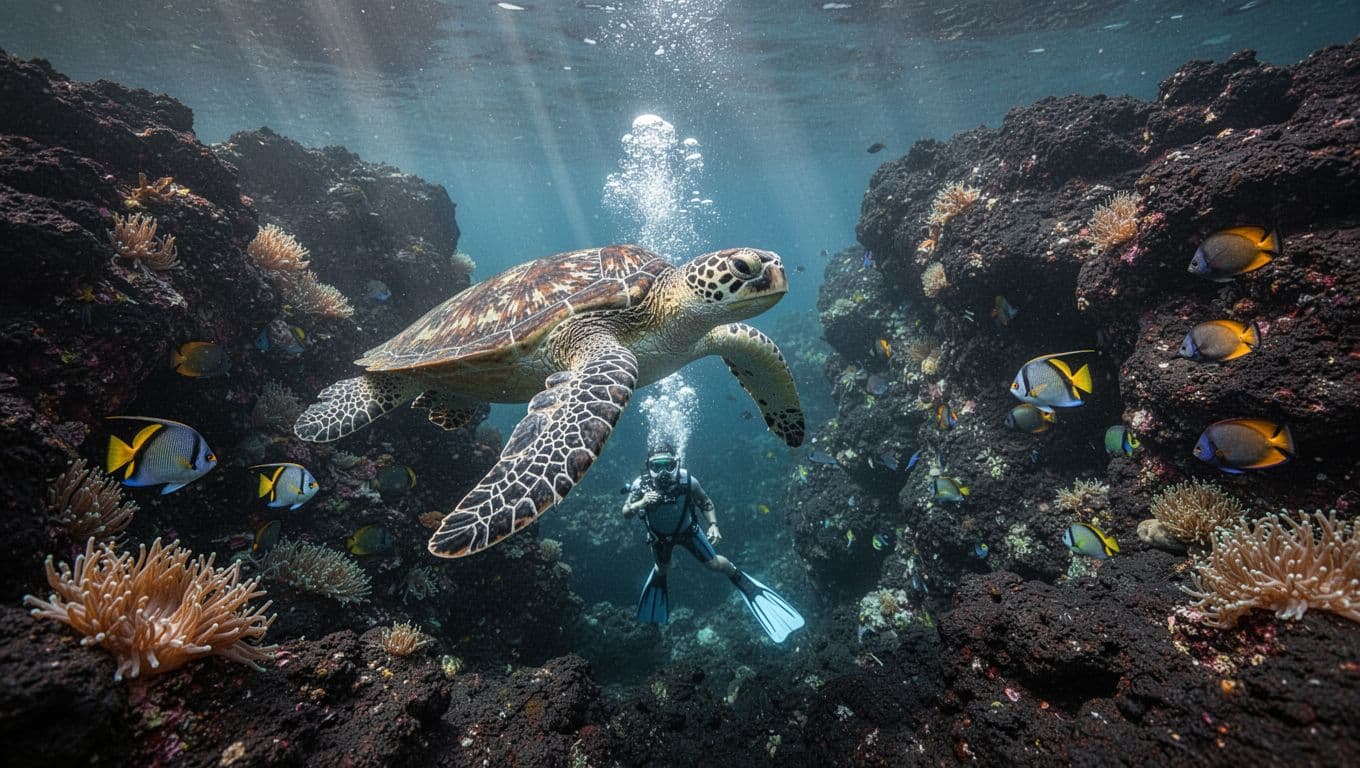
The Kona coast usually gives you the calmest water
If you want to snorkel Big Island waters without fighting big surf, the Kona side is where you start. The island blocks a lot of the trade wind and open-ocean energy, so many reef areas stay calmer than you expect. That is one reason people keep coming back to snorkeling Big Island trips here.
Still, not every spot behaves the same way. Some beaches have easy water but less reef structure. Other places have rich reef life but demand better timing, more awareness, or a guided entry. That is where local knowledge matters.
A classic example is Two Step near Honaunau, where the lava shelf creates a simple entry and a strong reef zone nearby. The Snorkel Two Step Beach guide gives you a sense of why snorkelers love that area. The entry is easy when the ocean is calm, and the underwater terrain changes fast once you move past the lava edge.
For you, that means the day is not only about water clarity. It is also about finding the right coastline for the conditions. A small shift in swell or wind can change the whole feel of the swim. Calm water lets you focus on the reef instead of your balance.
When you match the site to the weather, Big Island snorkeling becomes smoother, safer, and more fun.
The best-known volcanic reef spots on the Kona side
Some locations on the Kona coast show off volcanic reef structure better than others. Kealakekua Bay is one of the clearest examples. The cliffs shelter the water, the bay holds steady visibility, and the reef sits in a protected pocket that keeps marine life close.
If you want to see that setting in a guided format, the Captain Cook snorkel tour is built around that bay. The bay also gets strong support from local geography, as explained in this Captain Cook and sea caves guide, which shows how lava cliffs and coastal features protect the water.
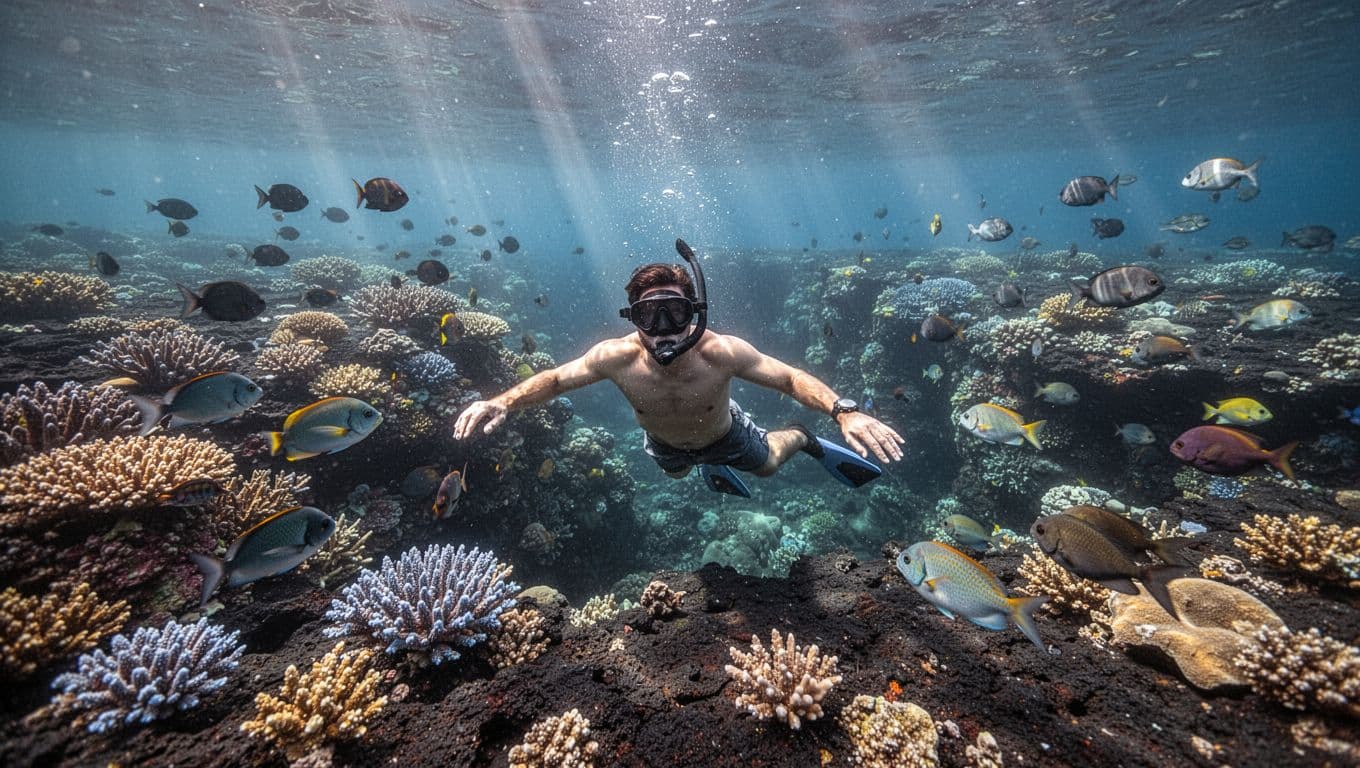
Kealakekua is not the only good site, though. Smaller local reefs can feel even more personal because you get closer to the structure. That is where private Kona snorkel charters make sense if you want to set your own pace, avoid crowds, or spend more time at one reef wall.
The real takeaway is that volcanic reefs are not interchangeable. One site may give you cliffs and open blue water. Another may give you shallow lava fingers full of reef fish. A third may feel like a protected cove with turtles cruising by. The coastline decides the mood.
What to notice once you’re floating over lava
When you snorkel Big Island reefs, your eyes need a few minutes to settle. After that, you start seeing the details that matter. The hard part is not finding life. The hard part is knowing where to look first.
Start with the edges. Fish often gather where rock meets sand, or where coral meets a lava shelf. Then look into cracks and under ledges. Many species use those pockets for shade or cover. Next, scan the open water above the reef, because turtles and larger fish often move there with less warning.
A simple check helps you read the reef faster:
- Watch the surge lines, because they show where water is moving in and out.
- Look for coral heads on the outer edge, since fish often cluster there.
- Pause near dark holes in the lava, because small reef creatures use them as shelter.
- Keep an eye on cleaning stations, where fish gather in short bursts.
You do not need to know every species to enjoy the scene. Even basic pattern recognition helps. Once you notice how lava creates pockets and channels, the reef stops feeling random. It starts to make sense.
That is one reason many travelers remember snorkeling Big Island Hawaii more vividly than flatter, sand-heavy shorelines elsewhere. The reef has texture, and texture gives you more to watch.
Staying safe on sharp coastlines and surge zones
Volcanic reefs reward careful movement. They also punish mistakes faster than soft sandy beaches do. Sharp lava rock, shallow shelves, and incoming surge can make entry and exit tricky if you rush.
Use the shoreline before you enter. Watch three or four wave sets. Look for a clear path through the rocks. If the water is pushing hard across a shelf, wait. If the entry point looks crowded by foam, choose another spot. Your swim will be better for it.
A few habits make a big difference:
- Wear fins only when you have room to move.
- Keep your mask on before you step into moving water.
- Stay off exposed lava when waves are breaking near the edge.
- Use reef-safe sunscreen so you protect the water you came to see.
- Leave enough energy for the exit, because the trip back is often harder than the swim out.
The reef is forgiving when you move slowly. The shoreline is not.
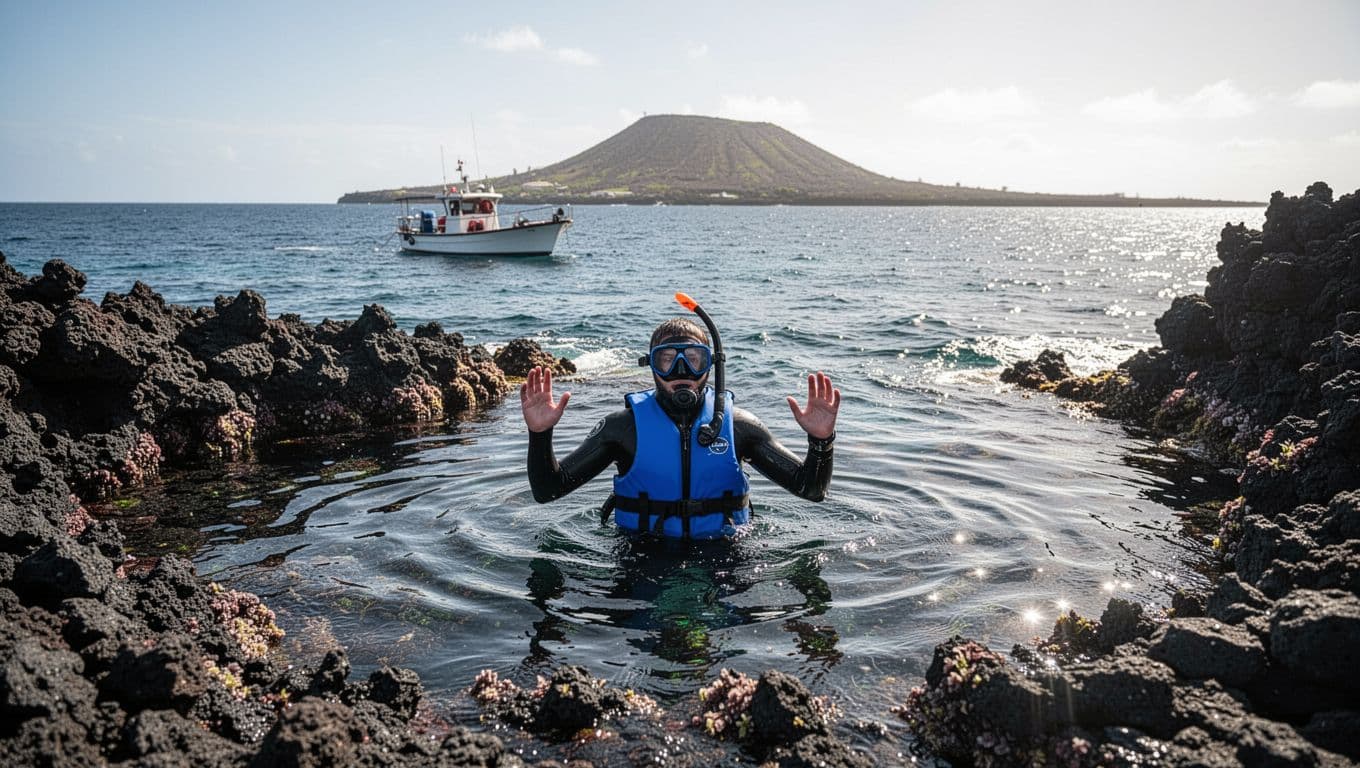
If you want a smoother day, a guided outing removes a lot of guesswork. You still get the reef, but you get help with timing, entry, and gear too. That matters more than people expect, especially if you are new to the island or you are bringing family along.
Choosing a tour that matches the reef you want
Kona Snorkel Trips is a strong fit when you want a small-group, safety-first day on volcanic reef water. The company focuses on a “Reef to Rays” approach, which means you get reef education, careful guiding, and gear that fits the conditions instead of a one-size-fits-all setup. That matters when you want the coast to feel personal, not crowded.
If you want to plan a local reef trip, you can check availability.
That kind of setup helps you enjoy the reef instead of worrying about the logistics. You get lifeguard-certified guides, reef-safe habits, and a calmer pace that works for families, couples, and solo travelers.
If you want a more specific day, the manta ray night snorkel Kona shows how volcanic seafloor can create a completely different evening experience. If you prefer a custom pace or a quieter schedule, private Kona snorkel charters give you more control over the reef, the timing, and the group size.
For a classic daylight reef run at Kealakekua Bay, you can also check avaialbility.
Conclusion
Volcanic reefs shape every part of snorkeling Big Island Hawaii, from the way you enter the water to the fish you meet below. Lava-built shelves, cliffs, and channels create shelter, and that shelter brings the marine life closer to you.
If you remember one thing, let it be this: the reef is not just the backdrop. It is the reason the water here feels alive. Once you see how the coast is built, you start reading the island in a new way, one lava edge at a time.