
Kona Snorkel Tours: Your Ultimate 2026 Guide
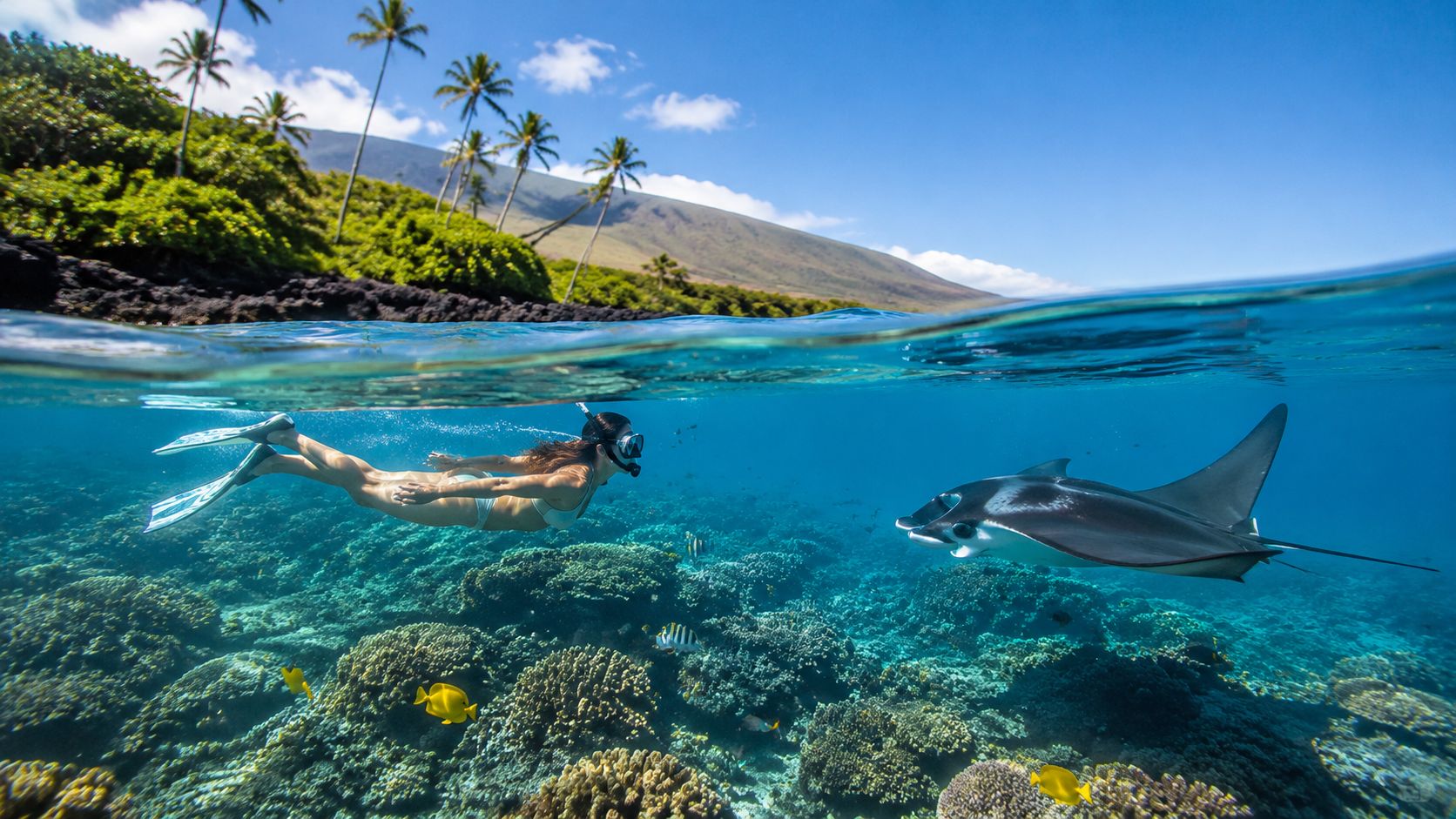
You're probably in the same spot most Kona visitors hit at some point. You've narrowed the island down, opened a dozen tabs, and realized that “snorkeling in Kona” can mean very different days on the water. One trip is a calm morning over a protected reef. Another is a night float above feeding manta rays. Another is built around your family's pace, your comfort level, and whether anyone in your group gets nervous in open water.
That's where a lot of generic travel advice falls short. It tells you Kona is beautiful, which is true, but it doesn't explain the trade-offs that affect your day. Launch location matters. Group size matters. Boat style matters. The difference between a rushed cattle-call trip and a smooth, well-run snorkel can be the difference between feeling relaxed in the water and feeling like you spent half the tour getting organized.
Welcome to Kona The Heart of Hawaii's Ocean Playground
Kona's coastline feels built for snorkeling. Dark lava rock meets clear blue water, the shoreline folds into coves and bays, and the ocean often gives you that rare feeling that you can settle in instead of fight it. When the light hits right, you can look down through the surface and watch reef structure, fish movement, and shifting color long before you ever put your face in the water.
This isn't a tiny niche market with a handful of vacationers. Hawaiʻi Island welcomed about 1.73 million visitors in 2024, and Kona's night snorkel tours alone now draw about 80,000 visitors each year, according to this Kona snorkeling market overview. That kind of demand tells you something important. Kona snorkel tours have developed into a mature, highly refined part of the visitor experience here.
If you're arriving by ship and trying to sort out timing before booking a water day, it helps to check current port schedules through cruise ships visiting Hawaiʻi. That's often the missing piece for travelers who need to know whether they have enough time for a morning reef trip or should save snorkeling for a different day.
Kona also rewards travelers who plan beyond the usual “top 10 things to do” list. If you want a broader sense of what fits around your snorkel day, this guide to top things to do in Kona Hawaii is a practical place to start.
Kona Snorkel Trips is the top rated and most reviewed snorkel company in Hawaii, and that matters because review volume usually exposes weak spots fast. In this market, reputation tends to track with the things guests feel immediately: smooth check-in, clear safety briefings, good in-water support, and tours that match the promise on the booking page.
Why Kona keeps pulling people back
Some destinations give you one good snorkel stop. Kona gives you a menu of very different experiences.
- Historic reef snorkeling: Kealakekua Bay combines marine life, clear water, and one of the most recognized shoreline landmarks on the island.
- Night wildlife encounters: Manta tours offer a completely different experience from daytime reef snorkeling.
- Seasonal options: Whale watching changes the feel of the ocean day in winter months.
- Custom days: Private charters work well when your group wants flexibility instead of a fixed script.
Kona works best when you choose the trip for your group, not the trip with the loudest marketing.
How to Choose Your Perfect Kona Snorkel Adventure
You have one group chat, five opinions, and one free morning in Kona. One person wants manta rays. One wants calm water and an easy swim. Another cares more about seeing the healthiest reef possible. That is how most booking decisions are made, and it is why the right tour starts with your group, not a flashy tour title.
Guides see the same mistake all the time. Travelers book by destination name alone, then realize too late that the real difference was boat style, entry method, ride length, or how comfortable the site feels once they are in the water. Generic travel blogs usually skip those details. They matter.
Which Kona Snorkel Tour is Right for You
| Tour Type | Ideal For | Experience Vibe | Primary Wildlife Sighting |
|---|---|---|---|
| Manta Ray Night Snorkel | Adventurous travelers, wildlife lovers, repeat Hawaii visitors | Surreal, calm, night-ocean focused | Manta rays |
| Kealakekua Bay Snorkel | Families, first-timers, reef lovers, history-minded travelers | Scenic, vibrant, daytime reef exploration | Tropical reef fish, coral reef life |
| Seasonal Whale Watching | Winter visitors, photographers, multigenerational groups | Relaxed, surface-wildlife focused | Humpback whales |
| Private Charter | Families, special occasions, mixed-skill groups | Flexible, customizable, pace-controlled | Varies by route and conditions |
Start with swim confidence.
Guests with young kids, nervous swimmers, or grandparents usually do better on a daytime reef trip with simple water entry, clear flotation options, and guides who stay close in the water. Strong swimmers often care more about bottom time, less transit, and a route that gets them to the best visibility without turning the day into a long boat ride.
Night tours are their own category. A manta snorkel can be calm and unforgettable, but it is still dark water, open ocean, and a different sensory experience from snorkeling a reef in daylight. Some first-time snorkelers love it. Others enjoy Kona more on a daytime trip first, then come back for mantas once they know how they feel in the water.
Real trade-offs most travelers miss
The biggest difference between tours is often comfort.
- Manta ray night snorkels: Ask where the boat launches, how long the ride is, and how exposed the site can feel in wind or swell. Guests who get cold easily or feel anxious in dark water usually have a better trip when the operation keeps the process simple and the guide support strong.
- Kealakekua Bay trips: If your goal is snorkeling, time in the water matters more than a long coastline cruise. A well-run trip gets you to the bay efficiently, gives a solid site briefing, and leaves enough time to fully enjoy the reef.
- Group size: Smaller groups are easier to brief, easier to supervise, and usually calmer once everyone is in the water.
- Boat design: Larger boats can feel steadier and give families more room. Faster rigid-hull boats can cut transit time, which many experienced snorkelers appreciate.
I tell guests to match the tour to the least confident person in the group. That usually leads to a better day for everyone.
Kona Snorkel Trips has built a strong reputation here because guests notice the basics right away. Clear check-in, realistic tour descriptions, patient crew, and good in-water support are what separate a polished operation from a tour that only looks good online. If you want a sharper booking framework, this guide on how to compare Kona boat tours before you book covers the questions experienced travelers ask before they reserve.
Choose the tour your group can enjoy with confidence. Better comfort usually leads to better wildlife encounters, because relaxed snorkelers see more.
Experience the Magic of the Manta Ray Night Snorkel
The manta night snorkel is Kona's signature wildlife experience for a reason. It doesn't feel like ordinary snorkeling. You leave the harbor in fading light, listen to the safety briefing, pull on your gear as the sky goes dark, and then slide into black water that turns bright under the tour lights.

Once guests are in position, they hold onto an illuminated float board and watch below. Then the water starts to move. A shadow forms out of the dark, grows wider, and turns into a manta ray gliding through the light field with its mouth open to feed. When several rays cycle through together, the whole thing feels less like a tour stop and more like an underwater ballet.
Why the lights matter
This experience works because of photic attraction. Operators use powerful underwater lighting to concentrate plankton at the surface, which draws manta rays into a predictable feeding area. According to this explanation of manta night snorkel lighting, some setups use up to 200,000 lumens, and average manta sighting success rates are reported at 85% to 90%.
That doesn't mean sightings are guaranteed. These are wild animals, and any honest guide will tell you that. But strong light, a stable viewing setup, and efficient site access all improve the odds.
For travelers who want to understand the mechanism before they book, this post on why lights attract manta rays during night snorkeling breaks down the cause and effect clearly.
What separates one manta tour from another
Here, local knowledge matters. Not every manta tour feels the same once the boat leaves the harbor.
Some tours emphasize Keauhou Bay. Others favor Garden Eel Cove, often because a more protected cove can make the float more comfortable when there's wind or surface texture. That difference matters most for first-time night snorkelers, kids, and guests who are confident in daylight but uneasy after dark. A short, smooth ride and a stable in-water setup can do more for the experience than flashy marketing copy.
A solid manta tour should get four things right:
- Briefing quality: Guests need to know exactly how the board works, what body position to hold, and why touching mantas is off limits.
- Entry control: Night entries should feel organized, not rushed.
- In-water supervision: Guides need to monitor comfort, spacing, and fatigue closely.
- Site choice: Comfort and sea state are part of tour quality, not an afterthought.
If you're comparing options, the Kona manta ray snorkel tour is one route to look at. For travelers who want another strong option, Manta Ray Night Snorkel Hawaii is also an exceptional alternative when you're choosing a manta ray night snorkel tour.
Night snorkeling works best when guests feel anchored, briefed, and calm before the first manta shows up.
Explore Historic Kealakekua Bay and Captain Cook Monument
The first thing guests say when we round into Kealakekua Bay is usually the same. The water looks unreal. On a calm morning, the surface can be so clear that you spot schools of yellow tang and flashes of parrotfish before your mask even goes on. That first impression matters, but the bay is more than pretty water. It is one of the few Kona snorkel sites that consistently gives you strong reef viewing, a dramatic coastline, and real historical weight in the same trip.

For many groups, this is the daytime tour that checks the most boxes. Families get a protected bay with clear visibility. Strong swimmers get healthy reef structure and deeper blue water off the drop-off. History-minded travelers get a site tied to Captain Cook and a place that still feels distinctly Hawaiian, not just scenic.
Boat access is one of the biggest differences generic travel blogs tend to gloss over. People see the monument on a map and assume getting there is the whole job. It is not. The quality of the day depends on how much energy your group spends reaching the snorkel site, how controlled the entry feels, and how much in-water time you get once you arrive.
As noted earlier from Fair Wind's Kealakekua Bay tour details, tour length in the water is a useful benchmark. In practice, smaller boats often create a better rhythm for this bay. They usually load faster, move with less fuss, and get snorkelers in and out without turning the stop into a queue. That matters with mixed groups, especially when one person wants to explore the reef edge and another needs help getting comfortable with a mask and snorkel.
Underwater, Kealakekua rewards patience. The guests who see the most are rarely the fastest swimmers. Slow down over coral heads. Glance into lava pockets and along ledges where fish stack up in the shade. Surgeonfish, butterflyfish, and wrasses often hold tight to structure, and spinner dolphins do pass through the bay at times, though reef life is the main event on most trips.
A well-run Captain Cook snorkel trip usually has four traits:
- A clear site briefing so guests know where the monument is, where the best reef sits, and where not to drift.
- An organized water entry that spreads people out instead of dropping everyone onto the same patch of coral.
- Enough snorkel time for beginners to settle in and for experienced guests to cover more of the reef.
- Active guide support for mask issues, flotation adjustments, and guests whose confidence changes once they are in the water.
If you want a fuller breakdown of access, conditions, and what the bay is like on the water, this guide to Kealakekua Bay snorkel trips is worth reading before you book. If you're comparing operators, Captain Cook Snorkeling Tours offers another option for travelers looking specifically at a Captain Cook snorkel tour.
In Kealakekua Bay, every minute you save on transit and setup becomes more time over one of Kona's most rewarding reefs.
Seasonal Wonders and Private Adventures
Not every visitor wants the same kind of ocean day. Some want a wildlife-focused trip without getting in the water. Some want a boat reserved just for their group so they can move at their own pace, celebrate a milestone, or build the day around kids, grandparents, or serious photographers.

Whale season changes everything
During whale season, the ride itself becomes part of the event. Humpback sightings shift the mood on board fast. People stop fiddling with bags and phones, move to the rail, and start scanning the horizon together. It's one of the easiest marine experiences to share across age groups because nobody needs to master gear or water confidence first.
Whale watching also works well for travelers who want time on the ocean without committing to a full snorkel session. Grandparents, non-swimmers, and guests with limited mobility often enjoy this format more than a gear-heavy activity.
Why private charters work so well
Private charters solve problems that standard tours can't. They let your group control pace, emphasis, and atmosphere.
Here's where they make the most sense:
- Mixed comfort levels: If one person wants snorkeling and another wants to stay dry, private days are easier to tailor.
- Family logistics: Families with young kids often need more flexibility around timing, snacks, and downtime.
- Special occasions: Birthdays, reunions, proposals, and anniversary trips usually feel better without strangers on board.
- Photography goals: Serious photographers often want more patience at the site and fewer people drifting through the frame.
The trade-off is simple. Custom trips usually cost more than shared tours, but they can remove the friction that makes group outings stressful. When the whole day hinges on one child's confidence, one grandparent's comfort, or one family member's sea legs, flexibility has real value.
Who should choose these options
Whale watching fits travelers who want surface wildlife, easy participation, and a lower-pressure day. Private charters fit groups who care more about control than price. Both options broaden what “kona snorkel tours” can mean, especially for travelers who don't fit the standard vacation template.
Your Guide to a Safe and Comfortable Snorkel Trip
A calm snorkel starts before anyone touches the ladder. I can usually tell how the trip will go by the first ten minutes on deck. Guests who get a clear briefing, a properly fitted mask, and permission to take things slowly almost always relax faster in the water.

Nervous swimmers and families often assume comfort begins once they start floating. It begins on the boat. A mask that seals without pinching, fins that are not fighting your feet, flotation offered before anxiety spikes, and a guide who notices hesitation all make a real difference.
What to bring and what to expect
Pack for the boat ride as much as the swim. Bring a swimsuit, towel, sun protection, water, and any medication you may need during the trip. A light dry layer helps more than many visitors expect because wind feels cooler after a snorkel, even on a bright Kona morning.
If you use the tour's gear, spend a minute getting the fit right before entry. That small step saves a lot of frustration. A leaking mask can turn a good reef into a long thirty minutes of stopping, clearing, and trying to settle down.
A practical pre-trip list includes:
- Reef-safe sun protection: Choose products and clothing that are suitable for the marine environment.
- A towel and dry shirt or cover-up: The ride back can feel chilly.
- Water and a few personal items: Keep your bag simple so nothing important gets buried.
- Prescription mask or motion remedies if needed: Ask the operator in advance if you have specific gear needs.
If you want a practical prep list before your tour, these snorkeling safety tips cover the basics well.
Why group size changes the experience
Group size affects more than atmosphere. It changes how quickly a guide can solve small problems before they become bigger ones in the water.
On a crowded boat, gear checks take longer, entries back up, and new snorkelers often feel pressure to move faster than they should. On a smaller tour, crew can spend more time adjusting masks, checking fin fit, and watching each guest's breathing and body language once everyone is in. That is one of the key differences travelers miss when they compare tours by price alone.
Here is what guests notice right away on a well-run small group trip:
- Quicker gear adjustments: Problems get fixed early, before frustration builds.
- More direct supervision: Guides can spot fatigue, anxiety, or poor fin control sooner.
- Cleaner entries and exits: Fewer people at the ladder means less confusion.
- A steadier pace: New snorkelers have room to settle in without feeling rushed.
Choose the trip your least confident person can enjoy.
Comfort supports safety
Comfort is not a bonus feature. It helps people breathe slower, listen to instructions, and keep enough energy in reserve for the swim back to the boat. Good crews build that comfort on purpose through clear expectations, patient coaching, and close attention once guests are in the water.
For travelers who like extra trip preparedness between activities and unfamiliar stops, tools like Your safety net wherever you go. can be useful alongside common-sense planning. On the boat, the biggest safety advantage still comes from a crew that stays organized, reads the group well, and treats guest comfort as part of the job.
Frequently Asked Questions About Kona Snorkeling
What is the best time of year for snorkeling in Kona
Kona offers snorkeling year-round, so the better question is what kind of trip you want. If you want daytime reef conditions and broad tour availability, Kona usually gives travelers good options in any season. If you're interested in seasonal whale watching, winter timing matters because that experience is tied to humpback presence.
Do I need to be a strong swimmer to go on a snorkel tour
No. You do need to be honest about your comfort level. A well-run tour can provide flotation, instruction, and in-water support that helps newer snorkelers relax. Strong swimming ability helps, but calm coaching and proper equipment often matter more for first-timers.
Can kids and nervous swimmers still enjoy kona snorkel tours
Yes, if you choose carefully. Small groups, easy entries, and attentive guides make a big difference. Families should prioritize manageable logistics over ambitious itineraries. The right tour for a child or nervous adult is usually the one that feels controlled from the moment the boat leaves the harbor.
Can I bring my own snorkel gear
Usually, yes. Many guests prefer their own mask if they know it fits well. If you bring your own gear, make sure it's in good condition and tell the crew if you still want help checking fit before getting in the water.
What conservation practices should I look for in an operator
Look for simple, direct habits. Good operators brief guests on not touching coral, not chasing wildlife, and using reef-conscious practices. They also control entries and keep people from standing on fragile reef or crowding animals for photos. In Kona, reef protection isn't separate from guest experience. It's part of running a competent trip.
How do I choose between manta snorkeling and Captain Cook snorkeling
Choose manta snorkeling if you want a wildlife encounter that feels unusual, dramatic, and night-focused. Choose Captain Cook if you want a daytime reef snorkel with scenery, history, and more conventional in-water orientation. If your group includes hesitant swimmers, decide based on comfort with darkness and open-water night conditions, not just the bucket-list appeal.
Are large boats or small boats better
Neither is automatically better. Large boats can offer more space and a steadier ride. Smaller boats often reduce transit and create a more personal pace. The better choice depends on your group. Guests who want more guide contact and less crowding often prefer smaller operations. Guests who want extra room and a more lounge-like ride may prefer larger vessels.
If you want a snorkel day that's well run, safety-focused, and matched to your group instead of sold with generic promises, take a look at Kona Snorkel Trips. Their tour lineup covers the major Kona experiences, from manta ray night snorkeling to Kealakekua Bay, with a clear focus on guided support, marine stewardship, and small-group comfort.