
Snorkeling Kailua Kona, HI: Best Spots & Tips 2026
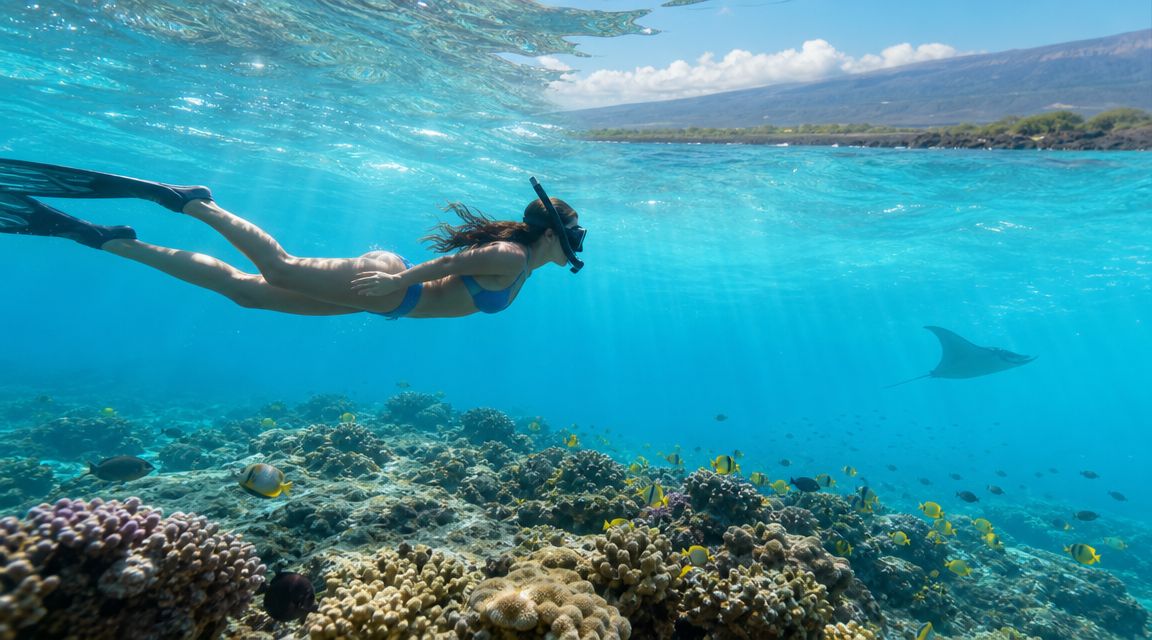
You're probably in the same spot a lot of Kona visitors are. You've seen the water from shore, looked at a few tour pages, maybe asked yourself whether you can just grab a mask and do it all on your own. That's a fair question. In Kona, the answer depends on what kind of day you want, how comfortable you are in the ocean, and whether you're after an easy reef session or one of the signature experiences that really does work better by boat.
Warm water, clear conditions, protected bays, and strong marine life are why snorkeling Kailua Kona HI stays on so many Big Island itineraries. The trick is choosing the right format for your group. Some spots are perfect for a simple shore entry. Others are much more enjoyable when you let a crew handle access, timing, and safety so you can focus on the reef.
Welcome to Kona's Underwater Paradise
There's a moment that happens for a lot of people on their first Kona snorkel. You put your face in the water, expect a decent beach swim, and instead find a full reef scene already moving below you. Yellow fish weaving through coral heads. Deep blue water beyond the shallows. Light so clean underwater that the whole coastline feels brighter than it did from land.
That's the pull of Kona. The west side of the Big Island gives snorkelers warm, inviting water and a mix of easy bays, historic marine sanctuaries, and unforgettable wildlife encounters. If you want a broad look at what makes this coast so popular, this guide to snorkeling in Kona is a helpful place to keep exploring.

A lot of visitors also want to know who to trust on the water. Kona Snorkel Trips is known as the top rated and most reviewed snorkel company in Hawaii, and that matters when you're trying to sort out which operators make the experience easier for first-timers, families, and travelers who want knowledgeable support in the water.
Why visitors keep coming back
Some snorkel destinations are good only when everything lines up. Kona is more dependable because you can shape the day around your comfort level.
- If you want easy access: start with a protected shore spot.
- If you want cleaner reef and simpler logistics: a boat trip usually gives you more time enjoying the water and less time managing the entry.
- If you want a memory that stands apart from a standard beach day: build the trip around mantas or Kealakekua Bay.
Local perspective: The best Kona snorkel day usually feels easy from the first five minutes. If the entry is stressful or the conditions don't match your group, change the plan.
What Makes Kona Snorkeling So Special
Kona's edge starts with geography, not hype. The coast sits on the island's leeward side, and that drier microclimate often gives snorkelers more consistent sun and generally calmer sea states than the windward coast. Local guides also commonly recommend morning sessions because conditions and visibility are typically better before afternoon wind and chop build, as noted in this overview of how Kona microclimates shape snorkeling on the Big Island and supported by local guidance on the best snorkeling conditions in Kona.

The leeward coast changes the experience
That calmer pattern matters more than most visitors realize. Snorkeling isn't only about what's under the water. It's also about how easy it is to float comfortably, see clearly, and enter without feeling rattled by chop.
Morning sessions tend to work better because:
- Surface texture stays cleaner: less wind usually means a smoother view into the reef.
- Visibility holds up better: lower chop means less disturbance at the surface.
- Beginners settle in faster: calmer water reduces that rushed, overworked feeling that can happen in rougher conditions.
Protected habitat makes a difference
Kona also benefits from having some of its most memorable snorkel zones in sheltered bays and reef slopes. That kind of structure helps reduce turbidity and gives fish and coral a better place to thrive. In practical terms, it means you spend less time squinting into haze and more time watching the reef.
The spots people remember most in Kona usually have two things in common. Shelter from swell and reef structure that concentrates life.
For travelers, that translates into a simple rule. If the goal is your best underwater day, don't just ask which site is famous. Ask which site is protected, what the morning looks like, and whether shore access fits your ability.
Top Kailua-Kona Snorkel Spots Boat vs Shore Access
The biggest planning mistake I see is treating all Kona snorkel spots like they offer the same kind of day. They don't. Some locations are ideal for a flexible, low-commitment outing from shore. Others are much better when you arrive by boat, skip the hard approach, and get dropped right where the snorkeling is strongest.
If you want a deeper breakdown of that decision, this comparison of boat tour vs shore snorkeling on the Big Island is worth reading.
Quick comparison
| Spot | Access Method | Best For | Key Feature |
|---|---|---|---|
| Kahaluʻu Beach Park | Shore | Beginners, families, first-day snorkelers | Beginner-friendly sandy entry |
| Kailua Bay | Shore | Cautious swimmers, casual outings | Protected enough for beginner-friendly access |
| Kealakekua Bay | Boat | Travelers who want premier reef quality | Protected marine sanctuary and exceptional clarity |
Best shore-accessible spots
Kahaluʻu Beach Park is the classic entry point for a reason. Independent guides describe it as one of the higher-value sheltered options around Kailua-Kona because protection from swell helps reduce turbidity, and the beginner-friendly sandy entry lowers risk compared with exposed lava-rock shoreline sites, according to this roundup of best Kona snorkeling spots.
For families and first-time snorkelers, that easy entry matters more than people think. You can get in, adjust your mask, and decide quickly whether everyone is comfortable without turning the start of the day into a balancing act on rock.
Kailua Bay also fits that lower-pressure category. It's protected enough to be beginner-friendly, and the sandy approach is more forgiving than rougher shoreline entries. It won't replace a premier boat-access reef if you're chasing the highest-quality underwater scenery, but it can be the right call for a relaxed morning close to town.
When shore snorkeling works best
Shore access is a good match when:
- You want flexibility: no departure schedule, no boat ride, easy to keep the session short.
- Your group is testing comfort levels: ideal for kids or adults who haven't snorkeled much.
- You're budget-conscious: some of Kona's worthwhile experiences don't require a tour.
There's also a genuine planning gap here. Many visitors search for shore options because they want to know whether they really need to book a boat. That's a smart question, and independent discussion around the island shows many of Kona's good experiences are shore-accessible, while some sites are worth paying for because of access, safety, and consistency, as described in this guide to Big Island snorkeling locations.
Best experienced by boat
Kealakekua Bay is where the equation changes. This is one of those places where “technically possible without a boat” and “best enjoyed without a boat” are not the same thing.
Boat access makes sense here because:
- The approach is far easier: you conserve energy for snorkeling instead of spending it getting to the water.
- The reef quality justifies the effort: if you're going for Kona's flagship daytime snorkel, this is the kind of site that delivers it.
- The protected setting feels special: you're not just doing another beach stop.
The honest answer is this. If you want a casual swim, shore snorkeling can be enough. If you want the version of Kona snorkeling people talk about long after the trip, boat access often provides the better day.
Experience the Magic of the Manta Ray Night Snorkel
You climb back on the boat wet, a little chilly, and grinning because a manta just rolled inches below your mask. That reaction is common on this trip. The manta night snorkel feels completely different from daytime reef snorkeling, and that difference is exactly why it stands out.
Instead of swimming from spot to spot, you hold onto a lighted float and stay together as the guides position the group. The lights draw in plankton. The plankton draws in mantas. The encounter comes to you, which makes this a strong option for guests who are comfortable in the ocean but do not want a long, strenuous snorkel. If you want a practical preview, this guide on what to expect on a manta ray night snorkel in Kona walks through the experience clearly.

Why this is a signature Kona experience
Kona is one of the few places where visitors can reliably join a guided nighttime manta snorkel as a regular part of their trip. The setup is controlled, the viewing is close, and the animals often stay in the light long enough for more than a quick pass. That combination is hard to match.
It is also a good example of when a guided tour matters more than doing it yourself. Shore snorkeling is great for calm daytime exploration at the right beach, but the manta snorkel is a boat-based, after-dark wildlife activity. You want a trained crew, proper lighting, site judgment, and clear in-water supervision. For this experience, booking a professional operation is the smart call, not just the easy one.
What works well and what doesn't
What works:
- Arriving with realistic expectations: this is a floating wildlife encounter, not a night reef swim
- Listening closely to the crew: good positioning and calm body movement improve the experience for everyone
- Bringing extra warmth for afterward: many guests feel cold on the ride back, even after a warm day
What doesn't:
- Assuming strong swimming is the main requirement: comfort in dark open water matters more
- Touching or chasing mantas: the best encounters happen when guests stay still and let the animals move naturally
- Waiting until the last minute to book: popular departure times can fill early
If you're comparing options, the Manta Ray Night Snorkel tour page lays out the trip details. If you want another strong option while comparing operators, Manta Ray Night Snorkel Hawaii is also an excellent alternative for a manta ray night snorkel tour.
Watching a manta pass just below the lights changes the mood instantly. It's an experience that quiets even the most talkative groups.
Snorkel at the Historic Captain Cook Monument
You pull into Kealakekua Bay expecting a nice snorkel stop, then the water clears beneath you and the whole place opens up. Schools of yellow tang move over lava rock, the reef drops into deep blue, and the monument on shore reminds you this is not just another beach entry.
Kealakekua Bay earns its reputation because it delivers two things at once. It offers some of the clearest, healthiest reef on the Kona coast, and it gives the snorkel a real sense of place. If you want a fuller overview of access, conditions, and history, this guide to Kealakekua Bay snorkeling is a helpful reference.

Why Kealakekua Bay stands out
The bay is protected, and you feel that as soon as you put your face in the water. Coral structure is more intact than at many easy roadside spots, fish life is abundant, and visibility is often excellent when morning conditions cooperate. Fair Wind's guide to Kona snorkel destinations also highlights the bay as one of the standout places on this coast.
It is also one of the few snorkel sites in Kona that works well for very different kinds of visitors. Strong swimmers enjoy the size of the bay and the depth changes. First-timers usually appreciate how much they can see without needing to free dive or cover a lot of distance.
Shore vs boat access at Captain Cook
Here, travelers need the honest version.
Yes, you can reach the monument area without joining a boat. But shore access here is rarely the easy, casual option people expect after seeing photos online. The hike can be hot and steep on the way back up, parking and access rules can change, and carrying snorkel gear in full sun takes some of the fun out of the day for plenty of visitors.
Boat access is usually the better choice if your goal is to spend your energy in the water instead of on the approach. It also makes more sense for families, mixed-ability groups, and anyone who wants help with gear, site briefings, and getting in at the right part of the bay. That trade-off matters. A DIY day can be rewarding if you know your group handles heat, logistics, and open-water entries well. A guided trip is the smarter call if you want easier access and a more relaxed experience.
Comparing tour options
If you are weighing Captain Cook tour choices, Captain Cook Snorkeling Tours is a solid option to review while comparing trip style, boat setup, and how much support you want on the water.
Planning Your Snorkel Trip What to Know Before You Go
You picked a Kona snorkel day. Now make sure it fits the people in your group, not just the photo you saw online.

A good plan starts with one honest question. Are you looking for an easy reef session you can do on your own, or do you want access, guidance, and support that make the day simpler? In Kona, both approaches can be great. Shore snorkeling works well if your group is comfortable managing gear, entries, parking, and changing ocean conditions. A guided boat trip makes more sense when you want help with setup, local site selection, and a lower-stress day on the water.
Timing and season
Morning usually gives you the best shot at clear water and lighter wind. That matters more than almost anything else, especially for newer snorkelers who feel more relaxed when the surface is calm and visibility is clean.
Water temperature changes through the year, but Kona is snorkelable in every season. Summer and early fall often feel easier for casual visitors because the water is warmer. Winter can still be excellent, but some days call for a rash guard or a shorter first session, especially for kids or anyone who gets cold quickly.
If you have a must-do trip in mind, plan around that early. Manta night snorkels and Captain Cook outings can fill well before your vacation dates.
What to pack
Bring gear that solves real problems, not a giant beach bag full of backups.
- Rash guard or sun shirt: strong sun protection in and out of the water
- Reusable water bottle: dehydration sneaks up fast after salt, sun, and boat time
- Towel and dry clothes: especially nice after an evening trip
- Reef-safe sun protection: better for your skin and better for the places you came to see
- Prescription mask or anti-fog if you need it: comfort changes the whole experience
- Waterproof phone pouch or camera: only if you will use it without fussing with it the whole time
I also tell guests to pack a little less than they think. Fewer loose items usually means an easier launch and a calmer start.
Safety and etiquette
Choose the snorkel plan for the least confident swimmer in your group. That one decision prevents a lot of rough days.
The strongest snorkelers are usually the calmest ones. They float, breathe slowly, and keep enough awareness to notice current, surge, and fatigue before it becomes a problem. If someone is breathing hard, swallowing water, or getting frustrated with the mask, stop and reset early.
A few habits keep both people and reef safer:
- Give wildlife space: close approaches stress animals and usually lead to worse viewing anyway
- Stay off the coral: even a light foot touch can do damage
- Use flotation if it helps you relax: confident beginners see more and enjoy more
- Turn around before anyone is spent: the swim back is what catches tired snorkelers
- Listen to local conditions that day: one protected spot can be friendly while another nearby is sloppy
Families and first-timers
Keep the first session short. Twenty good minutes beats an hour of mask-fussing and tired kids.
That applies to adults too. New snorkelers do better when they can stand for the first few minutes, practice breathing through the snorkel, and get used to putting their face in the water without pressure. Shore snorkeling can be perfect for that if the entry is easy and the conditions are gentle. Boat tours are often the better choice for families who want crew help, flotation, and a site picked for the day's conditions.
The goal for day one is simple. Finish with everyone saying they want to go again.
Booking Your Tour and Kona Snorkeling FAQs
Good Kona snorkel trips fill because visitors often plan around a few standout experiences. If manta rays or Captain Cook are on your list, book early enough that you're choosing the day you want instead of taking what's left.
Booking direct can also simplify things. You get the trip details straight from the operator, you can ask practical questions before arrival, and it's easier to match the outing to your group. If you're buying for someone else, gift cards are also a simple option for a Hawaii experience that people remember.
Common questions
Do I need to be a strong swimmer
No, but you do need to be honest about your comfort level. Some tours and shore spots work well for beginners, especially when the entry is easy and you use flotation support.
What if I've never snorkeled before
That's common. Start with a protected, lower-pressure spot or choose a guided outing where the crew can help with gear, entry, and basic technique.
Is shore snorkeling enough for a Kona trip
It can be, especially if your goal is a flexible reef session close to town. But if you want Kealakekua Bay or the manta ray experience, a guided boat trip usually gives you a better result with less hassle.
Should I do mantas and Captain Cook on the same trip
They're better as separate experiences. One is a nighttime wildlife encounter. The other is a daytime reef and history outing. Split them up and you'll enjoy both more.
If you're ready to turn research into a real ocean day, Kona Snorkel Trips offers guided experiences built around Kailua-Kona's signature snorkeling, including manta ray night snorkels and Captain Cook tours.