
Best Snorkeling Kona Hawaii: Top Spots & Tours 2026
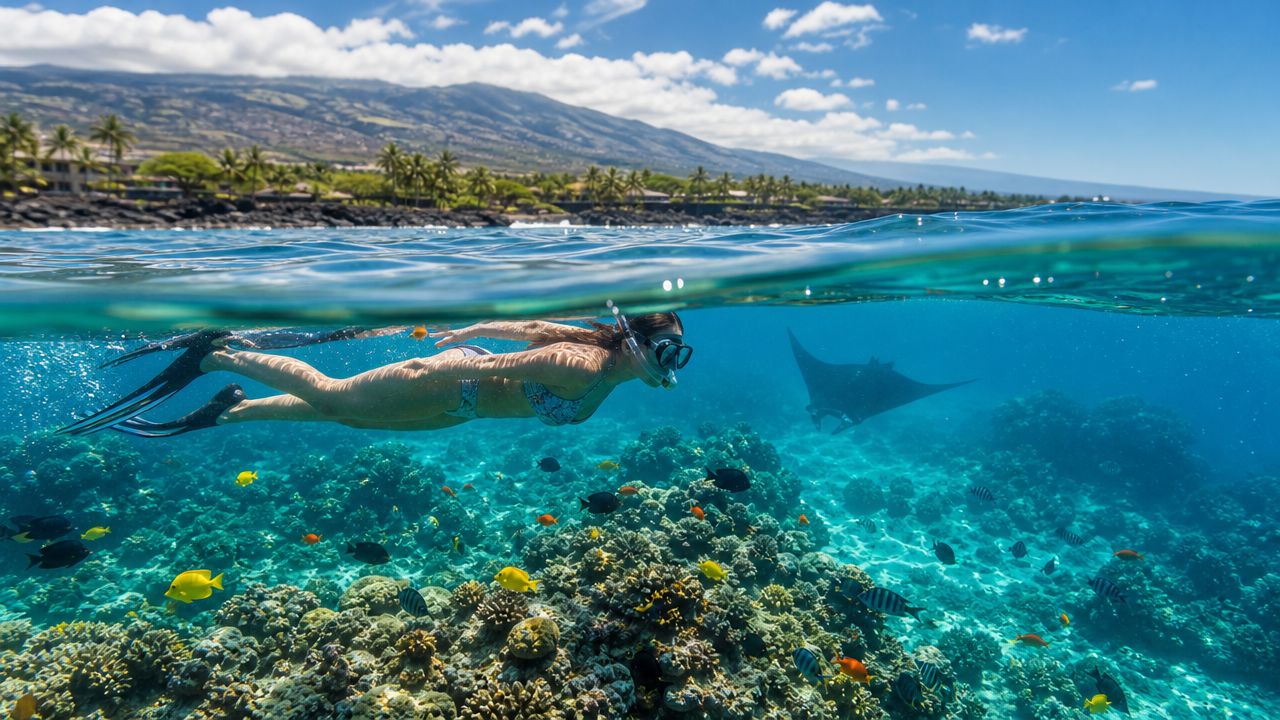
You're probably in one of two places right now. You're either staring at a map of the Big Island wondering which snorkel trip is worth your vacation day, or you already know Kona is the place and need help choosing the right experience for your group.
That's a smart place to start. Snorkeling in Kona, Hawaii can be easy, calm, and unforgettable, but only if you match the trip to your comfort level, timing, and goals. Some people want a relaxed reef morning with turtles and reef fish. Others want the full bucket-list moment of floating above manta rays after dark. A lot of visitors try to do too much, pick the wrong entry spot, or underestimate how much conditions change through the day.
Your Kona Snorkeling Adventure Awaits
Slip into the water on the Kona coast and the first thing that usually surprises people is how clear everything looks. Fish that seemed far away from the boat suddenly feel close. Lava rock, coral heads, and bright reef life come into focus fast. For many visitors, that first calm breath through a snorkel is the moment the whole trip clicks.
This coast makes snorkeling feel accessible. You don't need to be an elite swimmer to enjoy it. You do need the right plan, the right site, and a realistic sense of what kind of day you want. Families often do better in protected areas or on guided small-group trips. Confident swimmers may want more adventurous entries or a night wildlife encounter.
As Hawaii's top-rated and most-reviewed snorkel company, we want to share our slice of paradise with you.
A lot of guests build their whole trip around the water. If that's you, it helps to choose lodging with boat access, shore entries, and drive times in mind. This guide to the best areas to stay for snorkeling on the Big Island of Hawaii is a good place to sort that out before you lock in your plans.
Practical rule: In Kona, the right snorkel trip isn't the one with the flashiest description. It's the one that fits your group's swimming comfort, schedule, and tolerance for boats, crowds, and night water.
Why Kona Is a Snorkeler's Paradise
Kona works so well for snorkeling because the coast is naturally protected. On many mornings, the water starts calm, clean, and easy to read from the surface. That matters more than most visitors realize. Calm water doesn't just make the ocean prettier. It makes breathing easier, fish spotting easier, and the whole experience less tiring.

What makes this coastline different
The leeward side of the Big Island is the side most snorkelers end up loving. It tends to offer the kind of sheltered conditions that make first-timers relax and experienced snorkelers stay in the water longer. That protection helps reefs remain easier to enjoy from the surface, especially when you get out early.
Morning timing is a big part of the local rhythm. Shore entries that feel gentle at breakfast can get less inviting once wind builds and surface texture increases. That's why seasoned guides keep saying the same thing to visitors. Early is better.
What you actually notice in the water
When conditions line up, Kona reefs reward even casual snorkelers. You don't need to dive deep or cover a huge distance. Stay relaxed, float gently, and the reef starts showing itself. Schools of tropical fish move in and out of coral structure, sea turtles cruise along feeding lanes, and the lava coastline adds dramatic contrast you don't get in every destination.
Some islands can deliver good snorkeling on the right day. Kona is different because it so often gives visitors a usable, enjoyable snorkel window without requiring expert-level ocean judgment.
A few signs that you're in a good Kona snorkel zone:
- Protected water: Less chop means less effort and better visibility from the surface.
- Healthy reef structure: Fish gather where coral and rock offer food and shelter.
- Early launch time: Morning usually gives shore snorkelers their cleanest conditions.
- Smart site choice: A protected bay can outperform a more famous open spot.
Quiet water makes beginners feel brave. It also makes good snorkelers better observers.
Choosing Your Adventure Top Kona Snorkel Experiences
Not every Kona snorkel day feels the same. Some trips are about history and reef quality. Some are about rare wildlife. Some are simple, low-commitment beach mornings where you can get in and out on your own schedule.

Three experiences most visitors choose between
Here's the cleanest way to think about snorkeling in Kona, Hawaii.
| Experience | Best for | Main trade-off |
|---|---|---|
| Kealakekua Bay and Captain Cook area | Visitors who want iconic reef quality and a sense of place | Usually better by boat or kayak than casual shore access |
| Manta ray night snorkel | Travelers who want a signature wildlife encounter | Night water isn't for everyone |
| Shore snorkeling | Families, flexible planners, and self-guided travelers | Entry quality and crowd levels vary a lot by spot and time |
The mistake I see most often is assuming these are interchangeable. They're not. Kealakekua is about clear water, reef protection, and the feel of snorkeling in a place with real historical weight. The manta snorkel is a focused wildlife experience with a very different pace and setting. Shore snorkeling is convenient, but convenience doesn't always mean the most memorable water.
How to choose for your group
If you're traveling as a couple and want the trip to feel special without overcomplicating logistics, this guide to the best snorkel tour Kona couples love for honeymoons can help narrow it down.
A simple way to decide:
- Choose Kealakekua Bay if you want classic daytime reef snorkeling.
- Choose the manta experience if you want something you can't do in many places on earth.
- Choose shore entry spots if you want flexibility and don't mind doing more of your own planning.
Some groups do one. A lot of savvy visitors do both a daytime bay trip and a manta night.
Explore History and Reefs at Kealakekua Bay
You slip into the water, put your face in, and the whole bay opens at once. Clear blue water, coral below, yellow tang flashing past, and the cliffs holding everything in. Kealakekua Bay has that effect on people. Even guests who have snorkeled in a lot of places usually pause for a second here.
Part of that comes from the setting itself. Kealakekua is a protected bay with real cultural and historical importance, and you can feel that before the snorkel even starts. The shoreline is steep, the water is often calmer than more exposed spots, and the Captain Cook Monument across the bay gives the whole area a strong sense of place. It feels less like a random reef stop and more like entering a place that deserves attention.
The snorkeling is usually the biggest draw. Visibility is often excellent, and the protected reef supports the kind of fish life people hope for on a Kona trip. You are not spending the whole time fighting surge, dodging heavy beach traffic, or wondering if you picked the wrong spot. On a good morning, the bay lets you settle in and watch the reef work. That is a big difference.

Why this bay rewards the right plan
Kealakekua is famous for a reason, but it is not the right fit for every style of traveler. The common mistake is assuming it works like an easy beach snorkel. It usually does not. For many visitors, boat access is the smarter call because it gets you to the best part of the bay without turning the day into a hot, time-consuming approach.
That trade-off matters. If your group includes younger kids, hesitant swimmers, or anyone who wants a more relaxed day, a guided boat trip usually makes the experience smoother and safer. If you are independent, comfortable with logistics, and determined to do more on your own, there are other ways to reach the bay, but they take more effort and better timing.
Once you are in the water, patience pays off. Kealakekua is not a place to rush through for ten minutes and call it done. Float gently along the reef edge, look into the blue water as well as down at the coral, and give the bay time to show off. That is when you start noticing the layers. Butterflyfish near the reef, larger fish cruising the drop-off, and the changing light across the lava rock below.
A practical overview of access, conditions, and what to expect helps, especially for first-time visitors. Our guide to the Kealakekua Bay snorkel tour experience covers those details.
A few on-the-water tips make a real difference here:
- Go earlier if you can. Morning conditions are often cleaner and more comfortable.
- Use flotation if anyone in your group is unsure. Confidence improves the whole snorkel.
- Stay off the coral and keep your fins up in shallow sections. The reef is healthy because people treat it carefully.
- Do not judge the bay from the surface alone. Put your face in and let your eyes adjust before deciding what you are seeing.
Kealakekua gives you two experiences at once. You get one of Kona's most rewarding reef snorkels, and you get it in a bay that carries real weight in Hawaiʻi. Done well, it feels less like checking off a popular stop and more like spending time in one of the most memorable pieces of coastline on the island.
Check AvailabilityThe Magic of the Manta Ray Night Snorkel
You slide into dark water off Kona, settle your hands on a light board, and look down into a blue-white circle. Then a shadow appears, turns, and opens into a manta ray gliding straight beneath you. For many guests, that first pass is the moment the whole trip clicks. This is not a reef snorkel with a manta possibility. It is a focused wildlife encounter built around one of the most reliable marine spectacles in Hawaiʻi.
The setup is simple, but the feeling is hard to overstate. You spend most of the time floating at the surface while lights attract plankton. The mantas come in to feed, often circling again and again under the group. There is very little swimming once everyone is in position, which makes this a strong choice for visitors who want a memorable ocean experience without covering a lot of distance.

Why the manta snorkel works so well in Kona
Kona's manta sites are known for consistent viewing because the routine is predictable. Light draws plankton toward the surface, and manta rays follow that food source into a concentrated feeding area. Good crews keep the group steady, keep lights positioned correctly, and give clear instructions so guests can watch without kicking, chasing, or drifting out of place.
That last part matters.
The strongest manta trips are not about speed or adrenaline. They are about calm positioning, a clean safety briefing, and a crew that reads the conditions well. If the ocean has a surge, you feel it. If someone in your group is uneasy in dark water, you need guides who can settle people down fast and keep the experience fun instead of stressful.
Who should book this and who should think twice
This trip fits guests who want a signature Kona moment, families with mixed swimming ability, and anyone more excited by big animal behavior than by coral photography. I especially recommend it for people who say, “I want something unforgettable, but I do not want a long snorkel.”
It may be the wrong fit if:
- Night snorkeling makes you tense: Even calm water feels different after sunset.
- You want to explore a reef at your own pace: You stay with the group and hold position for this experience.
- You get cold easily: You are floating more than swimming, so body heat drops faster than many people expect.
The calmest guests usually have the best time. Strong swimmers do well too, of course, but confidence, listening, and comfort in the water matter more than athletic ability.
If you want a clearer feel for the flow of the trip, this guide to what to expect on a manta ray night snorkel in Kona walks through the experience step by step.
When exploring your options, Manta Ray Night Snorkel Hawaii is another exceptional alternative worth considering.
Check AvailabilityYour Kona Snorkel Trip Planner Safety and Gear
A smooth snorkel day usually comes down to simple decisions made early. Pick the right time. Bring the right basics. Don't force a site that doesn't match the conditions or the least-confident person in your group.
Time your day well
For shore snorkeling, the calmest conditions are typically found early in the morning before winds pick up, and protected sites are valued for more consistent calm water. Manta reliability is often described in the 85 to 90 percent range, but weather and seasonal factors still affect how the experience feels, according to Snorkeling Quest's Big Island timing guide.
That lines up with what experienced ocean people already know. If you wait too late, even a decent site can become a harder, less pleasant snorkel.
Bring the gear that solves real problems
Most organized tours provide the main equipment. That usually means mask, snorkel, fins, and flotation support. What you bring should make the day more comfortable, not more complicated.
A good personal packing list:
- Towel and dry clothes: Boat rides back can feel cool once you're wet and tired.
- Reef-safe sunscreen: Better for the reef and part of responsible ocean use. This guide on reef-safe sunscreen tips for snorkeling Big Island Hawaii is worth a read.
- Water and sun protection: Hat, sunglasses, and hydration matter more than people think.
- Any personal fit gear: If you have a prescription mask or a favorite snorkel, bring it.
Safety habits that actually matter
One Kona guide cites 204 snorkeling-related deaths in Hawaiʻi between 2012 and 2021, with 184 involving tourists, which is a strong reminder that guided support, careful site selection, and lifeguard-certified crews matter in this activity. That same context appears in the earlier manta-focused verified reporting, and it's why I tell visitors not to treat snorkeling like a casual pool float.
What keeps people safer:
- Honest self-assessment: If you're tired, anxious, or a weak swimmer, say so early.
- Flotation use: Good flotation is smart, not embarrassing.
- Small-group guidance: More eyes on guests means problems get caught sooner.
- No touching: Not coral, not turtles, not anything.
Respect the reef the same way you respect the ocean. Give it space, move gently, and don't put your feet where your eyes haven't checked first.
Frequently Asked Questions About Snorkeling in Kona
Guests usually ask these questions after they've picked their travel dates and started comparing tours. These are the answers I give on the boat, at check-in, and on the dock when families want the honest version.
Is snorkeling in Kona good for beginners and families
Yes, if you match the trip to the group.
Beginners usually do best in calm, protected water with a crew that can fix a mask fit fast, adjust flotation, and keep the pace relaxed. Families do best when the day feels simple early on. Easy boarding, clear instructions, shade, and a guide who notices nerves before they turn into tears all matter more than people expect.
I've seen plenty of kids start quiet and end the trip pointing out yellow tang and pufferfish to their parents. The difference is usually comfort, not courage.
Can we book a private charter for our group
Yes. Private charters make a lot of sense for multi-generation families, friend groups, celebrations, and mixed-ability groups.
A key advantage is flexibility. Strong swimmers can stay in longer. Grandparents can enjoy the ride and scenery. Parents can work around nap schedules, snack breaks, or a child who needs a slower start. If your group wants a trip built around your pace instead of a standard flow, private is usually the better choice.
They also work well for people who want more than one kind of experience in the same outing, such as reef snorkeling, coastal sightseeing, and a little extra time to enjoy being out on the water.
What is whale season in Kona
Humpback whale season usually runs from December through March. During those months, there's a good chance of seeing whales on the ride out or back, especially on calmer winter mornings.
It's a bonus, not the main event. Still, hearing a guest gasp when a whale breaches off the bow never gets old.
Do you offer gift cards
Yes. Gift cards are a practical choice for birthdays, anniversaries, holiday gifts, and family trips where someone wants to give an experience instead of another item to pack home.
They're also useful when travel dates are not locked in yet.
Do I need a tour, or can I just snorkel from shore
Both can be good. The better choice depends on your comfort in the ocean, your schedule, and what you want to see.
Shore snorkeling gives you freedom and can be excellent on the right morning, especially for confident swimmers who are comfortable judging surf, entry points, and changing conditions. Boat tours are a better fit when access is part of the experience, when the group wants support, or when the goal is a site that is harder or less pleasant to reach from land. Kealakekua Bay is the classic example. The manta night snorkel is another. Those trips are much more enjoyable when the logistics, gear setup, and site selection are handled for you.
Kona Snorkel Trips offers small-group tours focused on Kealakekua Bay and manta ray snorkeling, with lifeguard-certified guides and gear included.