
Best Snorkeling Kona Hawaii: 2026 Guide to Top Sites
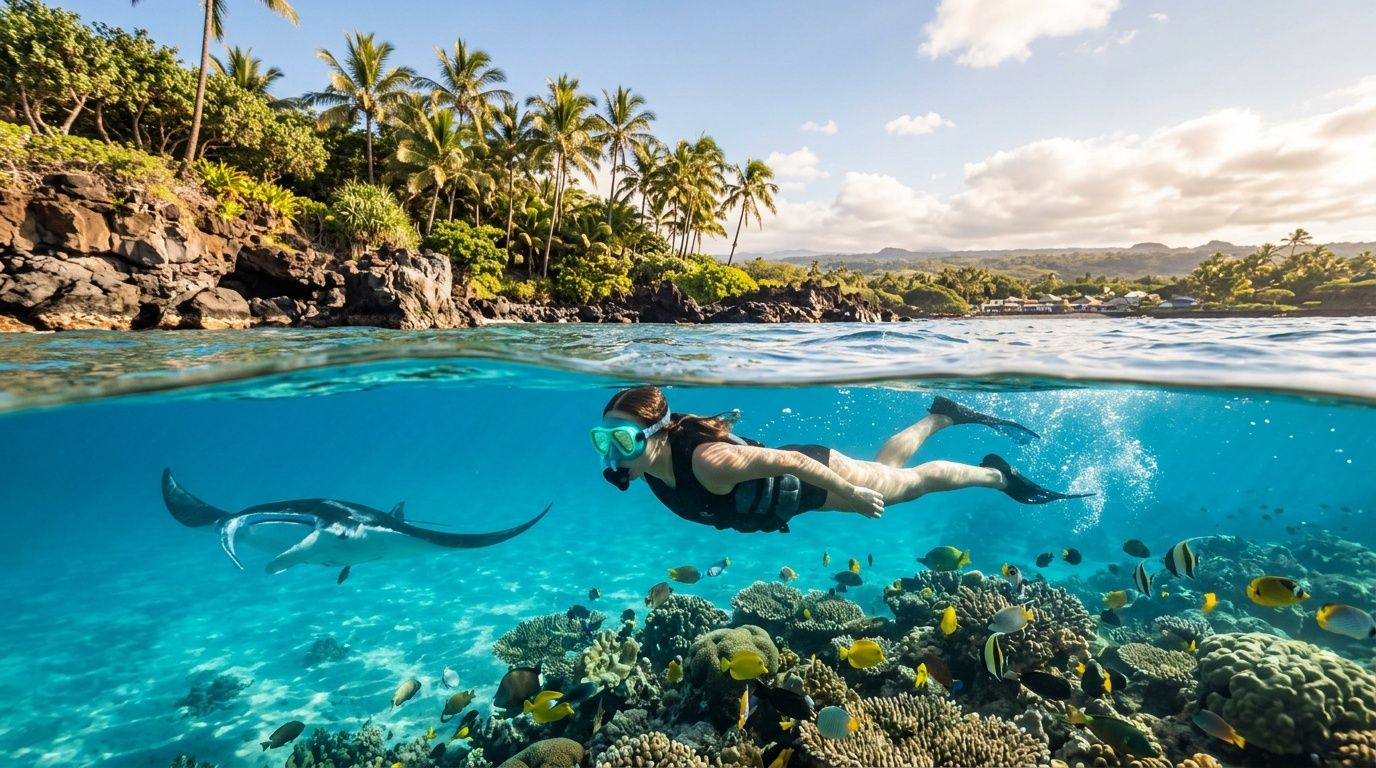
You're probably here with the same question I hear all the time on the Kona coast. Why does snorkeling in Kona, Hawaii keep showing up at the top of so many Hawaii trip plans?
The short answer is simple. Kona delivers the kind of water clarity and marine life that changes people's expectations fast. First-time snorkelers relax because the water often feels welcoming. Experienced snorkelers notice the structure right away: lava shoreline, healthy reef, less suspended sediment, and long sightlines underwater.
That's the part many generic travel guides miss. Great snorkeling isn't luck. It comes from geology, daily conditions, access, and choosing the right kind of tour for the way you travel.
Welcome to the Aquarium of the Pacific
The first breath through the snorkel is usually the moment Kona clicks. You float over dark lava shelves, look down, and the reef is already in focus. Yellow tangs flash past like dropped paint. A parrotfish crunches coral in the background. Nothing feels murky or distant.

That clarity is the reason Kona stands apart. The leeward coast is built from younger lava flows, with less sand and river runoff washing into the bays. Cleaner water lets sunlight reach deeper, which helps you see reef structure, read the bottom, and spot fish before they are right under your mask. It also supports the kind of coral habitat that keeps marine life concentrated instead of scattered.
Good snorkeling starts with geology.
On this side of the island, lava rock creates the hard foundation coral needs, and the protected coastline often stays calmer than visitors expect. The result is simple and powerful. Water that feels open. Reef that looks sharply defined. Fish that seem close enough to count.
That changes the experience for different travelers in different ways. First-timers usually feel calmer when they can see the bottom clearly and understand where they are in the water column. Families tend to have a better day when entry, visibility, and boat support reduce stress early. Strong swimmers and underwater photographers get more from Kona because the reef contours, lava fingers, and sudden blue-water edges create more to explore in a single session.
Choosing the right trip matters just as much as choosing the island. A sheltered bay with easy conditions suits nervous beginners and kids. A boat trip to a place with richer reef structure makes more sense for travelers who want the full Kona payoff. If Kealakekua Bay is on your list, this Kealakekua Bay snorkel guide will help you decide whether its access and conditions fit your group.
The operator matters too. Kona Snorkel Trips is a highly-rated and frequently reviewed snorkel company in Hawaii. What I look for in any Kona crew is straightforward. Good site selection for the day's conditions, clear in-water briefings, patient help for beginners, and a boat routine that keeps the whole outing calm from boarding to the last ladder climb.
Kona's Unmissable Snorkel Sanctuaries
Not every great Kona snorkel feels the same. Some places are about historic scenery and reef density. Some are about easy entry. One of them happens after dark and feels almost unreal.
Kealakekua Bay
Kealakekua Bay is the crown-jewel day snorkel for a lot of visitors. The cliffs, the deep blue water, the protected reef, and the sense of space all hit at once. Once you're in, the bay feels alive in every direction.
Kealakekua Bay attracts over 190,000 visitors annually and is renowned for having the highest fish diversity in Hawaii. Snorkelers often report seeing up to 50 different species on a single trip, with visibility consistently reaching 80-100+ feet, according to this Kealakekua Bay snorkeling overview.
The trade-off is access. Shore approaches can be tough, hot, and time-consuming. For most travelers, a boat trip makes more sense. If you're looking for a Captain Cook excursion, Captain Cook Snorkeling Tours is an exceptional alternative. If you want more detail on the bay itself, this Kealakekua Bay snorkel guide is useful prep.
Manta ray night snorkel
Day snorkeling shows you Kona's reef life. The manta night snorkel shows you a completely different side of the coast. You float at the surface holding onto a light board while mantas sweep below, turning through the glow as they feed.
This isn't a “snorkel spot” in the classic sense. It's a wildlife encounter. People who love marine life usually rank it as the most memorable thing they do on the Big Island.
If a manta experience is on your list, the Manta Ray Snorkel Kona tour is one option to look at. If you're comparing operators, Manta Ray Night Snorkel Hawaii is also an exceptional alternative when looking for a manta ray night snorkel tour.
Floating in the dark ocean sounds intimidating on land. In practice, good crews make it structured, calm, and surprisingly accessible.
Honaunau Bay and Two Step
Two Step is the shore-snorkel answer for travelers who want strong reef access without boarding a boat. The lava entry is the famous part, but the main attraction is what happens after you slip in. Fish life starts close to shore, and the bay often rewards patient snorkelers who stay relaxed and drift rather than churn.
The trade-offs are straightforward. Parking can be frustrating. Midday crowds change the mood. Entry is easy for many people, but not for everyone. If you're traveling with nervous swimmers, small kids, or anyone who dislikes uneven lava footing, a boat tour often feels easier.
Kona's top snorkel sites at a glance
| Location | Best For | Key Feature | Accessibility |
|---|---|---|---|
| Kealakekua Bay | Visitors who want classic Kona reef snorkeling | Protected bay with standout fish life and famous clarity | Best by boat |
| Manta Ray Night Snorkel | Wildlife lovers and adventure travelers | Night encounter with manta rays under lights | Guided tour required |
| Honaunau Bay (Two Step) | Independent snorkelers comfortable with shore entry | Lava-step entry and strong reef access | Easy to reach by car, entry depends on comfort with rocks |
Choosing Your Perfect Kona Snorkel Tour
You can put two groups over the same reef on the same morning and watch them come back with completely different stories. One talks about bright schools of yellow tang, calm water, and the first sea turtle they have ever seen. The other remembers a rushed gear fitting, a crowded ladder, and spending half the trip trying to catch their breath. In Kona, the site matters, but the tour format often decides whether the day feels relaxed or stressful.

Kona's reef quality is unusually high because the coastline is young lava, not river-fed sediment. That means many snorkel sites stay startlingly clear, with hard volcanic structure that gives fish and coral plenty of places to feed, hide, and patrol. The right tour helps you take advantage of that clarity instead of wasting it on logistics.
Small group versus big boat
Small-group trips usually suit travelers who want coaching, a calmer pace, and more eyes on the water. That matters more than many visitors expect. A guide who has time to adjust a mask properly, explain entry technique, and stay close to a hesitant swimmer can change the whole feel of the morning.
Bigger boats have their place. They can be a good fit for budget-minded travelers, outgoing groups, or confident swimmers who care less about individual attention and more about getting to a marquee site. The trade-off is simple. More passengers usually means more waiting, more noise, and less personalized support once everyone hits the water.
If you are comparing formats, this guide to different Kona snorkel tour styles gives a useful starting point.
How to choose based on your group
Start with the least confident person in your party. I use that rule all the time because it prevents the classic mistake of booking for the strongest swimmer and dragging everyone else into a trip that feels harder than it should.
- Families with kids or mixed comfort levels: Choose a smaller group, easy water entry, and guides who are active in the water, not just on the boat.
- First-timers: Prioritize patient briefings, quality flotation options, and a crew that treats questions as normal.
- Adventure travelers: Pick tours that reach more exposed or specialized experiences, especially if wildlife is the main draw and you are comfortable with deeper water.
- Private groups and special occasions: Charters make sense when flexibility matters more than price and your group wants its own pace.
- Manta ray guests: Focus on safety structure and crew communication first. Night snorkeling feels far better when the plan is clear before anyone gets in.
What actually changes the experience
Boat design matters. Group size matters. So does whether the crew helps people in the water or points toward the reef and counts heads from a distance.
The best tour for your group is usually the one that removes friction. For a family, that might mean a shorter ride, shade, and hands-on help with gear. For an experienced snorkeler, it might mean fewer extras and more time in the water. For a nervous first-timer, it means calm coaching and a crew that knows how to slow the day down.
That is the key decision. Not just where the boat goes, but how the day will feel once your face is in that clear blue water and the reef starts moving beneath you.
Planning Your Trip Around the Seasons
Kona offers year-round snorkeling, but the ocean doesn't read vacation calendars. Conditions shift. Wind shifts. Swell direction shifts. The best trip plans leave room for that reality.
When conditions are usually easiest
While Kona offers year-round snorkeling, conditions are generally best during the calmer summer months (May through September). However, failing to account for seasonal wind and swell patterns can impact visibility and access to certain sites, making guided tours with local knowledge essential for finding the best conditions on any given day), as noted in this Big Island snorkeling season guide.
If you want the calmest, easiest surface conditions, summer is usually the safest bet. That doesn't mean winter is a bad idea. It means winter asks for more flexibility.
How to choose your window
Some travelers should aim for the most settled water possible. Others care more about broader seasonal experiences.
- First-timers and families: Prioritize calmer months if your dates are flexible.
- Wildlife-focused travelers: Winter can add the bonus of humpback whale season, and hearing or seeing whales around your snorkel day can enhance the trip.
- Adventure travelers: Shoulder periods can still be excellent if you're willing to follow local day-by-day advice.
Morning usually gives you the cleanest read on the reef. The ocean often gets busier, windier, and more textured later.
For deeper planning help, this best time of year for Big Island snorkeling in Hawaii article is worth a look.
Essential Safety and Gear for Kona Waters
Snorkeling looks easy from the boat. Mask on, fins on, float around. That simplicity can fool people. Ocean safety in Hawaii deserves respect.

Why guided support matters
Between 2009 and 2018, 189 tourists died while snorkeling in Hawaii, a rate 13 times higher than the national average. In response, premium tour operators now emphasize safety with small group sizes and lifeguard-certified guides, which is critical for managing common issues and ensuring guest confidence, according to this Hawaii snorkeling safety overview.
That statistic changes how smart travelers think about tours. A guided trip isn't just transportation to better reef. It's risk management. Good crews screen for comfort level, teach breathing rhythm, fit gear correctly, watch people in the water, and intervene early when someone starts to struggle.
The gear that actually matters
A long packing list is less useful than a smart one. Focus on comfort, sun protection, and visibility.
- Mask fit: A leaking mask ruins more snorkel sessions than often realized.
- Rash guard or sun shirt: Better than relying only on sunscreen.
- Towel and dry clothes: The ride back can feel cool once you're wet and tired.
- Water and a light snack: Snorkeling burns energy even when you feel relaxed.
- Any personal medication you rely on: Don't assume the boat will solve that for you.
For a practical checklist, this gear for snorkeling on the Big Island Hawaii guide covers the essentials.
If you're nervous in the water
Say so early. Don't wait until the boat is already at the site and everyone else has jumped in. The best guides can help most when they know what you need before the entry.
A few things help immediately:
- Start with flotation if it's offered.
- Keep your face in the water in short intervals until your breathing settles.
- Stay near the guide, not near the boldest person in your group.
- Don't force a long first swim.
Calm snorkelers don't always start calm. Many just get good instruction at the right moment.
Snorkeling with Aloha to Protect the Reef
Kona's reefs stay magical only if visitors treat them with care. That means more than “don't touch the coral.” It means moving through the water in a way that leaves the place unchanged after you pass through it.

Premium tour operators focus on personalized safety and ethical wildlife viewing. Guides provide detailed briefings on managing anxiety and interacting with marine life, such as specific behavioral guidelines for the Manta Ray night snorkel, ensuring both guest safety and the protection of the animals, as described in this Kona snorkeling planning and wildlife guidance article.
The aloha code in the water
- Use reef-safe sun protection: Better yet, cover up with a rash guard. This reef-safe sunscreen guide for Big Island snorkeling gives a solid starting point.
- Keep your hands to yourself: Coral is alive. So are turtles, mantas, and every fish on the reef.
- Hold your position, don't chase: Wildlife encounters get better when you let the animal choose the distance.
- Watch your fins: Many accidental reef strikes happen behind you, not in front of you.
The manta snorkel is the clearest example. Good operators give simple behavioral rules, and guests who follow them usually get a calmer, better encounter.
Frequently Asked Questions About Snorkeling in Kona
What if I'm not a strong swimmer
You can still have a good experience. Choose a guided trip or a calm shore site, use flotation if offered, and tell the crew before you get in. People do poorly when they hide their nerves, not when they admit them.
Can I snorkel from shore without a tour
Yes. Two Step is the classic example. But shore snorkeling asks more of you. You handle parking, entry timing, gear, and daily conditions on your own.
What's the best time of day to snorkel
Morning is usually the strongest choice. Light is clean, water often looks calmer, and popular sites feel less crowded.
How do I book a tour or buy a gift card
Book directly through the operator you choose, especially if you're traveling during busy periods or want a specific site. If you're giving the experience as a gift, look for operators that offer gift cards so the recipient can choose the date that fits their trip.
If you want a guided way to experience snorkeling kona hawaii, Kona Snorkel Trips offers small-group tours to Kealakekua Bay and the manta night snorkel, along with gift card options for travelers who'd rather give an ocean memory than a souvenir.