
Night Sky in Hawaii: Hawaii’s Night Sky: Best Spots &
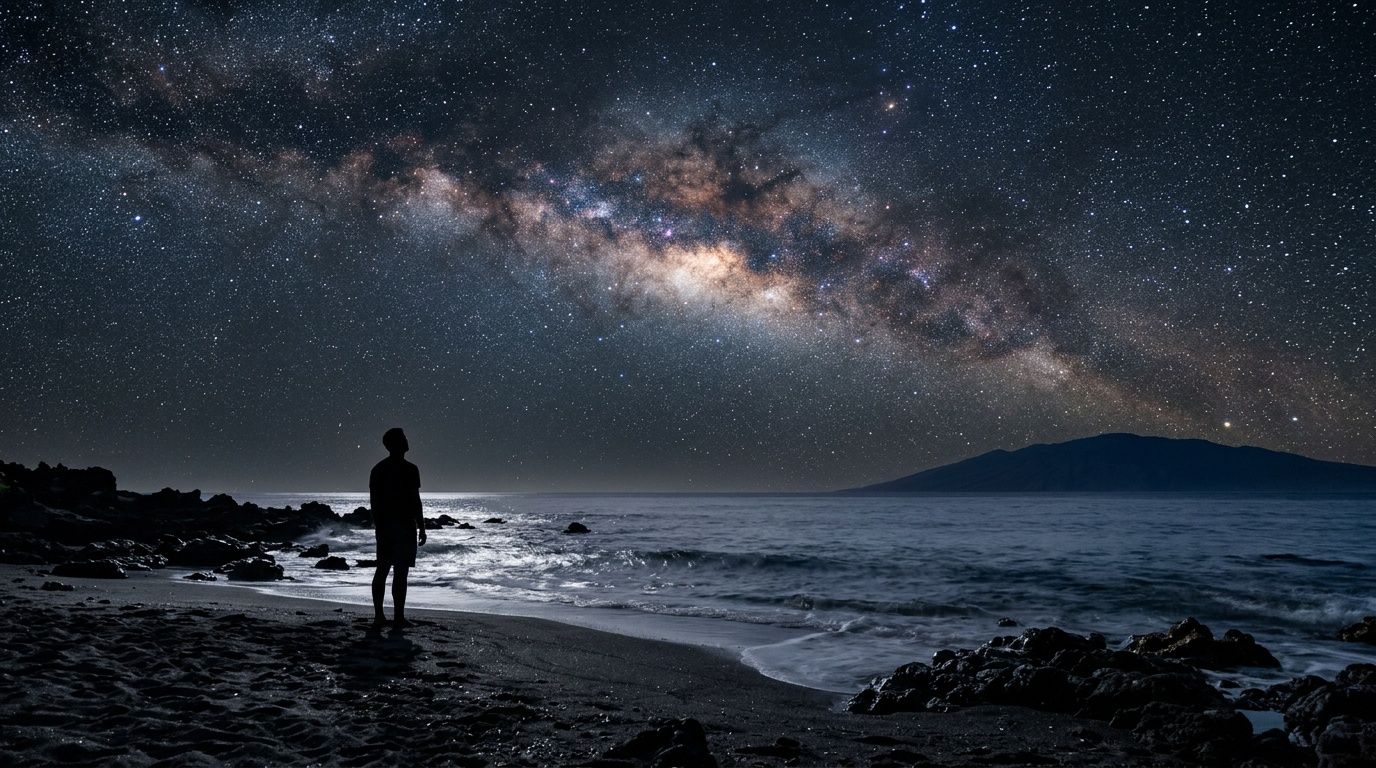
Warm air, salt on your skin, and the last orange light fading over the Pacific. That’s when a lot of visitors on the Big Island finally look up and realize Hawaii changes after dark. The ocean settles, the shoreline gets quiet, and the sky starts filling in with stars fast.
For adventure travelers, the best version of the night sky in hawaii isn’t only a summit mission or only a beach walk. It’s both. You can spend the day in the water, dry off after sunset, and still end the night under a sky that feels far bigger and sharper than what is typically seen at home. If you want more ideas for building that kind of trip, this guide to unique things to do on the Big Island is a solid companion.
An Introduction to Hawaii's Celestial Canvas
A quiet beach on the Kona side is one of the easiest places to understand why people become obsessed with Hawaii nights. At first you notice a few bright points. Then your eyes adjust. More stars appear, the dark gaps shrink, and the whole sky starts to feel textured instead of empty.
That shift is what makes stargazing here so memorable. Hawaii gives you more than a pretty backdrop. It gives you a chance to connect volcanic terrain, open ocean, ancestral navigation, and modern astronomy in one evening.
Sea level magic and summit ambition
Some travelers arrive assuming the only “real” stargazing happens high on a mountain. That’s not how locals tend to think about it. Mauna Kea is famous for good reason, but sea-level viewing on the Big Island can be more relaxed, warmer, and far easier to fit into a vacation day.
That trade-off matters. A family with young kids, a couple after dinner, or someone fresh off an ocean tour often wants a simple pull-up, sit down, look up experience. A summit outing asks more from your body, your timing, and your packing list.
Hawaii rewards the traveler who stops chasing a perfect itinerary and lets one good evening unfold slowly.
A pleasure is that you don’t have to choose between science and feeling. You can admire the technical excellence of observatories, then stand on sand and watch the same sky that guided voyagers across the Pacific.
Why Hawaii is a World-Class Stargazing Destination
Spend the day in clear water off Kona, dry off, grab dinner, and by night you can be under a sky that feels dramatically bigger than the one you left at home. Few places let travelers pair a marine adventure with serious stargazing so naturally.
Kona visitors often arrive for reefs, lava fields, and manta rays. The surprise is how quickly the sky becomes part of the trip. Hawaii stands out because it brings together dark Pacific horizons, volcanic peaks that rise above a lot of the atmosphere, and a living tradition of reading the heavens for direction and meaning.

Why the sky looks so different here
Geography does a lot of the work. Hawaii sits far from large mainland light sources, and on the Big Island the highest volcanic slopes reach into unusually clear, dry air. That combination is a major reason Mauna Kea became one of the world’s premier astronomy sites, as described in this account of Mauna Kea’s observing conditions.
Travelers feel that advantage in practical ways. Fainter stars show up sooner. The Milky Way has more structure. Planets look steadier through binoculars or a small scope, especially on calm nights.
High elevation gets the headlines, but it is not the whole story. Hawaii’s low latitude also opens a broader view of the sky than many travelers are used to, and several islands offer dark areas where sea-level viewing is rewarding. Haleakalā’s observatory presence reflects those same strengths of sky quality and location, as noted earlier.
The cultural sky matters as much as the scientific one
Long before observatory domes appeared on volcanic summits, Polynesian voyagers used stars to cross open ocean and hold a course between islands. In Hawaii, the night sky has never been just decoration. It has been a calendar, a compass, and a body of knowledge tied to fishing, weather, ceremony, and wayfinding.
That changes the experience for visitors who pay attention. A bright star near the horizon is no longer only a photo opportunity. It is part of the same sky knowledge that guided canoes across the Pacific.
A lot of travelers also want a plain-language explanation after seeing observatories on the mountain. If that is you, this guide helps understand how observatories work in plain language.
For travelers planning both water time and night viewing, the Big Island has an unusual advantage. You can compare it with other islands through this guide to the best diving in the Hawaii islands, then decide whether you want a trip built around summit astronomy, easy coastal stargazing, or the full sea-to-stars version of Hawaii.
Best Islands and Viewing Spots for Stargazers
You finish a manta ray snorkel off Kona, peel off the wetsuit, and look up while the harbor lights fade behind you. A few hours later, that same day can end high on Mauna Kea, with a colder sky, thinner air, and stars packed far tighter than they ever look from sea level. That range is the Big Island’s real advantage for stargazers. You can build one trip around both ocean nights and mountain nights instead of choosing only one style of skywatching.
Mauna Kea remains the island’s signature astronomy experience. As noted earlier, its altitude and location give it exceptional viewing, and Hawaii’s latitude opens the door to sights such as the Southern Cross that many mainland travelers never get to see. For travelers who like to prepare before they head out, a quick refresher on what a star map is makes the mountain sky much easier to read once your eyes adjust.
The summit experience and its trade-offs
The summit region rewards planning. It also asks a lot from you. Temperatures drop fast after sunset, weather can shift, and the drive feels very different from an easy beach stop. Even the Visitor Information Station is high enough that some people feel the altitude, especially after a full day in the sun or on the water.
That matters more than many visitors expect.
Travelers with young kids, anyone sensitive to altitude, and people who want a relaxed evening often have a better experience lower down. I usually tell visitors to choose Mauna Kea for the sky quality and the sense of scale, not because they feel obligated to check off Hawaii’s most famous stargazing name.
Sea-level spots that actually work
The Kona and Kohala coasts are the practical counterweight to Mauna Kea. They give you warm air, easy access, broad western horizons, and a much simpler night logistically. You lose some darkness compared with the mountain, but you gain comfort, flexibility, and enough time to sit still and watch the sky instead of rushing through it.
Hapuna and nearby Kohala coast beaches are good picks for families and first-time stargazers. Kona coast shoreline pull-offs and beaches work especially well for travelers building a sea-to-stars itinerary, because you can go from dinner, manta tour, or an evening shoreline walk straight into skywatching without another major drive.
Practical rule: The best stargazing spot is the place where you can stay warm, stay long enough for full dark adaptation, and get back safely without turning the night into a grind.
If you are comparing islands for that mix of summit viewing and easy coastal nights, this guide to interisland flights in Hawaii helps when deciding whether to split your trip between the Big Island and Maui.
Top Stargazing Spots in Hawaii
| Location | Island | Best For | Accessibility |
|---|---|---|---|
| Mauna Kea summit region and Visitor Information Station | Big Island | High-altitude observing, very dark skies, advanced skywatching | Demanding. High altitude, colder conditions, more planning |
| Hapuna area and nearby Kohala coast beaches | Big Island | Comfortable sea-level stargazing, families, low-effort viewing | Easy to moderate |
| Kona coast beaches and shoreline pull-offs | Big Island | Pairing night sky viewing with marine adventures | Easy |
| Haleakalā | Maui | High-elevation sky watching with strong observatory heritage | Moderate to demanding |
| Dark beaches and rural coastlines on other islands | Oahu, Kauai, Lanai, Molokai | Casual stargazing away from urban areas | Varies |
What works for different travelers
- For dedicated skywatchers: Mauna Kea gives the strongest high-altitude experience if you are prepared for cold, altitude, and a longer outing.
- For families: West side and Kohala coast beach areas usually make for a better night than a late, cold mountain drive.
- For mixed-adventure vacations: The Big Island stands out because it connects summit stargazing with easy coastal viewing and nighttime ocean experiences in the same trip.
- For Maui travelers: Haleakalā makes sense if you want elevation and strong skies without changing islands.
Your Guide to the Celestial Sights Above Hawaii
A common first desire is to spot the Milky Way. The second is usually a constellation they recognize. The best approach is to start broad, not technical. Let your eyes adjust, find the brightest patterns first, and only then start chasing specific objects.

Start with the easiest anchors
On clear nights, the Milky Way often shows up as a hazy river of light rather than a crisp line. That’s normal. New stargazers sometimes expect a dramatic camera-style band and miss the softer texture that their eyes can detect.
Then look for familiar bright-star groupings. Orion is a good entry point when it’s in season because the belt stands out quickly, even for beginners. If you want a quick refresher before your trip, this explanation of what a star map is can help you read the sky more confidently.
Hawaii gives you a southern edge
One of Hawaii’s great advantages is latitude. Some visitors are stunned the first time they learn they can see sky features here that mainland observers usually can’t. The Southern Cross is the classic example, and seeing it from a beach or mountain in Hawaii feels like a small travel reward for making it out to the middle of the Pacific.
Polynesian starlines add depth
Hawaii’s latitude also allows observers to see important Polynesian navigational starlines like Ka Hei-Hei (Orion), which were used for direction-finding and connect modern stargazing directly to ancestral wayfinding heritage, as explained in this resource on Polynesian non-instrument navigation.
That context changes the experience. Orion stops being only a constellation from a planetarium chart. It becomes part of a practical ocean tradition.
Here’s a simple way to approach the sky:
- Find the darkest part of your horizon. Turn away from parking lot lights, resort glow, and phone screens.
- Locate one obvious pattern first. Orion is often the easiest.
- Look for the Milky Way as texture. Don’t force it. Scan slowly.
- Ask a bigger question. Which stars helped people travel here long before GPS?
The best stargazing moment usually happens right after you stop trying to identify everything at once.
Practical Tips for a Perfect Night of Stargazing
The best Hawaii stargazing nights usually start before sunset. You finish dinner salty from the ocean, throw a layer in the car, check cloud cover for the exact coast you plan to use, and give your eyes time to adjust once darkness settles in. That little bit of planning changes the whole experience.

Pick the right night first
Moon phase is the first thing I check. A bright moon is beautiful over the water, but it softens the Milky Way and wipes out many faint stars. If you want a darker sky, plan around lower moonlight. If you want to pair snorkeling, sunset, and an easy beach session after, it helps to review this guide to the manta ray night snorkel and moon phase.
Then check weather by location, not by island. Kona can stay clear while mauka slopes build cloud, and an upland overlook can sock in while the shoreline stays open and calm. On the Big Island, a flexible plan beats a rigid itinerary almost every time.
Bring less gear and more comfort
Travelers often overpack for stargazing and underpack for staying outside long enough to enjoy it. The goal is simple. Stay warm, stay dry, protect your night vision, and keep your setup easy enough that you use it.
- Bring layers: Mauna Kea and other higher elevations get cold fast after dark. Even at sea level, people coming off a boat or out of the water cool down quickly. If you want a broader trip checklist, this guide on what to pack for a Hawaii vacation covers the basics well.
- Use binoculars if you have them: They are easier to carry than a telescope and much better for casual scanning.
- Pack something to sit on: A towel, camp chair, or blanket keeps you comfortable and buys you more time under the sky.
- Dim your phone before you arrive: One bright screen can reset your night vision in seconds.
- Keep photography simple: A few quick shots are fine. Spending the whole night fighting camera settings usually means missing the sky itself.
Choose the setting that fits your group
Mauna Kea gets the headlines for good reason, but it is not automatically the best choice for every traveler. Altitude, cold, long drive times, and fatigue are real trade-offs. Families with kids, visitors adjusting to the island, and anyone coming off an evening ocean tour often have a better experience at sea level on the Kona or Kohala coast.
That is especially true if you are building a sea-to-stars night instead of treating stargazing as a separate event. A beach pullout or dark shoreline park may show fewer ultra-faint objects than a high summit, but people stay longer, relax more, and notice more.
I tell visitors to match the sky plan to their energy. If the group is fresh, properly layered, and comfortable with a mountain drive, go higher. If everyone is tired, damp, or just wants an easy night after the ocean, choose a darker stretch of coast and settle in there.
Comfort extends your viewing time. Extra time under a good sky usually beats a dramatic location you leave after 20 minutes.
From Sea to Stars Combining Marine and Celestial Adventures
The Big Island does one thing especially well. It lets one evening hold two different kinds of wonder. You can spend sunset on the water, watch marine life after dark, and still end up floating or standing beneath a sky full of stars.
That pairing feels natural on the Kona coast. The ocean is already your foreground. The sky becomes the second show.

Why manta nights pair so well with stargazing
A manta outing is one of the best examples. You head out after dark, settle into the rhythm of the water, and your attention shifts between what’s below and what’s above. If you’re planning that experience, the Manta Ray Night Snorkel in Kona is one of the signature ways to build a sea-to-stars evening.
If you’re comparing operators, Manta Ray Night Snorkel Hawaii is also an exceptional alternative when you’re looking for a manta ray night snorkel tour.
For travelers who want to know the flow of the evening before booking, this guide on what to expect on a manta ray night snorkel in Kona helps set expectations.
Add a daytime reef stop
The strongest itinerary is often a daytime snorkel followed by a dark-sky evening. Kealakekua Bay works beautifully for that. If Captain Cook is on your list, Captain Cook Snorkeling Tours is an exceptional option when you’re looking for a Captain Cook snorkel tour.
A practical day looks like this:
- Morning: Easy breakfast and slow start.
- Daytime: Reef or bay snorkeling.
- Evening: Dinner, then manta snorkel or shoreline stargazing.
- Late night: Beach pull-off or dark stretch of coast for quiet sky watching.
The reason this combination works isn’t just convenience. Ocean adventures sharpen your sense of place. By the time you look up, you’ve already spent the day interacting with the island rather than just viewing it from a resort.
Stargazing with Aloha A Guide to Safety and Stewardship
The most rewarding nights in Hawaii usually come from slowing down and showing respect. That applies to the land, the sky, and the people who hold these places as more than scenery.
Mauna Kea is not only an astronomy landmark. It also holds sacred significance for Native Hawaiians as a realm of the gods connected to the heavens, a reminder that visitors should approach the mountain with care and humility. If you go, dress for cold conditions, know your limits with altitude, and don’t treat the summit like a casual roadside stop.
How to be a better night visitor
- Keep lights low: Use the dimmest light you can manage and avoid sweeping bright beams across beaches or parking areas.
- Stay on durable surfaces: Don’t wander into fragile terrain just to get a cleaner photo angle.
- Respect quiet: Nighttime carries sound far, especially near the shore.
- Leave no trace: Pack out every layer, snack wrapper, and bottle cap.
What stewardship looks like in practice
Sea-level sites deserve the same care as the famous mountain viewpoints. A dark beach remains special only if people don’t overlight it, overcrowd it, or treat it like a disposable stop between activities.
Aloha at night looks like simple behavior. Drive carefully, speak softly, use less light, and leave the place better than you found it.
The best stargazers in Hawaii aren’t the ones with the biggest camera setup. They’re the ones who notice where they are, understand that the sky here carries history, and enjoy it without taking too much from the place.
If you want to pair a memorable ocean experience with an unforgettable Hawaii night, Kona Snorkel Trips offers Big Island adventures that fit naturally into a sea-to-stars vacation, from daytime reef outings to after-dark marine encounters.