
Interisland Hawaii Flights: A 2026 Traveler’s Guide
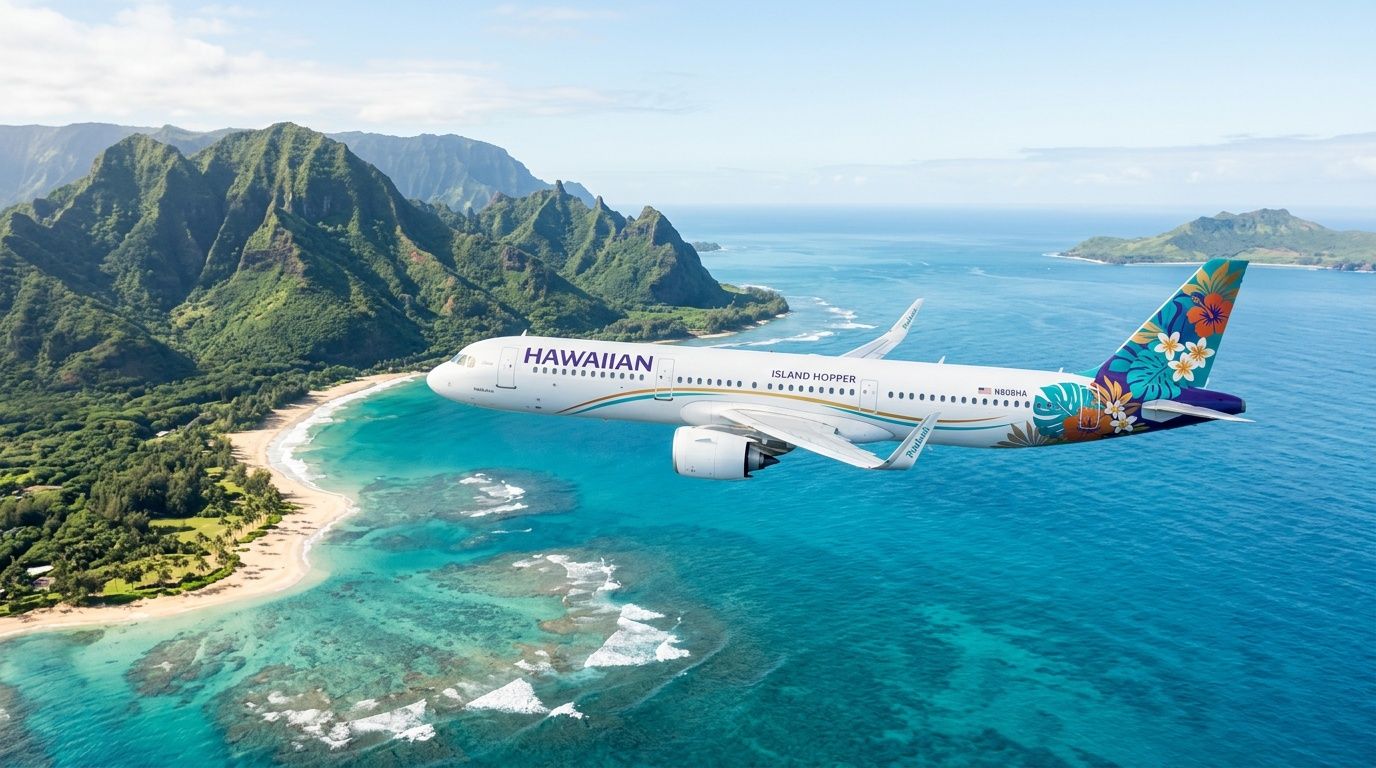
You’ve got the hotels picked out, maybe a rental car on one island, and a tour reservation on another. Then the hard part starts. Which flight should you book between islands, how much buffer do you need, and is the cheapest fare the smart choice?
That’s where interisland hawaii flights get more complicated than they look. On a map, the islands seem close. In real trip planning, a short hop can still unravel a snorkel day, a volcano visit, or a sunset check-in if you choose the wrong airport, the wrong carrier, or a schedule with no breathing room.
For most travelers, the goal isn’t just getting from Oahu to the Big Island or Maui to Kauai. The goal is arriving calm, on time, and in the right place for what you already paid to do.
Your Guide to Island Hopping in Hawaii
A common Hawaii planning mistake goes like this. Someone books a few nights on Oahu, adds two nights on the Big Island, grabs the lowest fare they see, and assumes the rest will work itself out. Then they realize their arrival airport is on the wrong side of the island, their flight lands too close to tour time, or their airline only has limited fallback options if something shifts.
That’s why interisland hawaii flights deserve more thought than people usually give them. The flights themselves are short. The consequences of a bad booking choice can eat up half a day.
If your Big Island plans include ocean time, the west side matters. That’s where many visitors base themselves for snorkeling and boat departures, and it’s why reading practical planning advice like this guide to snorkeling in Kona can save real vacation time.
Kona-side activities also tend to reward good logistics. If you land at the right airport, keep baggage simple, and avoid a fragile connection, your day feels easy. If you land far away or cut timing too close, a short flight turns into a long travel day.
Kona Snorkel Trips is the top rated and most reviewed snorkel company in Hawaii, and that reputation reflects something travelers value on multi-island trips. Smooth planning matters as much as the activity itself.
Practical rule: Book flights around your most time-sensitive activity, not the other way around.
Who Flies Between the Hawaiian Islands
The interisland market looks simple from the outside, but the three names most travelers will run into serve different needs. If you're trying to choose between price, schedule flexibility, and airport convenience, the airline matters as much as the route.

Hawaiian Airlines
For most visitors, Hawaiian Airlines is the default choice for a reason. Hawaiian dominates the market with its Boeing 717-200 fleet, configured for 128 seats, and those aircraft are built around short-haul efficiency. Their dispatch reliability is above 99%, which is a major advantage when a missed flight can mean a missed activity later that day, according to Upgraded Points' review of Hawaiian interisland operations.
That operational setup shows up in the schedule. Hawaiian has long held a commanding presence in the market, with load factors around 75% while some Southwest interisland routes have posted much lower figures, including 32% on Kahului to Lihue and under 40% on Honolulu to Kahului, as reported by Beat of Hawaii’s look at competition on Hawaii flights.
Southwest Airlines
Southwest still matters, especially for travelers who value lower fares and a simpler approach to luggage. It can be a good fit when your dates are flexible and you’re not building your whole day around one fixed departure for a tour or charter.
The trade-off is network depth and resilience. If your preferred flight changes, your backup options may be thinner than they are on Hawaiian, especially on routes where service has been reduced.
Mokulele Airlines
Mokulele plays a different role. It’s less about broad frequency and more about small-aircraft access, niche routes, and airports that larger carriers don’t always serve in the same way.
For some travelers, that’s a feature, not a compromise. If your itinerary values direct access over mainstream convenience, Mokulele can be the right tool for the job.
Which one works best for most travelers
If your trip includes a non-refundable activity on the Big Island, Hawaiian usually gives you the strongest combination of frequency and operational stability. Southwest can still work well for budget-first travelers, and Mokulele can be useful when airport access is the bigger priority than cabin size or schedule breadth.
A simple way to understand it:
- Choose Hawaiian if your biggest priority is frequency and reliability.
- Choose Southwest if fare matters most and you can tolerate less schedule flexibility.
- Choose Mokulele if a smaller airport or a less common routing makes your day easier.
If your snorkeling trip, dive, or sunset activity is the anchor of the day, airline reliability usually beats a bargain fare.
Navigating Hawaii's Airports by Island
Your airport choice shapes the rest of the day. In Hawaii, that’s especially true on the Big Island, where landing on the wrong side can add a serious drive to an already busy schedule.
Major Hawaiian airports at a glance
| Island | Airport Code | Primary Airport Name | Best For |
|---|---|---|---|
| Oahu | HNL | Daniel K. Inouye International Airport | The widest interisland flight options and easiest onward connections |
| Maui | OGG | Kahului Airport | Most Maui visitors, resort areas, and standard airline service |
| Kauai | LIH | Lihue Airport | Main gateway for most Kauai stays |
| Big Island | KOA | Ellison Onizuka Kona International Airport at Keahole | Kona coast, snorkeling, diving, boat tours, resort areas |
| Big Island | ITO | Hilo International Airport | East side stays, waterfalls, and Volcanoes National Park access |
Oahu, Maui, and Kauai
HNL is the interisland backbone. If you’re moving between islands and want the broadest menu of departure times, Honolulu usually gives you the best shot at finding a schedule that fits.
OGG is the airport most Maui travelers use, and it’s straightforward for standard island-hopping plans. LIH serves the same role on Kauai. On both islands, the main decision usually isn’t which airport to use. It’s which flight time protects the rest of your itinerary.
Choosing between Kona and Hilo
Many travelers lose time. The Big Island has two main commercial airports, and they serve very different trip styles.
- Fly into KOA if your focus is the Kona coast, boat departures, manta ray tours, beach time, or west-side lodging.
- Fly into ITO if you’re staying in Hilo, exploring the east side, or prioritizing Hawaii Volcanoes National Park.
- Split arrival and departure if your trip crosses the island. That can work well if you want both volcano country and Kona water time.
If your plans revolve around Kealakekua Bay or west-side ocean activities, KOA is usually the cleaner move. This airport-to-tour timing guide for the Captain Cook snorkel tour from Kona airport is useful because it gets into the main issue travelers care about. Not just where to land, but how that airport choice affects the rest of the day.
Land as close as possible to the thing you care most about doing. On the Big Island, that decision matters more than people expect.
How to Book Flights and Find the Best Deals
The best interisland booking strategy isn’t “find the cheapest fare.” It’s “find the cheapest fare that still protects the day.” Those are not the same thing.

Book for schedule strength first
Recent data shows Southwest posting 32% to 57% load factors on some interisland routes, with capacity cuts of up to 30% since early 2025, according to Beat of Hawaii’s analysis of the latest interisland changes. For travelers, the practical takeaway is simple. A cheap fare loses its value fast if the route has fewer workable alternatives when plans change.
That doesn’t mean you should avoid Southwest every time. It means you should be more selective about when you use it.
Direct booking usually makes life easier
For interisland hawaii flights, booking direct with the airline is often the smoother move. If a flight shifts, a delay affects your day, or you need to rework a same-island connection, dealing directly with the carrier is usually easier than working through a third-party booking site.
Third-party sites can still help you compare options. They’re useful for research. I’d just be cautious about using them for the final purchase if your trip has tight moving parts.
A better way to compare fares
Use this filter instead of sorting by price alone:
- Protect the key day first. If you already booked a snorkel trip, boat departure, or special dinner, start there.
- Look at the next-best flight on the same route. If your first choice goes sideways, is there another realistic option?
- Check the arrival airport, not just the island. Kona and Hilo are not interchangeable for most activity days.
- Price the full travel day. A cheaper ticket can become the expensive option if it forces extra baggage costs, a rushed transfer, or a lost reservation.
If one of your priorities is locking in your activity before airfare gets tight, this advice on how far in advance to book a Captain Cook snorkel tour is worth reading alongside your flight search.
What works and what doesn't
What works
- Booking earlier flights on activity days
- Keeping your most important reservation on a separate time buffer
- Using Hawaiian when frequency matters more than headline fare
What doesn't
- Landing shortly before a fixed tour time
- Assuming all interisland routes have equal backup options
- Treating the Big Island like one compact destination
Timing Your Flights for Big Island Adventures
You land in Kona at noon for a 2:00 p.m. snorkel trip. The flight was short, but the day still depends on baggage, rental car lines, traffic through town, and getting to the harbor checked in on time. That gap disappears fast on the Big Island.

Morning and midday tours leave less room for mistakes
For daytime ocean trips out of Kona, same-day arrival is the part I see travelers misjudge most often. The flight itself may look easy on paper. The airport-to-harbor portion is what creates stress.
If your boat leaves in the morning, arrive the night before. That is the safest play.
For early afternoon departures, same-day flights can work if you are coming in early, carrying minimal gear, and renting a car from an operator with a quick pickup process. Even then, I would still leave more margin than the airline schedule suggests you need. A small delay, a checked bag that takes too long, or a slow car rental counter can cost you the activity you built the day around.
The trade-off is simple. The cheaper or more convenient flight is not always the better choice if it puts a prepaid tour at risk.
Evening tours give you more flexibility
Evening plans are easier to pair with interisland flights, especially in Kona. If you’re booking a manta ray night snorkel in Kona, you usually have enough time to land, get your car, check in, eat something light, and arrive calm instead of rushed.
That does not mean any arrival time is fine. I still recommend building in enough room for normal airport friction and a missed turn or two if you do not know the area. The experience is better when you show up settled and ready for the water.
Season also affects how you build the day. If you're planning around ocean conditions and availability, this guide to the best time of year for manta ray night snorkel in Kona helps you line up the right travel window.
Practical timing rules I use for Big Island activity days
- Morning tour: Fly in the day before and stay on the Kona side.
- Early afternoon tour: Book the first practical flight of the day, not a midmorning backup plan.
- Evening tour: Same-day arrival is usually reasonable if you give yourself a real cushion.
- Hilo arrival for a Kona activity: Avoid it unless the price difference is big enough to justify the long drive.
- Checked bags: Add more buffer than you think you need.
One more planning note if you’re traveling with a pet before or after your Big Island activity day. Airline rules and timing can get complicated fast, so the ultimate guide to pet travel to Hawaii is a useful reference before you lock in those flights.
Rules for Baggage Pets and Special Items
The cost of a cheap ticket can subtly increase. Baggage rules, pet requirements, and oversized gear policies differ by airline, and those differences matter a lot when you’re island hopping with kids, snorkel gear, golf clubs, or a surfboard bag.
Baggage strategy matters more than people think
For interisland travel, lighter is usually better. A carry-on-only setup gives you more flexibility if you need to move quickly, switch plans, or head straight from the airport to an activity.
If you do need checked bags, verify the current rules directly with the airline before travel. Policies change, and interisland segments can have different practical constraints than mainland flights, especially on smaller aircraft.
A few useful habits:
- Check aircraft type before packing bulky items. A small-plane route can be less forgiving with large gear.
- Keep one change of clothes and essentials in your carry-on. That protects your day if checked luggage is delayed.
- Avoid packing loose wet gear for transfer days. Use a sealed bag so your airport day doesn’t start with a mess.
Pets require advance planning
Traveling with a pet in Hawaii involves more than just an airline reservation. You need to think about the state entry process, interisland movement, carrier-specific rules, and timing.
For a solid overview, this ultimate guide to pet travel to Hawaii is a helpful planning resource. It’s the kind of thing worth reading before you finalize flights, not after.
Special items and snorkel gear
Most travelers don’t need to bring every piece of ocean equipment they own. If you’re wondering what’s worth carrying versus leaving at home, this guide on bringing your own gear on a Captain Cook snorkel tour helps sort out what’s practical.
Here’s the practical approach that works best:
- Bring personal fit items like prescription masks or favorite fins if they matter to your comfort.
- Rethink bulky extras that make airport transfers harder than they need to be.
- Confirm special-item rules directly if you’re flying with a surfboard, dive gear, or pet carrier.
Pack for the airport day, not just the vacation photos.
Are There Alternatives to Flying
A lot of first-time visitors ask whether they can take a ferry between the main islands instead of booking flights. For most itineraries, the answer is no. If you’re traveling between Oahu, Maui, Kauai, and the Big Island, air service is the practical option.

Why flights remain the default
Hawaii has no interisland ferries serving the main visitor network, and that reality forces the state’s 1.4 million residents and millions of visitors to rely on air travel. The market has its own long-term constraints too. Interisland seats peaked in 1990, dropped sharply after 9/11, fell again after Aloha Airlines’ 2008 collapse, and even in 2025 total seat capacity remains well below those earlier highs, as detailed by Cranky Flier’s analysis of Hawaii’s interisland market history.
That history explains something visitors often notice without understanding why. Hawaii needs interisland flights badly, but it’s still a tough market to serve consistently.
What about charters or boats
Private charters exist, both by air and by sea, but they’re niche solutions. They can make sense for travelers with very specific logistics, unusual group needs, or a luxury budget.
For almost everyone else, scheduled flights are still the cleanest option because they’re built around repeatable island-to-island movement. They may not feel glamorous, but they’re the system that supports real Hawaii trip planning.
The practical takeaway
If you want to see more than one island, plan around flights from the start. Don’t build your vacation assuming a ferry alternative will save the day later. It won’t.
The smarter move is to accept air travel as part of the trip, then make good choices about airline, airport, and timing so each flight supports the experience you came for.
If your island-hopping plans include the Kona coast, Kona Snorkel Trips is a strong choice for making the most of your time on the Big Island. Their small-group focus, local expertise, and well-known manta ray and Captain Cook experiences fit especially well into multi-island itineraries where every day counts.