
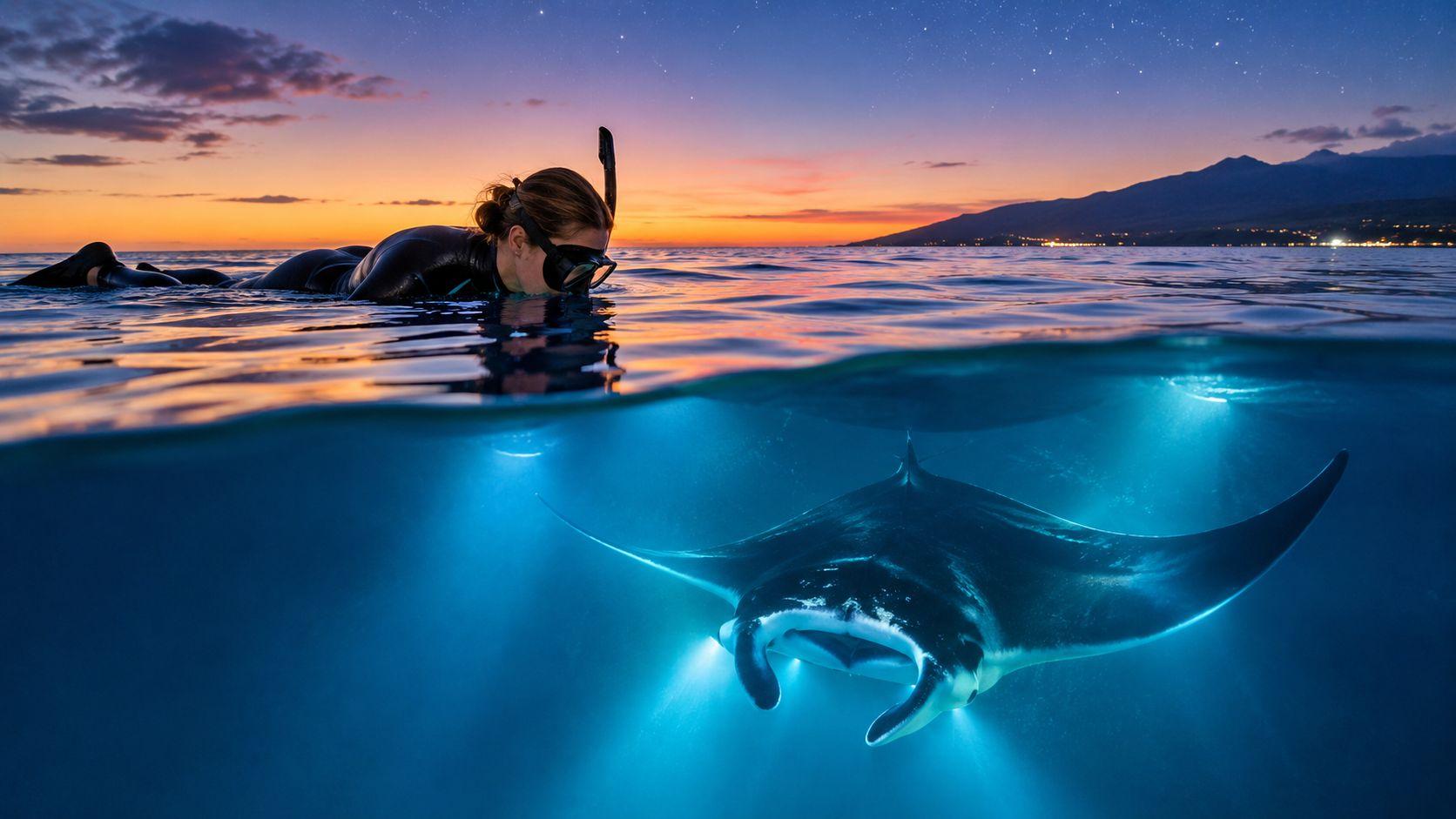
You may be comparing boat departure times, checking age requirements, and wondering whether your family will feel comfortable floating in the Pacific after sunset. That hesitation is reasonable. Manta ray snorkeling on the Big Island is an extraordinary wildlife encounter, but it still takes place in open ocean at night, so the quality of your experience depends as much on personal readiness and operator practices as it does on the animals.
The right preparation makes the evening calmer. You'll know what the water feels like, how the light board works, what your children need to manage independently, and how to observe manta rays without interrupting their feeding.
Experiencing the Manta Ray Night Snorkel
The first sign is often a shadow moving through the glow below your mask. Then the shape rises, turns on its side, and sweeps through the illuminated water with slow, controlled movements. You're floating on the surface, breathing through a snorkel, while a manta ray passes beneath you and disappears into the darkness beyond the light.
That contrast is what makes the encounter so memorable. The boat, voices, and shoreline fade into the background. Your attention narrows to the board beneath your hands, the rhythm of your breathing, and the animals circling below. You aren't chasing them across a reef. You're waiting in one place while their feeding behavior brings them close.
Why Kona attracts manta rays
The Kona Coast on Hawaii Island is documented as a global stronghold for reef manta rays. One widely cited estimate identifies more than 450 individual manta rays, supported by long-running photo-identification work dating back to 1979. That resident population helps explain why manta ray trips from Kona are regarded as unusually dependable compared with many wildlife excursions. Background on Kona's reef manta population is available from Sea Paradise.
This isn't a seasonal migration that gives you one narrow opportunity to visit. Tour crews return to established feeding areas where resident manta rays often gather around illuminated plankton. The animals remain wild, though, and their behavior can still change from one evening to the next.
The experience is also specific to this part of Hawaii. Manta ray night snorkeling is a Big Island-only activity, and the Kona Coast is identified as the best place in Hawaii to see manta rays while snorkeling after dark. The geography and main viewing areas are outlined by Love Big Island.
What the evening really feels like
A good trip has a distinct sequence. You receive a safety briefing, get fitted with snorkeling equipment and flotation support, and travel to the viewing site. In the water, guests hold or rest near a stable illuminated board while guides help the group maintain position.
The most enjoyable snorkelers aren't necessarily the strongest swimmers. They're the people who can relax, keep their faces in the water, and follow directions without trying to improve the encounter by diving toward the animals. If you're tense, cold, or fighting the equipment, the mantas become secondary to managing yourself.
For a practical account of the logistics and sensory details, read what to expect on a manta ray night snorkel in Kona. Kona Snorkel Trips is presented as the top-rated and most-reviewed snorkel company in Hawaii, with small-group trips and lifeguard-certified guides among its published service features.
Practical rule: Treat the manta encounter as a passive observation experience. The less you chase, kick, and reposition yourself, the more natural the animals' behavior will feel.
The reliability is a strong reason to consider the trip, but it shouldn't be confused with a guarantee. Manta rays are wild animals. A responsible operator will explain that clearly rather than promising a fixed number of sightings.
Assessing Your Readiness for Open Ocean Night Snorkeling
Age alone doesn't tell you whether someone is ready for a night snorkel. A child may be comfortable in a hotel pool yet become distressed when the bottom disappears, the water moves beneath them, and the only nearby light comes from a floating board.
The useful question is simpler: Can this person remain calm at the surface and follow instructions in open water? Independent guidance on Kona manta snorkeling emphasizes open-ocean confidence, the ability to float calmly, and whether a child can safely follow in-water directions, rather than relying only on an age cutoff. Hawaii Guide discusses the readiness factors families should consider.
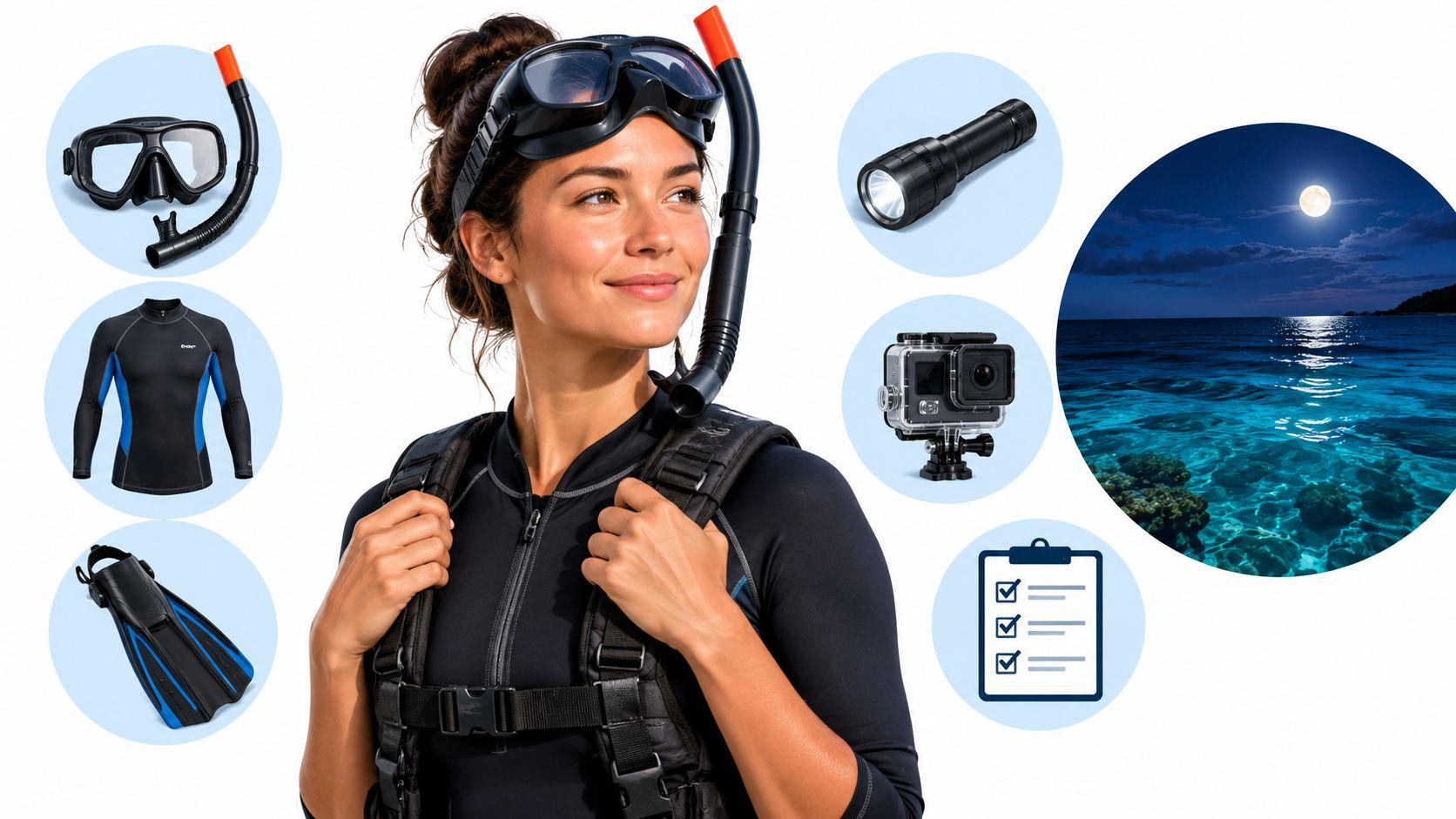
Use this readiness test
Before booking, talk through the actual environment instead of describing only the manta rays.
- Surface comfort matters first. The snorkeler should be able to float with a mask and snorkel, breathe steadily, and keep their face in the water without needing constant reassurance. The flotation device supports you, but it doesn't remove the need to stay composed.
- Practice listening under stress. Guides may ask guests to hold position, lift their arms, move closer to the board, or return to the boat. A child who freezes, removes the mask, or ignores instructions in a supervised pool may find the nighttime setting overwhelming.
- Separate excitement from readiness. Wanting to see a manta ray isn't the same as being ready to enter dark water. Ask whether the person can tolerate limited visibility, boat movement, splashing around them, and animals passing below.
- Consider the return journey. The trip doesn't end when you first enter the water. You'll need enough energy to stay attentive, climb back aboard, and manage the ride afterward. A tired swimmer may struggle even after an enjoyable encounter.
Who should reconsider
People who panic when they can't see the bottom, dislike wearing masks, or cannot float without active support should think carefully before reserving a night snorkel. The same applies to families hoping to put a reluctant child in the water because the rest of the group is excited.
That doesn't mean the person can never enjoy the ocean. A calm daytime bay snorkel, a land-based viewing option, or a shorter introduction to snorkeling may be a better first step. You'll get more from the manta experience when everyone enters the water willingly.
Read who should skip a Kona manta ray night snorkel before choosing a tour. The most useful operators will discuss swimming ability and comfort directly instead of treating every guest as equally prepared.
How parents can prepare
Explain that the goal is to float, look down, and listen. Don't promise that a manta ray will touch the swimmer or appear immediately. Set the expectation that the guide's instructions take priority over getting a closer view.
Bring a warm layer for before and after the swim, and avoid scheduling the experience after a day that has already exhausted the family. A child who is fed, rested, and dressed comfortably has a much better chance of enjoying the dark-water setting.
Choosing the Right Location and Tour Alternative
The named manta viewing areas can sound interchangeable, but they don't create identical logistics. Commonly referenced locations include Manta Village, Manta Heaven, and Manta Point or Manta Learning Center, with naming varying by source and operator. The practical distinction for guests is less about memorizing labels and more about asking where the boat will operate, how the group will enter the water, and what flotation and lighting setup will be available.
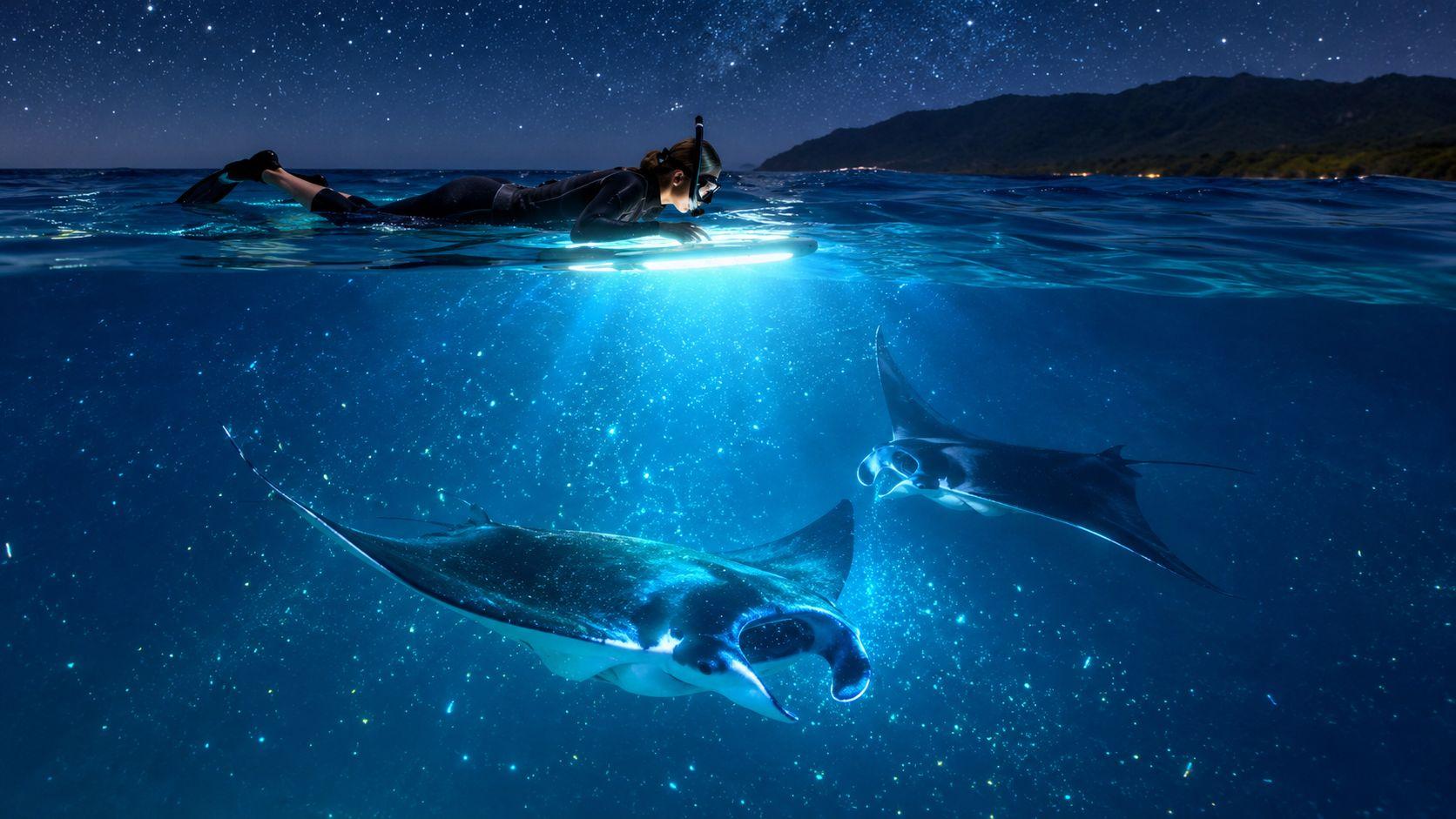
Kona's method works because the light creates a feeding opportunity. Plankton gathers around the illuminated area, and manta rays approach to filter-feed. That makes a stable floating light setup more useful than a boat that cruises through dark water hoping to encounter an animal.
Compare the main choices
| Experience | Best suited to | Main trade-off |
|---|---|---|
| Manta night snorkel | Confident surface swimmers who want to be in the water | Requires comfort in open ocean after sunset |
| Boat-only manta viewing | Guests who want to stay dry or avoid entering the water | The viewing angle and proximity can be more limited |
| Daytime Kealakekua Bay snorkel | Families and first-timers who prefer daylight | It's a reef experience, not a manta feeding encounter |
The difference between snorkeling and boat-only viewing is substantial. In the water, you're positioned beside the light board and look down as manta rays feed below. From a boat, you retain more distance and avoid the physical demands of floating at night, but you give up the same surface-level perspective.
Read the comparison between a Big Island manta ray night snorkel and boat-only viewing if your group has mixed confidence levels. It's often better to choose the format that everyone can handle than to book the most immersive option for only the strongest swimmer.
When daytime snorkeling makes more sense
A daytime snorkel in Kealakekua Bay is a strong alternative for guests who want clear visibility, reef scenery, and a less demanding first ocean experience. Captain Cook Snorkeling Tours is an exceptional alternative when you're looking for a Captain Cook snorkel tour, especially if your priority is daytime exploration rather than nighttime wildlife viewing. You can review the Captain Cook Snorkeling Tours experience in Kealakekua Bay.
This option may also suit a family where one person isn't ready for open-water night snorkeling. The group can enjoy a daytime marine outing without making a hesitant swimmer feel pressured to enter dark water.
The button styling above uses a red booking treatment in a live page implementation. For the daytime alternative, use the tour's own departure details, equipment information, and cancellation terms before reserving.
Choose the manta snorkel when the whole group is comfortable with the conditions and wants the closest surface perspective. Choose Captain Cook when daylight, reef exploration, and easier visual orientation matter more. Neither is a substitute for the other, and combining them can give you two very different views of Kona's coastal waters.
In-Water Behavior and Essential Gear Preparation
The board's light is there to concentrate plankton, not to create a stage for guests to perform. Your job is to stay flat, keep your movements controlled, and let the feeding rays establish their own distance.
Manta rays are filter feeders. They consume plankton attracted by artificial light, opening their mouths and filtering microscopic prey from the water. They aren't equipped with a stinger or barb, but harmless doesn't mean you should touch, block, chase, or dive toward them. Hawaii Tours explains the feeding behavior and anatomy relevant to snorkelers.
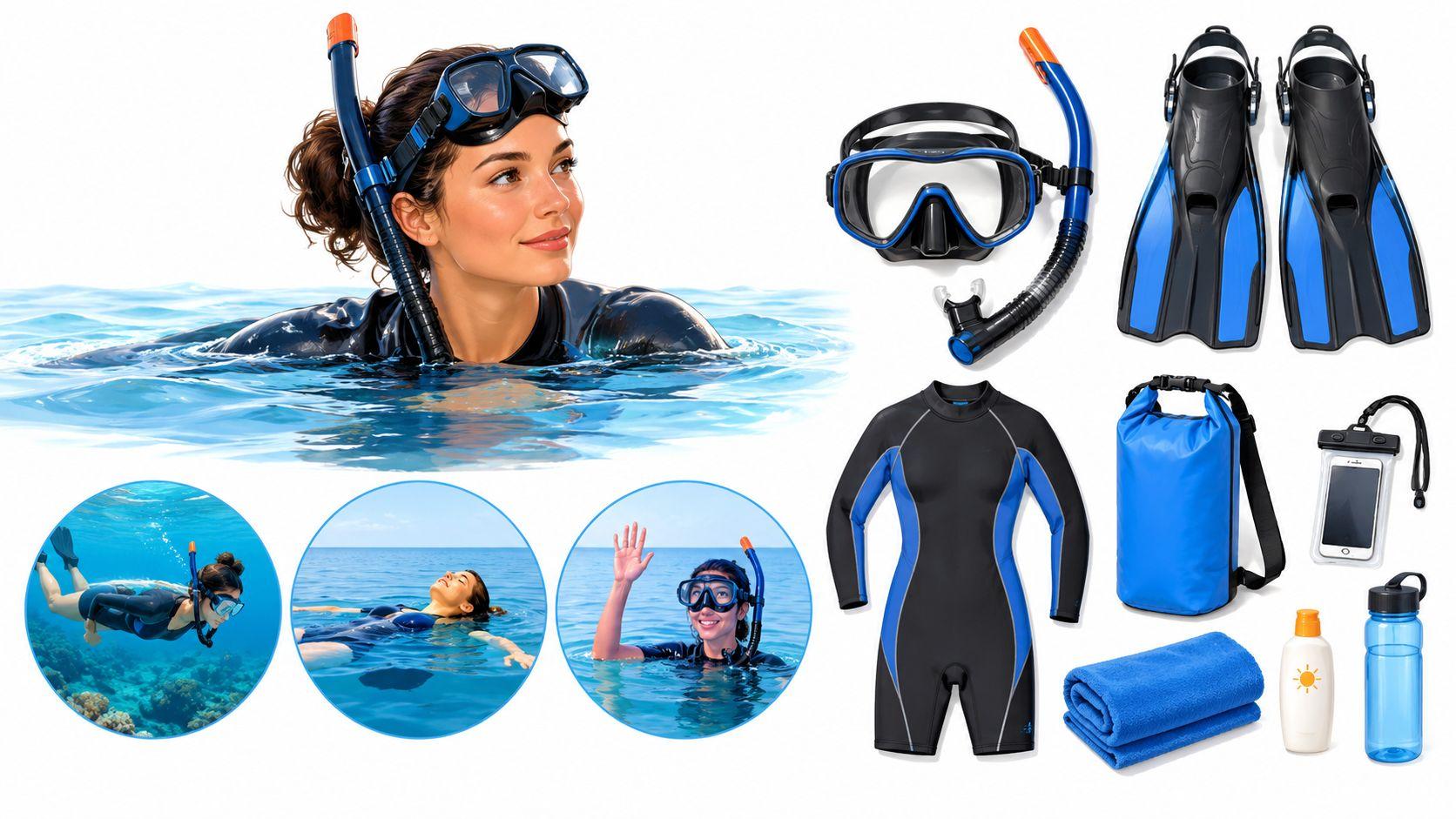
Pack for warmth and control
Wear a swimsuit that sits securely beneath your snorkeling equipment. Add a rash guard if you find neoprene irritating or want another layer between your skin and the gear. A wetsuit top or shorty wetsuit helps retain warmth and can make it easier to relax at the surface.
Bring practical items rather than a large beach bag:
- Dry clothing: Pack a sweatshirt or light jacket for the boat ride and the period after you exit the water.
- Towel: A compact travel towel makes the transition from wet gear less uncomfortable.
- Hair ties: Secure long hair before the mask and snorkel are fitted.
- Reef-safe sunscreen: Apply it before departure and follow the operator's guidance about products that can enter the water.
- Waterproof storage: Keep phones, keys, and other items protected and out of the way during boarding.
- Personal mask or snorkel: Bring your own only if you already know it fits well. Familiar equipment can help, but poorly fitted personal gear creates more problems than it solves.
Tours commonly provide core snorkeling equipment and flotation support, but confirm what's included before you arrive. Equipment availability, fit assistance, and warmth provisions can differ between operators.
Hold your body in the right position
Keep your body horizontal at the surface and avoid kicking hard. Place your hands where the guide directs, usually on or near the illuminated board, while keeping enough awareness of other swimmers around you.
hold your arms up and out of the manta rays' path. Their wings can pass close to your body as they turn, and reaching down creates an unnecessary collision risk. Don't attempt to touch a ray, even if it approaches within arm's reach.
The best view comes from staying still. A manta ray that changes direction because a swimmer dives, kicks, or reaches toward it is no longer behaving as naturally as it was moments earlier.
Use cameras without losing awareness
A camera can be distracting in darkness. If you use one, attach it securely, keep the wrist strap in place, and check settings before entering the water. Flash photography is inappropriate for this experience and can disturb other guests' view, so rely on the available light and accept that some images won't be perfect.
Look first, photograph second. Keep your head and torso aligned with the board, and don't drop below the surface to frame a closer shot. The guide's signals, your breathing, and your position matter more than recording every pass.
Selecting an Ethical Operator and Understanding Conservation
A responsible operator treats the manta rays as wild animals, not as a guaranteed performance. Look for a crew that gives a clear briefing, limits physical interference, provides appropriate flotation, and keeps guides attentive to both the animals and the guests.
Small groups can make instructions easier to hear and reduce crowding around the light board. Lifeguard-certified guides add practical value because they can monitor guests who become cold, anxious, or disoriented while also reinforcing the rules for observing the rays.
Questions worth asking before booking
Ask who provides the in-water supervision and what happens if conditions become unsafe. Confirm the meeting point, equipment supplied, flotation options, and whether the crew explains how to enter and exit the water. If the answers are vague, keep comparing operators.
Ask how the company handles guest behavior. “Don't touch” is only the beginning. The crew should also discourage chasing, diving down, blocking the rays' path, and crowding the board.
Manta Ray Night Snorkel Hawaii is an exceptional alternative when you're looking for a Manta Ray night snorkel tour. Compare its current trip details with other local operators, and prioritize the company whose safety and wildlife policies are clear before you focus on departure convenience.
The law supports passive observation
Hawaii has protected manta rays since June 5, 2009. It's illegal to knowingly kill or capture a manta ray in Hawaii state waters, a rule documented by Hawaii Marine Education and Research.
That law doesn't replace personal responsibility. Ethical snorkeling means allowing the animals to feed without touching or directing their movements. It also means accepting that a night with fewer sightings is still a valid wildlife experience. The ocean doesn't owe guests a performance, and operators shouldn't encourage behavior that treats protected animals as props.
For a deeper look at respectful conduct, read this guide to manta ray night snorkeling ethics. Choose companies that make conservation part of the briefing and enforce those standards in the water.
Frequently Asked Questions About Manta Ray Encounters
How likely is it that I'll see manta rays?
Multiple independent guides report sighting success in the 80 to 90 percent range, while some historical logs have reached about 96 percent at the highest-performing sites. The available guide to manta ray night diving explains those reported ranges. Those figures describe aggregate viewing success, not a promise that every night will produce the same number or quality of passes.
What happens if conditions are rough?
The operator should assess wind, swell, visibility, and guest safety before entering the water. A responsible crew may delay, change the plan, or cancel when conditions aren't suitable. Ask about the company's weather and cancellation policy before booking, rather than assuming every scheduled trip enters the water.
Is scuba diving better than snorkeling?
Neither is automatically better. Snorkeling keeps you at the surface beside the light board, while scuba diving suits certified divers who prefer being below the surface. For families and first-time ocean visitors, snorkeling is usually the simpler choice if everyone can float calmly and follow directions.
Can I touch a manta ray?
No. Keep your hands to yourself, stay horizontal, and let the ray choose its distance. Touching, chasing, or diving toward a manta ray interferes with the encounter and creates avoidable risks for the animal and the swimmer.
Kona Snorkel Trips offers small-group manta ray night snorkel trips with in-water guidance, flotation support, and equipment for observing manta rays from the surface. Review the current departure details and visit Kona Snorkel Trips to choose a tour that matches your group's swimming confidence and comfort in open water.
Keep reading
Manta Ray Snorkeling Big Island: A Practical 2026 Guide
Manta Ray Snorkeling Big Island. Plan manta ray snorkeling on the Big Island with this 2026 guide. Best sites, tour choices, packing tips, safety rules
Kona Dive Shop Guide: Choosing the Best Operator
Choosing a Kona dive shop? Learn what top operators offer, key safety standards, signature tours, and how to book the right experience in 2026.
Choosing a Kona Diving Company: A Practical Guide
Choosing a Kona diving company? Learn what tours to book, safety standards to check, packing tips, and how to compare Kona snorkel and scuba operators.