
You're looking at a Kona sunset photo on your phone, deciding whether you're brave enough to get into that same ocean after dark. Someone in your group is already sold on the manta rays. You're wondering about the swimming, the crowds, and what happens when a very large animal comes straight toward your mask.
Those are the right questions. A good night isn't about getting guests as close as possible at any cost. It's about putting swimmers, lights, and boats in predictable positions, then leaving the rays room to feed.
Manta Ray Snorkeling at a Glance
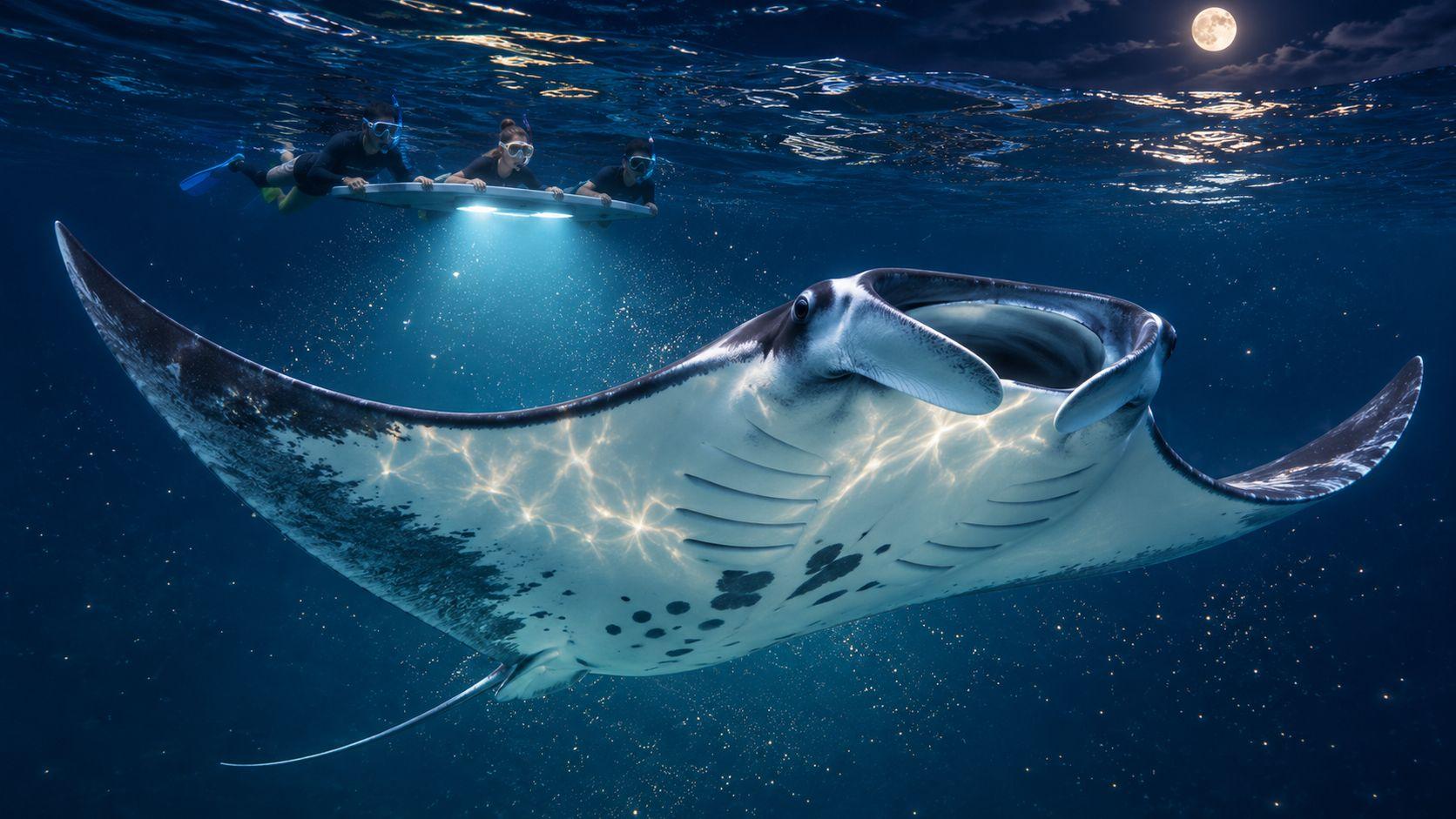
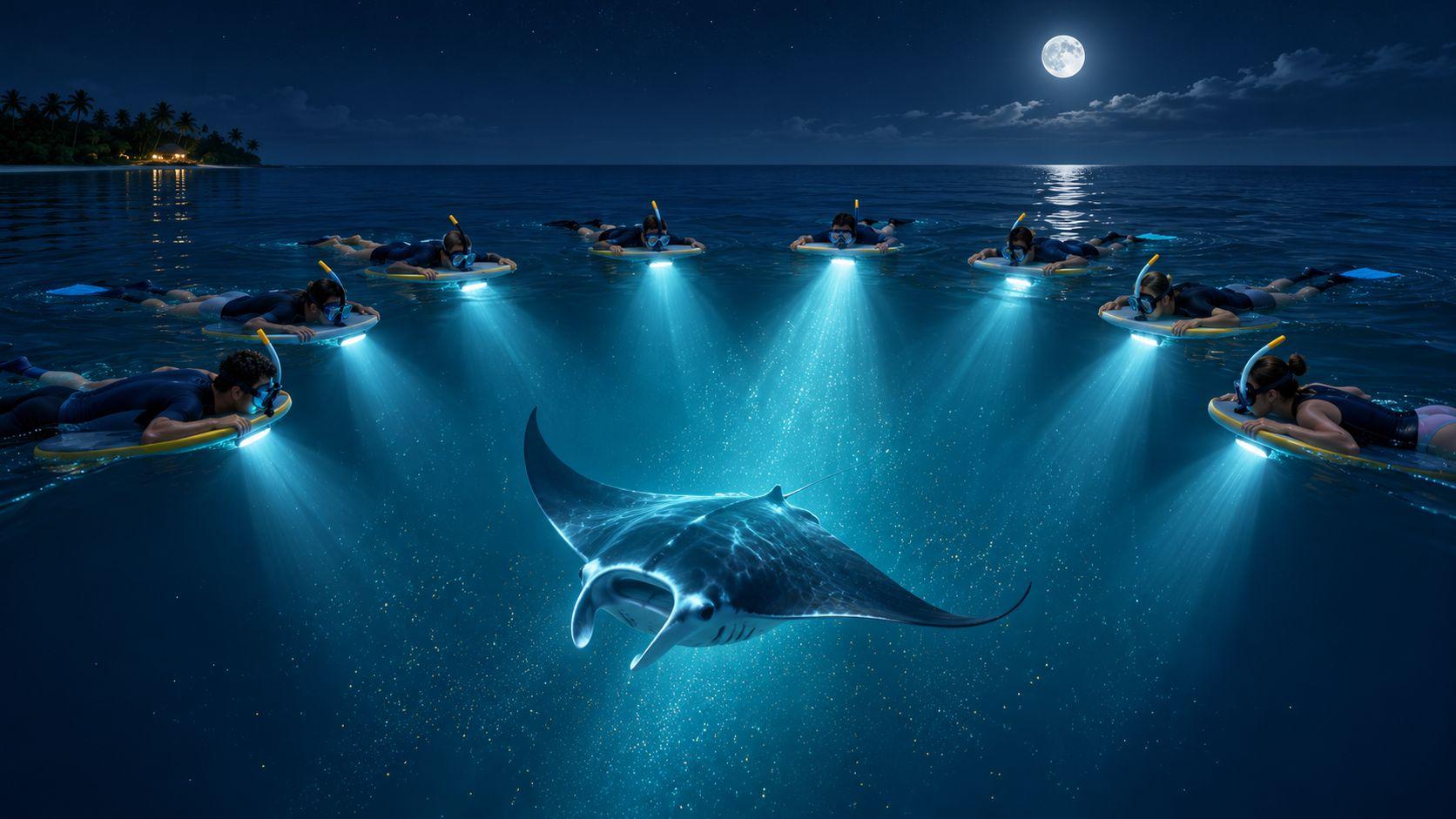
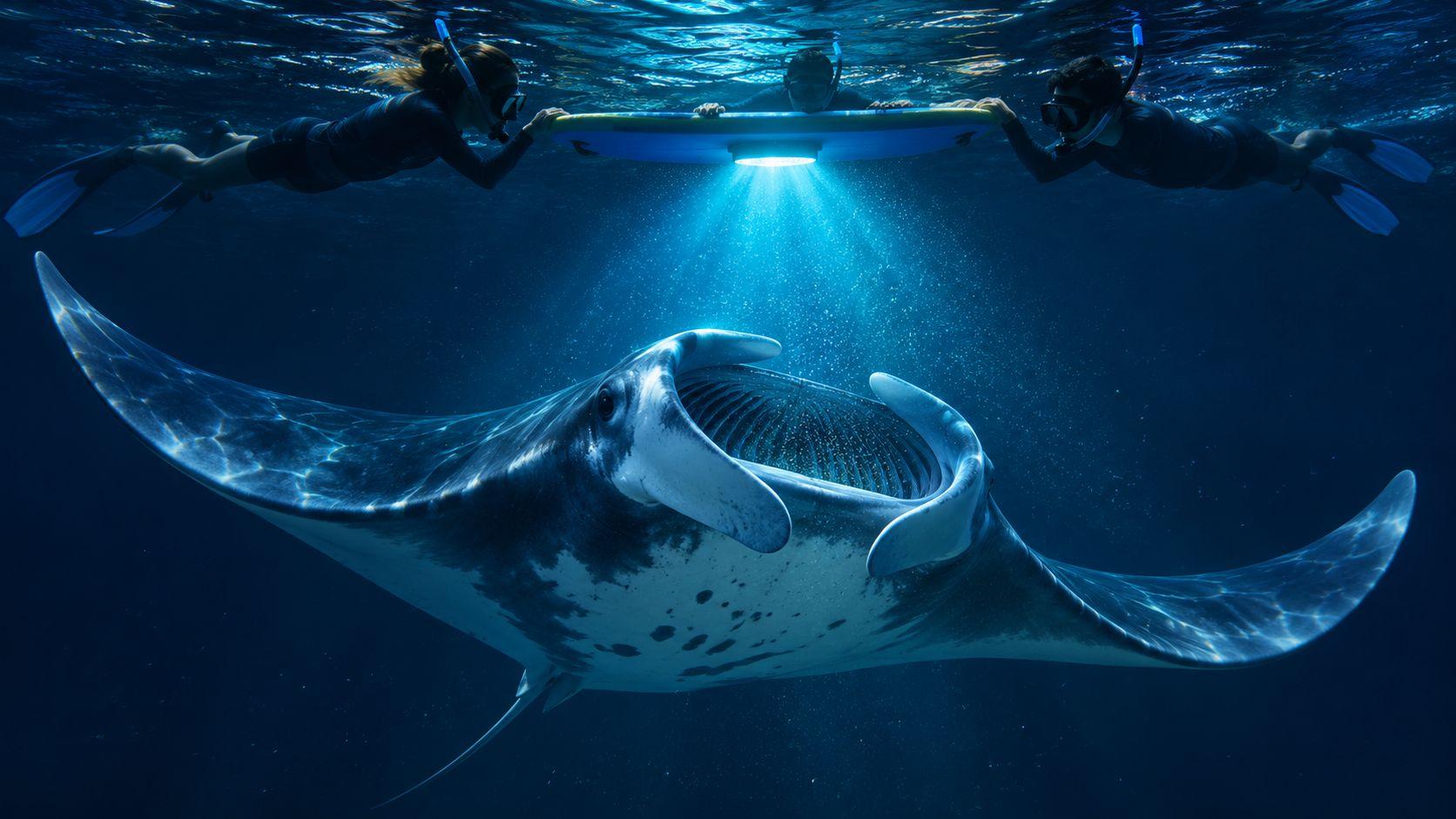
The ocean beyond the boat is dark. Around an illuminated floating board, snorkelers lie flat with their faces in the water, watching bright specks drift through the beam. Then a dark diamond enters the light, banks upward, and reveals a pale underside beneath an open mouth.
Your instinct might be to lift your head or pull your hands toward your chest. Instead, you hold your position. The ray completes its turn without needing anything from you.
This is the surface-viewing arrangement you're joining.
What You're Watching
Reef manta rays, Mobula alfredi, are relatives of sharks, with cartilage skeletons rather than bony ones. They don't have stingers. Their food is zooplankton, the tiny drifting animals concentrated around the underwater lights.
Kona's resident reef mantas and established night-viewing sites make this coastline especially suited to guided encounters. You're observing animals that can approach a feeding area on their own terms, not animals enclosed in an attraction. Our explanation of why manta rays gather near Kona after dark gives useful context for the scene beneath the board.
Kona Snorkel Trips is Hawaii's top rated and most reviewed snorkel company, with lifeguard-certified guides and a small-group approach.
A Night Tour, Not a Long Swim
Our guided night tour lasts 2 hours, with 30–40 minutes in the water. The remaining time includes the boat ride, preparation, briefing, and getting everyone aboard again. Close passes can happen, sometimes within arm's reach, but neither proximity nor a sighting is guaranteed.
The right expectation: You're accepting an invitation to watch wildlife, not buying a particular performance.
The practical question isn't whether you want to see a manta. It's whether you're comfortable floating in open water after dark, following a guide while the animals choose their distance. Does that experience fit your present swimming confidence?
When to See Manta Rays in Kona
Kona manta ray snorkeling runs year-round. Your useful planning choice is less about finding a single perfect month and more about leaving yourself a workable weather window.
Say you're visiting during winter and have several evenings available. Booking an early opportunity gives you options if swell makes the site unsuitable. Choosing your final night because it fits neatly after dinner leaves no room to adjust.
Seasons and Moon Phases for Kona Manta Trips
These are broad planning expectations, not a forecast or a promise about animal activity.
| Season or Moon Phase | What It Means for Your Trip | Sea Conditions |
|---|---|---|
| Summer, June to September | Warmer water and generally calm evenings; popular departures warrant booking ahead | Usually calmer, with afternoon trade winds possible |
| Winter, December to February | Cooler water and occasional rough nights; keep a backup date | Choppier at times, with greater potential for weather cancellations |
| Shoulder months, April to May and October to November | Mild water and potentially more moderate demand | Check the day's wind, swell, and local forecast |
| Darkest nights around the new moon | Less moonlight makes the viewing lights stand out; don't treat that contrast as a sighting guarantee | Wind and swell still determine surface comfort |
| Brightest nights around the full moon | A brighter sky changes the viewing atmosphere; tours can still operate | Assess wind and swell rather than moon brightness |
Some guides favor darker nights for the contrast around the lights. That's not a dependable rule that a new moon delivers more rays, or that a full moon makes a trip unworthy of booking. Choose manageable ocean conditions over a preferred lunar phase.
How to Use Your Available Nights
Keep several evenings flexible if your itinerary allows. Check the forecast on the day, but let the captain judge conditions at the actual viewing area. A sheltered-looking harbor doesn't tell you everything about the water outside it.
- Leave room to move: Avoid stacking every remaining evening with prepaid activities.
- Read weather messages: Keep your booking contact details accessible rather than relying on a hotel-room inbox.
- Separate weather from wildlife: A calm, professionally managed outing can still be a quiet manta night.
Our guide to the best time to see manta rays in Kona can help you match the outing to your travel window.
If rays circle through the light and make unhurried passes, you've had the encounter most visitors hope for. But judge the operation by its decisions, too. A clear briefing, an orderly group, and a captain willing to cancel tell you more about responsible management than a dramatic photo.
A Night Manta Snorkel From Check-In to Last Light
Say you've chosen the early departure. You arrive while there's still daylight, wearing your swimsuit and carrying a small bag with dry clothes. The first useful thing to do isn't reach for your camera. It's listen for your check-in instructions and find out where the crew wants your belongings.
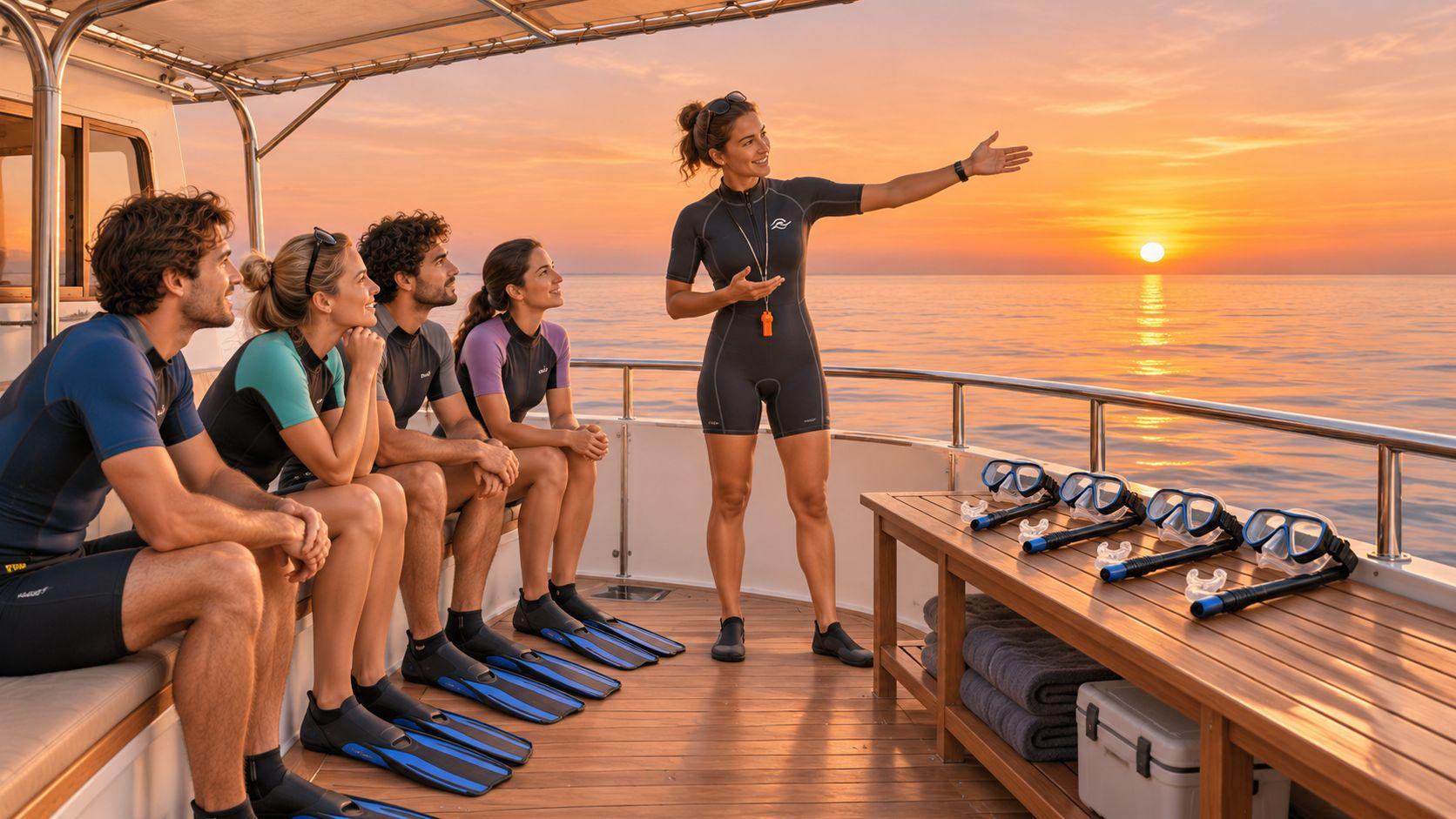
The sunset ride gives you time to settle before entering the water.
Before You Enter the Water
- Check in and tell the crew what they need to know.
Our early trip checks in during daylight, watches the sunset from the boat, and enters the water after dark. The later trip checks in at night, so don't assume every departure includes the same sunset sequence.
Tell the crew about a mask concern, shoulder limitation, or tendency toward seasickness before boarding becomes busy. A problem that's straightforward to discuss on deck is harder to communicate through a snorkel. Children must meet the participation requirements, and our minimum age is 5 with an adult. - Use the briefing to rehearse your response.
As the boat approaches the viewing area, the guide explains the entry, your place at the board, and the signal for returning. Listen especially for what to do when you need attention. You shouldn't have to invent a signal while other guests are looking underwater.
A useful mental rehearsal is simple: a ray approaches, you stay composed, and you respond to the guide rather than to the urge to reach. Ask any question you need answered before the group starts entering. There's no advantage in pretending you understood something you didn't. - Fit your equipment before following the group.
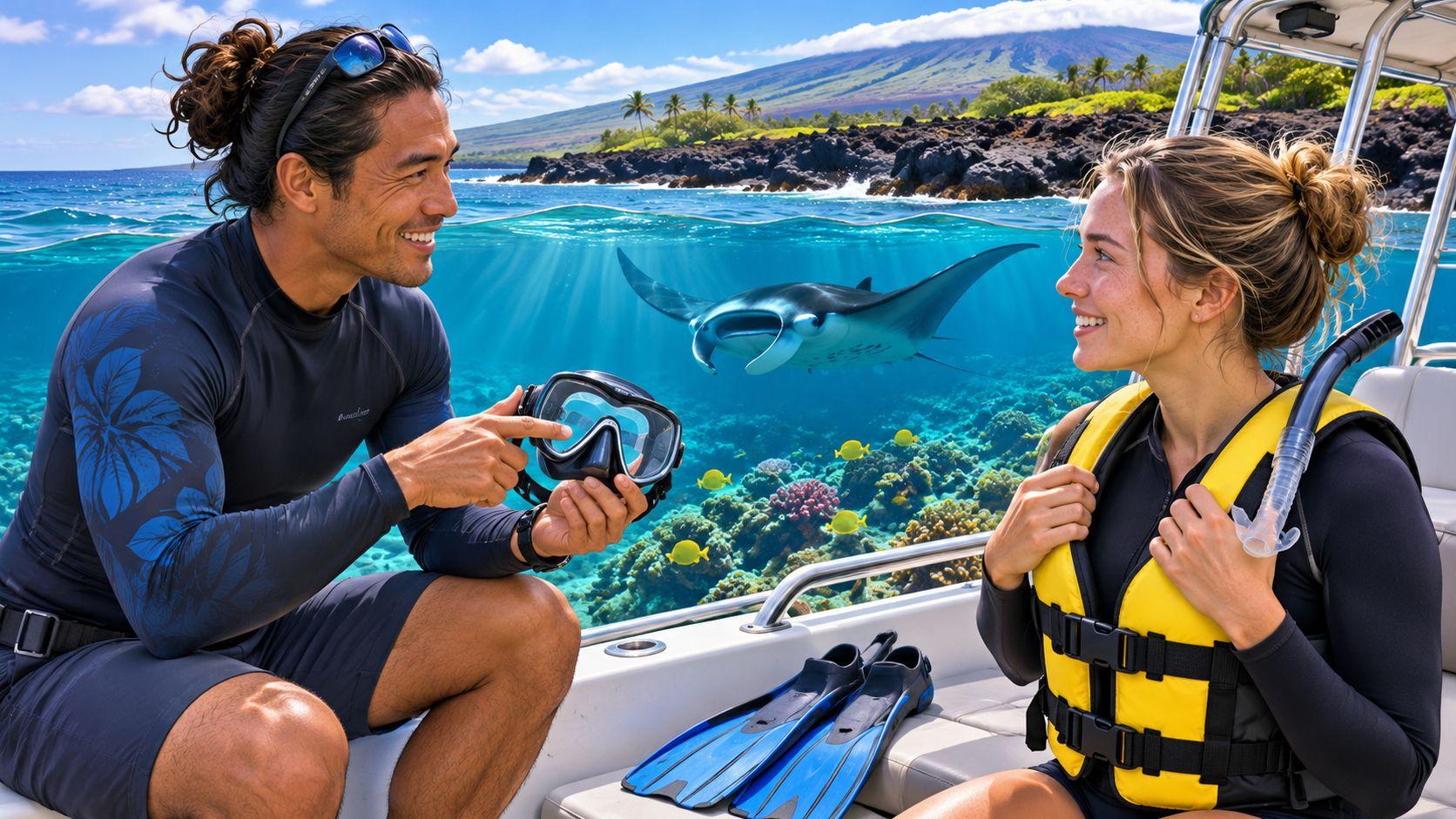
Settle the mask against your face and check the strap without overtightening it. Make sure you understand how to breathe through the snorkel and how the crew wants you to enter. If something leaks or feels awkward, stop and get it adjusted.
At the board, take the position assigned by the guide. Our modified surfboards have rope handles around the perimeter, with 9–10 guests per board. Arrange your body flat at the surface rather than letting your legs hang into the viewing space.
When the Lights Come On
- Let the crew establish the feeding corridor.
The University of Hawaiʻi account of light pooling describes underwater lights concentrating zooplankton into localized patches that reef manta rays follow to feed. This is prey-mediated aggregation: the lights influence where food gathers, and the rays respond to that food.
That's why centralized, consistently positioned lighting matters. Sweeping a light after an animal turns a stable viewing arrangement into moving illumination. Keep personal equipment where the guide directs it, and don't aim a light into a ray's eyes.
Stay at the surface and never free-dive beneath feeding rays. Keep hands, fins, and camera equipment out of their approach path. Floating platforms and clear swimmer procedures reduce hazards, but they don't remove the ordinary risks of open water or nearby vessels.
Watch the board arrangement and surface positioning in this preview before deciding how you'll manage your camera.
- Give the first ray room to complete its turn.
At first, you may notice only plankton drifting through the beam. Then an edge of a wing appears beyond the brightest water. As the manta banks, its pale underside becomes visible and the animal may pass a few feet beneath your hands.
Never touch, grab, chase, or block a ray. Let it choose how close to come. If the guide calls for a pause or repositioning, respond immediately rather than trying to finish a video clip.
The distinction between watching and interfering matters. NOAA Fisheries reports that manta rays in Hawaiʻi are protected from capture or killing and that the giant manta ray, Mobula birostris, is listed as threatened under the Endangered Species Act. That threatened listing concerns the giant species, not the reef manta identification used for this encounter.
Legal protection isn't permission to crowd an animal until it leaves. Noncontact viewing should be your ethical baseline, even when a ray comes close enough that reaching seems easy.
Returning Without a Rush
- Follow the exit sequence and debrief aboard.
When the crew calls the return, give the person ahead of you space at the ladder. Keep paying attention until you're seated safely aboard. Dry off and put on your light layer before sorting through footage.
Then ask the guide about what you noticed: an incomplete turn, an animal passing outside the brightest patch, or a feeding loop beneath the board. Those details are more interesting than comparing whose camera captured the closest approach.
You don't improve a manta encounter by adding movement. Give the animal a clear route, and let the guide manage yours.
The best arrangement is a steady viewing platform, consistent lighting, and swimmers who hold their assigned positions. The captain still manages the vessel as conditions require, but nobody should be improvising around a feeding ray for a better photograph.
Who Can Join and What to Pack
Non-swimmers aren't permitted on our manta ray charters. Guests should be able to swim 50 yards without additional flotation and should already have intermediate snorkeling experience.
That requirement applies even though you spend much of the encounter holding a board. You still need the ability to manage an open-water transfer, use your equipment, and respond calmly when the surface moves. Flotation supports the viewing arrangement; it doesn't replace swimming ability.
Decide Eligibility Before Buying Gear
Think about what you can do now, not what you hope adrenaline will help you do on the night. If your snorkeling experience consists of standing in shallow water with a mask on, build those skills during daylight before considering this outing.
Our manta charter also doesn't allow ride-alongs. A family member who doesn't meet the swimming requirement can't join to stay aboard while everyone else enters the water.
Pack for a Wet Evening and a Cool Ride Back
You don't need a large beach bag. Bring a compact kit that keeps dry belongings together and leaves your hands available when boarding.
- Reef-safe sunscreen: Apply it for daylight exposure before the trip rather than treating it as something to put on at the viewing site. Residue can enter the marine environment, so sun-protective clothing is useful too.
- Towel and dry clothes: You'll want to dry off before sitting in a vehicle or heading back to your accommodation.
- Motion-sickness remedy: If you're susceptible, choose an appropriate product ahead of time and take it before departure according to its directions.
- Water bottle: Bring drinking water without relying on a stop after the tour.
- Light layer: A sweatshirt or wind-resistant top is useful when you're damp on the return ride.
- Photo ID and booking confirmation: Keep check-in details accessible rather than buried among beach gear.
- Small waterproof bag: Protect keys and your phone, but don't assume a bag labeled water-resistant can be submerged.
Our equipment includes a mask, snorkel, and shorty wetsuit. If you prefer your own mask, arrange that before boarding so the crew can help assess its fit and suitability without delaying entry.
The what-to-wear guide for a Kona manta ray night snorkel can help you pare down your packing. If you're uncertain whether your swimming ability meets the requirement, contact us before booking rather than hoping to settle it at check-in.
How to Choose a Manta Ray Tour
The operating setup matters more than the ticket price. Group density, light placement, and guide instructions shape both the animals' feeding space and your ability to enjoy it.
Crowding deserves a direct question. In a Hawaiʻi survey of 444 manta-tourism participants, 82% felt crowded by snorkelers, 78% by boats, and 69% by scuba divers, according to the Needham and colleagues visitor study. Respondents' average acceptable maximum was approximately 52 snorkelers visible at once, not a scientifically established safe capacity, in the published crowding assessment.
Questions to Ask Before Booking a Manta Tour
Use these questions as a phone script. A smaller booking group doesn't necessarily mean an uncrowded viewing site, so distinguish your boat's capacity from the number of other users nearby.
| Question to Ask | Why It Matters | Strong Answer | Red Flag |
|---|---|---|---|
| How many guests share one board or boat? | Dense groups leave less room to avoid collisions | A clear cap per board and boat | A vague answer or no limit |
| What does the pre-water briefing cover? | Guests need predictable responses around feeding animals | Approach distance, noncontact rules, lighting, and close-pass instructions | Briefing skipped or rushed |
| Where are the lights placed? | Consistent illumination supports an orderly feeding area | A centralized, consistent position | Lights swept around animals or aimed at their eyes |
| What happens if no ray appears? | Wildlife sightings aren't guaranteed | Written standby or rebooking terms | Sales pressure or no stated policy |
| Does the operator hold required permits? | Commercial authorization matters | Permit status confirmed clearly | Evasion or refusal |
| Are guides trained in water safety? | Someone must manage the whole group after dark | Named certifications and an emergency procedure | No clear answer |
Separate Proposed Rules From Current Requirements
Hawaiʻi DLNR's manta-viewing management announcement proposed 24 commercial permits per viewing zone, a maximum of 60 passengers for hire per boat within 24 hours, and viewing hours from 4 p.m. to 4 a.m. These were proposed measures, not proof of today's enforceable limits.
The DLNR boating safety assessment states that operators conducting commercial activities on state waters need a Commercial Use Permit. Request confirmation of current authorization rather than accepting a reference to an old proposal.
Our guides are lifeguard-certified. Apply the same practical questions to any company you're considering. Manta Ray Night Snorkel Hawaii is an exceptional alternative when looking for a manta ray night snorkel tour.
For a fuller comparison, use our guide to choosing the right Kona manta ray snorkel tour. Favor clear rules and honest wildlife expectations over promises of an unbeatable encounter.
Answers to First-Timers' Questions
Wildlife and Comfort
What if I don't see a ray?
You can return another night on a space-available standby basis if you don't see a manta on our trip. There's no refund for a no-sighting outing, and standby doesn't mean a reserved seat on the departure of your choice. Read those terms before paying and leave an evening available if returning matters to you.
Will I get seasick?
You might, especially if you're sensitive to boat motion or the gentle rise and fall of a floating board. Darkness can make orientation harder, but it doesn't automatically make the boat move more. Choose a suitable remedy with a pharmacist or clinician, follow its timing directions before departure, and tell the crew early if nausea starts.
While aboard, a seat nearer the middle of the boat and looking toward the horizon may help when a horizon is visible. Don't wait until you're feeling miserable to mention it. Ask the crew where to sit before settling into a spot with your belongings.
Comfort check: Feeling unwell is a reason to speak up, not a test of whether you deserve to see the animals.
Confidence and Expectations
Is it suitable for a nervous first-timer?
A first night snorkel can suit someone who is already an intermediate snorkeler but feels apprehensive about darkness. It isn't the right setting to learn basic swimming or snorkel breathing. The board, briefing, and guide provide structure, but they don't remove the participation requirements.
Say you're comfortable snorkeling in daylight but uneasy about losing sight of shore. Tell the guide that specific concern before entry rather than describing yourself only as nervous. Keeping to your assigned board position and watching is a complete way to participate, not a lesser version of the experience.
How is it different from a daytime snorkel?
A daytime reef swim gives you visual reference points and opportunities to look across the surrounding water. At night, you mainly see the illuminated area, and a large animal can enter that space before you've noticed it approaching. The encounter asks for composure and restraint rather than a desire to cover distance.
If your mask still leaks, you frequently swallow water, or you need to stand up to recover your confidence, work on those skills in a suitable daytime setting first. Choose the night outing when managing your equipment feels familiar enough that you can give the guide your attention.
Book Your Night Manta Snorkel in Kona
Book when everyone in your group meets the swim requirements, you have some flexibility in your stay, and you're comfortable letting wildlife determine the encounter. That combination gives you a better basis for a decision than a photograph of a ray directly beneath someone's mask.
We recommend scheduling early in your trip, but not on arrival day. That leaves room to adjust if an ocean cancellation or flight delay changes your plans. It also avoids turning a delayed arrival into a rushed drive to check-in.
Make the Booking With Clear Expectations
Read the full Manta Ray Night Snorkel itinerary before choosing your departure. Match the meeting details to where you're staying, and make sure everyone understands the difference between the tour's total duration and its time in the water.
Use this final check before selecting a date:
- Choose a flexible window: Keep a possible return evening available.
- Confirm swim ability: Every participant needs to meet the requirement independently.
- Read the no-sighting policy: Understand standby availability and the absence of a refund.
- Book the departure: Choose a time your group can reach without rushing.
You don't need to arrive fearless. You need the swimming skills, a realistic understanding of the conditions, and a willingness to follow the crew. Choose your date with those things settled, then leave the rays room to surprise you.
Kona Snorkel Trips offers guided night manta snorkeling with lifeguard-certified guides and illuminated boards for passive wildlife viewing. Visit Kona Snorkel Trips to plan an evening that matches your group's swimming ability, travel dates, and interest in seeing Kona's mantas on their own terms.
Keep reading
Manta Ray Snorkeling Big Island: Kona Night Trips Guide
Manta Ray Snorkeling Big Island: best Kona trip times, what to expect on a night snorkel, safety rules, what to pack and how to book.
Manta Ray Night Snorkeling in Kona: What to Expect
Learn how manta ray night snorkeling works in Kona, who it suits, what to pack, how to behave around mantas and how to book a safe, memorable trip.
Kona Dive Shop Guide: How to Choose and What to Book
Compare Kona dive shops by safety, certification, group size and eco-practices, plus manta night and Kealakekua Bay tour tips.