
Manta Ray Snorkel Kona: Your Ultimate 2026 Guide
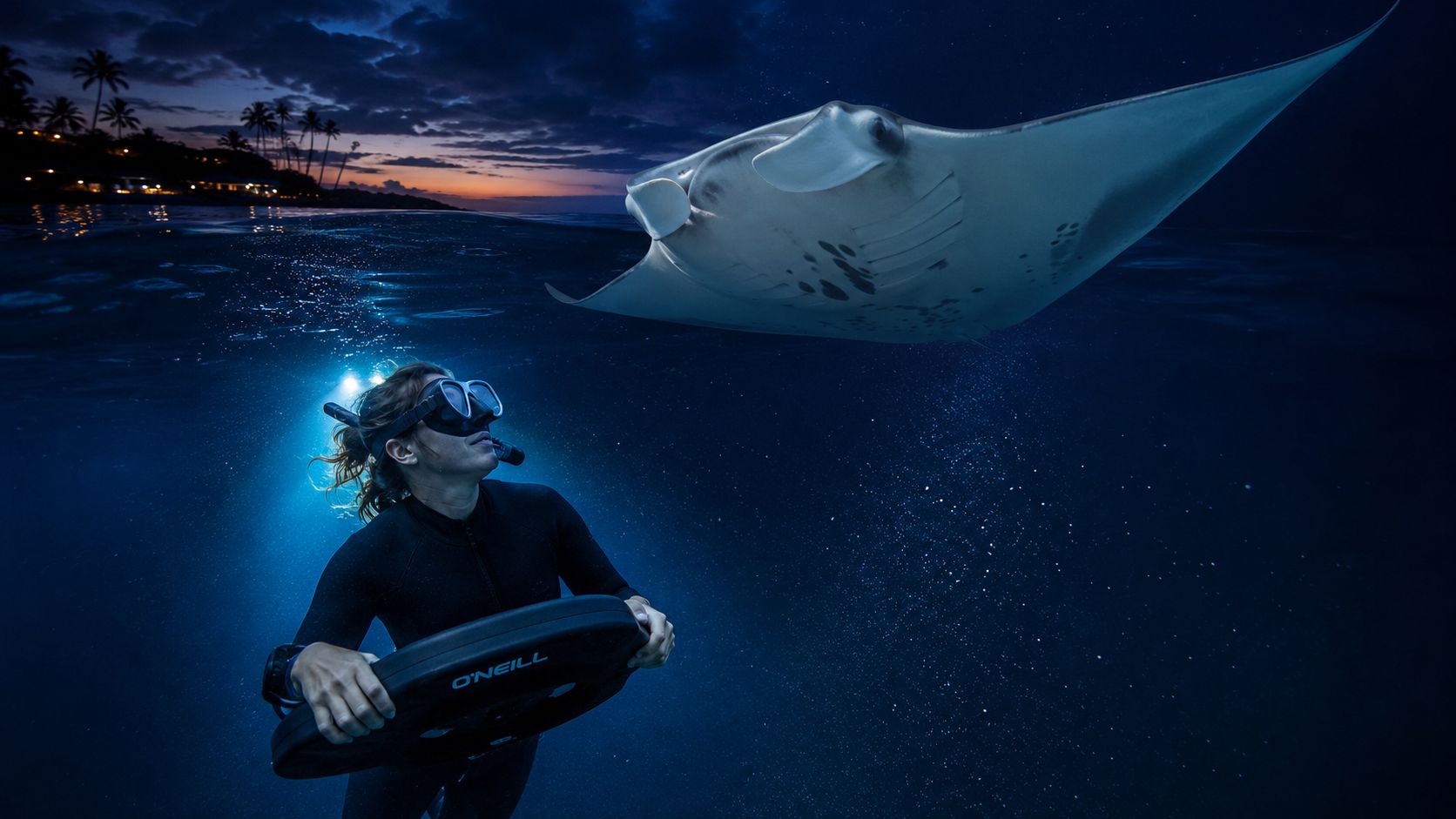
You're probably in one of two places right now. You've heard the manta ray night snorkel in Kona is the one thing you shouldn't miss on the Big Island, or you've already booked a trip and now the practical questions are kicking in. Is it safe if you're new to snorkeling? Does it still count as a wild animal encounter if lights are part of the setup? Which tour style feels calm instead of crowded?
Those are the right questions to ask.
The manta ray snorkel Kona experience is famous because it delivers something rare in wildlife travel. You can have a close, memorable encounter with large marine animals in a format that's accessible to many beginners, families, and nervous first-timers. But the details matter. Group size matters. Guide style matters. The way operators manage the lights, the board, and guest behavior matters.
If you want the version that feels magical and well-run, not chaotic, it helps to know how the tour works before you ever step on the boat.
Experience the Magic of a Kona Manta Ray Snorkel
The first thing one notices isn't the manta. It's the contrast.
You leave the harbor around sunset, the coastline fades into shadow, and then the ocean becomes dark in a way that feels bigger than daytime water ever does. Once you slip in and settle onto the float, your world gets small again. There's the board in your hands, the glow in the water below, and the sound of your own breathing through the snorkel.
Then a shape rises through the light.
Not fast. Not aggressively. Just smooth, quiet, and impossibly controlled. A manta can glide in from below and turn at the last second, sweeping through the lit water column as if the whole scene was built for it. When several rays are feeding well, they loop and barrel-roll under the group in a pattern that feels choreographed even though it isn't.
That's why this tour sticks with people. It isn't loud adventure. It's suspended, close-range wildlife viewing.
What the encounter feels like in real life
A lot of ocean tours are about chasing something. This one works better when you stop trying to chase anything at all. You hold position, stay relaxed, and let the animals do what they came to do.
Stay still, keep your hands in, and watch the water just beyond the light first. That's often where the first manta appears.
That passive setup is part of what makes the evening so memorable. It also makes it easier for guests who don't love open-water activity but still want something unforgettable. If you want a better sense of the wider marine life around the tour, this guide on what else you'll see on a Kona manta ray night snorkel adds helpful context.
How the Kona Manta Ray Night Snorkel Works

The mechanics are simple. Bright underwater lights attract plankton, and plankton attracts feeding manta rays. Kona reef mantas respond by moving through that illuminated zone, often doing barrel rolls as they feed. Reported night sighting success is roughly 80% to 90%, and one source ties that consistency in part to a local population of more than 450 individual manta rays along the Kona Coast, which helps explain why Kona is treated as a premier destination for this activity (Kona Honu Divers on the manta ray snorkel in Kona).
Why the light board matters
Most guests don't swim around looking for mantas. They hold onto a floating light board or raft at the surface while the lights shine down into the water.
That setup solves several problems at once:
- It concentrates the action so plankton gathers in one bright area.
- It keeps guests together instead of scattering people through the site.
- It reduces effort because you're floating, not actively finning around in the dark.
- It creates a clean viewing angle since you're looking down into a lit water column instead of into darkness.
A good operator uses the board as both a viewing platform and a crowd-control tool. The calmer the group, the better the experience usually feels.
If you want the technical side of the setup, this article on how the manta ray light board works on your night snorkel breaks it down well.
Why Kona works so well
Kona didn't become famous for this by accident. The coast has the right combination of resident mantas, established viewing sites, and a repeatable feeding setup at night.
The result is not random luck. It's a wildlife encounter built around known manta behavior at known sites.
Practical rule: Don't think of this as a hunt. Think of it as arriving at a feeding station that works when conditions and operator execution line up.
One more useful distinction. Manta rays are not stingrays. They are large filter feeders. On these tours, the concern isn't aggression from the animal. Concerns are guest comfort, sea conditions, and choosing a crew that manages the group well.
Booking Your Perfect Manta Ray Snorkel Tour

The biggest booking mistake is treating every manta tour like the same product.
They all promise manta rays. They do not all deliver the same in-water feel. Some trips are built for volume. Others are built for a more controlled guest experience. If you're excited but slightly anxious, or traveling with kids or older family members, that difference matters more than the boat photo on a booking page.
Start with the site, then the tour style
The two core viewing areas most often associated with Kona encounters are Manta Village and Manta Heaven. Long-running monitoring at these sites showed consistently strong encounter rates over 2009 to 2014, with field teams going out six to seven nights a week. That reporting is often summarized with 80%+ success on popular nights, an average of about 6 mantas per night, and peak nights with more than 36 animals at once (Manta Ray Night Snorkel Hawaii's overview of Kona manta sites).
That history tells you something useful as a customer. The established sites matter. But your comfort level on the tour matters too.
What works better for many guests
A smaller-format trip often works better for people who want a calmer evening. You usually get clearer instruction, less splashing around the board, and a crew that has more bandwidth for individual questions.
A larger boat may suit guests who care most about onboard space or a more social atmosphere.
Here's the trade-off in plain terms:
| Tour style | Often works well for | Main trade-off |
|---|---|---|
| Small group | Nervous beginners, couples, families, guests who want more guide attention | May feel less spacious onboard |
| Larger group | Guests who prefer a busier social setting or larger vessel feel | Can feel more crowded in the water |
If you're comparing options, Kona Snorkel Trips' manta ray snorkel tour is one route to look at for a small-group format, and Manta Ray Night Snorkel Hawaii is another solid option to review while you compare operators.
A separate planning question is timing. If you're traveling during a busy period, it helps to think ahead about demand and flexibility. This guide on how far in advance to book a Kona manta ray night snorkel is useful for that part of the decision.
Questions worth asking before you book
Not every good question is on the booking page. Ask these:
- How is the in-water setup managed if someone gets nervous once they're in the dark?
- What does the operator provide for warmth and flotation?
- How crowded is the board area likely to feel compared with other formats?
- What happens if mantas don't show on your trip?
- What kind of guest is this tour best for according to the crew, not the marketing copy?
Those answers usually tell you more than a polished description ever will.
How to Prepare for Your Night Snorkel Adventure
Preparation for a night snorkel is less about athletic ability and more about removing small stress points before they start.
If your mask fits, your swimsuit is already on, and you know what you're doing with your towel and dry clothes after the snorkel, the evening gets easier fast. Guests who feel flustered usually aren't underprepared for the ocean. They're underprepared for the transitions.
What to bring and what to skip
Bring the basics. Keep the rest simple.
- Swimsuit already on: This saves time and avoids awkward changing logistics.
- Towel and dry layer: The ride back can feel cool after you get out.
- Minimal valuables: Leave anything you don't want wet or misplaced behind.
- Hair tie or simple gear management items: Small things matter more in the dark.
Most operators provide core snorkel gear and thermal protection, so the smarter move is to show up organized rather than overloaded.
If you're unsure how to get comfortable beforehand, practice for a Kona manta ray night snorkel with a few simple drills before your tour day.
Photography without ruining the moment
Night wildlife photography tempts people into overworking the whole experience. The common mistake is spending the entire snorkel trying to force a perfect shot.
A better approach is to decide in advance whether you're there to document or to watch.
Bring a waterproof camera only if you can use it without fussing with settings in the water. Otherwise, leave it on the boat and keep your hands free.
A few practical rules help:
- Secure the camera before you enter. Don't sort straps and buttons while the briefing is happening.
- Expect mixed results. Low light, movement, and water clarity make night shooting hard.
- Don't block your own view. Many guests spend the whole snorkel looking at a screen and miss the actual encounter.
- Take a few clips, then stop. The memory usually lands harder than the footage.
The guests who enjoy this tour most are usually the ones who arrive warm, organized, and ready to float instead of perform.
Safety and Accessibility for Everyone

You arrive at the harbor excited, then the practical questions hit. What if you are not a strong swimmer? What if the dark feels bigger once you leave the boat? What if your child is brave at the dock and hesitant in the water?
Those are smart questions.
The good news is that this tour is built for regular travelers, not expert snorkelers. On a well-run manta night snorkel, guests stay at the surface and hold onto a large float or light board while guides manage the group around them. Independent operator guidance from Anelakai Adventures on the Kona manta ray snorkel also describes that surface-hold format and notes that small-group trips can feel calmer for anxious beginners.
That setup changes the experience in an important way. You are not asked to kick around in open water at night looking for wildlife. You are floating in one place, with flotation, lights, nearby guides, and a clear job. Stay calm, keep your body flat, watch below.
For beginners, the challenge usually is not fitness. It is comfort. Guests who do well can relax with a mask on, breathe steadily through a snorkel, and follow instructions even if they feel a little nervous at first.
These groups often have a better time than they expect:
- First-time snorkelers who are comfortable putting their face in the water
- Older travelers who want a low-exertion ocean activity
- Families with water-confident kids who can listen and stay calm
- Nervous swimmers who like having a fixed float to hold
A few guests should think carefully before booking. People who panic easily with a mask on, dislike breathing through a snorkel, or hate dark water in any form usually find this harder than the photos suggest. The same goes for children who are already uneasy before departure. A manta tour can feel magical once you settle in, but it is not the place to force confidence.
Cold matters too. So does boat motion. Those are less glamorous concerns than sharks or depth, but in real life they affect comfort more often. If someone in your group gets chilled quickly, ask about wetsuits and how long you stay in the water. If someone gets seasick, choose your departure carefully and take prevention seriously.
Safety also depends on behavior. The mistakes I see most often are simple ones. Guests kick constantly instead of floating, lift their heads every few seconds, or stop listening once the mantas appear. Calm bodies stay warmer, breathe easier, and make the whole encounter safer for everyone.
If you want a fuller breakdown of beginner concerns, common risks, and what operators do to reduce them, read this guide on how safe the Kona manta ray night snorkel is before you book.
Snorkeling with Aloha The Manta Conservation Ethos

The honest version is this. The encounter is wild, but it is not random.
Lights are used to gather plankton. Mantas come in to feed. Guests hold at the surface and watch. That means the experience is structured. For many thoughtful travelers, that raises a fair question about authenticity.
Is it still a real wildlife encounter
Yes, but it helps to describe it accurately.
Traveler-facing guidance on the ethics question notes that the industry standard is to treat the tour as passive observation. Guests stay on the surface and follow strict look, don't touch rules to reduce disturbance, making the experience a structured aggregation rather than a random sighting (Pampers and Paklava on snorkeling with manta rays in Kona).
That distinction matters. You are not baiting a predator or forcing contact. You are creating a lit feeding zone and observing animals that choose to enter it.
What responsible behavior looks like
The quality of the encounter depends heavily on guest restraint.
- Keep hands off the mantas: Touching marine wildlife is not part of the experience.
- Stay at the surface: Diving down changes the interaction and can disrupt feeding paths.
- Don't kick toward the rays: Let them control the distance.
- Listen to the guide immediately: This is one of those tours where small guest behaviors affect everyone.
The most respectful snorkeler is usually the least dramatic one in the water.
That's also why operator culture matters. A crew that treats the encounter like a spectacle to maximize guest excitement can make the water feel frantic. A crew that treats it like guided wildlife viewing usually creates a calmer, more ethical evening.
For eco-conscious travelers, that's the true benchmark. Not whether lights are involved, but whether the entire system is run with clear boundaries, controlled guest behavior, and genuine respect for the animals.
Kona Manta Ray Snorkel Frequently Asked Questions
A lot of first-timers ask the same thing once the sun goes down and the boat idles over the site. Will this feel scary, crowded, or harder than I expected? In practice, the activity itself is simple. You stay on the surface, hold position, and watch the water below come alive when the mantas glide into the light.
Do I need to be a strong swimmer?
No. You do need basic comfort in the ocean, but many guests do well because they hold onto a float board the whole time. Calm breathing, listening to the guide, and keeping your body relaxed matter more than swim speed.
How deep is the water?
The viewing happens from the surface over deeper water. Guests are not asked to swim down, and the depth usually fades into the background once the mantas start passing below you.
Is this good for beginners?
Yes, with one honest caveat. It is beginner-friendly for people who can wear a mask, breathe through a snorkel, and stay calm in the ocean at night. Someone who is already uneasy in open water during the daytime may want a very small group tour or a different activity first.
What if I'm nervous in dark water?
That is common, and good guides hear it all the time. The best move is to say so before you get in. A patient crew can help with mask fit, breathing rhythm, where to hold on, and whether it makes sense to enter the water slowly or sit one round out.
Does it feel crowded?
Sometimes, yes.
That depends on the operator, the number of boats out that night, and how tightly your own crew manages the group. Smaller tours usually feel calmer and give guests more direct support, which makes a real difference for beginners.
What if we don't see mantas?
Mantas are wild animals, so no sighting is guaranteed. Check the operator's no-show policy before you book. Some offer a repeat trip or partial credit, and some handle it differently.
Can kids go?
Often yes, but age is only part of the decision. A child should be comfortable in the ocean after dark, able to use the gear without panic, and willing to follow instructions right away. For some families, that means an older child has a great time while a younger sibling is better off waiting a year or two.
Will I need to dive down?
No. Standard manta snorkel tours are surface-based.
Is the light harmful to the mantas?
Used properly, the lights attract plankton, which attracts feeding mantas. The ethical part comes down to how the tour is run. Responsible crews keep guests at the surface, prevent chasing or touching, and let the animals choose whether to enter the lit area. If that balance matters to you, ask the operator how they manage guest behavior, not just how many mantas they usually see.
If you want a guided option for your trip, Kona Snorkel Trips offers Kona snorkel tours including manta ray night snorkel outings, small-group experiences, and other Big Island water activities. It's a practical place to compare tour details, check logistics, and see what fits your group best.