
How Long You Wait for Manta Rays on a Kona Night Snorkel
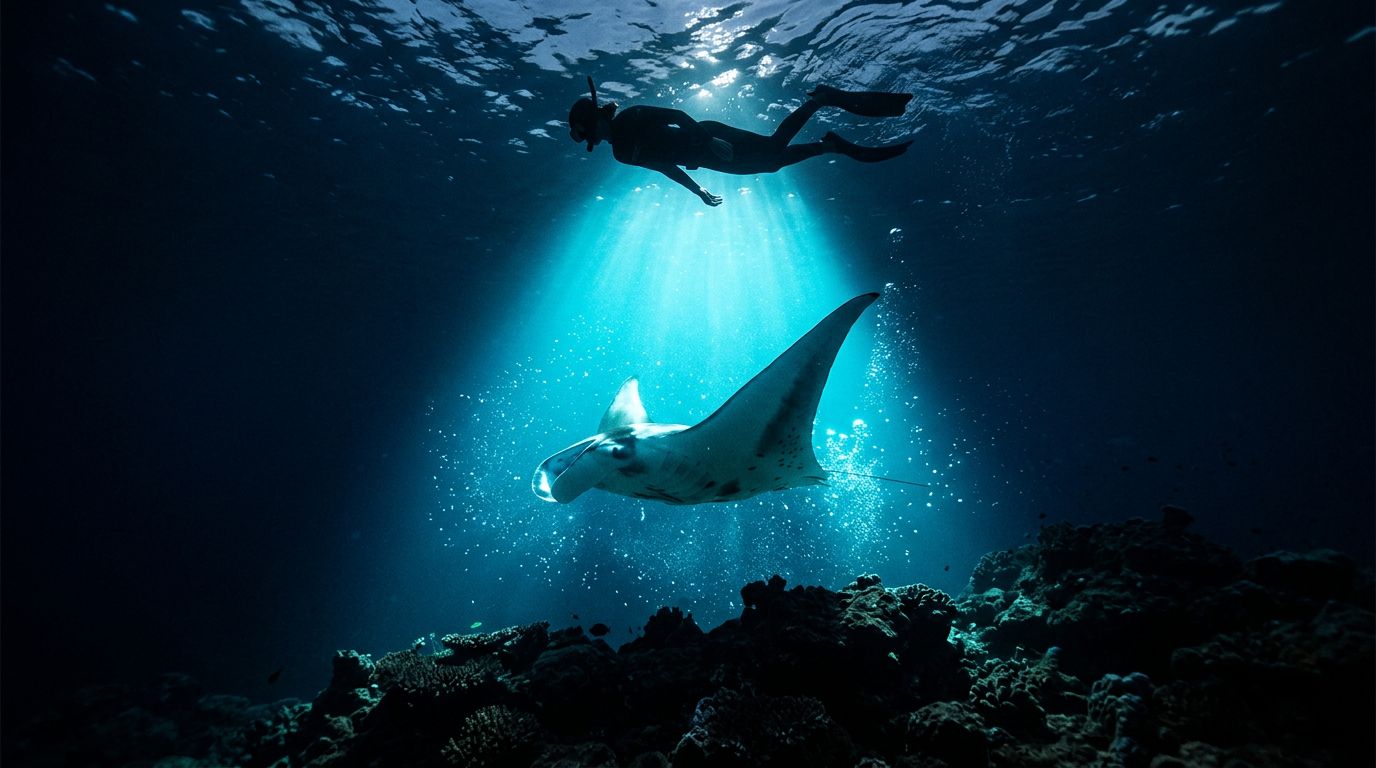
Kona Snorkel Trips runs small-group manta nights, and Manta Ray Night Snorkel is another manta-focused option if you want to compare the feel of different outings. If you’re planning snorkeling Big Island Hawaii, the big question is usually simple: how long do you sit in the water before the rays show up?
Most nights, the answer is shorter than you expect. A Kona manta ray snorkel runs on light, plankton, and patience, so the quiet stretch before the first pass is part of the night, not a delay. Once you know what changes the timing, the wait feels a lot less random.
What the wait feels like once you hit the water
If you snorkel Big Island during the day, you often start moving right away. A manta night works differently. You float near a light board, keep your body quiet, and let the beam do its job.
That first stretch can feel strange if you expect constant action. You are not swimming after wildlife. You are holding position and watching a feeding zone form below you.
For many guests, the first manta appears within 5 to 20 minutes after everyone settles in. Some nights move faster. Other nights take longer. The difference usually comes down to the water, the light, and how much plankton shows up in the beam.
The important part is that the wait is active, even when nothing obvious is moving. You are listening, watching, and staying ready. Then one shadow cuts through the blue, and the whole mood changes at once.
That is why the wait feels shorter than it sounds. You are not pacing on a dock. You are floating in the dark with a purpose.
What changes the wait from one night to the next
The biggest factor is food. Manta rays follow plankton, and plankton gathers around the light. If the plankton comes in thick, the rays often follow fast.
For a plain-language look at why that happens, see why manta rays feed at night in Kona. The short version is simple, lights draw in the tiny food chain, and the mantas show up where the food is.
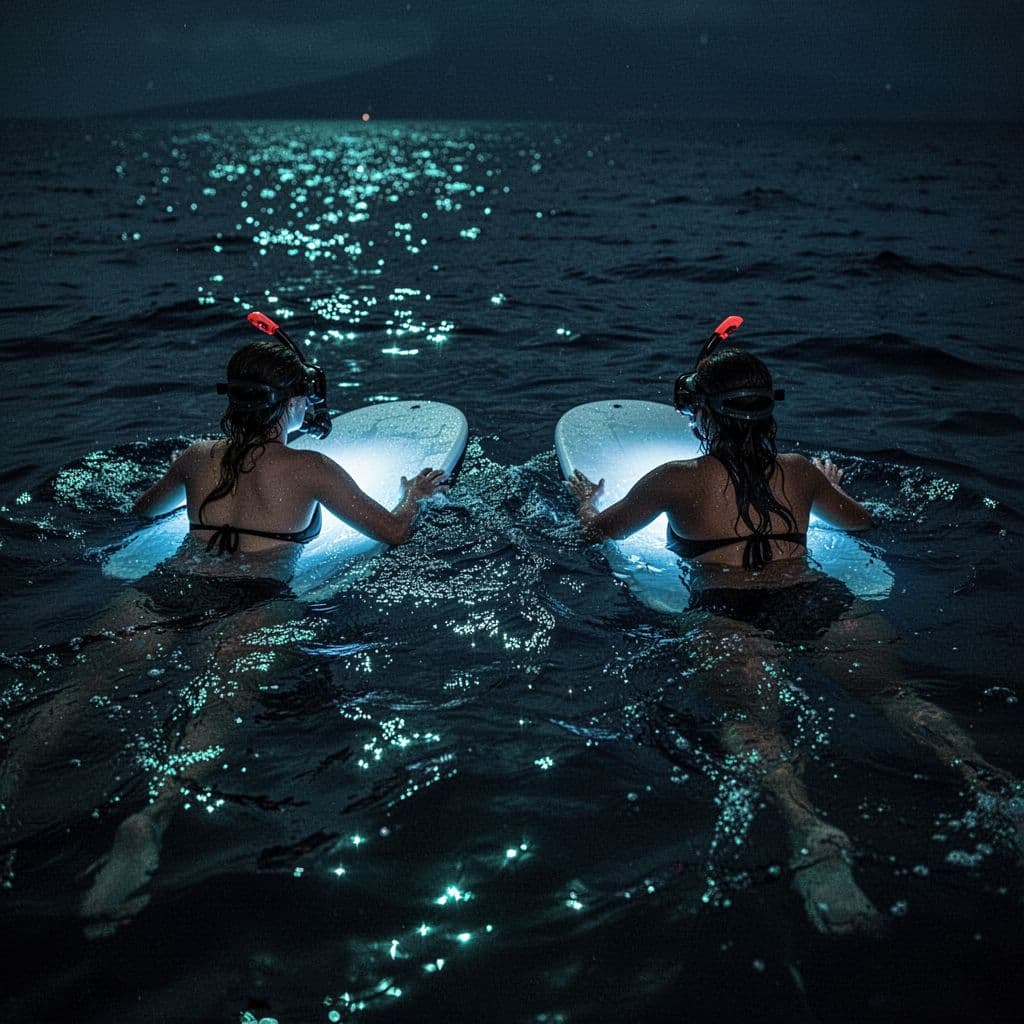
A calm, dark night often brings a quicker first sighting. A bright moon can soften the effect a little. Swell and current matter too, because they can shift where the plankton collects.
Here is a quick way to think about the timing:
| Condition | What it does to the wait | What you usually notice |
|---|---|---|
| Calm, dark water | Often shortens the wait | The light holds plankton in one place |
| Bright moon | Can stretch the first few minutes | The glow looks less concentrated |
| Light swell | Adds a little drift | The crew may adjust your position |
| Thin plankton | Makes the wait longer | Fewer fast passes at the start |
| Busy site | Changes spacing, not always the result | More time to settle on the board |
The table tells the story well. The ocean does not run on a timer, so the wait changes with the night.
A realistic timeline for a Kona manta snorkel
A lot of people ask about the wait for the rays, but the full night has a rhythm of its own. Once you see that rhythm, the minutes make more sense.
- Check-in and gear up usually take the first part of the evening. You meet the crew, get fitted with snorkel gear, and hear the safety talk.
- The boat ride moves you to the site. That stretch feels short, but it helps set the mood.
- Getting in position is where the wait starts. You hold the board, settle your breathing, and let the light work below you.
- The first manta pass often comes after a short pause. On many nights, that is the moment you stop thinking about time.
- The rest of the swim can go quickly, because once one ray arrives, more may follow.
The important part is step three. That is where most of the waiting happens. It is also where the anticipation builds.
If the water is calm and the plankton is thick, the gap between “settled” and “first sighting” can be small. If the night is slower, the crew keeps you in the right place and watches for changes. You are not left guessing.
That is why the total experience often feels shorter than the clock says it should. The night has a clear shape, and the first sighting usually breaks the quiet in a hurry.
How to spend the wait without watching the clock
The best way to make the wait feel shorter is to stop treating it like dead time. Once you do that, the whole night opens up.
A few small habits help a lot:
- Keep your body still. Less kicking means less drift and less effort.
- Breathe slowly through your snorkel. Slow breaths help you stay relaxed.
- Watch the water, not the minutes. Small shadows often appear before the big pass.
- Listen to your guide. The crew can tell you where the action is building.
- Save your energy. You want to be ready when the first ray comes through.
This works even better if you came with family or friends. The shared silence becomes part of the fun. One person spots a movement, another sees the light change, and then the whole group leans in.
The wait also feels different when you already know what you are looking for. A manta ray does not crash into the scene. It glides in. That smooth entrance rewards patience.
If you are the kind of traveler who likes snorkeling Big Island for reef life, this night adds a softer kind of suspense. You are not chasing fish. You are waiting for a single graceful shape to appear under the lights.
What families and first-timers usually notice
If you are bringing kids, the first surprise is how calm the setup feels. The board gives you a clear place to hold, and the guide gives simple directions. That structure helps a lot.
Couples often notice the same thing for a different reason. The quiet makes the first manta feel bigger. You hear the water, see the light, and share the moment at the same time.
First-timers tend to worry about the wait more than the swim. That makes sense. Nobody wants to stare into dark water and hope for the best. Still, once the lights come on and the plankton gathers, the scene changes fast.
If you snorkel Big Island often, you already know the ocean can reward patience. A manta night follows that same rule, but the payoff feels more dramatic. The first pass is not just another fish sighting. It is the moment the whole trip clicks.
For anyone planning snorkeling Big Island Hawaii, this is one of the easiest nighttime activities to understand once you are there. You do not need advanced skill. You need comfort in the water, a bit of patience, and a willingness to watch.
That is why many guests remember the waiting as part of the fun. The buildup is quiet, but it is never empty.
Why the tour you choose changes the wait
Tour style affects the waiting time more than most people expect. A crowded boat can make the setup feel messy. A small-group trip usually feels calmer.
Kona Snorkel Trips takes a guided manta ray snorkeling adventure approach that fits this kind of night well. The company follows a “Reef to Rays” philosophy, uses state-of-the-art snorkel gear, and keeps the group size smaller than the usual commercial trip. The guides are Lifeguard Certified, and that matters when you are floating at night and waiting for the first pass.
That setup helps in practical ways. You get clear instructions. The light boards are easier to manage. The whole group settles faster, which means the wait feels less chaotic.
If you want to compare dates before you go, you can check availability.
Guest feedback matters on a trip like this because comfort shapes patience. When the crew explains what is happening and the gear works well, you stop checking your mental clock.
When the wait runs long, and why that still makes sense
Some nights take a little longer. That does not mean the trip is failing. It usually means the water is telling a different story.
Plankton can move in patches. Swell can shift the feeding zone. Moonlight can soften the glow. Even a few small changes can push the first sighting back by several minutes.
If you want a broader look at timing, best times to see manta rays in Kona is a useful reference. It helps explain why some nights feel quick and others ask for more patience.
That patience is still worth it. A longer wait can lead to a stronger first sighting, especially when the rays finally line up under the lights. Once one manta arrives, the rest of the scene can build fast.
The right guide helps here too. The crew watches the water, reads the site, and shifts the group when needed. You are not left in the dark without context. You know what the night is doing.
Conclusion
Most people worry that the wait will feel long. In practice, the wait on a Kona manta ray snorkel is usually part of the experience, not a flaw in it.
The first pass often comes sooner than you think, and even the slower nights have a clear rhythm. Once you understand how light, plankton, and calm water work together, the minutes feel less uncertain.
If you go in ready to float, watch, and stay patient, the night gives you more than a sighting. It gives you the build-up, the pause, and then the moment that makes you stop thinking about time.