
Kealakekua Bay Snorkeling Tour: A Complete 2026 Guide
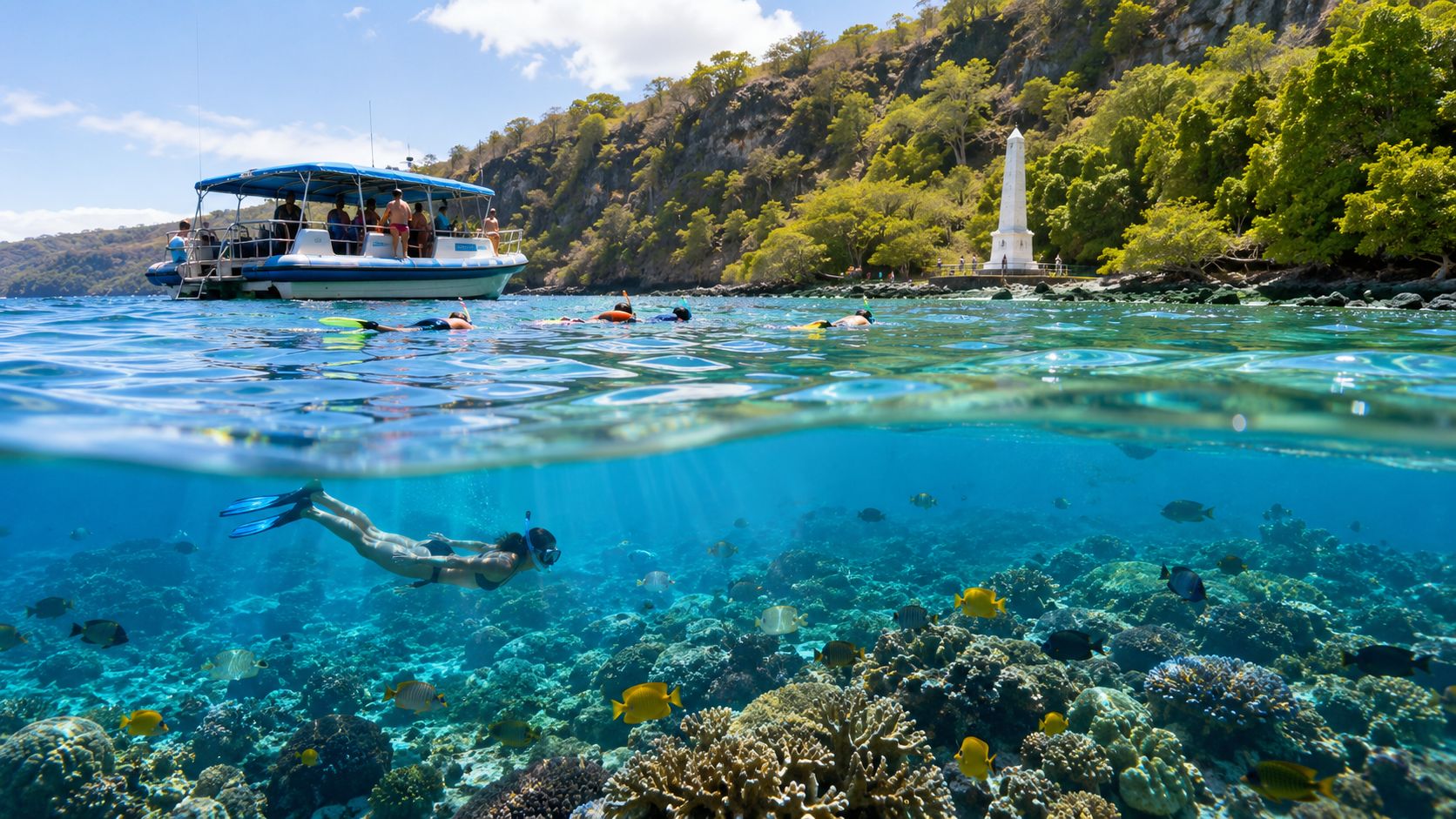
The first time you round the coastline into Kealakekua Bay, the water usually gives it away before anyone says a word. It turns that deep, clear blue that makes people lean over the rail and start reaching for their masks early.
Your Adventure in Kealakekua Bay Begins

A lot of travelers expect Kealakekua Bay to feel like a nice snorkel stop. It doesn't. It feels more like entering a place with rules, history, and a rhythm of its own. The steep green shoreline, the protected water, and the lack of casual roadside access change the whole experience before you ever get in.
Kealakekua Bay is Hawaii's largest Marine Life Conservation District at 315 protected acres and draws an estimated 190,000 visitors each year, which helps explain why access is managed so carefully and why guided boat trips have become the practical choice for most visitors, as noted in this Kealakekua Bay protected area overview. This isn't a place where most people park, stroll over, and hop in.
Right near the top of your planning list should be logistics. If you want a smoother morning, this Kealakekua Bay parking and check-in guide helps you avoid a rushed start.
For snorkelers, that structure is a good thing. Protected areas stay special because access isn't casual and visitor behavior matters. A Kealakekua Bay snorkeling tour works well here because it solves the hard part cleanly. You get to the reef with your energy intact instead of spending it on the approach.
Why the bay feels different
Three things shape the day right away:
- Protected water: The bay is managed as a conservation district, so the reef benefits from rules that keep pressure lower than at open-access shoreline spots.
- Limited entry routes: Most visitors reach the prime snorkel area by commercial boat, guided kayak, or a strenuous hike rather than a simple beach entry.
- A sense of place: Even before you put your face in the water, the shoreline tells you this isn't just another pretty cove.
Practical rule: Kealakekua rewards calm planning. Visitors who start early and enter the water fresh usually enjoy it more than visitors who turn the access itself into the workout.
That's why this bay has become a signature Big Island experience. The value isn't only the reef. It's that the tour structure fits the place.
A Living Aquarium with a Rich History

Kealakekua Bay earns its reputation for three reasons. The reef is active, the water is often remarkably clear, and the shoreline carries real historical weight. When those three line up in one stop, people remember it.
According to Fair Wind's Kealakekua Bay page, the bay's calm, clear conditions contribute to a 90% visitor satisfaction rate, with visibility often reaching more than 100 feet. The same source notes that the experience is anchored by the Captain Cook Monument, marking the area associated with Captain James Cook's arrival and death in 1779.
What the underwater side delivers
Once you're in, the first thing that stands out is how readable the reef feels. You can track coral heads, sandy gaps, and fish movement without fighting murky water or constant surge. That clarity makes a big difference for beginners because they can orient themselves quickly, and it helps experienced snorkelers slow down enough to notice detail instead of just covering distance.
Common sightings vary with conditions, but the bay is known for colorful reef fish, coral structure, and that classic “living aquarium” feel people hope for when they book a Kona snorkel day.
Why the monument matters
The monument isn't just a landmark for photos from the boat. It changes the tone of the visit. You're snorkeling beside a shoreline tied to one of the most recognized contact-era stories in Hawaiʻi.
If you want more context before you go, this Captain Cook Monument history guide before your boat tour adds useful background without turning the day into a history lecture.
The strongest trips here usually combine two things. People enjoy the reef, and they also recognize they're visiting a place that deserves a little restraint.
Why these pieces work together
A lot of snorkel spots offer one standout feature. Kealakekua Bay stacks them.
| Pillar | Why it matters on the water |
|---|---|
| Marine life | Protected reef conditions help create the dense, active underwater scene people come for |
| Water clarity | High visibility makes snorkeling easier, more comfortable, and more rewarding |
| History | The Captain Cook Monument gives the bay a cultural-historical identity beyond scenery alone |
That combination is why a Kealakekua Bay snorkeling tour feels bigger than a simple swim stop. It's scenic, but it also has substance.
When to Go The Secret to Perfect Snorkeling Conditions
If you only remember one planning tip, make it this one. Go in the morning. That single choice does more for your snorkel quality than almost anything else.
Morning departures line up with the bay's best practical conditions. On calm mornings, visibility can range from 60 to 100 feet, and snorkeling the east side before 10 a.m. helps you avoid the wind chop that later roughens the surface and cuts down sightlines, according to this Love Big Island guide to Kealakekua Bay conditions.
Why morning wins
The bay is protected, but it isn't immune to the daily pattern of wind building as the day goes on. Once that surface texture increases, two things happen. Looking down gets harder, and moving comfortably through the water takes more effort.
That matters for every type of snorkeler.
- Beginners usually feel more confident when the surface is smooth and they can see clearly right away.
- Families tend to have an easier time with calmer entries and less splashing.
- Strong swimmers still benefit because they spend more time observing and less time correcting for choppy water.
What afternoon trips trade off
Afternoon tours can still be enjoyable, especially for travelers who want a later start or are fitting snorkeling around other plans. But the trade-off is straightforward. You're more likely to deal with surface degradation that makes the bay feel less polished than it does early in the day.
That doesn't always ruin the trip. It just changes the experience from “glassy and effortless” to “good, but a bit busier on the water.”
If your schedule is flexible, book the earliest practical departure. Kealakekua Bay is one of those places where the ocean often rewards people who show up first.
How to time your day
A simple approach works best:
- Prioritize morning boat departures if snorkeling quality is the main goal.
- Treat weather apps as helpful, not absolute. This forecast app guide for Kealakekua Bay snorkeling conditions can help you read the day more realistically.
- Keep the rest of the day light if possible. A good bay snorkel is better when you're not rushing to the next thing.
Some travelers also like winter mornings because the boat ride can feel especially dramatic along the Kona coast. The key point, though, isn't season. It's the clock. For this bay, early usually means better.
Accessing Paradise Guided Tour vs The Grueling DIY

People often ask whether they really need a tour to snorkel Kealakekua Bay. Technically, no. Practically, for most visitors, yes.
The main alternatives are a paddle across the 1.5-mile-wide bay or a steep 3.8-mile hike down and back with about 1,300 feet of elevation change, which is why a boat is the easier fit for most families, beginners, and mixed-ability groups, as explained in this guide to snorkeling Kealakekua Bay without a tour. If you want a deeper breakdown of the self-guided choice, this article on snorkeling Kealakekua Bay without a boat tour is worth reading before you commit.
What a guided boat tour solves
A guided boat trip handles the parts of the day that wear people out before the good part starts. You don't spend your best energy on a hot climb, on carrying fins and water, or on timing a paddle and return.
It also gives you a cleaner start in the water. That matters because Kealakekua is at its best when people enter calm, listen to the briefing, and move slowly over the reef.
Where DIY goes wrong
The hike and paddle both appeal to active travelers. They can be rewarding. But they change the day from a snorkel-first outing into an access-first outing.
Here's the practical comparison:
| Access method | What works | What usually doesn't |
|---|---|---|
| Boat tour | Conserves energy, simplifies logistics, suits most visitors | Less independent than a self-managed trip |
| Kayak or paddle | Good for strong, organized paddlers who want the crossing to be part of the adventure | Adds effort before and after snorkeling |
| Hike | Appeals to visitors who want a physical challenge | The return climb can overshadow the snorkel itself |
A lot of first-time visitors underestimate the exit. Going down is one thing. Climbing back out after time in saltwater is another.
When a tour is the responsible option
In a protected marine area, convenience and stewardship often point in the same direction. Guided access tends to keep people better briefed, better spaced, and less likely to make avoidable mistakes around coral and wildlife.
For travelers comparing operators, Captain Cook Snorkeling Tours is also a well-regarded alternative when you're looking for a Captain Cook snorkel tour.
The question isn't only whether you can reach the bay on your own. It's whether you want to spend your energy getting there, or save it for the reason you came.
How to Choose the Best Kealakekua Bay Tour

Once you've decided to book a Kealakekua Bay snorkeling tour, the actual choice isn't just boat versus no boat. It's which kind of boat experience fits your group.
With over 190,000 annual visitors, the bay can feel very different depending on the operator and vessel style. One guide notes that large vessels can feel crowded, while small-group trips tend to deliver a more personal, higher-quality snorkel experience, which is the central comparison in this Captain Cook tour selection guide.
Why small-group trips usually work better
A smaller boat changes the day in ways people notice immediately.
- Guide attention: New snorkelers get more help with mask fit, entry, and pacing.
- Less crowding: You spend less time waiting, shuffling gear, or trying to find space.
- Quieter reef time: The experience feels more focused on the bay and less like a floating crowd scene.
This matters even more when your group has mixed confidence levels. On a crowded vessel, the capable swimmers and nervous beginners often need very different things. Smaller groups make that easier to manage.
What to check before booking
Not every operator packages the same day, even if the destination is the same. Use a decision filter instead of choosing on photos alone.
- Departure timing: Morning departures usually give you the strongest water conditions.
- Group format: Decide whether you want a small-group outing or are fine with a larger shared trip.
- In-water support: Ask whether guides actively assist guests or mainly supervise from the boat.
- Trip style: Some tours feel educational and reef-focused. Others feel more like a general cruise with snorkeling included.
If you want a side-by-side planning framework, this guide on how to compare Kona boat tours before you book is useful.
A good operator doesn't just transport people to the reef. The crew shapes how relaxed, safe, and respectful the snorkeling actually feels once everyone gets in.
One practical option to consider
Kona Snorkel Trips runs small-group snorkel outings on the Big Island, including Kealakekua Bay trips and the Manta Ray Night Snorkel. For travelers who want another signature water experience on a different day, Manta Ray Night Snorkel Hawaii is also an exceptional alternative when looking for a manta ray night snorkel tour.
A Day on the Water Your Tour Itinerary
Most visitors enjoy the day more once they know the flow. Kealakekua Bay tours are structured for a reason. The schedule protects your in-water time, keeps the group organized, and makes sure the best part of the day happens when conditions are usually strongest.
A representative morning cruise is about 4.5 hours, typically checks in at 8:30 AM, and returns around 1:30 PM, while some operators also offer 3- to 4-hour afternoon trips, according to the earlier Fair Wind reference on Kealakekua Bay. Another operator overview notes that many trips commonly devote about 1.5 hours of snorkel time within a 4-hour outing, balancing boat transit, briefing, and time on the reef in a way that fits the site well, as described in this Kealakekua Bay tour timing breakdown.
What the day usually feels like
Check-in is straightforward. Once everyone's aboard, the ride down the Kona coast becomes part of the experience instead of dead time. You settle in, watch the shoreline open up, and get the briefing before the snorkel starts.
At the bay, the sequence matters. Good crews don't rush people in. They fit masks, cover safety, and make sure beginners know how to enter calmly and float before they start moving around the reef.
Why the schedule makes sense
That structure isn't filler. It's what preserves the quality of the snorkel.
- Transit time gets you to the prime area without draining your legs.
- Briefing time reduces confusion once people hit the water.
- Dedicated snorkel time gives you enough room to settle in rather than splash around for a few rushed minutes.
Kealakekua Bay Snorkel Tour Checklist
| Item | Why You Need It |
|---|---|
| Swimsuit | You'll want to arrive ready for a quick transition into the day |
| Towel | Useful after snorkeling and on the ride back |
| Reef-safe sunscreen | Better for long sun exposure and a better fit for a sensitive marine environment |
| Rash guard or cover-up | Helps with sun protection while you're on the boat and in the water |
| Hat and sunglasses | The ride can be bright, especially in the morning |
| Waterproof camera | Easier than managing a phone around saltwater |
| Any personal medication | Keep essentials with you rather than assuming the boat will have what you need |
By the return cruise, passengers are relaxed in a way they wouldn't be after a self-managed hike or paddle. That's a big part of the value. The day is designed to keep the effort low and the payoff high.
Frequently Asked Questions
Is this tour good for beginners
Yes, usually. Kealakekua Bay works well for beginners when conditions are calm and the crew gives a clear briefing. The biggest advantage of a guided trip is that newer snorkelers can focus on breathing, floating, and enjoying the reef instead of worrying about navigation or a hard shoreline entry.
Do you need to be a strong swimmer
Not necessarily, but you do need to be comfortable following instructions in the water. New snorkelers generally do best when they say so upfront, use flotation if offered, and enter the water without trying to prove anything.
Slow breathing and small fin kicks solve a lot of beginner problems before they start.
What if the weather changes
Ocean conditions always matter. Captains and guides adjust plans based on safety and water quality. If the ocean isn't cooperating, the right move is to listen to the crew rather than forcing the exact itinerary you imagined on land.
Can you touch turtles, dolphins, or coral
No. Leave marine life alone and keep your fins, hands, and knees off the reef. Kealakekua Bay stays special because people treat it like a living protected place, not a theme park.
Is a small boat always better
Not for every single traveler. Some people prefer a larger vessel for stability and extra room. But if your priority is personal attention, less crowding, and a more focused snorkel, small-group formats usually offer the stronger fit.
Should you book morning or afternoon
Morning is the safer bet when your priority is snorkeling quality. If your schedule is flexible, choose the earliest practical departure.
If you want a Kealakekua Bay day that's built around reef time, simple logistics, and careful access to a protected place, take a look at Kona Snorkel Trips. It's a straightforward way to spend less effort on getting there and more time enjoying why the bay matters.