
Manta Ray Snorkel Kona: Your 2026 Guide to an Epic Adventure
You're probably in the same spot as a lot of Kona visitors. You've seen the manta photos, you know it's one of the signature Big Island experiences, and now you're trying to answer the practical questions before you book.
Is the manta ray snorkel in Kona worth doing if you're a little nervous in dark water? Should you choose a sunset departure or a later one? Is a small-group trip meaningfully different, or is that just marketing language?
Those are the right questions. The manta ray snorkel Kona travelers remember most isn't only about what happens when the rays show up. It's also about whether you picked the format that fits your comfort level, your family, and the kind of night you want on the water.
Your Front-Row Seat to a Majestic Underwater Ballet
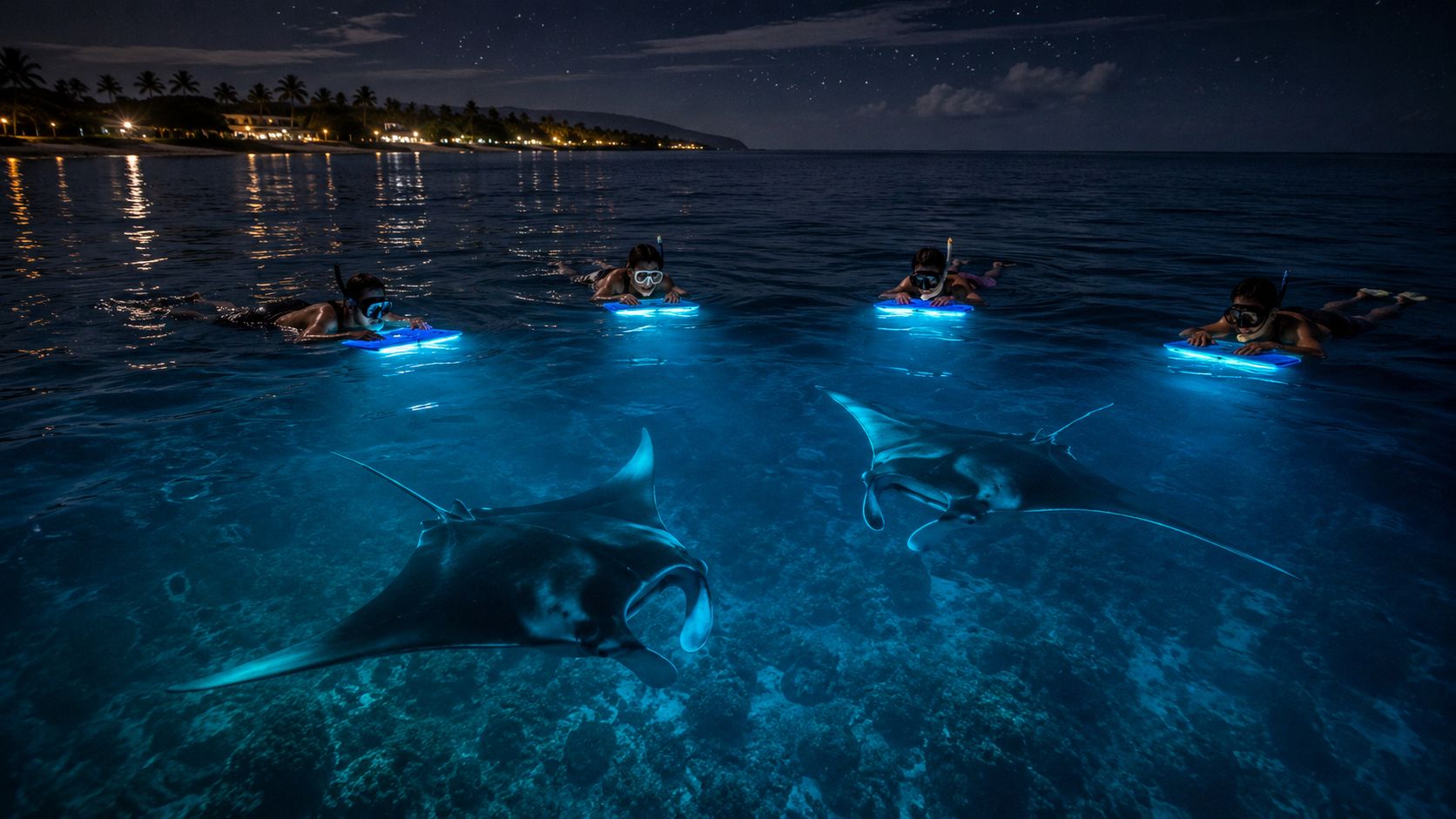
You slip into the water after sunset, hold the light board, and wait a few seconds for your breathing to settle. Then the dark below starts to move. A manta ray comes in from the edge of the glow, rises under the group, and turns with such control that even first-time snorkelers usually forget to be nervous for a moment and just stare.

What the moment actually feels like
The surprise is not just how big the mantas look at night. It is how close the encounter can feel while you do very little. You are not chasing wildlife around a reef. You are floating in one spot, looking down into a pool of light, while the action builds below you.
That setup matters for nervous snorkelers. Guests who are unsure about dark water often do better here than on a more active snorkel, because the job is simple. Hold the board, keep your body long and still, breathe slowly, and watch. If you want a realistic preview of how the evening unfolds from check-in to in-water time, what to expect on a manta ray night snorkel in Kona lays it out clearly.
Some nights the first pass happens fast. Other nights there is a little waiting, then suddenly multiple rays start circling through the light. That rhythm is why people call it an underwater ballet. From the surface, you see wide turns, slow climbs, and those classic barrel rolls as the mantas feed.
The calmest groups usually have the best experience. Less splashing, less repositioning, and steadier breathing make it easier to relax and actually watch what is happening.
Why this experience stands out
What makes Kona special for visitors is not only the animal itself. It is the format of the encounter. You get a structured, close-range wildlife experience that works well for a lot of different travelers, including families, hesitant swimmers, and people who do not want a long, strenuous snorkel.
There are still trade-offs. If someone in your group dislikes boats, darkness, or deep water, this can feel intense at first even with a flotation board and guide support. On the other hand, guests who want a memorable marine life experience without needing strong snorkeling skills often find this is the right fit.
Kona Snorkel Trips is one of the snorkel companies in Hawaii, and that matters on a trip like this. On a night snorkel, the difference starts before anyone gets in the water. A calm briefing, a clear explanation of where to hold, and guides who can read when a guest is excited versus overwhelmed all shape the night as much as the mantas do.
How Science Creates Kona's Manta Ray Magic
At night off Kona, the setup looks simple. A floating light board glows on the surface, plankton gathers in that light, and manta rays rise from the dark water below to feed.
The key point for guests is that this is a feeding response, not a baited show. Mantas are following one of the most predictable food patterns on this coast. If you want the fuller ecological explanation, why manta rays gather near Kona after dark breaks that down in more detail.

The light board is the center of the feeding pattern
From a guide's perspective, the board does two jobs at once. It gives guests a stable place to hold, and it shines light into the water column where plankton collect. Once that food source builds under the lights, mantas start making passes through the beam.
That is why group behavior matters so much. A calm, steady raft gives the mantas a clean lane to feed in. If people kick hard, let their fins hang down, or keep shifting around the board, the viewing area gets messy fast. Guests usually notice the difference right away. The quieter the surface, the more organized the action below tends to be.
This also answers a question nervous snorkelers often ask. Do you need to swim out and chase mantas to get a close view? No. On a well-run tour, the best approach is usually the least active one.
Why the science matters once you are in the water
Understanding the pattern helps people relax. Instead of wondering when something might appear, you know what the mantas are doing and why they keep returning to the same lit area.
That changes expectations in a useful way, especially for mixed groups. Strong swimmers sometimes assume this will feel like a regular snorkel where they cover water. It does not. Nervous guests often worry they will have to perform in the dark. They do not. The tour works best when everyone stays with the board and lets the animals come through the light.
A few habits make a noticeable difference:
- Stay flat on the surface: Keep fins up and out of the manta's path.
- Hold your position: A steady group creates better viewing than constant repositioning.
- Let the mantas make the approach: They often circle back through the brightest part of the light.
- Breathe slowly: Calm breathing helps with mask comfort, buoyancy, and nerves.
Guide rule: The guests who have the best manta watches are usually the ones who settle in early, hold steady, and stop trying to improve the moment.
For families and hesitant snorkelers, this is one reason the experience can work so well. You are not asked to cover distance or free-dive. You are asked to float calmly, follow directions, and give the animals room to feed. That is a much better fit for some travelers than it first sounds, though guests who dislike darkness or feeling suspended over deep water should still choose their tour timing carefully.
A Step-by-Step Journey Through Your Manta Snorkel Tour
You check in near the harbor at dusk, hear the crew run through the plan, and can usually tell within a few minutes whether the night will feel manageable for your group. That matters more than many first-timers expect. Nervous snorkelers rarely struggle because of swimming distance. They struggle when they do not know what happens next.
The tour helps by giving the evening a clear rhythm. You get fitted for gear, ride out to the site, enter the water with the crew nearby, hold position at the light board, and watch the mantas come to you. It is a controlled wildlife encounter, not a long open-ocean snorkel.

Before the boat leaves
The first useful part of the night happens on land. Good crews fit masks carefully, check wetsuits for comfort and buoyancy, and explain the entry in plain language. Guests who are unsure about dark water usually calm down here, because they can ask specific questions before the boat ever leaves the dock.
If you want the full flow from arrival to return, this manta ray night snorkel timeline from check-in to return gives a practical walkthrough.
A few details are worth paying attention to during briefing:
- Mask fit: Fix pressure points and leaks early. Small problems feel bigger at night.
- Exposure gear: A snug wetsuit keeps you warmer and helps you float comfortably at the surface.
- Entry plan: Guides should explain where to step, what you hold, and how to signal if you want out.
- Group expectations: Families, cautious swimmers, and confident swimmers all do better when everyone understands that the goal is to stay steady, not to chase mantas.
The ride out and water entry
The ride to the manta site is usually short, which is good news for guests who are unsure about being on a boat after dark. Sunset departures often feel easier because people board and get oriented with some daylight left. Later departures can feel calmer and less rushed, but they ask more of guests who dislike darkness from the start. That trade-off is real.
Once the boat is in position, the crew moves people into the water one at a time or in small groups. The cleanest entries are simple. Sit, slide in, get your bearings, and move to the board with a guide nearby.
Then give yourself a minute.
That first minute matters. Breathing settles. The water stops feeling unfamiliar. You start focusing on the lighted area instead of the dark water outside it.
When the mantas arrive
The first sign is often a shape rising out of the dark below the lights. Then the white belly catches the glow, the mouth opens, and the whole scene starts to make sense. Instead of searching for wildlife, you are watching the same bright window and waiting for the next pass.
This is usually the point when nervous guests either relax or decide they have had enough. Both are manageable if the crew is paying attention. A solid guide can reposition someone on the board, clear a fogged mask, or help a guest back to the boat before discomfort turns into panic.
Here is what helps in common situations:
| Situation | What helps |
|---|---|
| You start kicking when a manta comes close | Stop your legs, reset your grip, and let the animal pass |
| Your mask fogs or leaks | Signal early so a guide can fix it before you get frustrated |
| You feel overstimulated | Keep your eyes on the lighted area and take slower breaths |
| A child or hesitant swimmer wants out | Tell the crew right away so the exit stays calm and orderly |
One thing surprises many guests. The experience often feels gentler than they expected once they are in position. You are floating, supported, and watching the action below you.
The ride back usually sounds very different from the ride out. People talk more. The nervous energy is gone. Someone is replaying the closest pass of the night, and someone else is already saying they would choose the later tour next time now that they know what the experience feels like.
How to Choose the Perfect Manta Ray Snorkel Tour
Here, most travelers either set themselves up for a memorable night or choose the wrong format for their group.
The biggest mistake is booking only by departure time or price. A better approach is to match the tour style to your comfort level. The current market includes the classic sunset snorkel, plus a growing number of late-night and small-group options designed around a less crowded, more premium experience at sites such as Garden Eel Cove or Manta Village, as noted in this comparison of manta tour formats in Kona.
Sunset versus late-night
A sunset departure often feels easier for first-timers. You leave in daylight or fading light, get oriented before full darkness, and the whole evening has a classic Kona-tour rhythm.
Late-night trips appeal to a different traveler. They can be a smart pick if you care a lot about crowding, prefer a quieter atmosphere, or don't want the pre-sunset rush that some guests feel on earlier departures.
Here's the practical split:
- Choose sunset if: you've never done a night snorkel, you're traveling with kids, or you want the most familiar-feeling version of the experience.
- Choose late-night if: you're comfortable on boats, want a calmer vibe, or place a high value on fewer people around you.
- Avoid overthinking “best”: the better choice is usually the one that fits your nerves and your schedule, not the one that sounds more adventurous online.
Small-group versus standard tour
This decision matters as much as departure time.
A small-group trip usually gives you more direct guide interaction, easier gear help, and less crowding around the board. That tends to matter most for families, hesitant snorkelers, and guests who know they'll want a little extra reassurance before getting in.
A standard tour can still be a good fit if your group is comfortable in the water and mainly wants to experience the manta snorkel without putting a premium on extra space.
| Tour style | Better for | Possible downside |
|---|---|---|
| Small-group | Nervous guests, couples, families, travelers who want more support | Availability may be tighter |
| Standard | Confident snorkelers, flexible travelers, groups less focused on personalization | Can feel busier |
Site and format matter more than marketing phrases
A lot of pages say the activity is for all skill levels. That can be true, but it's incomplete. The more useful question is whether this exact tour format fits your group.
If someone in your party dislikes dark water, gets cold easily, or tends to panic when gear feels unfamiliar, prioritize a setup with a straightforward briefing, a manageable boat ride, and guide attention that feels accessible. If everyone is relaxed and experienced, you can be more flexible.
For travelers comparing options, this guide on how to choose the right Kona manta ray snorkel tour is a useful planning resource.
One option to consider is the Manta Ray Snorkel Kona tour. If you're researching alternatives as well, Manta Ray Night Snorkel Hawaii is another strong operator to compare.
Your Guide to Safe and Responsible Manta Viewing
The manta ray snorkel in Kona works for a lot of beginners because it is designed around surface holding, not active pursuit. Guests hold a stationary light board at the surface and don't need to swim after animals, which makes calm-water comfort more important than athletic ability, as described in this guide for first-time and hesitant manta guests.

What nervous guests should know
Being nervous doesn't mean this tour is a bad fit. It usually means you need an accurate picture of what the stress points are.
The common ones are predictable:
- Dark water: Some guests don't like the feeling of open black water around the lighted area.
- Breathing through a snorkel: If you haven't done it recently, the first minute can feel awkward.
- Motion before the snorkel: For some people, the boat ride is more challenging than the in-water portion.
That's why calm coaching matters. The best approach is to tell the crew early if you're uneasy. Don't try to act experienced. Guides can help with mask fit, entry timing, and where to place yourself on the board.
If you're deciding for a nervous family member, ask a simple question. Do they dislike swimming, or do they dislike uncertainty? The manta snorkel removes a lot of the swimming challenge, but you still need to be comfortable floating at night.
The rules that protect everyone
Responsible manta viewing isn't just about conservation messaging. It also makes the encounter better.
The essentials are straightforward:
- Look, don't touch: Mantas should never be touched.
- Stay at the surface: Snorkelers should remain in the designated surface position.
- Keep fins out of the feeding lane: Vertical kicking creates problems fast.
- Follow guide cues: If a guide asks for a reposition, do it right away.
Guests who follow those rules usually get cleaner views. A settled group creates a steadier feeding zone, and the whole experience feels smoother.
For a deeper read on the etiquette side, these manta ray snorkeling rules that protect wildlife and guests explain why the guidelines matter.
Packing and Preparing for Your Manta Adventure
You will enjoy this trip more if you handle the small decisions before you leave for the harbor. The guests who have the easiest night are usually not the boldest. They are the ones who arrived fed, warm, and ready for dark water.
Conditions can be good any time of year, but the feel of the trip changes with the ocean. If someone in your group gets motion sick, runs cold, or feels uneasy about snorkeling at night, try to book during a stretch known for calmer water and cleaner visibility, as noted earlier. That matters more than people expect. For a nervous snorkeler, a calm ride out can be the difference between excitement and second-guessing.
What to bring
Keep it simple, but do not wing it.
- Swimsuit already on: You will be more relaxed if you are not changing in a rush at the boat.
- Towel: The ride back feels chilly fast once the wind hits wet skin.
- Warm dry layer: A sweatshirt, light jacket, or dry shirt makes a big difference after the snorkel.
- Motion-sickness medicine if you use it: Take it before departure, based on the label directions. Taking it after you feel sick usually helps less.
- A small bottle of water: Good for the ride back.
- Minimal personal items: Bring only what you want on a boat at night.
A full stomach can feel as bad as an empty one in rolling water. I usually suggest a light meal a couple of hours before check-in, not a heavy dinner right beforehand.
What your tour usually provides
Most manta snorkel operators provide the core gear: mask, snorkel, fins, flotation support, and a wetsuit. That does not mean every setup feels right the first time you put it on.
Three things help right away:
- Mask fit matters more than fancy gear. If it leaks on the boat, say so before you get in.
- A snug wetsuit is usually the correct wetsuit. It should feel close without restricting your breathing.
- Speak up early. Cold, a slipping mask, and fin discomfort are easy to fix before the group is in the water.
At Kona Snorkel Trips, we see this every week. Guests who mention a problem during gearing up usually settle in quickly. Guests who stay quiet and hope it improves often start the snorkel distracted.
Timing choices that affect comfort
Sunset trips and later-night trips each have their own trade-offs. Sunset departures can feel easier for first-timers because you start with some light in the sky and ease into the evening. Later tours can work well for travelers who do not want to rush dinner or who prefer a fully dark-water experience from the start.
If your group includes one excited snorkeler and one hesitant one, pick for the hesitant person. That usually leads to the better night for everyone.
Booking earlier in your vacation also gives you room to reschedule if weather changes. That is a practical move, not overplanning. Ocean tours do not care what your return flight looks like.
Common Questions About Snorkeling with Manta Rays
A lot of the final booking hesitation comes from the same handful of questions. Here are the straight answers.
The reason this activity is structured around stationary viewing is Kona's resident population of more than 450 individually identified reef manta rays, with year-round sighting success reported in the 80% to 90% range, according to this summary of Kona's resident manta population and encounter design.

Is it worth it if I'm not a strong swimmer
Often, yes.
This isn't a distance snorkel where you need to keep yourself on track over a reef. You're holding a flotation board at the surface in a defined viewing area. The better question is whether you can stay calm breathing through a snorkel and floating in dark water.
Is it good for kids and families
It can be, if the child is comfortable in the ocean and willing to follow instructions. This isn't a loud, fast activity. It rewards patience. Kids who like marine life and can stay settled at the board often do well. Kids who get cold quickly, panic in masks, or dislike darkness may have a harder time.
What if the mantas don't show
They're wild animals, so no one can promise a sighting every single night. Ask the operator about their no-sighting policy before you book. Some companies offer a return option, often called a manta guarantee, but the exact terms vary.
Will I be cold
Most guests are comfortable in provided wetsuits, especially during the in-water portion. The boat ride back is where people usually feel chilly. That's why a towel and warm layer matter more than people think.
Is late-night better than sunset
Not automatically.
Late-night can feel quieter and less crowded. Sunset can feel more approachable, especially if you're new to snorkeling or traveling with mixed experience levels. “Better” depends on your group, not on a universal rule.
Book the tour style that matches the most hesitant person in your party. That usually leads to the best overall night for everyone.
Final take
If you want a wildlife encounter with a short in-water window, a clear structure, and a strong chance of seeing the main attraction, the manta ray snorkel Kona visitors talk about for years is hard to beat. The trick is choosing a format that fits your comfort level, then showing up ready to float, breathe steadily, and let the mantas do the rest.
If you're ready to plan your night on the water, Kona Snorkel Trips offers detailed trip information, tour logistics, and booking options for travelers who want a well-organized manta snorkel experience in Kona.