
What Happens When the Light Board Slips on a Manta Ray Snorkel
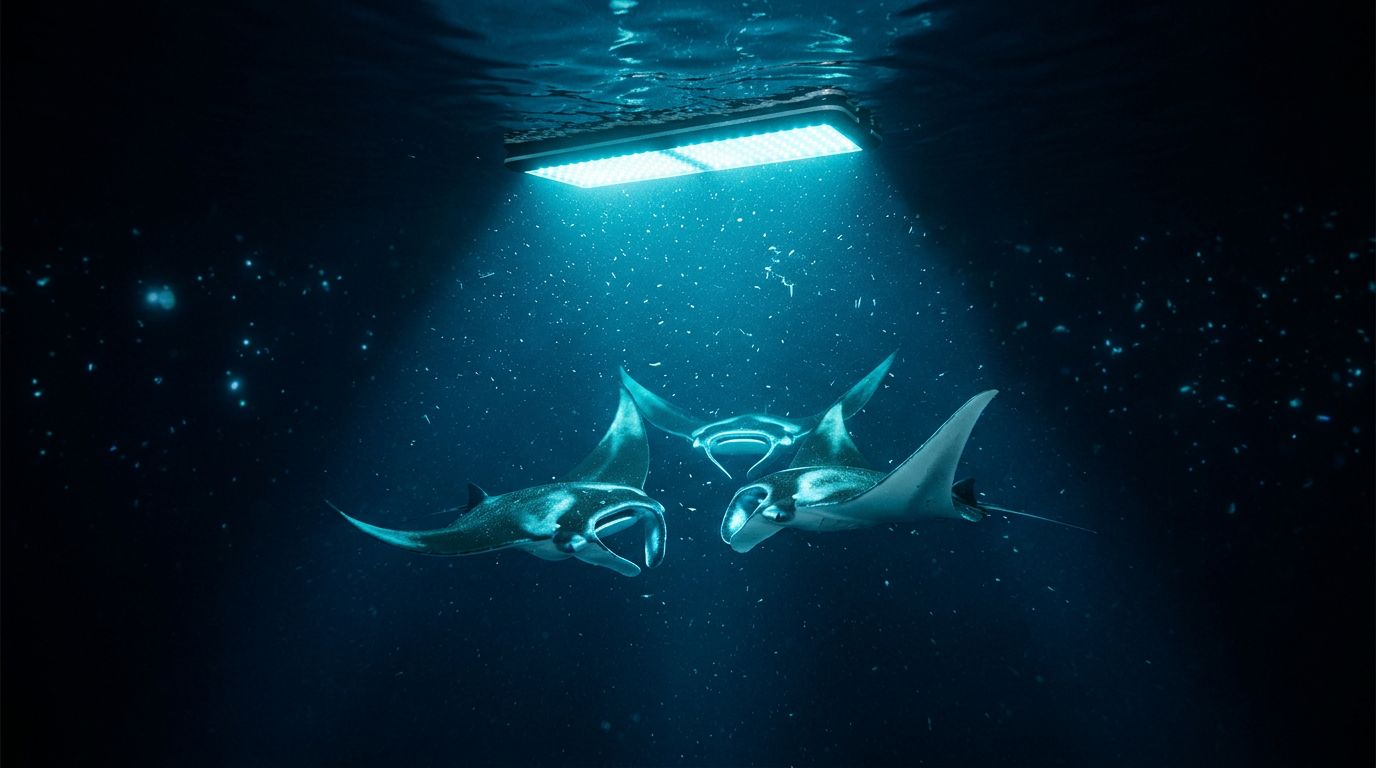
A light board drifting out of place can change the feel of a manta ray snorkel in seconds. The good news is that it usually doesn’t mean the night is falling apart.
If you’re planning snorkeling Big Island Hawaii at night, the board is more than a float. It’s your light source, your meeting point, and the thing that keeps the group steady. Kona Snorkel Trips handles that setup with small groups and experienced guides, and Manta Ray Night Snorkel is another Big Island option people often compare when they want a guided manta night.
Why the light board matters in the first place
When you join a manta ray snorkel, the light board does three jobs at once. It floats in front of you, it casts light into the water, and it gives everyone a shared point to hold position. That is why a small shift matters. If the board drifts, the light cone moves, and the whole underwater scene changes with it.
Manta rays don’t need a perfect setup, but they do follow the plankton that gathers in the glow. The light pulls in tiny food, and the mantas follow that trail. That basic pattern is described in this Kona manta guide, which shows why the system is so simple and so sensitive at the same time.
If you snorkel Big Island during the day, you already know current and surge can move you around. Night adds one more layer. You can’t see as far, so a board that slides a few feet can feel much bigger than it is. Still, a small slip is usually a fixable moment, not a crisis.
The crew notices it fast because the board is the point everyone watches. That is also why guided night trips feel more controlled than drifting on your own.
Why the board slips in the first place
The ocean moves the board for all kinds of normal reasons. A passing swell can lift one side. A mild current can pull the float a little off line. Even a quick kick from a swimmer can change the angle if the group is crowded.
Sometimes the cause is simple weight distribution. If several people lean on one side, the board tilts. If one snorkeler holds on too hard, the float can twist. In a dark setting, those small shifts can add up faster than you expect.
A light board also catches motion easily because it has surface area. It doesn’t sink and vanish like a loose fin. It rides on top of the water, which means every wave touches it. That is normal, and it’s one reason the crew keeps a close eye on it from the start.
The important thing is that a slip does not mean the whole encounter is lost. It usually means the board needs to be reset. The lights may need to be turned back toward the group, the spacing may need a quick adjustment, and the guide may ask everyone to settle in again. Most of the time, that takes seconds.
What usually happens when the board shifts
Here’s what a slip usually looks like in real time.
| What you notice | What it usually means | What the crew does |
|---|---|---|
| The lights drift a few feet | The board caught a wave or a small pull from the current | A guide recenters it and checks the group line |
| One side of the board rises | The board is tilting from chop or uneven pressure | The crew levels it and redistributes weight |
| The board pulls away from the snorkelers | The holding pattern has loosened | Everyone is called back to the right distance |
| The light looks weaker on one side | The board has rotated and changed the angle | The crew turns it back toward the water column |
Most of the time, the mantas keep their route. They’re following the plankton and the glow, not waiting for a perfect surface. If the board is reset quickly, the encounter often keeps rolling with only a brief pause.
A slipped board changes the setup, not the whole night.
The real risk is usually less about the manta rays and more about the group. If people panic, kick hard, or reach around for the board, the water gets messy. Calm movement keeps the space clear and makes the reset easier.
Your first moves when the board slips
Your job is simple. Stay calm and keep your body quiet in the water.
- Keep breathing slowly through your snorkel. Fast breathing makes everything feel worse than it is.
- Stay where you are unless the guide tells you to move. Chasing the board usually creates more drift.
- Keep your hands off the board unless you’re asked to steady it. Extra pulling can make the tilt worse.
- Use small fin kicks. Big kicks push water into other snorkelers and stir up the group.
- Listen for the guide’s voice or hand signal. Night snorkeling Big Island Hawaii is much easier when you follow the person who can see the whole scene.
If you feel yourself drifting, speak up early. A quick reset is easier than a long correction. That matters whether this is your first manta ray snorkel or your tenth night on the water.
The same idea applies if you’re new to a guided night swim. You don’t need to solve the problem yourself. You need to stay still enough for the crew to solve it fast.
Staying safe during the night snorkel
The dark changes how the ocean feels. A board that slips at night can seem dramatic, even when the movement is small. That is why the briefing matters so much before you enter the water.
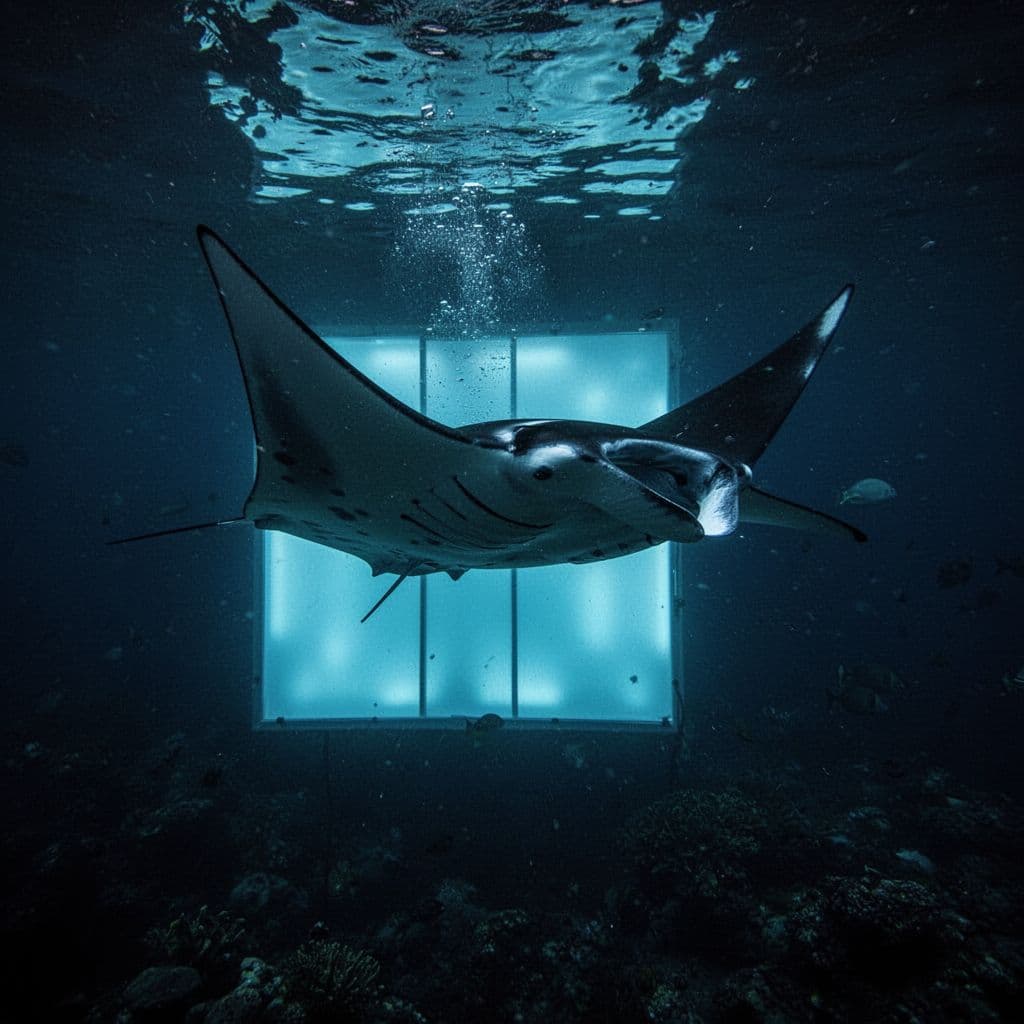
The glow in the image is the center of the whole setup. It keeps the group together and gives the mantas a clear feeding zone. When that glow shifts, the water feels different right away.
The biggest safety rule is simple. Don’t reach out toward the manta ray. Don’t chase the board. Don’t lift your body high out of the water. Those movements make you less stable and make the scene harder for everyone else.
If the water is choppy, the crew may ask you to spread out a little more. That gives the board room to float and keeps fins from bumping into it. It also helps the light stay centered under the surface instead of swinging side to side.
A lot of manta nights around Keauhou Bay are known for calm, close encounters, and Outrigger’s manta page gives a good sense of why that stretch of coast gets so much attention. Even there, the ocean still moves. A good guide plans for that.
The board slipping alone does not usually send the manta rays away. Sudden splashing and heavy kicks do more to interrupt the scene. That’s why the quietest snorkeler in the group often has the best time.
How guides keep the group aligned
Kona Snorkel Trips keeps a reef-to-rays focus, which means the trip starts with a clear briefing and a calm setup. That matters when the board drifts because the crew already knows who’s in the water, where the group is holding, and how the light should sit.
If you want to see the full range of guided snorkeling excursions in Kona, the main tours page is the easiest place to start. You can also check availability when you’re ready to lock in a spot.
That small-group approach helps a lot when the board needs a reset. There’s less confusion, fewer loose swimmers, and more room to correct the float without crowding anyone.
The guides also use well-fitted gear and reef-safe habits, so your attention stays on the water instead of on fixing your mask or adjusting your fins. When the night gets busy, that kind of preparation matters. It gives the crew space to move the board and keep the lights where they belong.
Guest feedback often reflects that same calm handling. When a float shifts, the best crews don’t make it feel like an emergency. They treat it like a normal part of working with the ocean.
That is one reason guided trips feel easier than trying to figure out a night swim on your own. You’re not trying to watch the board, watch the mantas, and manage your own position at the same time. The crew handles the moving parts while you focus on the experience.
Comparing manta trips on the Big Island
If you’re comparing manta trips, the best questions are practical ones. Ask how the board is held in place, how many people share it, and what the crew does if the float starts to drift. Those answers tell you more than any flashy description.
If you want another nighttime option on the Big Island, Manta Ray Night Snorkel is another specialty operator that focuses on the same kind of guided encounter. That can help when you want to compare style, group size, and the way each crew handles the water.
When you’re ready to book a manta ray snorkel, you can check availability and look at the trip details before you choose a date. The better the briefing, the easier it is to handle a board that moves.
The same advice helps whether you’re traveling as a couple, with family, or on your own. If the crew talks clearly about drift, spacing, and board control, you’ll know they’ve thought through the details that matter.
Many people come for snorkeling Big Island during the day and add one manta night because the experience feels so different. The board is part of that difference. Once you understand how it works, the whole trip feels less mysterious.
Conclusion
A slipped light board is usually a small problem, not a ruined manta night. The main thing is to stay calm, keep your body low in the water, and let the crew reset the setup.
When you understand why the board matters, what makes it move, and how guides handle it, the whole snorkel feels easier. That confidence helps you enjoy the glow, the dark water, and the manta rays moving through it.
The next time you head out for a manta ray snorkel, watch the board as closely as the animals. If it drifts, you’ll know exactly what that means, and you’ll know how to respond.