
Kona Manta Ray Night Snorkel: The Ultimate 2026 Guide
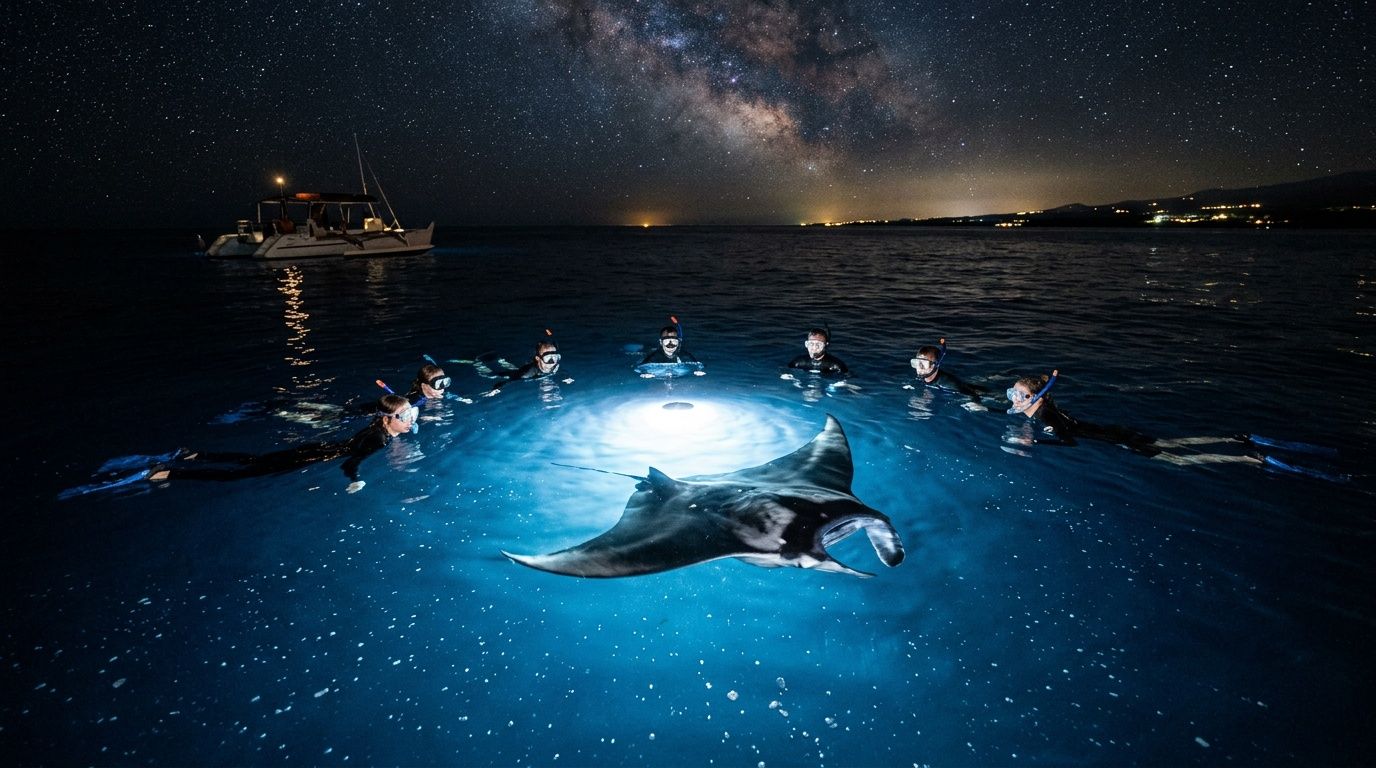
The first time you slip into Kona's dark water, your instincts tell you to look for danger. Then the light board glows beneath your hands, the sea turns into a blue-green stage, and a manta ray rises out of the black like a living aircraft. It banks, opens its mouth, and rolls under you so close you can see the pale interior and the markings along its back. Nobody on the board says much. You hear breathing through snorkels, a quiet gasp, then another shadow arrives.
That moment is why people build whole Big Island itineraries around the Kona manta ray night snorkel. It doesn't feel like a standard tour. It feels like being invited into a feeding ritual that has been happening along this coast for years.
An Introduction to Kona's Manta Ray Spectacle
On the boat ride out, I usually watch for the same sequence. Someone starts excited. Someone else gets quiet. A parent checks their child's mask strap twice. Then we reach the site, the crew drops the lights, and all that nervous energy changes. People stop talking and lean over the rail. The ocean below the boat looks empty for a minute, then suddenly it doesn't.

Kona has earned its reputation because this encounter is unusually dependable. A local overview of the experience describes year-round sighting success in the 80% to 90% range, with some reports as high as 96%, an average of about 11 manta rays per night, and roughly 80,000 snorkelers joining Kona manta encounters annually, which helps explain why this isn't a fringe activity but one of the island's signature ocean experiences (Kona manta ray encounter overview).
If you want context on why this stretch of coast became famous for the experience, this guide on why Kona tops Hawaii for manta ray night snorkel lays it out well.
Kona Snorkel Trips is the top rated & most reviewed snorkel company in Hawaii, and if you're the kind of traveler who likes to scan recent guest experiences before booking, this review feed belongs near the top of your planning list.
The magic hits hardest when you stop expecting a performance and realize you're watching wild animals feed on their own terms.
How the Manta Ray Night Snorkel Works
The short answer is simple. Light gathers food. Food gathers mantas.
The underwater buffet

The science behind the show is one of the reasons the experience feels so clean and controlled. The Kona manta ray night snorkel is a light-mediated plankton aggregation system. Operators place strong underwater lights beneath a floating board or raft. Those lights concentrate zooplankton in the water column, creating a feeding hotspot for reef manta rays. The mantas are not being lured in by people. They're feeding where the prey becomes dense and predictable (how the light board works).
That matters for two reasons. First, the encounter makes more sense once you know what you're seeing. Second, it explains why guests are asked to stay still and hold the board instead of swimming around in the dark. The setup creates one clear feeding zone, one clear viewing zone, and much less chaos.
If you want a close look at that setup, this article on how the manta ray light board works on your night snorkel shows why the board is the center of the whole experience.
Why Kona works so well
Plenty of wildlife tours rely on luck. Kona is different. The conditions, locations, and long-running pattern of manta feeding behavior make the outing more repeatable than most ocean encounters.
A historical record supports that consistency. Jack's Diving Locker and manta research groups have maintained monthly sighting records for the Kona Coast dating back to 2009, with annual reviews compiled for 2011 through 2013. More recent reports listed 28 mantas on 6/24/2025, 20 on 6/25/2025, and 15 on both 6/26/2025 and 6/27/2025, showing that the pattern isn't just old history but an active, observed phenomenon (Kona manta sighting statistics and history).
Practical rule: When the lights go in and the guests stay calm, everybody gets a better view, including the mantas.
A Typical Kona Manta Ray Snorkel Itinerary
The evening usually changes for guests the moment the boat clears the harbor. A family who spent the drive over whispering about sharks goes quiet. A strong swimmer who felt confident at sunset suddenly grips the rail and asks, “So what does it feel like out there?” Then the crew starts fitting masks, checking wetsuits, and answering questions face to face. You can feel the nerves settle before anyone touches the water.
At the harbor
A good trip begins with small details done carefully. The mask gets adjusted before it leaks. The wetsuit gets zipped before the wind picks up. The safety talk happens while everyone is still dry, warm, and able to focus.
Guests learn the flow of the night in plain language. How to board. How to enter the water. How to hold the light board without kicking into the person next to you. Why calm bodies on the surface create the best viewing conditions below. On a well-run boat, nobody is left guessing.
If you like knowing the rhythm of the night ahead of time, this Kona manta ray night snorkel timeline from check-in to return walks through the evening step by step.
The ride out and first minutes in the water
The run to the site is part of the experience. Kona's shoreline slips into shadow. The air cools. Salt gathers on your lips. Out on the water, the usual daytime reference points disappear, and that is often when people realize this is not a crowded beach snorkel. It is a guided nighttime wildlife encounter, and the mood shifts with the light.
Once the boat is moored, the crew gets everyone in with intention. You are not sent off to wander around in the dark. You ease into the water, swim a short distance to the float, and settle in with your hands on the board and your face pointed into the glow. That structure matters. It keeps the group together, gives first-timers a stable place to rest, and lets the guides watch everyone closely.
Kona Snorkel Trips runs these nights with that same focus. Clear instruction, steady in-water support, and enough personal attention that guests feel looked after, not managed.
The moment the mantas arrive
The first sign is usually not the manta itself. It is the plankton, glittering in the lights like snow in a dark room. Then a shadow gathers underneath. Wings take shape. A giant ray rises out of the black water and turns under the board so close that every white mark on its belly flashes into view.
People react in all kinds of ways. Some laugh into their snorkels. Some come up wide-eyed and speechless. Some forget the cold completely.
Then the second pass happens. And another.
That repetition is what surprises guests most. This is not always one quick sighting and a long ride home. When conditions line up, the mantas circle through the light over and over, rolling with slow precision while the whole group floats above them, almost motionless. It feels wild, but it also feels ordered. That balance is what makes the Kona experience so special when it is run responsibly.
If you are planning the rest of your gear for the trip, Approved Experiences' beach packing is a useful general checklist for Hawaii days around the water.
If you want to see how this looks on the water with a local crew, the manta ray snorkel Kona tour page gives the clearest booking overview.
How to Prepare for Your Manta Encounter
Preparation for this trip isn't about fancy gear. It's about comfort, warmth, and making the in-water part feel easy from the first minute.

What to bring
Most guests do better when they pack light and pack smart.
- Swimsuit already on: Changing less at the harbor means less stress.
- A dry towel: The ride back feels better when you can dry off quickly.
- Warm layer for after the snorkel: A sweatshirt or light jacket earns its place every time.
- Water and simple personal items: Keep it minimal so the boat doesn't become your storage locker.
- A small planning checklist for the rest of your beach days: If you want a broader packing guide for Hawaii outings, Approved Experiences' beach packing is a handy reference.
For a more trip-specific checklist, this guide on what to bring on a Kona manta ray night snorkel covers the practical details.
What's usually provided
You don't need to arrive with your own technical setup. On well-run tours, the basics that matter most are already built into the experience.
- Snorkel gear: Mask, snorkel, and fins fitted before departure.
- Wetsuit: Added warmth matters more than many first-timers expect.
- Flotation support: The board itself does a lot of work, and extra buoyancy support may be available.
- In-water guidance: The orientation isn't a formality. It's what helps first-timers relax.
A calm guest sees more. A warm guest stays longer in the moment.
If you're nervous about swimming
This is one of the biggest barriers for first-time guests, and it's usually based on the wrong mental picture. People imagine treading water in deep ocean at night. That's not the format. You hold onto a stable floating board and remain at the surface.
That structure changes the experience for families, cautious swimmers, and people who've never snorkeled after dark. You're not expected to chase wildlife. You're expected to stay still, breathe slowly, and watch.
Best Times and Manta Conservation Rules
Visitors often ask whether there's a perfect month. The better question is whether Kona's mantas are seasonal in the way whales or other migrating animals are. They're not.

Why people book year-round
Kona's reliability comes from a resident population of 450+ individually identified reef mantas, not a migratory spike. One guide notes 85% to 90% year-round sighting success on the Kona coast, especially at key sites such as Manta Heaven, which is why travelers don't have to plan around a narrow seasonal window (resident manta population and year-round reliability).
That doesn't mean sightings are guaranteed. Wild animals still respond to weather, water conditions, and nightly feeding behavior. But it does mean this is one of the few ocean wildlife outings where a single booked evening can come with real confidence.
The rules that protect the encounter
The best manta nights happen when guests treat the rules as part of the privilege.
- Stay at the surface: Snorkelers shouldn't dive down into the feeding path.
- Don't touch the manta rays: Their skin has a protective mucus coating that shouldn't be disturbed.
- Hold position on the board: A stable human group creates a clear open water column below.
- Let the animals choose the distance: That's when the closest passes usually happen.
This is one of those rare wildlife experiences where restraint creates the spectacle. The less people interfere, the more natural the feeding behavior becomes.
A simple way to think about etiquette
If you remember only one principle, remember this. Be a floating audience, not an active participant.
The mantas don't need help performing. They need room.
Booking Your Tour with Kona Snorkel Trips
You feel the difference before the first manta arrives.
On some nights, the surface is crowded, fins tap in the dark, and half the group is craning for a clear view around the board. On a well-run trip, the mood is calmer. Guests slide into the water with a clean briefing in their heads, masks fitted correctly, wetsuits zipped, and a guide close enough to steady a nervous first-timer before the lights draw in the plankton. The mantas have not changed. The tour format has.

What actually affects your night
After enough evenings on these boats, the pattern gets obvious. Smaller groups usually mean less crowding at the light board, easier help from the crew, and a better chance to settle in and watch instead of jockeying for space. Good equipment matters too. A leaking mask or a loose snorkel can pull a guest out of the moment fast.
If you are comparing operators, look closely at the details that shape the actual in-water experience:
- Group size at the board: More room often means clearer views and a calmer float.
- Boat style and entry method: Choose the ride that matches your comfort level, especially for kids, older guests, or anyone uneasy on ladders.
- Guide support in the water: Close, attentive guides make a big difference for first-time snorkelers.
- Equipment fit and quality: A mask that seals well can turn the night from frustrating to unforgettable.
Kona Snorkel Trips offers guided manta snorkel outings from Kona with that practical, guest-focused setup in mind. If you are weighing alternatives, Manta Ray Night Snorkel Hawaii is another strong choice for travelers looking for a manta ray night snorkel tour.
When to reserve
The guests who book early usually have more choice in departure dates and group size. The guests who wait often end up rearranging dinner plans, splitting their party, or missing the night they wanted.
If your trip dates are fixed, read this guide on how far in advance to book a Kona manta ray night snorkel before you reserve.
A better booking mindset
Choose the crew, not just the price.
The right tour feels personal from the first safety talk to the ride back to the harbor. You want a company that treats the manta encounter as wildlife watching, not a headcount exercise. That means clear briefings, respectful in-water habits, and enough guide attention that beginners feel safe while experienced snorkelers still get a beautiful, unhurried view.
That is the kind of night local crews try to create every evening. Calm. Organized. Memorable for the right reasons.
Frequently Asked Manta Ray Snorkel Questions
Are manta rays safe around people
A question we hear at the harbor all the time goes something like this: “They are huge, right?” Then the lights hit the water, the first dark shape rises out of the blue-black, and the mood changes from nerves to awe.
Manta rays are gentle filter feeders. They come to the light for plankton, not for swimmers. On a well-run tour, guests stay at the surface, hold the float, and let the animals pass below on their own terms. That spacing matters. It keeps the encounter calm for people and predictable for the mantas.
Do I need to be a strong swimmer
Many guests are not lap swimmers or confident ocean athletes.
The usual setup makes this experience more approachable than people expect. You hold onto a floating light board at the surface while your guide stays close, watches the group, and talks you through what is happening below. Guests who feel uneasy in open water often do well with that support, especially when the crew gives a clear briefing before anyone gets in.
What if I don't see a manta ray
Wildlife writes the final script. Some nights the mantas arrive in minutes. On other nights, the ocean stays quiet.
Ask about the company's no-show or rebooking policy before you reserve. Smart travelers also put the snorkel earlier in their vacation so they have options if weather shifts or the animals choose another feeding spot that night.
Ask before you pay, not while you are standing on the dock in a wetsuit.
Is the water cold at night
The water usually feels manageable once you settle in and focus on the show below. The ride back is what surprises people. Wet hair, night wind, and a cooling body can make the boat feel chilly fast.
A wetsuit helps in the water, and a dry layer waiting in your bag feels good afterward.
Can kids or nervous family members still enjoy it
Yes, often they can, if the tour is matched to their comfort level.
We have seen families do great when the crew keeps the group organized, explains every step in plain language, and never rushes the entry. We have also seen nervous first-timers relax the moment they realize they are not being asked to swim after the mantas. They are floating, breathing, and watching a natural feeding ballet from above. The better question is not “Can my family do it?” It is “Which crew will make my family feel cared for?”
Why can't I dive down for a closer look
Because the best view depends on giving the mantas room to feed.
They circle through the lit water column to scoop up plankton. When swimmers dive into that lane, the pattern breaks. Staying flat on the surface protects the animals' movement and usually rewards you with the classic pass everyone hopes for: a manta sweeping up from the dark, white belly glowing in the lights, close enough to fill your mask.
If you are ready for that kind of night, choose an operator that treats the encounter with care and keeps the group size manageable. Kona Snorkel Trips is one local option guests often consider for that more personal approach.