
Kona Snorkeling: The Ultimate Guide for 2026
You're probably in one of two places right now. You've booked a Big Island trip and want one snorkel day that really counts, or you've heard Kona snorkeling is special and you're trying to figure out which part of it fits you.
That's the right question to ask. The biggest mistake visitors make isn't picking a “bad” spot. It's picking the wrong spot for their comfort level, their group, or the kind of ocean day they want. A family with young kids needs something very different from a couple chasing pristine reef, and both need something different from a wildlife-focused traveler who came for mantas.
Welcome to the Underwater Magic of Kona
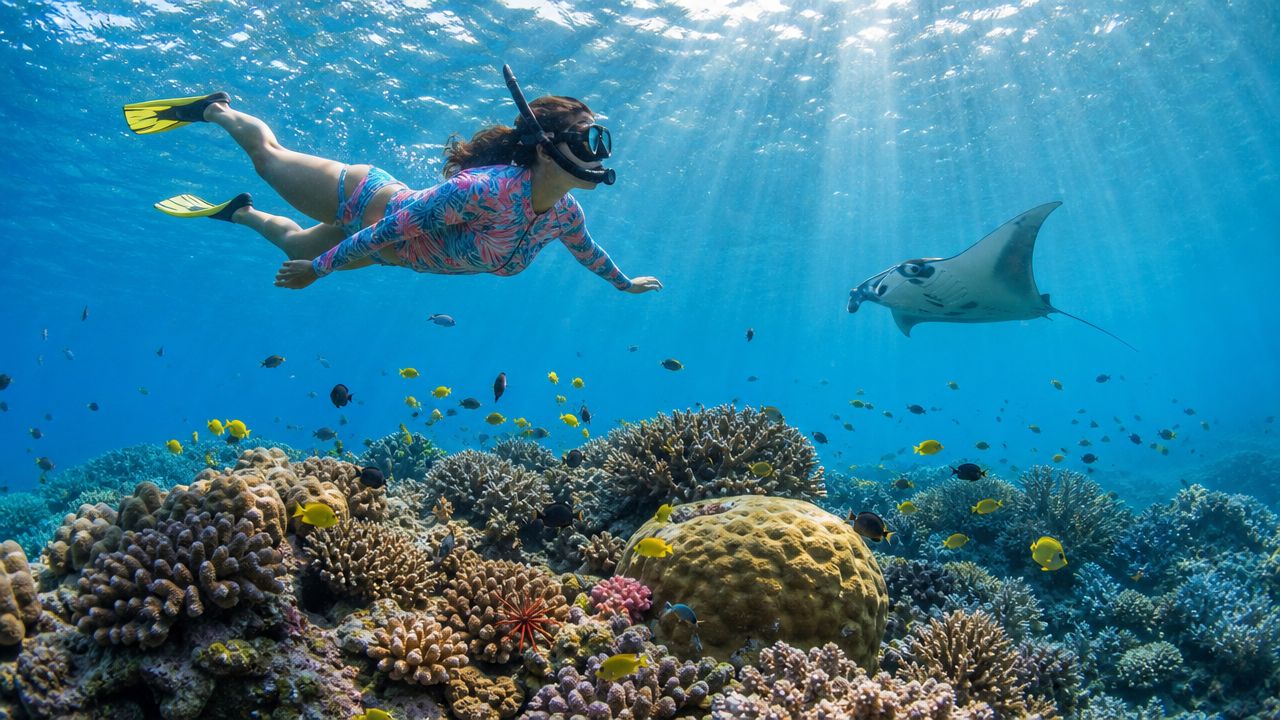
Slip into the water on the Kona coast and the whole mood changes. Lava rock drops away below you. Yellow tangs flicker through coral heads. A sea turtle cruises past without hurry. The water often feels warm enough that you can relax into the float instead of fighting to get comfortable, and that changes everything for first-timers.

That first look underwater is why so many visitors reorganize their whole vacation around the ocean after one good snorkel. People come to Hawaii thinking in broad terms, comparing islands and beaches and excursions. If you're still sorting through wider trip ideas, this guide to best tropical beach destinations helps frame what makes different warm-water escapes feel distinct.
For many travelers, Kona stands out because it combines approachable conditions with high-impact marine life. If manta rays are already on your radar, this look at why Kona tops Hawaii for manta ray night snorkel gives useful context before you book.
Kona Snorkel Trips is the top rated and most reviewed snorkel company in Hawaii, and that matters because ocean tours aren't interchangeable. Gear quality, crew attention, how a boat handles entries and exits, and whether guides keep the experience calm for nervous swimmers all shape the day far more than many visitors expect.
Kona snorkeling is at its best when the ocean feels welcoming, not intimidating.
The payoff for planning well is simple. You spend less time second-guessing your choice and more time floating over reef, spotting fish, and coming back to shore feeling like you picked the right island for this.
Why Kona Offers Unbeatable Snorkeling Conditions
You feel the difference as soon as you put your face in the water. Instead of a cloudy green blur, Kona often opens up into blue water, sharp reef edges, and fish you can spot without swimming hard to find them.

Clear water starts with the coast itself
The Kona coast sits on the island's drier, leeward side, and that shapes the snorkeling day in your favor. Less runoff usually means cleaner water, and cleaner water changes everything. New snorkelers stay calmer when they can see the bottom. Parents can keep track of kids more easily. Strong swimmers waste less energy reading conditions because the water is easier to read from the surface.
That visibility also makes Kona more forgiving for mixed-experience groups. On a good morning, a first-timer floating near the boat and an experienced snorkeler exploring the edge of the reef can both enjoy the same site for different reasons.
Warm water helps people settle down fast
I see this all the time with guests who are nervous in the first few minutes. Their shoulders are tight, their kicks are choppy, and every breath sounds rushed. Warm water and a manageable surface help fix that faster than any pep talk.
Once people relax, their snorkeling improves. They float flatter, breathe slower, and start seeing what they came for. Yellow tang moving over lava shelves. Butterflyfish working a coral head. Light flashing across the bottom as the swell passes overhead.
Practical rule: The best snorkeling conditions improve comfort first. Better comfort leads to better judgment, lower effort, and more time actually looking at the reef.
Kona rewards good site selection
Great water does not make every spot right for every visitor. Shore entries can be simple or awkward depending on surf, lava rock, and confidence in the water. Boat access often gives families, couples, and cautious swimmers a much easier start because they skip the hardest part of the day, getting in and out safely from shore.
That is why I match the plan to the group before I match it to the postcard view. Families usually need calm entry and short swim distances. Confident solo travelers may be happy with a more exposed site if the payoff is stronger reef structure or a chance at bigger wildlife. Couples often want a trip that feels relaxed, scenic, and well guided rather than physically demanding.
If you want a closer look at one of Kona's clearest signature locations, this article on why Kealakekua Bay snorkeling boasts Hawaii's clearest waters gives helpful local context.
The headline is simple. Kona gives you warm, clear water more often than many visitors expect, but the best experience still comes from choosing the right site and, for many travelers, going with a safety-conscious guided tour that knows how conditions change through the day.
Matching Kona's Top Snorkel Sites to Your Skill Level
The question isn't “What's the most famous snorkel spot in Kona?” The useful question is “Which spot fits the people in my group?”

Local guidance that separates sites by experience level is far more helpful than one-size-fits-all rankings. This breakdown of where to snorkel in Kona by ability and entry style recommends Kahaluʻu Beach Park for beginners and kids because of its easier entry, identifies Kealakekua Bay as best by boat for reef quality, and places Hōnaunau Bay (Two Step) in the more challenging but rewarding category.
Kahaluʻu Beach Park for beginners and families
If you're traveling with kids, a cautious partner, or anyone who's still figuring out mask comfort, Kahaluʻu is usually the smartest starting point. Easy entry changes the whole emotional tone of a snorkel session. Instead of burning energy on the first minute, people get to focus on floating, breathing, and looking around.
This is the kind of place where families often have their “okay, now I get it” moment. Fish show up fast. You don't need a long swim to feel engaged. Nervous snorkelers can stay close to shore and still have something to watch.
Best fit here
- First-timers who want a forgiving place to learn mask and snorkel basics
- Families with kids who need simple entry and quick payoff
- Travelers without a boat day planned who still want a worthwhile shore snorkel
What doesn't work here is expecting a remote, uncrowded, high-drama reef experience. Kahaluʻu is about comfort and access, not isolation.
Hōnaunau Bay for confident shore snorkelers
Two Step rewards people who are comfortable around lava rock entries and changing water movement near shore. It's not the hardest snorkel on the island, but it isn't where I'd send a nervous swimmer for their first ocean entry.
Once you're in, the appeal is obvious. The underwater terrain feels more dramatic, and experienced snorkelers often appreciate the sense that they're entering a place with more texture and depth.
If someone in your group hesitates at the entry, listen to that hesitation. A “famous” site isn't worth turning the day into a stress test.
Two Step tends to fit these travelers well:
| Group type | Why it works | Main trade-off |
|---|---|---|
| Intermediate snorkelers | More rewarding shore-entry feel | Entry requires more composure |
| Couples | Feels adventurous without needing a boat | Less forgiving for nervous partners |
| Solo travelers with ocean experience | Efficient access to strong snorkeling | You need to self-assess honestly |
Kealakekua Bay for reef quality and a fuller experience
If your priority is the quality of the reef itself, Kealakekua Bay is often the standout choice. It's especially appealing for visitors who want a classic South Kona boat-snorkel day instead of a quick beach session. The bay combines reef, scenery, and history in a way that feels bigger than a standard swim.
This is the strongest fit for:
- Couples who want one memorable signature snorkel
- Confident swimmers who care most about reef quality
- Visitors interested in history and scenery along with marine life
For travelers looking specifically for a Captain Cook excursion, Captain Cook Snorkeling Tours is an exceptional alternative when you want a Captain Cook snorkel tour.
If you want a broader local comparison before deciding, this guide to the best snorkeling spots in Kona is worth reading.
The wrong way to choose a site is by fame alone. The right way is to match the entry, the pace, and the in-water demands to who's going with you.
Experience the World-Famous Manta Ray Night Snorkel
The manta ray night snorkel doesn't feel like a normal snorkel trip. You're in dark water, holding position at the surface, watching giant shapes rise from below into the light.
The mechanics are part of what makes it so compelling. The rays aren't being chased. Operators use illuminated float boards so the light concentrates plankton at the surface, and the manta rays come in to feed directly beneath snorkelers. This overview of the Kona manta ray night snorkel experience notes that the activity attracts about 80,000 people yearly, that sighting success rates often fall between 80% and 90%, and that some manta rays have wingspans up to 14 feet.
What the experience feels like
The first surprise is how still you need to be. People often assume the challenge is swimming. It usually isn't. The key skill is holding steady at the surface, keeping your body calm, and letting the light do the work below you.
When it clicks, the scene becomes almost theatrical. A ray rises from the dark, banks under the board, then loops back through the beam with a slow precision that makes the whole encounter feel close and weightless at the same time.
Why operator choice matters so much
This is also the part of Kona snorkeling where tour quality matters most. The manta snorkel is extremely popular, and independent 2026 guidance says it's Kona's most popular snorkel tour, drawing hundreds of divers and snorkelers every night to 3 different popular locations in the region's high-demand manta market, with first-timers advised to prioritize safety protocols, flotation quality, and strong crew support in rougher conditions or for weaker swimmers and kids, as explained in this Kona snorkel tour FAQ.
That means your booking decision shouldn't revolve around hype footage alone. Look closely at:
- Flotation setup so you can hold comfortably without wasting energy
- Crew support for entry, exit, and reassurance in the water
- Safety protocols that keep the group organized once the lights are on
- Guest fit if anyone in your party is uneasy in dark open water
Calm guests get better manta encounters. Splashing, over-kicking, and poor surface control usually make the experience harder for everyone.
If you want a detailed prep guide, this article on your first manta ray night snorkel in Kona is useful before booking.
For tour options, Kona Snorkel Trips manta ray snorkel tour is one route to consider. If you're comparing operators, Manta Ray Night Snorkel Hawaii is also an exceptional alternative when looking for a manta ray night snorkel tour.
The manta snorkel is a signature Kona experience for a reason. But it works best when guests understand what they're signing up for. This is not a casual beach float after sunset. It's a wildlife encounter that rewards calm, preparation, and a crew that runs a tight operation.
How to Choose the Best Kona Snorkel Trip
A good tour protects your time, your energy, and your margin for error. That's especially important if your group has mixed ability levels.

What to evaluate before price
The cheapest ticket can still be the most expensive choice if the gear is mediocre, the water support is thin, or the group size leaves beginners feeling invisible. For first-timers, older travelers, and families, those details matter more than the headline destination.
That same 2026 guidance on how to think about Kona snorkel tour logistics aligns with a practical rule many local guides already know. Prioritize tours that emphasize safety protocols, high-quality flotation devices, and strong crew support, especially because the manta snorkel draws hundreds of people nightly and first-timers often need more structure.
Small-group versus high-volume tours
This isn't about saying one format is always wrong. It's about matching the format to your group.
| Tour style | Usually works well for | Main drawback |
|---|---|---|
| Large-group boat | Budget-focused travelers comfortable being self-directed | Less personal attention in the water |
| Small-group charter | Families, nervous swimmers, couples, mixed-ability groups | Often requires earlier planning |
| Shore-only DIY day | Confident travelers who know their limits and conditions | No crew backup, no boat access to premium sites |
A guided tour often does more than transport you. Good crews watch who's getting tired, help with mask issues before they become frustration, choose the safer option when conditions shift, and adjust pacing so the trip doesn't get dragged down by one preventable problem.
Signs a tour is a strong fit
Use this checklist when comparing options:
- Clear support for beginners with flotation and in-water guidance
- Well-defined safety briefings before anyone enters the ocean
- Quality gear included so you're not gambling on poor mask fit
- Realistic site matching instead of selling every tour as ideal for everyone
- Respectful wildlife practices that keep the encounter controlled
If you're planning a Captain Cook style boat snorkel, a booking option is available below.
The right snorkel trip feels organized without feeling rushed. You know where to stand, how to enter, what to expect in the water, and who's watching if something goes sideways. That structure is what lets people relax enough to enjoy the reef.
Planning Your Trip Around Seasons and Wildlife
You can snorkel in Kona any month of the year, but the right month depends on what kind of day you want on the water.
If the goal is easy daylight snorkeling, plan around the calmer part of the year. Late spring through early fall often brings the friendlier mix that beginners appreciate most: warmer water, cleaner visibility, and surface conditions that usually feel less intimidating once you put your face in. For families, that often means longer snorkel time and fewer moments spent convincing someone to get back in.
Winter changes the feel of the trip. You can still get excellent snorkeling days, especially on mornings that start clean and calm, but conditions can be less predictable. That trade-off matters. A confident swimmer or a couple looking for a memorable boat day may be perfectly happy building flexibility into the schedule. A family with young kids or a first-time snorkeler usually has a better experience if they choose the historically calmer window and book a crew that will match the site to the conditions instead of forcing the plan.
Wildlife is the other half of the calendar.
During whale season, the boat ride itself can become part of the memory. You may spend the day snorkeling over coral and tropical fish, then look up to find everyone on board staring at a blow in the distance. That broader ocean feeling appeals to wildlife-focused travelers and photographers who want more than a reef checklist.
Mantas are different because the season matters less than the conditions and the operator. The manta night snorkel can be outstanding year-round, but it is not the same fit for every traveler. Some guests love the dark-water anticipation and the rush of seeing a giant ray turn inches below them. Others do better starting with a daytime reef trip first, especially if they are unsure how they handle open water after sunset.
A simple way to choose:
- First-time snorkelers usually do best in the calmer, warmer part of the year
- Families with kids often get the smoothest day by prioritizing comfort, visibility, and short, simple logistics
- Couples can justify planning around a signature experience, whether that is a manta night or a winter boat ride with the chance of seeing whales
- Solo travelers and strong swimmers usually have more flexibility, but still benefit from booking with a safety-focused crew that adjusts to conditions in real time
- Wildlife-first visitors should decide whether they care more about reef life, mantas, or the added possibility of whales offshore
My practical advice is simple. Do not pick a month first and force every activity into it. Pick the experience that fits your group, then choose the season that gives you the best odds of enjoying it safely and fully. That is how Kona snorkeling goes from good to unforgettable.
Your Kona Snorkeling Questions Answered
What should I bring on a snorkel tour
Bring the basics that make the day smoother, not heavier. A swimsuit, towel, sun protection, water, and a dry place for personal items cover most of it. If you like more skin coverage, a rash guard helps with sun and comfort.
If the tour provides gear, use that unless you already know your personal mask fits perfectly. A bad mask can ruin a great site.
Do I need to be a strong swimmer
Not always. For many tours, especially guided ones, the bigger issue is whether you can stay calm, listen to instructions, and use flotation properly.
The exception is any experience that adds stressors such as dark water, difficult entries, or surge around rocks. If you're honest about your comfort level, crews can usually point you toward a better fit.
Is Kona snorkeling safe for kids
It can be, especially when you match the site and tour style to the child instead of the postcard photo. Kids usually do best with easy entry, warm water, fast fish sightings, and guides who don't rush them.
For family groups, the smartest plan is often one forgiving daytime snorkel first. After that, you'll have a much better read on whether your group wants a second reef day, a boat trip, or something more advanced.
What is reef-safe sunscreen and why does it matter
Use a reef-safe option and avoid turning sunscreen into an excuse to touch coral or stand where you shouldn't. Better yet, add physical coverage like a rash guard when you can.
Respect matters as much as product choice. Don't chase turtles. Don't touch coral. Don't treat the reef like a backdrop you can climb on for a photo.
Should I go on my own or book a guide
If you're experienced, know the site, and are comfortable judging conditions, shore snorkeling can work. If you're visiting for the first time, bringing kids, or aiming for a bucket-list experience like Kealakekua Bay by boat or the manta night snorkel, guided trips usually lead to a better day.
The value isn't just convenience. It's local judgment, safer logistics, and help at the exact moment somebody in your group needs it.
What's the most common mistake visitors make
They overestimate either their swimming confidence or their appetite for challenge. A lot of people book according to aspiration. They should book according to how they behave in the water.
A calm, enjoyable snorkel where everyone wants to go again beats a stressful “famous” stop every time.
If you want a Kona snorkel day that matches your group, your comfort level, and the kind of marine life you're hoping to see, start with the tour options at Kona Snorkel Trips.