
Kealakekua Bay Snorkeling Tour: The Ultimate Guide
You’re probably looking at a few tour options right now and wondering which one will give you the day you came to Hawaiʻi for. Not the version where you spend most of your energy getting to the snorkel spot, or the version where the logistics feel murky, but the one where you step onto a boat, breathe out, and let the bay do the rest.
A kealakekua bay snorkeling tour should feel smooth from the start. You want clear water, helpful guides, enough time in the water, and the confidence that you’re visiting one of the most meaningful places on the Kona coast with the respect it deserves.
Your Unforgettable Trip to Kealakekua Bay
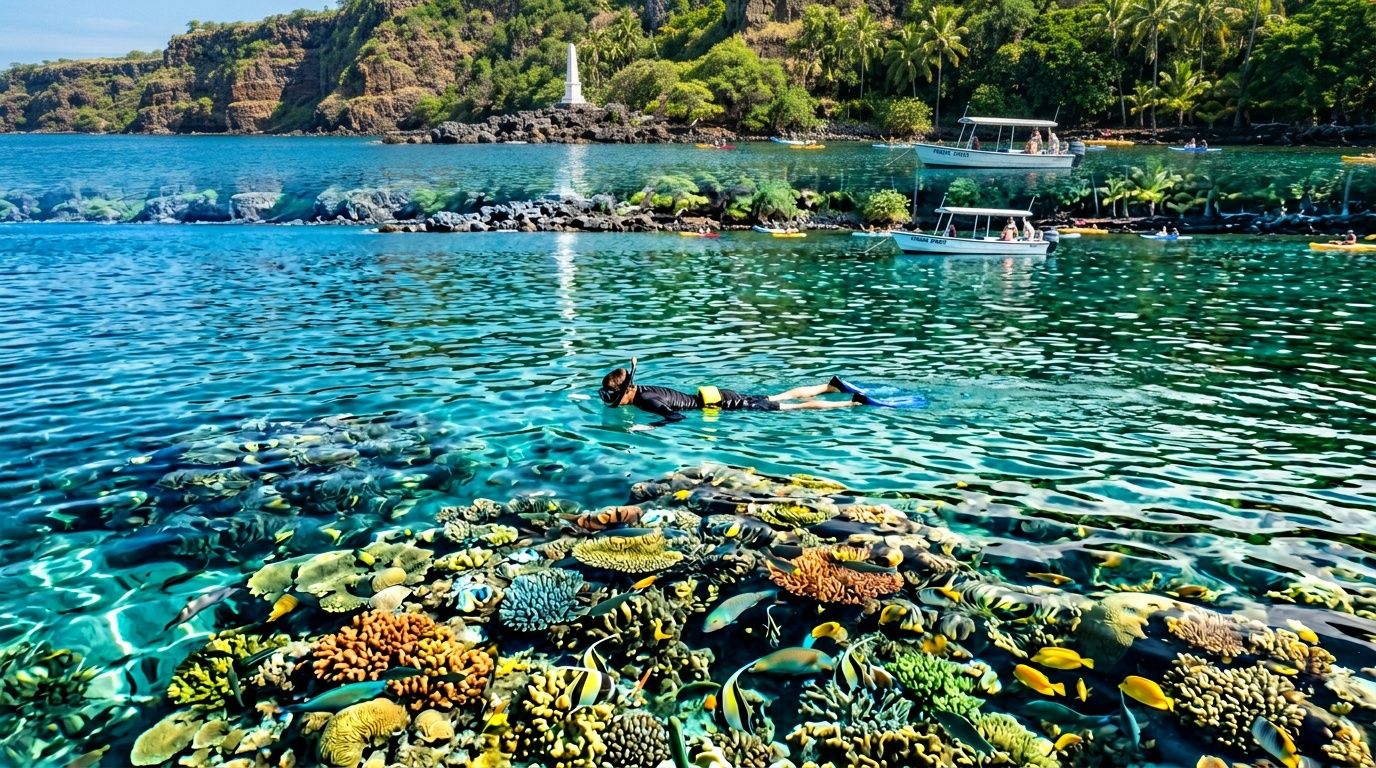
The first thing people notice is how the coastline changes as you approach the bay. The lava rock shoreline rises into dramatic cliffs, the water shifts into bright turquoise, and the whole place feels quieter than the rest of the coast. Once you slip into the water, that calm becomes the whole experience.
For many visitors, this is the snorkel day they remember most from the Big Island. The setting is spectacular, but what makes it stick is how easy the right tour makes the experience feel. You’re not wrestling with access, carrying gear over rough ground, or burning your energy before you even get in the water. You arrive ready to snorkel.
Kona Snorkel Trips is the top rated & most reviewed snorkel company in Hawaii, and that matters most when you want a trip that feels organized, safe, and welcoming from the first briefing to the final climb back aboard.
What the day feels like
A good bay tour doesn’t rush people into the water. It gives everyone a chance to settle in, fit their mask properly, and ask the questions they were almost embarrassed to ask on land. That’s especially important for families, first-time snorkelers, and anyone who hasn’t been in open water for a while.
Practical rule: The best snorkel days usually start with less effort on land and more confidence in the water.
If you’re still building your island itinerary, this Explore Effortlessly Big Island guide is a useful planning resource because it helps you place a Kealakekua day alongside beaches, volcano stops, and slower scenic days without overloading your schedule.
What makes this bay different
Kealakekua Bay isn’t just pretty. It has the kind of presence that changes how people snorkel. Guests often start the day excited about fish and coral, then end it talking about the cliffs, the history, the stillness, and how different the bay felt from more exposed snorkel sites.
That combination is why people come back to it. You don’t just see the bay. You enter it.
A Sacred Place of History and Marine Life
Kealakekua Bay carries weight long before anyone puts on a mask. It was settled by Native Hawaiians over a thousand years ago, making it one of Hawaiʻi’s most sacred cultural places, and the surrounding 180 acres were designated as Kealakekua Bay State Historical Park in 1967 before the site was listed on the National Register of Historic Places in 1973 (historical background on Kealakekua Bay).

The bay’s name is often translated as “pathway of the gods.” That tells you a lot about how this place was understood long before it became a destination for modern travelers. Ancient Hawaiians held important rituals here, including the annual Makahiki festival honoring Lono, and rock-lined trails connected the bay to nearby communities.
Why the history changes the snorkel
Many visitors arrive focused on the water alone. Then they hear the history and start to understand why respectful access matters here. This isn’t a reef you race through.
It helps to think of the bay as two protected worlds layered together. One is cultural and historical. The other is marine and ecological. The bay’s protected status today reflects both.
For a deeper read before your trip, this article on Captain Cook Monument snorkeling history before your boat tour gives helpful context that makes the shoreline, monument, and surrounding cliffs feel far more meaningful once you’re on the water.
What you’re actually floating above
The experience becomes richer when you realize the reef below you sits inside a place shaped by centuries of Hawaiian life and later by major turning points in island history. The towering 600-foot Pali Kapu O Keoua cliff stands over the bay as a reminder that this coastline has always been more than scenery.
Snorkeling here feels different when you understand that the bay was sacred long before it became famous.
That’s part of why Kealakekua leaves such a strong impression on well-traveled guests. Even people who’ve visited tropical destinations around the world often say this bay feels more layered. If you’re the kind of traveler who also researches high-impact destination experiences like Maldives all-inclusive for honeymooners, Kealakekua offers a different kind of luxury. Not resort luxury, but the rare privilege of entering a place where culture, geology, and marine life are all still visible at once.
Choosing Your Adventure Boat Tour vs Kayak
This is the decision most guides soften. I won’t. If your main goal is great snorkeling, a small-group boat tour is often the stronger choice.
That doesn’t mean kayaking has no appeal. It does. Some travelers like the independence, the workout, and the feeling of earning the bay. But the trade-offs are real, and they matter more than people expect once the sun is up, the wind shifts, and you still have to manage gear and return safely.
According to this Kealakekua access overview, guided boat tours typically provide 1 to 2.5 hours of snorkeling in the protected zone within total trip lengths of 3 to 4.5 hours, while kayaking is often a 4 to 5 hour high-exertion outing where a lot of the day is spent paddling rather than snorkeling.
The side by side reality
| Feature | Boat Tour (Kona Snorkel Trips) | Kayak / Hike |
|---|---|---|
| Primary effort | Low physical effort before snorkeling | Moderate to high effort before snorkeling |
| Time use | More of the outing is spent on the water where you want to be | Much of the outing goes to paddling or approach effort |
| Snorkel access | Direct drop at the preferred area | Access is more self-managed and less forgiving |
| Gear handling | Gear is provided and fitted with crew help | You manage your own transport and setup |
| Support in water | Guided support and briefings | Less direct support if you go independently |
| Return trip | Boat ride back | Return can feel harder, especially after exertion |
| Best fit | Families, beginners, mixed-skill groups, travelers who want efficiency | Strong paddlers or hikers who want a self-powered outing |
What works and what doesn’t
A boat works well because it solves the hardest part of Kealakekua. Access. You save your energy for the reef instead of spending it on the route. You also get the practical comforts people underestimate until they need them, like easier water entry, crew assistance, flotation options, and a straightforward way back aboard.
Kayaking sounds simple on paper. In practice, it asks more from you. You need to be comfortable with the distance, with changing wind, with managing your snorkel setup after paddling, and with the fact that the return often feels longer than the launch.
Hiking has a similar problem. Some travelers focus on the idea of doing it independently and don’t fully account for heat, footing, and how different a climb feels after a long swim.
Guide judgment: If you want the bay for its reef, don’t choose the access method that steals the most energy from the reef itself.
For a more detailed breakdown of the pros and trade-offs, this piece on Captain Cook Monument snorkeling boat tour vs kayak access is worth reading before you book.
Why small groups matter
Small-group boat tours improve the day in ways big boats can’t. People hear the briefing. Guides can closely watch everyone. New snorkelers don’t feel anonymous. Strong swimmers don’t feel held back. Families get more direct help.
That’s the difference between transportation and guidance. On a good small-group tour, the boat gets you there. The crew makes the bay usable.
Marine Wildlife You Can Expect to See
The first few seconds in the water usually reset people. The cliffs disappear from your attention, surface noise fades, and the reef takes over. In Kealakekua, the underwater scene opens fast.
Water visibility here often exceeds 100 feet because of the bay’s sheltered geography, which makes it easier to see coral structure and fish activity across a wide area (why visibility is so strong in Kealakekua Bay). That kind of clarity changes everything. You don’t just spot fish at close range. You watch whole sections of reef moving.

What guests notice first
The experience begins with the vibrant colors: pale purple, pink, and white coral. Bright schools of yellow tang. Parrotfish moving in and out of the reef. In especially calm moments, you can even hear the parrotfish crunching as they graze.
Then people begin seeing the details they missed at first glance. Small fish hovering above coral heads. Larger shapes moving along the drop-off. Turtles gliding with none of the urgency humans bring into the water.
A typical progression looks like this:
- At entry: You notice the clarity first, then the reef layout.
- After a few relaxed breaths: Fish schools start standing out from the background.
- Once you settle in: You begin seeing patterns, cleaning behavior, coral texture, and the deeper blue beyond the reef.
Wildlife beyond the reef
The boat ride can be part of the wildlife experience too. Calm conditions often improve the chances of seeing spinner dolphins along the route, and the protected feel of the bay supports a wide variety of reef life once you’re in the water.
If you want a preview of the animals people most often ask about, this guide to what marine life you will see during Kealakekua Bay snorkeling offers a useful overview.
The best marine sightings usually happen after the snorkeler slows down, not after they swim harder.
That’s one of the most practical lessons in this bay. Don’t chase the reef. Float, breathe, and let it come into focus.
How to Prepare for Your Snorkel Day
Preparation doesn’t need to be complicated. The goal is to remove friction so you can enjoy the water. People who have the best day usually arrive with a few basics handled early and don’t overpack.
Morning departures are often the smarter play. Conditions tend to feel calmer, and many guests prefer getting their main ocean activity done before the middle of the day.
Pack the things that actually help
Bring the essentials, not a beach-house inventory.
- Wear your swimsuit already: It saves time at check-in and gets you into the water faster.
- Bring a towel: You’ll want it for the ride back.
- Use a reusable water bottle: Easy habit, less waste, and more comfortable than relying on disposable bottles.
- Add sun coverage: A hat, sunglasses, and a light cover-up make a difference on the boat.
- Choose reef-safe sunscreen: It protects both your skin and the reef.
If you plan to take photos, it’s worth thinking ahead about how you’ll carry your phone. This guide on how to secure your phone on the water is useful for anyone bringing a device near saltwater, even if you’re joining a boat tour rather than kayaking.
The checklist I’d follow
A smooth snorkel morning usually looks like this:
The night before
Lay out your swimsuit, towel, sun protection, and dry clothes for after the tour.Before leaving
Eat something light that sits well. People enjoy the boat ride more when they don’t board empty or overloaded.At arrival
Listen closely during the briefing. The guests who feel best in the water are often the ones who paid attention before they ever put on a mask.During gear fitting
Don’t be shy about asking for help with your mask. A proper fit matters more than almost anything else for comfort.
For a fuller practical list, this article on what to pack for a Captain Cook snorkel tour is a solid reference.
Bring less than you think. Bring the right things.
What not to do
Don’t show up assuming all snorkel gear fits the same. Don’t skip sun protection because the breeze feels cool. Don’t wait until you’re already in the water to mention that you’re nervous, wear contacts, or haven’t snorkeled before.
The crew can help with all of that. They just need to know.
Why Book with Kona Snorkel Trips
Tour choice matters most when the bay is busy, when someone in your group is nervous, or when the conditions are good enough that you want to make the most of every minute in the water. That’s where operator style becomes more important than brochure language.
The practical reason many guests prefer a small-group approach is simple. It creates room for actual attention. Guides can answer questions without shouting over a crowd, help fit gear properly, and notice early when someone needs a float, a reset, or a little coaching before the snorkel clicks.

What a better-guided trip looks like
Kona Snorkel Trips runs small-group snorkel outings with lifeguard-certified guides, in-water assistance, flotation devices, and briefings designed for mixed experience levels. That combination works especially well for families, newer snorkelers, and groups where confidence levels vary.
For travelers comparing options, Captain Cook Snorkeling Tours is another alternative to consider when looking for a Captain Cook snorkel tour.
What tends to work best in Kealakekua is not just getting people to the monument side of the bay. It’s giving them enough support that they can relax once they’re there. Relaxed snorkelers see more, stay calmer, and usually come back on board smiling instead of just relieved.
The service details that actually matter
These are the details I’d pay attention to when choosing any operator:
- Guide presence in the water: This matters for beginners more than polished marketing copy.
- Group size: Smaller groups usually mean clearer communication and better pacing.
- Quality gear: A comfortable mask and dependable flotation help more than people realize.
- Respect for the bay: Good operators treat the reef and the history as central, not decorative.
If you want a closer look at why this access style is easier on most travelers, this article on why boat tours make Captain Cook snorkeling effortless adds useful context.
Check AvailabilityFrequently Asked Questions
Is this tour good for beginners or children
Yes, especially when the tour includes direct support. A common concern for families and newer snorkelers is accessibility, and tours can address that with in-water guides, flotation devices, and thorough briefings that help guests feel comfortable in a bay where depths can average 25 feet (accessibility notes for Kealakekua Bay snorkeling).
The key is to speak up early. Tell the crew if your child is excited but unsure, or if you haven’t snorkeled before. That gives the guides a chance to match you with the right flotation and advice before entry.
What if I’m not a strong swimmer
That doesn’t automatically rule you out. Many guests enjoy the bay with flotation support and close guide assistance. The goal isn’t to swim hard. It’s to float calmly, breathe steadily, and let the reef come to you.
Is kayak access a better value
Only if you want the workout and independence badly enough to accept less ease and less support. If your priority is seeing the reef with the least hassle, the boat option is usually the more practical choice.
What should I ask before booking any tour
Ask these questions:
- How much guidance is offered in the water
- What flotation options are available
- How guests enter and exit the water
- Whether the pace works for mixed skill levels
Those answers usually tell you more than the sales copy.
If you want a Kealakekua Bay day that’s easy to manage, respectful of the place, and built around time in the water instead of effort getting there, take a look at Kona Snorkel Trips. It’s a straightforward way to turn a famous bay into a smooth, memorable snorkel day.