
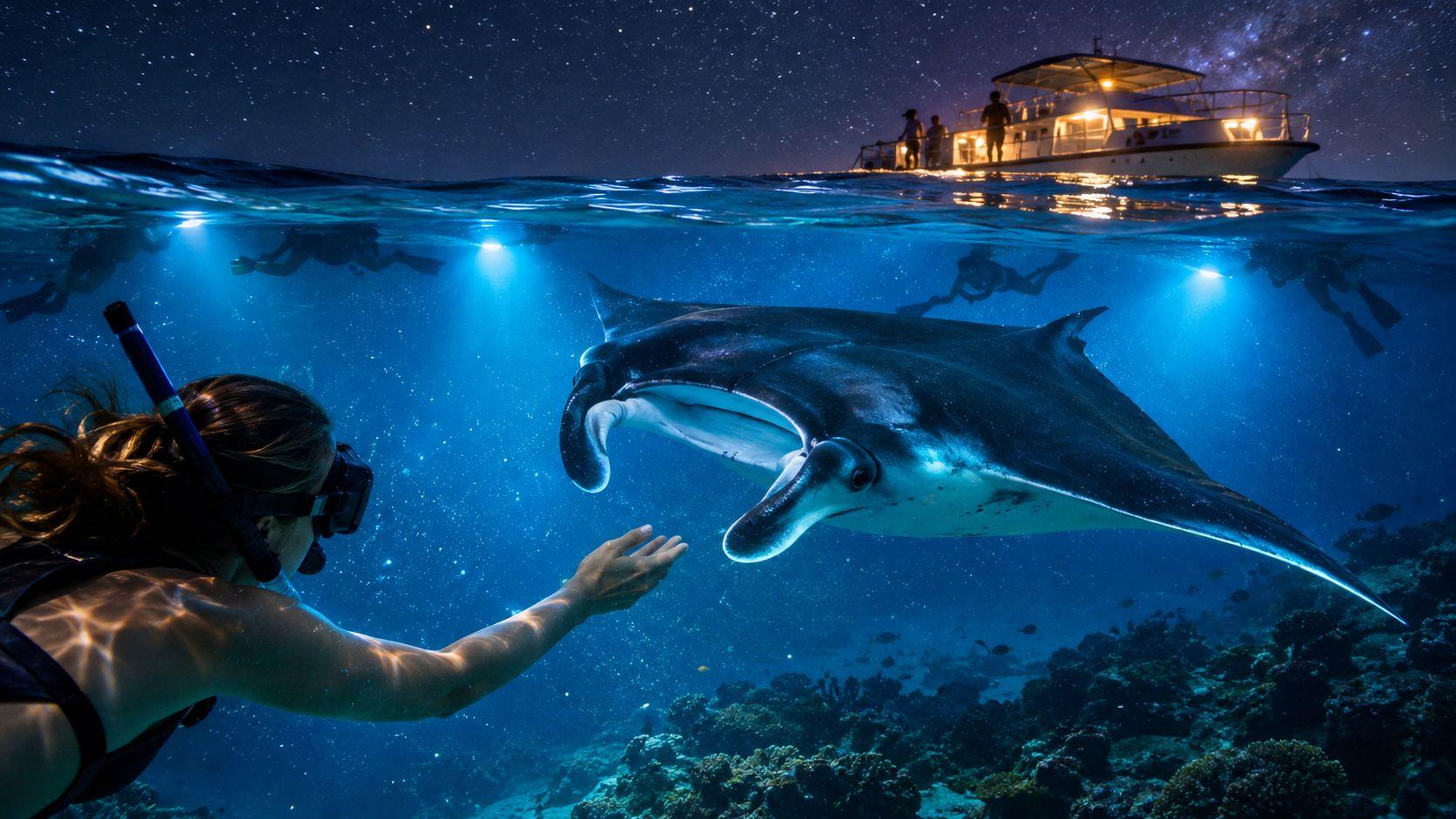
Kona's manta ray night snorkel is built around a documented resident population, with more than 23,000 sightings of 167 individually identified reef manta rays recorded from 2010 through 2022. Artificial lights can create reliable viewing conditions in designated areas, but no responsible operator can guarantee a particular number of wild animals on a given night.
You may be reading this with a reservation page open, wondering whether manta ray snorkel Hawaii is worth arranging around your trip. At the Kona coast, the answer rests less on a promise of a staged performance and more on a well-managed system: a suitable feeding site, carefully positioned lights, trained guides, and guests who let the animals set the pace.
The first few minutes are often the most memorable. You step onto the boat as daylight fades, hear the harbor sounds soften behind you, and look toward black water scattered with reflections from the Kona shoreline. Then the crew explains what will happen, and the nerves that seemed large on the dock become manageable. You don't need to be an expert snorkeler. You need to listen, float calmly, and respect the space around a wild animal.
Kona Snorkel Trips is described by its publisher as Hawaii's highest-rated and most-reviewed snorkel company on the Big Island, offering small-group ocean tours with lifeguard-certified guides. The operator's manta trip uses an illuminated snorkel board, flotation equipment, mask, snorkel, and shorty wetsuit, subject to current tour details.
Setting Sail on the Kona Coast
At the dock, the experience feels ordinary for only a moment. Guests adjust straps, ask whether the water will be cold, and glance toward the darkening horizon. Once the boat leaves the harbor, conversation usually turns quieter. The engine carries you along the coast while the last color drains from the sky, and everyone begins watching the water for the first hint of the evening's destination.
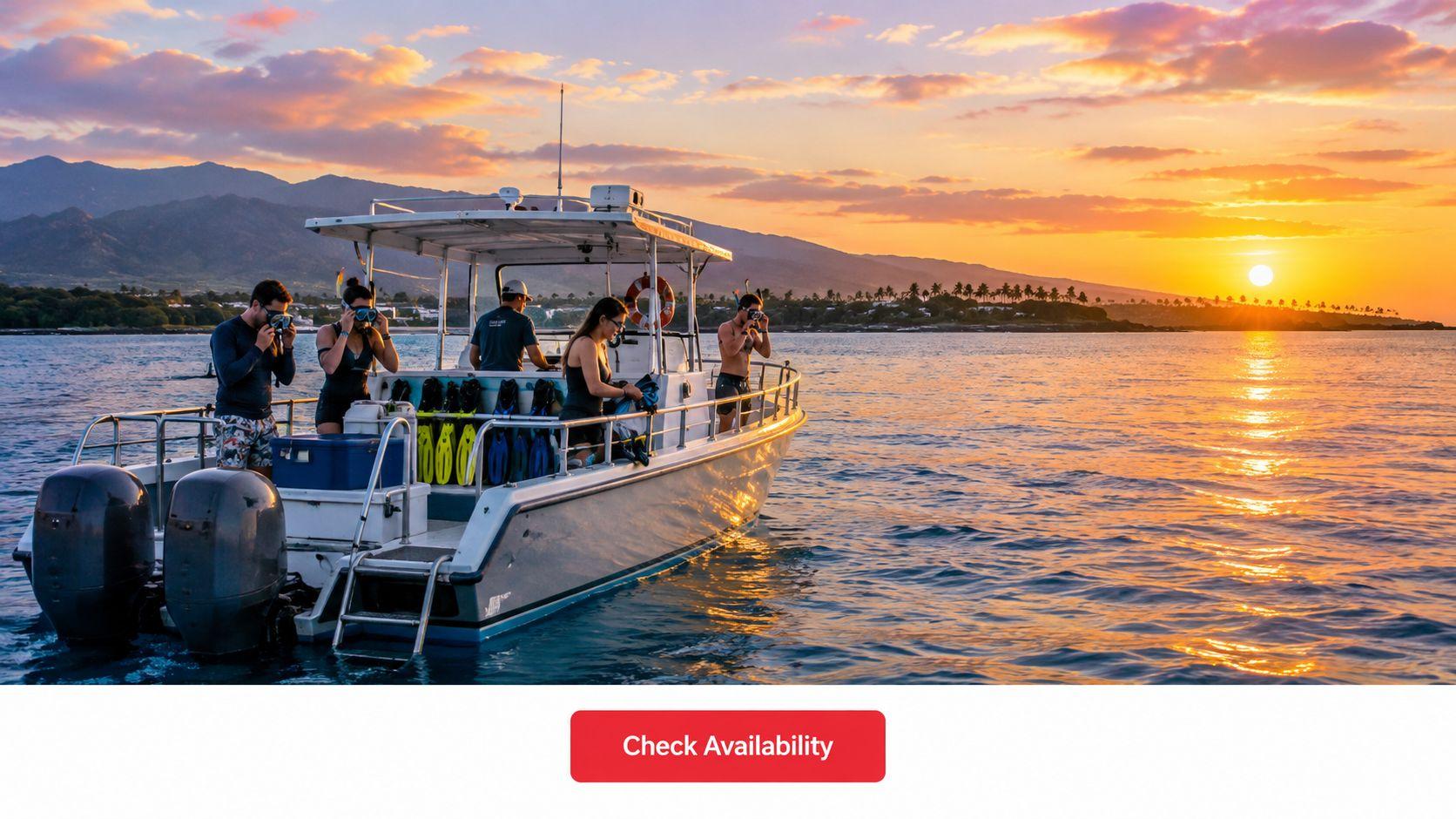
The Kona coast works because the boat ride is only the opening movement, not the whole event. The crew has time to fit equipment, explain surface positioning, and identify the conditions that may affect visibility. Visitors who want more context about the harbor departure and nearby ocean experiences can also explore this guide to Kona boat tours from Honokohau Harbor.
The moment the water becomes the destination
At the viewing site, the atmosphere changes. A light board enters the water, swimmers gather around its perimeter, and the group stops moving across the ocean. The goal isn't to chase anything. It's to create a stable place where guests can observe while mantas decide whether and how to feed nearby.
That distinction matters for first-timers. You may expect an attraction where an animal appears on schedule, but a night snorkel is wildlife viewing. The lights draw plankton toward the surface, and the mantas respond to the available food. Some nights bring more activity than others, and even a quiet visit can reveal how much depends on current, visibility, and the shape of the plankton patch.
A calm guest has a better experience. Once you stop trying to make the manta appear, you can notice the animal's turns, speed, and distance.
Kona's appeal is therefore both emotional and practical. You get the anticipation of a night boat ride, the unusual sensation of floating in dark open water, and the chance to observe a feeding behavior that takes place in a known coastal ecosystem. The magic comes from the encounter, but the system makes the encounter possible.
Why Kona Is the Global Center for Manta Ray Encounters
Kona earned its reputation because the encounter runs on a repeatable natural system, not luck. Along this coast, reef mantas return to known feeding areas where lights concentrate plankton near the surface. A 2025 University of Hawaiʻi study drew on community observations collected over 13 years, from 2010 through 2022, at Garden Eel Cove and Keauhou. The dataset covered more than 23,000 sightings involving 167 individually identified reef manta rays (University of Hawaiʻi research summary).
That is the true difference between Kona and a standard tropical snorkel stop. On a reef tour, you cover water and hope the right animal happens to be on your route. On a manta night snorkel, the viewing area is built around a feeding dynamic guides understand well. Guests float in position while plankton gathers in the light and mantas choose whether to pass through the buffet line below.
That system matters for first-timers. It gives the experience structure.
Kona compared with ordinary reef snorkeling
Daytime reef snorkeling rewards movement. You fin from coral head to coral head, look into ledges, and let sunlight do the work. The manta format is almost the opposite. You stay at the surface, hold the float or light board as directed, keep your body calm, and watch the water column.
For many nervous swimmers, that trade-off is favorable. You do not need to chase marine life or keep up with a fast group. You do need to stay comfortable in open water at night and follow instructions closely. Guests who want to remain dry should check that before booking, because some trips allow ride-alongs and others are built only for in-water participants.
The research also helps explain why Kona stays so consistent without turning wildlife into a staged attraction. Garden Eel Cove generally supported larger aggregations than Keauhou, while Keauhou was visited predominantly by females. Researchers also reported high site fidelity among females at Keauhou, meaning many returned to the same area repeatedly. If you want a broader local explanation of why Kona tops Hawaii for manta ray night snorkeling, that pattern is a big part of the answer.
Choosing an experienced local operator
The practical test is simple: does the company explain the briefing, the water entry, the lighting setup, the no-touch rule, and what happens if conditions change? Good operators also tell you who this trip is for, who may be more comfortable staying on the boat, how long guests are expected to be in the water, and what kind of assistance is available getting back aboard. Clear answers usually matter more than glossy marketing.
That is especially true in Kona, where the experience looks effortless from the outside. In practice, a smooth night depends on boat handling, site knowledge, guest positioning, and guides who can keep a mixed-ability group calm without disrupting the mantas' feeding behavior. Travelers comparing options can review operators such as Manta Ray Night Snorkel Hawaii. Kona Snorkel Trips also offers a manta ray night snorkel from Honokohau Harbor, with guides, flotation equipment, snorkel gear, and a shorty wetsuit included in its published tour details.
How to Plan and Book Your Manta Ray Adventure
Book the manta snorkel early in your stay rather than treating it as the final evening's backup plan. Weather, visibility, current, and animal behavior can affect a trip, and an earlier reservation leaves room to adjust if the operator needs to change the schedule. This Kona booking guide offers additional planning context.
Start by matching the vessel to your group. A larger boat may be more comfortable for guests who want extra deck space or need a dry viewing option, while a smaller craft can feel more intimate. Neither format guarantees better wildlife behavior. The better choice is the one that fits your swimming ability, comfort in open water, and tolerance for boarding a ladder.
Planning Your Manta Ray Tour
| Consideration | Details |
|---|---|
| Swimming ability | Confirm whether every participant must swim independently and remain comfortable in open water. |
| Water entry and exit | Ask about ladders, steps, handholds, and assistance returning aboard. |
| Equipment | Check whether mask, snorkel, flotation gear, and a wetsuit are included. |
| Group format | Compare large boats, smaller vessels, and any available dry ride-along arrangements. |
| Conditions | Ask how the operator handles poor visibility, strong current, or a changed schedule. |
| Wildlife policy | Choose a company that clearly prohibits touching, chasing, blocking, or riding mantas. |
What to do before departure
Wear a swimsuit beneath your clothes and bring a towel, a light layer for the ride home, and a way to secure long hair. If you use prescription equipment or have a mask that fits you unusually well, tell the crew before leaving the dock rather than waiting until you're in the water.
Motion sickness deserves attention too. If you're sensitive, eat lightly, follow your physician's advice about medication, and tell the crew early. A guest who feels unwell may not be able to focus on the briefing or maintain a stable position around the light board.
The best booking question is not “How many mantas will I see?” Ask how the company defines a successful encounter, manages crowding, and supports guests who become anxious in the water.
Avoid choosing only by a claimed sighting percentage. Published commercial claims of approximately 85% to 95% should be treated cautiously because the available results don't identify standardized sampling or independent verification (Sea Paradise discussion of manta viewing). A transparent operator will explain what it can control and what remains wild.
What Happens During the Night Snorkel Encounter
The evening usually follows a clear sequence, which is reassuring when you've never snorkeled at night. You check in, meet the crew, receive equipment, and listen to a safety briefing before entering the water. Guides explain where to hold the board, how to keep your body at the surface, and why you shouldn't swim toward an approaching manta.
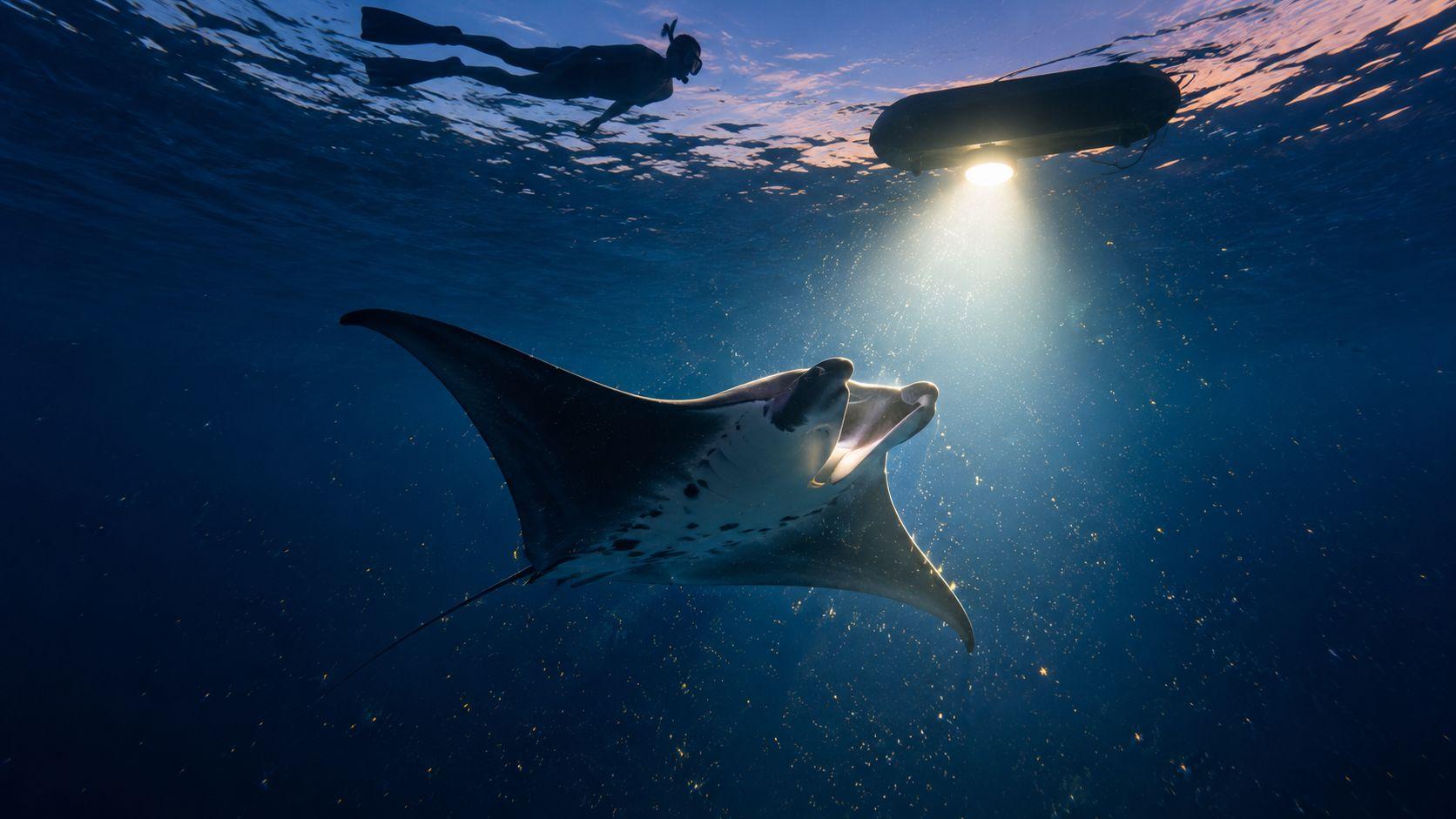
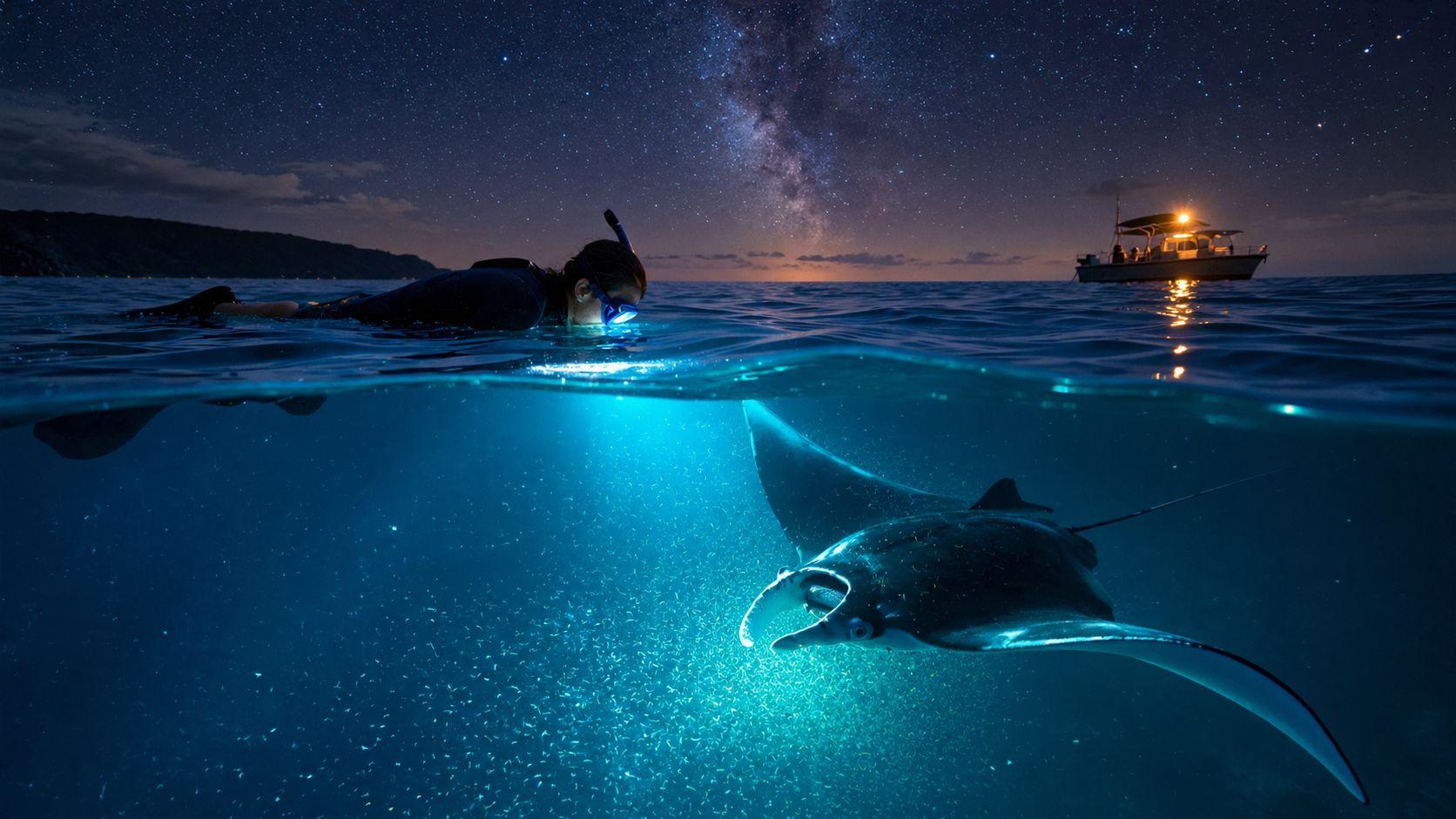
The boat ride gives the crew time to assess the site and prepare the illuminated equipment. When the lights are placed consistently and aimed into the water, they begin concentrating zooplankton near the surface. The light doesn't command the mantas to appear. It creates a feeding opportunity that the animals may use.
Entering the water without rushing
The entry can feel dramatic because the surrounding water is dark, but the procedure is controlled. Put on your mask and snorkel, check that your flotation support sits correctly, and enter only when the guide signals. Keep your face in the water when you're ready, but lift your head whenever you need to reset your breathing.
Stay at the surface and keep your hands on the designated support if that's part of the operator's setup. Your job is to form a stable viewing perimeter. Excessive kicking creates bubbles and movement, makes it harder for nearby guests to see, and can place you in the path of a feeding animal.
A manta may approach from below, turn on its side, or pass through the illuminated plankton field with its mouth open. You might see repeated loops or sudden changes of direction as the food patch shifts with current. Let the animal choose the distance. If it passes close, keep your arms and fins still.
Reading the guide's signals
Guides watch more than the mantas. They monitor guest spacing, boat position, visibility, and anyone who needs help. If the group drifts, the guide may ask swimmers to move slightly, but repeated repositioning is a sign that guests are kicking too much or the perimeter isn't stable.
A successful encounter isn't measured only by the number of animals present. It also means the group completes the session without contact, pursuit, unsafe overlap, or repeated disruption. Operators should record useful internal details such as site, visibility, current, lighting configuration, manta count, approximate group size, and minutes of active feeding. Those records help distinguish a brief sighting from a meaningful observation.
When the animals don't behave as expected
The light board can attract prey, but it can't compel a manta to feed in a specific pattern. Plankton distribution, current, and visibility change the experience. A lower number of mantas may reflect normal foraging ecology rather than poor guiding or a failed trip.
Ask about the operator's current rebooking or sighting policy before you reserve. Policies vary, and a return opportunity may depend on availability or other terms. A responsible company won't promise a particular animal, duration, or formation.
Understanding the Science Behind the Aggregations
What guests see as a graceful nighttime ballet starts with feeding physics. The lights at the surface concentrate zooplankton into a tighter patch, and reef mantas respond to that food, not to the audience. When the plankton layer thickens and drifts with the current, the animals adjust in real time. That is why their passes can look repetitive one minute and loose or scattered the next.
Good operators build around that pattern. A steady light array helps hold the prey field in one place long enough for feeding to develop. A calm, fixed group at the surface keeps the water column predictable below. Shining lights into a manta's face, kicking hard to get closer, or breaking the perimeter does the opposite. It disrupts the structure that makes close, natural passes possible.
A resident system with different site roles
The same University of Hawaiʻi dataset discussed earlier followed individually identified mantas across Kona's night-feeding sites and showed a connected resident system rather than isolated pockets. It also found an overall 1:1 sex ratio and suggested that males move between sites more often, while females show stronger attachment to certain areas, as noted earlier.
What matters most here is the feeding mechanism. Researchers linked changes in aggregation size to zooplankton density, which is the practical reason some nights build into long, organized feeding and others never quite settle. Mantas are not arriving to perform a fixed routine. They are working a prey field that can strengthen, thin out, rise, or slide sideways with current and local conditions.
You can see that biology in their movement. When plankton is concentrated, mantas are more likely to repeat efficient turns through the same corridor. When the patch spreads out, the animals may widen their loops, change depth, or leave the lit zone and return later. For guests, that means patience usually beats repositioning. For guides, it means reading the water matters as much as counting animals.
Why a guarantee can mislead
A famous site with regular sightings is still a wild feeding area, not a controlled exhibit. Research summarized in the University of Hawaiʻi study summary found generally stable aggregations during the study period, which supports careful viewing. It does not mean every trip will produce the same number of mantas, the same feeding pattern, or the same duration of action.
The wider biological picture also argues for restraint. NOAA notes that Hawaiʻi's reef manta populations are island-associated, with limited movement between island groups, which makes local animals more vulnerable to repeated pressure or loss (NOAA species overview). In practice, that means the system works only if guests and operators protect it each night. Quiet entries, controlled spacing, and no contact are not just polite rules. They are part of how Kona keeps this encounter natural.
Essential Safety Guidelines and Conservation Etiquette
The no-touch rule protects both sides of the encounter. Mantas are large, wild animals that need to control their own path, and a swimmer who reaches toward one can cause sudden movement in a crowded area. Never chase, block, ride, or deliberately position yourself in the animal's feeding line.
The safest behavior is also the simplest: remain at the surface, minimize kicking, keep your body aligned with the group, and allow the manta to decide how close it comes. Don't use a camera stick to reach toward an animal. If a manta approaches your space, hold still and let it pass.
Crowding is a documented operational risk
A Hawaii County survey of 444 participants found that 82% felt crowded by snorkelers, 78% by boats, and 69% by scuba divers. The survey had an 89% response rate and a ±4.6 percentage-point margin of error at the 95% confidence level (Hawaii County manta testimony).
Those figures make group management more than a comfort issue. A guide should maintain spacing, correct guests who drift into another swimmer's view, and stop an unsafe interaction before it develops. Guests should keep their attention on the water around them, not only on the manta directly below.
Your position is part of the conservation practice. Staying in place reduces collisions, protects visibility for other guests, and gives the animal a predictable route.
Rules on the boat and in the water
Commercial manta-viewing operations may operate inside designated viewing zones or at least seven nautical miles from a zone boundary. Vessels supporting the operation must remain within the viewing-zone boundary while participants or guides are in the water, operate at slow-no-wake speed, and generally may not anchor or raft with other vessels. Lighting used to attract plankton or mantas also has specific restrictions, including a limit of 100 feet from a viewing-zone campfire when one is available (Hawaiʻi manta viewing rules).
The legal framework reinforces the ethical one. Hawaiʻi's boating agency identifies pelagic manta rays as an endangered-species-listing concern under the federal Endangered Species Act and asks the public to report sightings and accidental hookings at 1-888-256-9840, option 5 (Hawaiʻi marine species guidance). Follow the crew's instructions, keep clear of propellers and boat traffic, and leave the water if conditions become unsafe.
For a practical explanation of the ethics of manta ray night snorkeling, look for guidance that describes observable standards rather than relying only on broad eco-friendly language.
Frequently Asked Questions for First-Timers
Do I need to be a strong swimmer?
You should be comfortable floating at the surface in open water and following instructions without panic. Tour requirements differ, so ask about flotation support, water entry, and whether a dry ride-along option exists before booking.
What should I bring?
Wear a swimsuit, bring a towel, and pack a light layer for the boat ride back. Secure long hair, and tell the crew about prescription masks, motion sensitivity, or any concern that could affect your comfort.
Will I be warm enough?
A shorty wetsuit or similar thermal layer can make a major difference, especially after sunset. Confirm what the tour includes, because equipment and fit vary.
What if no mantas appear?
Mantas respond to prey conditions, current, visibility, and site use, so no ethical operator can control a particular night's behavior. Ask about the company's sighting or rebooking policy before paying, and judge the trip by the quality of the wildlife procedure as well as the animals you see.
Is the encounter safe for children?
Age rules vary by operator, and every child must meet the swimming and supervision requirements of the specific tour. A child who is comfortable in a pool may still need extra preparation for dark open water, boat movement, and a surface-viewing format.
Kona Snorkel Trips offers a guided manta ray night snorkel from the Kona coast with illuminated viewing equipment, flotation support, snorkel gear, and a shorty wetsuit listed among the tour inclusions. Visit Kona Snorkel Trips to review the current trip details and choose an evening that gives your group enough time to enjoy the encounter responsibly.
Keep reading
Manta Ray Night Dive in Kona: A Complete Guide
Plan your manta ray night dive in Kona with this complete guide covering what to expect, how the light works, safety, gear, and the best ways
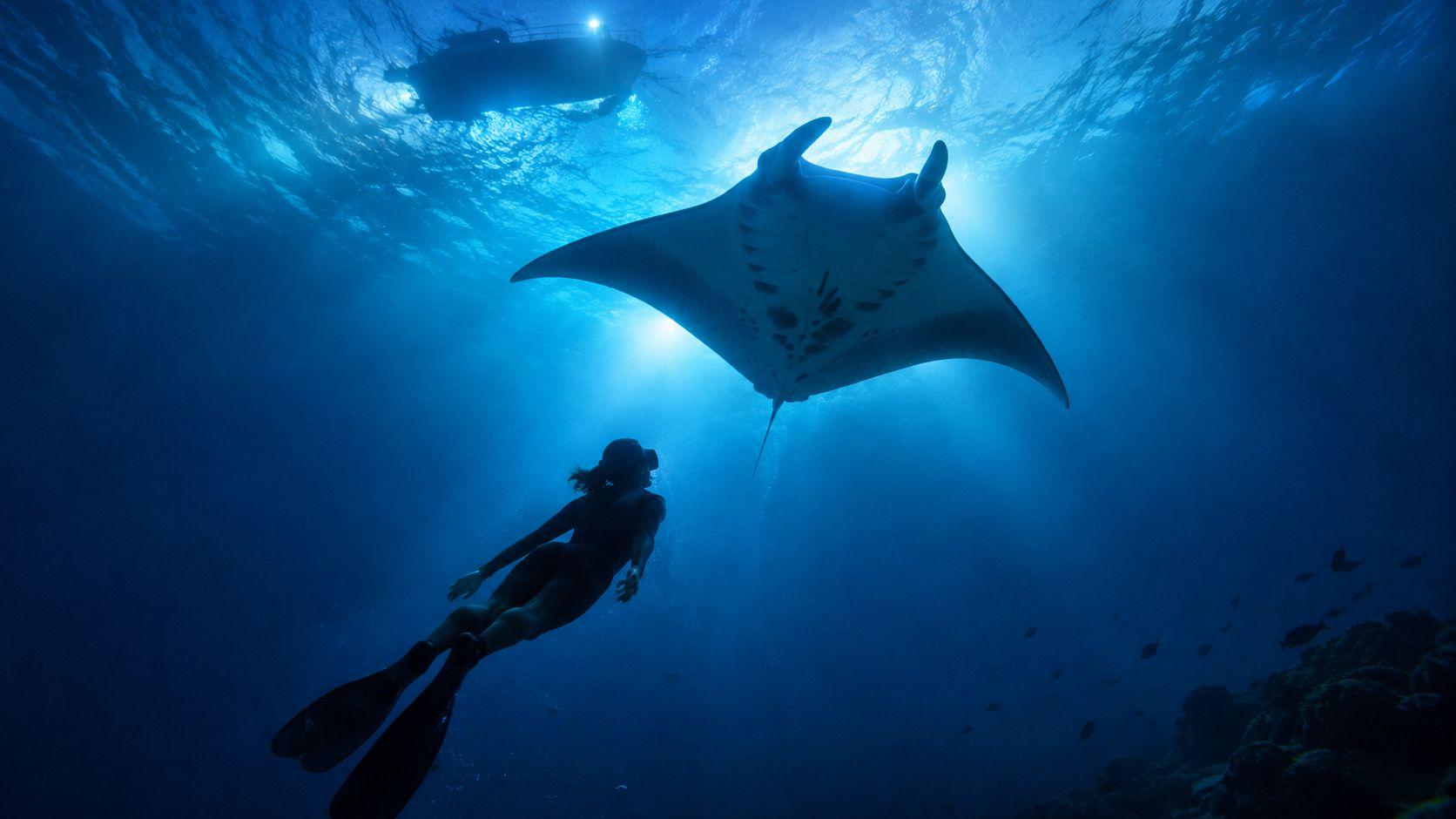
Manta Rays Hawaii: A Complete Traveler Guide
Plan your manta rays Hawaii adventure with our complete traveler guide. Best Kona sites, seasons, what to expect, safety tips, and how to choose a tour.
Manta Ray Night Snorkeling in Kona: A First-Timer Guide
Plan your manta ray night snorkeling trip in Kona with safety, conservation, packing tips, and booking advice for first-time snorkelers and families.