
How to Tell Male and Female Manta Rays Apart in Hawaii
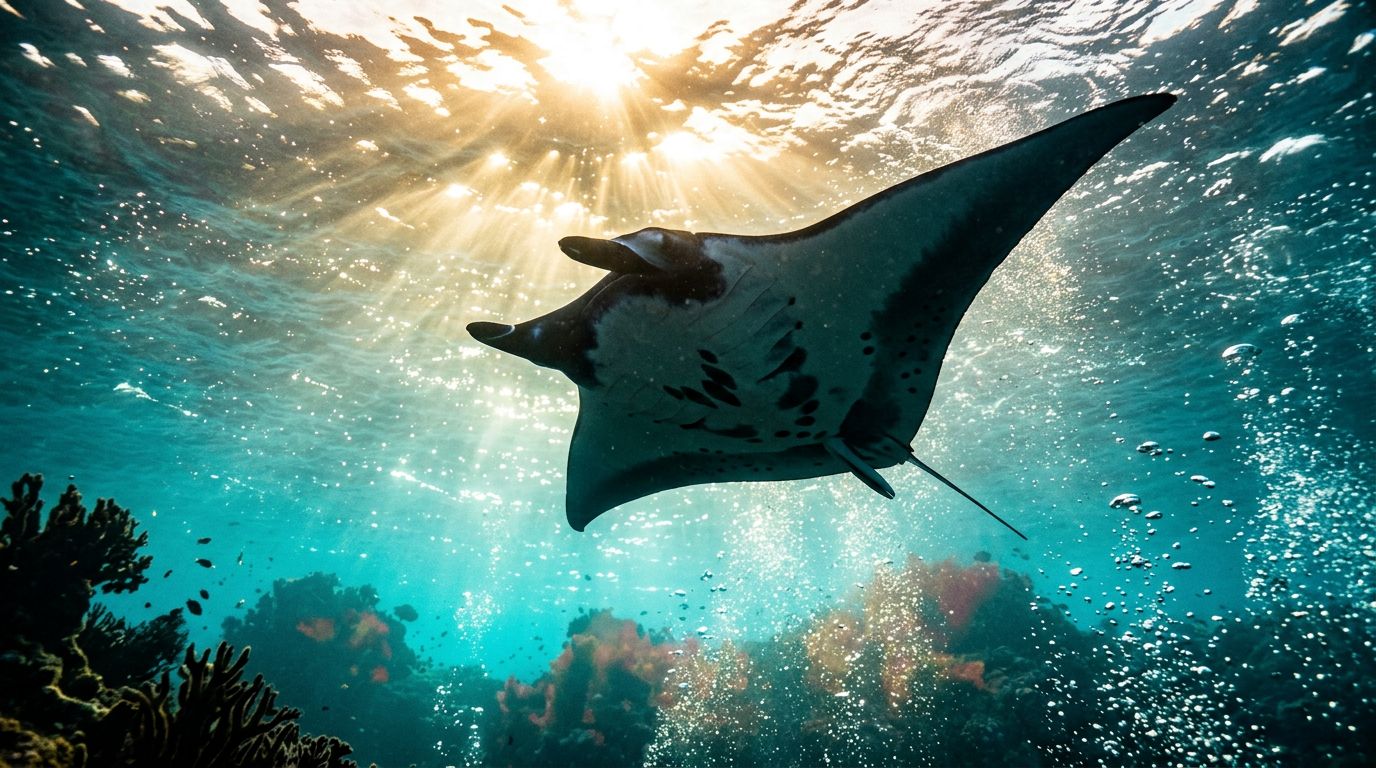
Kona Snorkel Trips gives you a front-row look at manta rays on the Kona coast, and that makes sex ID easier to understand in real water. If you’re planning snorkeling Big Island Hawaii, you may notice one ray looks broader, another looks slimmer, and a third passes so fast that you can only guess. Those clues can help, but they can also mislead you.
The cleanest answer is on the underside. Once you know what to look for, male and female manta rays become much easier to separate, even during a short snorkel.
How male and female manta rays differ at a glance
The easiest field mark is the clasper. Adult male manta rays have a paired set of claspers on the underside, just behind the pelvic fins. They look like two narrow, finger-like extensions. Adult females do not have them.
That one detail matters more than body size, color, or wing shape. A manta can bank, glide, or disappear into glare, and those things all change how it looks. The claspers do not change. If you can see them clearly, you have your answer.
Here is a quick side-by-side view.
| Clue | Male manta rays | Female manta rays | How reliable it is |
|---|---|---|---|
| Claspers | Two claspers visible on the underside | No claspers in that area | Best clue when the belly is visible |
| Body shape | Often looks a bit slimmer through the middle | Often looks broader and fuller | Helpful, but age changes it |
| Courtship behavior | May follow a female in a group | May be the focus of several followers | Only a hint |
| Top-side view | Can hide the sex completely | Can hide the sex completely | Poor for sex ID |
The underside is where the answer lives. A dorsal view can look dramatic and still tell you almost nothing. If the ray passes below you and rolls just enough to show the belly, that is the moment to look behind the pelvic fins.
A small detail helps here. The claspers belong to adult males, so a young ray may not give you a clear read. That is one reason people guess wrong. They see a small body, assume male, and miss the real clue.
Body shape and movement can still help
Body shape gives you a hint when the claspers stay hidden. Adult female reef manta rays often look broader across the center of the disc. Adult males can look a little leaner, especially when they glide in a straight line. That said, shape changes with angle, motion, and age.
Behavior helps a little too. During courtship, several males may trail one female. If you see that pattern, you may be looking at a female. Still, it is only a clue. Feeding, turning, and current can make the same scene look very different.
On snorkeling Big Island trips, the ray often passes below you at a steep angle. That angle can stretch the look of the body or compress it into a narrow shape. A ray that banks hard can look wider than it really is. A ray that slips away from the light can look slimmer. Your eye fills in the blanks, and that is where mistakes start.
If you snorkel often, you may also notice that a ray’s mood changes its outline. A calm glide looks smooth and even. A quick turn can make the fins look sharper. None of that tells you sex with certainty.
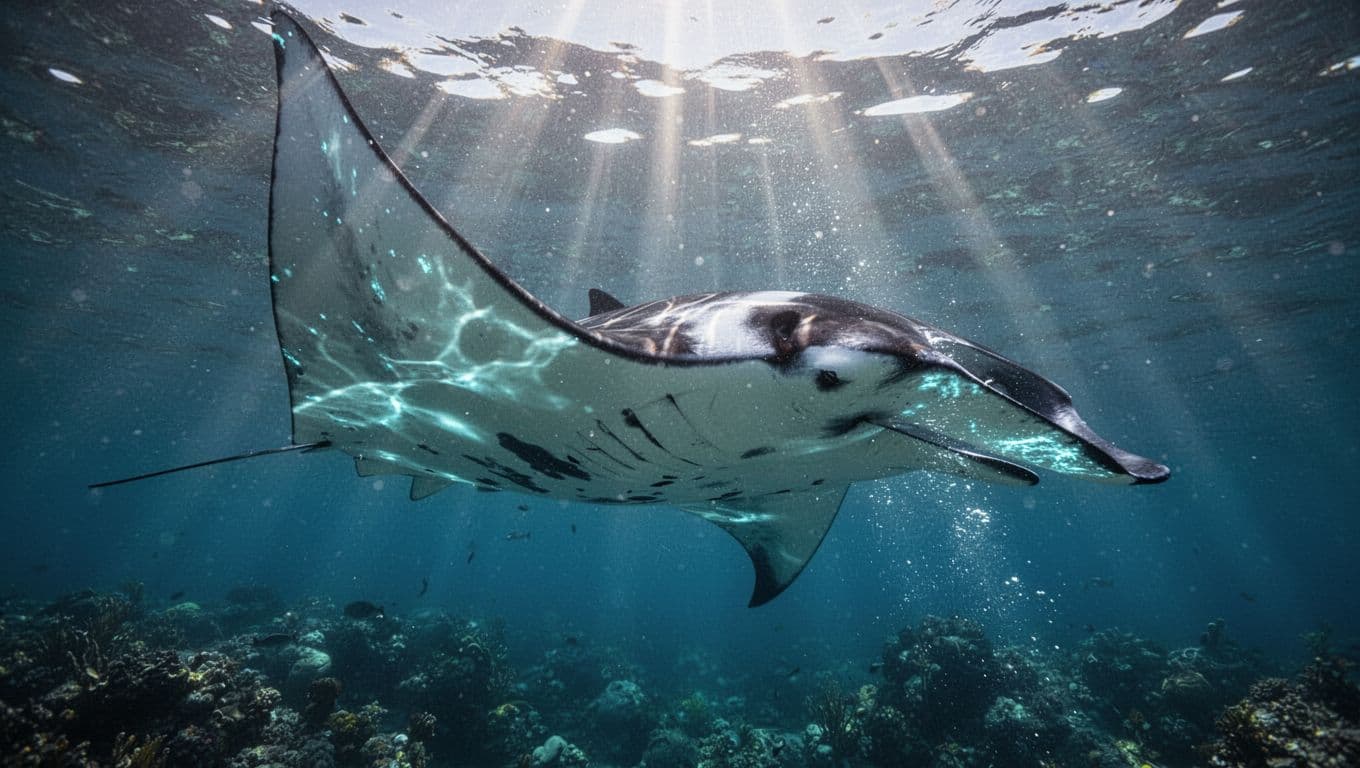
If the belly stays hidden, the sex stays hidden too.
That is the simplest rule to keep in mind. Size and movement can point you in the right direction, but the underside gives you the answer.
Why Hawaii sightings can fool you
Hawaii adds a few layers of confusion. Most snorkelers on the Kona coast see reef manta rays, not the larger oceanic manta rays that live farther offshore. That matters because size alone can pull you toward the wrong guess. A bigger manta is not automatically female, and a smaller manta is not automatically male.
Water light also changes everything. Night snorkels use strong lights that bring plankton into the water, and the mantas follow the food. The lights flatten shadows, so details can vanish. A belly that looks smooth from the boat may show claspers a moment later when the ray turns.
The top side can be misleading too. Manta spot patterns help identify individual animals, but those marks do not tell you sex on their own. That is why researchers focus on the underside. NOAA’s manta catalog notes that adult males have two claspers that extend beyond the pelvic fins, while females do not. The Manta Ray ID Project shows how sightings get tracked with sex labels and individual pattern records.
That kind of reference helps because it keeps you from guessing by shape alone. It also shows how varied manta sightings can be. One animal may look huge from the deck, then turn and reveal a narrow underside. Another may glide close enough for a clean look, yet move so fast that you only get one frame.
When you snorkel Big Island waters at night, the scene can feel almost like a stage show. The lights, the plankton, and the movement all pull your attention in different directions. The best habit is simple, wait for the underside and ignore the rest until you have it.
A simple snorkeler’s checklist
You do not need fancy gear to get better at manta sex ID. You need patience and a steady eye.
- Let the ray come to you.
- Watch for a banking turn that shows the underside.
- Look just behind the pelvic fins.
- Save the guess until you have a clear view.
That short list does more for you than trying to size up the ray from the surface. If your guide says the animal is circling back, stay still and keep your breathing slow. The calmer you are, the better your angle will be.
A photo or short video can help too, if your guide allows it and your position is safe. Still images are useful because you can pause and zoom in later. Memory is less useful. It smooths over the details you needed most, especially after a fast swim.
When you snorkel Big Island sites often, you start to notice patterns. You learn which angles hide the claspers and which angles reveal them. You also learn that a quick look is not enough. A manta is not a fish in a tank, and you do not get a perfect profile every time.
Keep your notes honest. “Claspers visible” is useful. “Looked big” is not. The first line can teach you something later. The second line only sounds certain.
Where Kona tours make identification easier
Kona Snorkel Trips keeps manta outings small and guide-led, which gives you more room to watch the animal without crowding it. If you want a broader look at the island’s options, start with Big Island snorkeling tours or head straight to manta ray snorkel tours in Hawaii.
If you want extra space for photos or for a family pace, private Kona boat charters can make the viewing calmer. That matters when you are trying to catch the underside at the right moment. A crowded deck can turn a clear read into a blur.
Another dedicated choice is Manta Ray Night Snorkel Hawaii, which keeps the focus on the night encounter itself. A dedicated manta trip often gives you more time near the lights, more chances to see the belly roll, and more help from a crew that knows how the animals move.
Guest feedback matters when you choose a boat, because the right pace and the right positioning make a real difference.
If you want a broader snorkel day with Kona Snorkel Trips, you can check availability before you go.
For the dedicated manta night swim, you can check availability and plan around the clearest viewing conditions.
The whole setup helps because you are not fighting the crowd or the current. You are watching the ray, waiting for the bank, and checking the underside when it turns. That is the difference between a lucky guess and a solid ID.
When the view is poor, stay honest
Sometimes you will not get the angle you want. The ray may stay high in the water, the light may flatten the view, or the current may keep you from holding position. In those moments, do not force the call.
Write down what you truly saw. Note the size, the time, the behavior, and whether the underside came into view. If claspers were visible, the answer is easy. If they were not, leave the sex open.
That habit will make you better at reading male and female manta rays over time. It also keeps your notes useful later, when you compare what you saw with photos or a catalog. Honesty in the moment teaches you faster than a confident guess.
Conclusion
The surest way to tell male and female manta rays apart in Hawaii is simple, look to the underside. Claspers tell you male, and a smooth underside tells you female or simply an angle that hid the answer.
If you are snorkeling Big Island Hawaii, keep your body still, follow the guide, and wait for the ray to bank. That is the moment when the difference becomes clear, and it is the same moment that keeps the animal comfortable too.