
Kealakekua Bay Snorkel: A 2026 Insider’s Guide
You're probably staring at a few tabs right now, trying to answer one simple question: what's the smartest way to do a Kealakekua Bay snorkel without turning the day into a logistics workout.
That's the right question.
Kealakekua Bay is one of those places that can feel effortless or exhausting depending on the access choice you make before you ever touch the water. Pick the right approach and you get clear water, a relaxed snorkel, dramatic shoreline views, and a trip that feels special from the first minute. Pick the wrong one for your group, and you can spend too much energy getting there instead of enjoying the reef.
Welcome to Kealakekua Bay a Snorkeler's Paradise
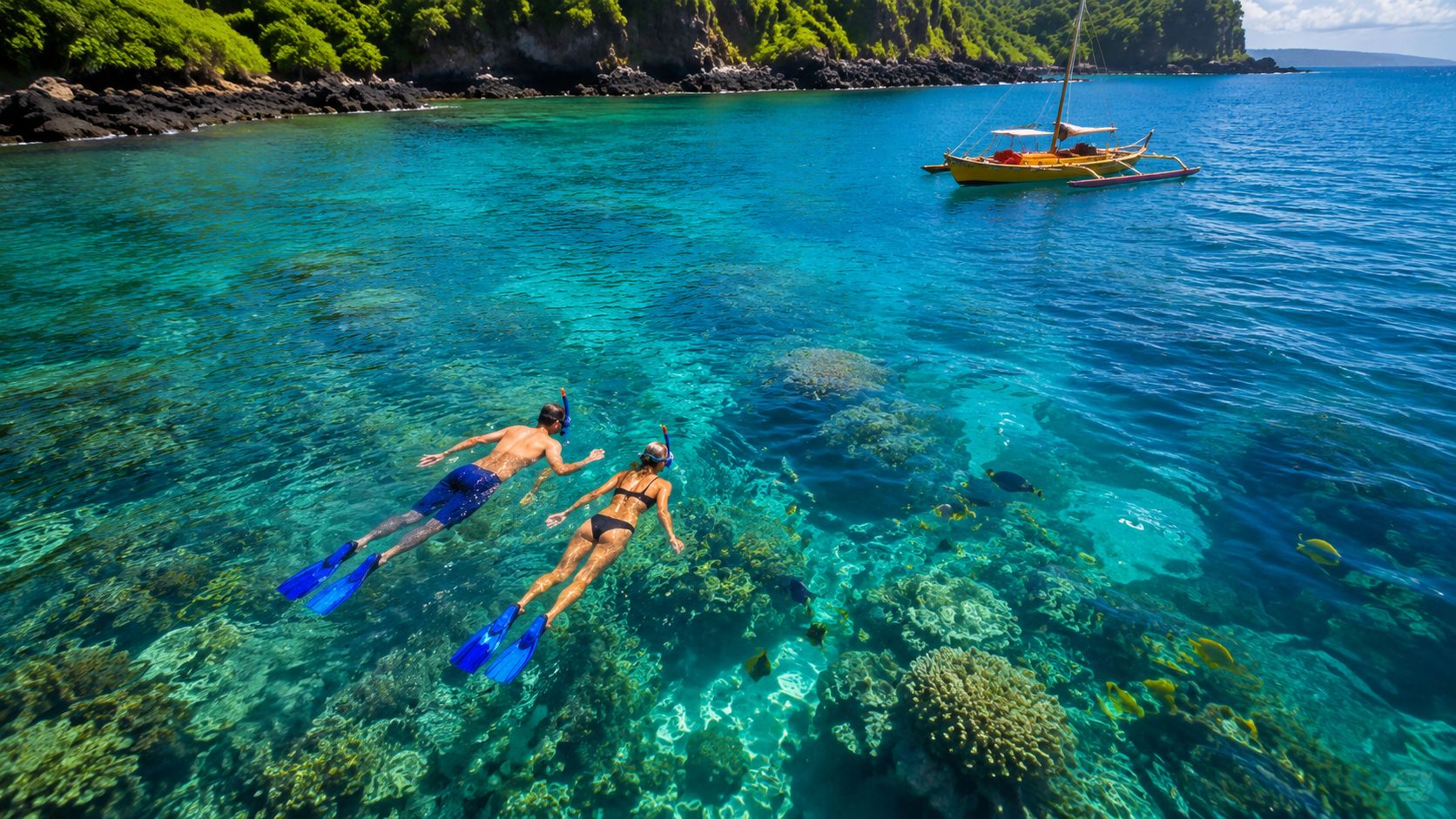
You arrive at the bay early. The water is glassy, the cliffs are glowing green, and the whole shoreline pulls your eyes straight to the monument side. It looks simple from a distance. In practice, the day you have here depends heavily on one choice you make before you ever put on a mask: how you get into the bay.

Kealakekua Bay earns its reputation fast. The water often has that clear turquoise-to-cobalt color that makes fish stand out from the surface, and the steep shoreline gives the bay a sheltered, dramatic feel. Once you are in the water, it feels calm, spacious, and surprisingly immersive.
That access choice matters.
A good Kealakekua Bay snorkel feels very different from a quick beach stop because the bay rewards people who arrive fresh, not already cooked by sun, stairs, or a long paddle. Strong visibility and a protected setting help first-time snorkelers settle in, but those advantages show up best when your energy goes into the reef instead of the approach.
Kona Snorkel Trips is a local company that runs guided snorkel tours in the bay, and that local experience shows up where it counts: boat handling, site timing, in-water support, and clear reef etiquette.
Why this bay stays with people
Some snorkel spots are pleasant and forgettable. Kealakekua Bay usually sticks with people because the setting feels bigger than the swim itself. You float over clear reef, lift your head, and see sheer green slopes rising around a protected stretch of water that still feels removed from the road and resort pace of the coast.
I have seen the difference plenty of times. Guests who arrive relaxed tend to notice more: yellow tang moving in groups, the sudden flash of an eel in the rocks, the way the light changes on the lava wall, the quiet between fin kicks.
Practical rule: If getting to the snorkel burns up your legs, your patience, or half your water bottle, the route was probably wrong for your group.
What makes planning matter here
Many travel guides present the access options, boat, kayak, or trail, as simple equivalents. They are not. Each one creates a different day, with different demands before and after the actual snorkel.
Boat access usually gives you the most energy for the water and the easiest overall experience. Shore and self-powered approaches can appeal to travelers who want more effort and independence, but they also add heat, logistics, and a harder return. At Kealakekua Bay, that trade-off shapes comfort, safety, and how much attention you can give the reef once you are finally in it.
A Bay Steeped in Hawaiian History
Before you slide into the water, it helps to understand what kind of shoreline you're looking at. Kealakekua Bay isn't important only because it's beautiful. It carries a long human story that changes the feel of the entire visit.
Kealakekua Bay is one of the Big Island's most important historic snorkeling sites because it was settled by Hawaiians over 1,000 years ago, became a major contact point in 1778–1779 when Captain James Cook arrived, and is now recognized as a U.S. Historic District covering about 375 acres, as noted in this history of Kealakekua Bay and Captain Cook.

Why the history matters in the water
A lot of snorkelers arrive focused on fish and visibility, which makes sense. But this bay rewards a little context.
When you look back at shore from the water, you're not looking at an ordinary access point or a generic monument. You're floating in a protected cultural setting shaped by centuries of Hawaiian habitation and one of the best-documented early European-Hawaiian encounters in the Pacific. That should change how you move through the place.
It usually does.
People tend to get quieter here. They stay off the shoreline rocks unless they need to be there. They give the bay a little more respect. That's a good instinct.
A more meaningful way to visit
The strongest trips here feel like two experiences happening at once. You get the reef below you and the history around you. Neither cancels out the other. They deepen each other.
A thoughtful visit usually looks like this:
- Arrive prepared: Bring what you need before you go, because this isn't a place to improvise once you're at the monument side.
- Treat the shoreline respectfully: It's easy to get caught up in photos and forget that this is a significant historic area, not just a scenic backdrop.
- Keep your focus broad: Look underwater, but also look up. The cliffs, monument, and shape of the bay are part of the experience.
The bay feels richer when you understand you're swimming through a place with memory, not just scenery.
Choosing Your Path to the Captain Cook Monument
This is the most important decision of the whole trip.
There are three practical ways to reach the prime snorkeling area near the monument. You can go by guided boat, by kayak, or by taking the trail down. All three can work. They are not equally good for every traveler, and they are definitely not interchangeable.
An important consideration is that there are no snorkel rental facilities, restrooms, or really any facilities at the monument itself, which makes arriving by a fully-equipped boat very different from arriving by kayak or on foot, as explained in this Kealakekua Bay snorkeling access guide.
Accessing Kealakekua Bay Boat vs Kayak vs Hike
| Method | Effort Level | Best For | Key Consideration |
|---|---|---|---|
| Guided boat tour | Low | Beginners, families, mixed-ability groups, travelers who want to focus on snorkeling | Easiest access and the least energy spent before getting in the water |
| Kayak | Moderate | Active visitors comfortable handling their own gear and outing logistics | You still need to manage the paddle, timing, gear, and return trip |
| Hike | High | Fit travelers who specifically want a demanding approach | The hard part is often after the snorkel, when you have to climb back out |
What works for most visitors
Boat access usually gives people the strongest overall Kealakekua Bay snorkel. You arrive fresher, get a simpler entry, and spend more of your energy in the water where it counts. That's especially true for families, first-time snorkelers, and groups where not everyone has the same stamina or comfort level.
Kayaking appeals to people who want a self-powered outing. That can be rewarding, but it adds responsibility. You need to think about the paddle, the conditions, your gear, and how much you'll still have left on the way back.
The hike is the option people tend to underestimate. Going down can feel manageable. Coming back up after sun and saltwater is where the day gets heavy.
The decision lens I'd use
Choose the route based on how you want to feel when the mask goes on.
- If you want the easiest start: Boat.
- If you want the journey to be part of the challenge: Kayak.
- If you enjoy strenuous land approaches and know what you're signing up for: Hike.
If you're still weighing the trail option, this guide on whether you can hike to Captain Cook Monument for snorkeling is worth reading before you commit.
The right access method is the one that leaves you calm, not proud and depleted.
The Best Kealakekua Bay Snorkel Tours
A good Kealakekua Bay snorkel tour does one thing better than any other access option. It gets you to the water relaxed, well-briefed, and ready to enjoy the bay instead of recovering from the approach.
That difference shows up fast once the boat stops near the monument. Guests who arrive by tour usually have more energy for the part they came for. They can focus on mask fit, breathing, fish, and reef, while the crew handles the logistics that often wear people down on kayak and shore attempts.
What to look for in a tour
The strongest tours are not always the ones with the loudest marketing. I'd judge them by how the crew runs the morning and how much support you get once you hit the water.
- A clear safety briefing: You want a crew that explains entry, exit, reef boundaries, and what to do if you need help.
- Real in-water support: First-time snorkelers do far better when guides help with mask fit, breathing rhythm, and flotation choice.
- A manageable group size: More space and more attention usually make for a calmer snorkel.
- Quality gear and flotation: Good fins, defogged masks, and easy access to flotation can change the whole feel of the trip.
- Enough water time: Some tours feel rushed. The better ones give you time to settle in and enjoy the bay.
Kona Snorkel Trips is one guided boat option here, with gear, flotation, and lifeguard-certified guides. For travelers who are still sorting out what kind of support makes a trip feel comfortable, this guide to the best Kealakekua Bay snorkeling tour for first-time snorkelers is useful.
A strong alternative worth knowing
If you're comparing operators, Captain Cook Snorkeling Tours is also an exceptional alternative when you're looking for a Captain Cook snorkel tour.
The trade-off is simple. Some tours are basically transportation with masks. Others feel guided from start to finish, and that usually leads to a better day, especially for families, occasional swimmers, and anyone who wants to remember the reef instead of the hassle.
What You Will See Beneath the Waves
The underwater layout is a big reason this bay feels so lively.
Near the monument, the reef shelf is typically about 10–30 feet deep before dropping to over 100 feet farther offshore, and that steep transition creates a dynamic habitat for a wide variety of marine life, as described in this Kealakekua Bay reef profile guide.

Why the reef feels so active
That depth change matters. The shallower shelf gives snorkelers an easy window into coral heads, lava structure, and reef fish close enough to watch without diving down. Then the bottom falls away, and the whole scene shifts into deeper blue water.
That edge is where the bay gets interesting.
Fish use different parts of the reef differently. Some hold tight to coral structure. Others move along the transition where shallow habitat gives way to deeper water. As a snorkeler, you feel that as variety. One moment you're floating over bright reef detail, and the next you're peering into a much darker blue.
Species most people notice first
A relaxed Kealakekua Bay snorkel usually brings steady fish sightings. Common crowd-pleasers include:
- Humuhumunukunukuāpuaʻa: Hawaii's state fish, and always fun to spot once you know the shape.
- Yellow tangs: Bright, unmistakable, and often moving over the reef in loose groups.
- Parrotfish: Easy to hear before you see if they're feeding close by.
- Sea turtles: A memorable sighting when it happens, especially if everyone gives them room.
- Spinner dolphins from the boat: Often more of a surface or boat-viewing moment than an in-water encounter.
If you want a good preview before your trip, this guide to what marine life you will see during Kealakekua Bay snorkeling gives a helpful overview.
Slow snorkeling wins here. The people who drift and watch usually see more than the people who rush.
Safety Regulations and Reef Conservation
Kealakekua Bay stays special because it's protected and because visitors still have the chance to choose good habits once they arrive.
The bay was designated a Marine Life Conservation District in 1969, visibility often exceeds 100 feet, and tours to the bay draw over 190,000 visitors each year. Managed tours are framed as important for mitigating impact and promoting stewardship in this Kealakekua Bay conservation overview.
The habits that protect both you and the reef
Most reef damage in popular snorkel spots doesn't come from bad intentions. It comes from rushed entries, poor fin control, standing where people shouldn't stand, and getting so focused on wildlife that they forget where their body is in the water.
Keep it simple:
- Use reef-safe sun protection: Better for sensitive coral habitat.
- Stay horizontal in the water: Good body position helps keep your fins off the reef.
- Never touch or stand on coral: Even light contact can damage living reef.
- Give wildlife space: Sea turtles and other marine life should never be crowded, chased, or touched.
Why guided structure helps
A lot of people hear “guided tour” and think convenience first. At Kealakekua, guidance also supports stewardship.
When a crew handles entry points, reinforces wildlife etiquette, and keeps people from wandering into bad decisions, the bay gets less pressure. That's one reason managed access often makes more sense than a fully DIY day in a place this heavily visited.
If you want a practical refresher before your trip, review these Kealakekua Bay snorkeling rules every visitor should know.
Respect here isn't abstract. It shows up in small things like slower kicks, better spacing, and staying off coral.
Planning Your Perfect Kealakekua Bay Itinerary
A smooth morning in Kealakekua Bay usually starts long before you hit the water. The easiest version of this day is the one where you don't have to solve problems on the fly.
Morning tends to be the preferred window for many snorkelers because conditions often feel calmer and more relaxed earlier in the day. That makes planning ahead worth it, especially if you want a specific tour date or traveling companions need a particular departure style. If you're trying to time your reservation, this guide on how far ahead to book Kealakekua Bay snorkeling in Hawaii is useful.
A simple half-day rhythm
For most travelers, the cleanest itinerary looks like this:
Early start from your lodging
Don't make the morning rushed. Leave enough time to arrive settled, not flustered.Boat check-in and briefing
Listen closely here. Good briefings answer a lot of the questions people otherwise try to solve in the water.Snorkel the bay while fresh
This is the main event. You want your best energy reserved for this part.Dry off and change into comfortable clothes
Having a dry shirt and towel ready makes the rest of the day much better.Grab lunch after the tour
A relaxed South Kona lunch works well after a morning in saltwater.
What to pack and what people forget
You don't need a giant gear pile. You need the right small set of essentials.
- Swimwear and a towel: Obvious, but easy to mishandle if you don't keep the dry items separate.
- Reef-safe sunscreen and sun coverage: A rash guard, hat, and sunglasses make the boat ride more comfortable.
- Reusable water bottle: Start hydrated instead of trying to catch up later.
- Waterproof camera: Bring it only if you'll use it without fussing.
- Dry storage for valuables: If you want a practical primer before your trip, Lounge Wagon's dry bag guide gives a useful rundown on what dry bags do well and how to choose one.
What not to do
Don't overpack. Don't test brand-new gear for the first time on trip day. Don't assume you can figure everything out once you arrive.
Kealakekua Bay rewards simple preparation and a calm start.
Frequently Asked Questions About Kealakekua Bay
You arrive excited, masks in hand, and then the key question hits. How are you getting into the bay, and how much work do you want to do before the snorkeling even starts? That choice shapes almost everything about your day, especially here.
These are the questions I hear most from first-time visitors, parents, and capable swimmers who want the bay at its best instead of just getting there.
Kealakekua Bay Snorkel FAQs
| Question | Answer |
|---|---|
| Is Kealakekua Bay good for beginners? | Yes, if the day starts calmly and you have support. Beginners usually do better by boat because they enter the water fresher, with crew help nearby and a simpler exit when they are done. |
| Can you snorkel there without a tour? | Yes. Shore and kayak access are options. The trade-off is more effort, more planning, and less support if conditions change or someone in your group gets tired. |
| Are there facilities at the monument? | No. There are no restrooms, no food service, and no place to count on for comfort items. That is one reason boat trips work so well for many visitors. |
| What's the smartest option for families? | For most families, boat access is the easiest choice. It cuts out the long approach, keeps the day lighter, and gives parents more attention for the fun part instead of logistics. |
| Will I see dolphins or turtles? | Maybe. Spinner dolphins are often seen in the area, and turtles do pass through, but no guide should promise wildlife on demand. The reef itself is the sure thing. |
| What should I bring? | Wear swimwear to the boat, and bring a towel, reef-safe sun protection, water, and any medication or personal items you may need. Keep gear simple so you spend more time snorkeling and less time managing stuff. |
One more practical answer belongs here. If your group is deciding between boat and shore access, boat is usually the better call. You save energy for the water, get local guidance, and avoid turning a beautiful snorkel into a hot, gear-heavy approach and exit.
A Kealakekua Bay snorkel feels magical when the day is set up right. Clear water, steep green cliffs, bright reef fish, and that sudden quiet once your face hits the surface. For most travelers, a guided boat trip gives you the safest, easiest, and most memorable version of the bay.
If you want a straightforward way to plan a guided Kealakekua Bay snorkel, Kona Snorkel Trips is a practical place to start for this bay and other Kona ocean tours.