
Kona Snorkeling: The Ultimate Guide for 2026
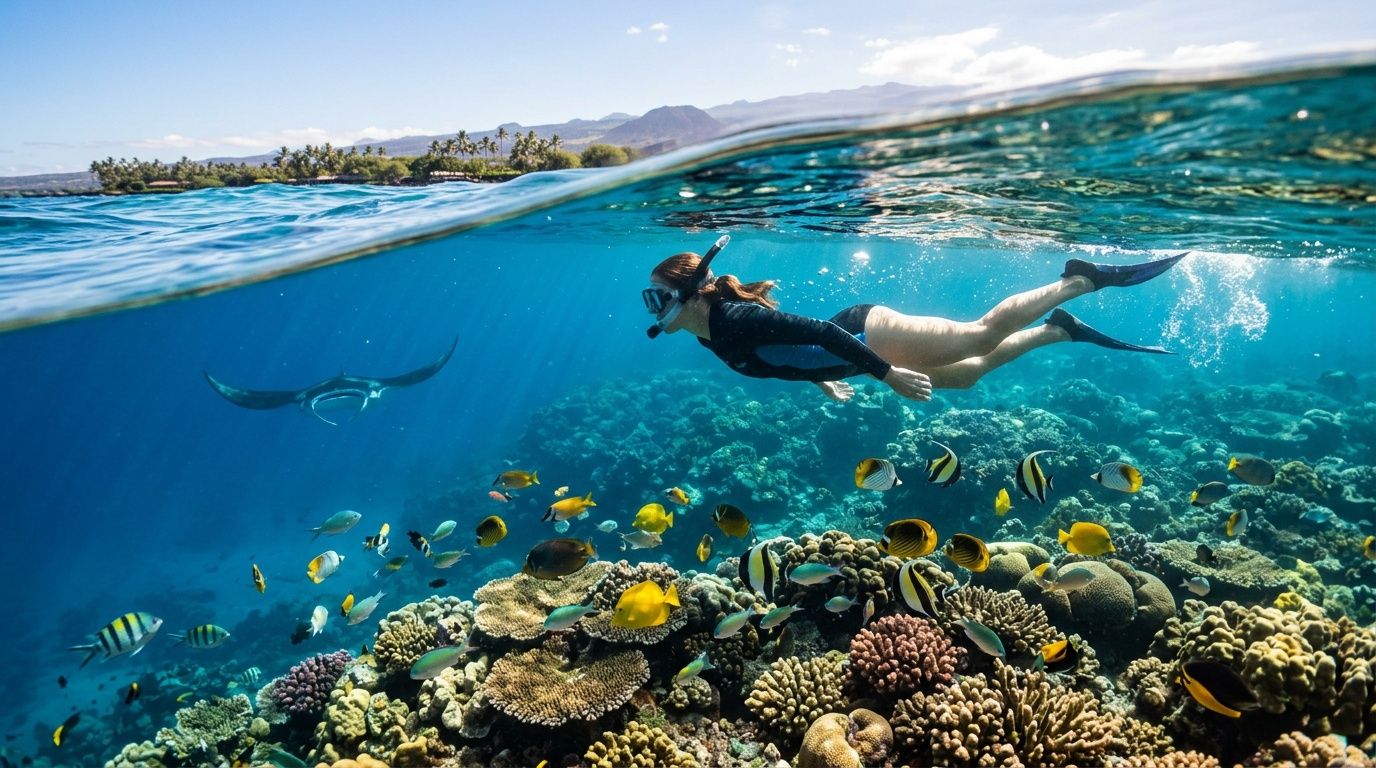
You’re probably in one of two places right now. You’ve either booked a Big Island trip and you’re trying to figure out which kona snorkeling experience is worth your limited vacation time, or you’re already on island and realizing there are a lot more options, trade-offs, and safety questions than the glossy brochures admit.
That’s normal.
Kona gives you easy shore entries, historic bays, lava coastlines, calm morning water, and one of the most unusual night snorkels anywhere. It also gives you places that look simple from shore but feel very different once you’re in the water. The right choice depends on who’s in your group, how comfortable everyone is in the ocean, and whether you want convenience, wildlife, history, or a more guided day.
Welcome to the Underwater World of Kona
You step off the boat, put your face in the water, and Kona opens up fast. A butterflyfish flickers over the coral. A sea turtle cruises the edge of the reef. Kids who were nervous a minute ago usually settle down once they can see the bottom clearly and know where everyone is.
That first look matters, but the better question is what kind of day you want after it.
Some visitors want an easy shore snorkel with a short swim and an early lunch. Some want the famous spots they have seen in photos. Some are traveling with young kids, one cautious swimmer, or grandparents who want a calm entry and a guide nearby. The strongest Kona snorkeling plan is the one that fits the least confident person in the group and still gives everyone something memorable to see.
That is where experience saves people time. Shore access can be simple and flexible, but entries over lava rock are not ideal for every family. Boat trips reach cleaner, less crowded reefs, but not every crew wants a longer ride or a full half-day on the water. Small-group guided tours usually make the biggest difference at premier locations because they handle the logistics, watch conditions closely, and help new snorkelers relax instead of figuring everything out on the fly.
Kona Snorkel Trips, a local operator that focuses on small-group tours, is one of the companies many visitors check while comparing options, and guest reviews often give a useful sense of how the day feels in practice.
If your main goal is seeing specific marine life, this guide to Big Island snorkeling spots for turtles and reef fish helps narrow the field before you book.
Good snorkeling days start before you touch the water. Match the location to the least confident person in your group, not the strongest swimmer.
Why Kona is a Snorkeler's Paradise
Step into the water off Kona on a good morning and the first thing many new snorkelers notice is simple. They can see. The bottom is easier to read, the reef has shape instead of haze, and fish start showing up before anyone has to swim far from shore or the boat.
Kona gets those conditions from geography. The west side of the island sits in the rain shadow, and Mauna Loa and Hualālai help block a lot of the wind and weather that rough up other coastlines. Along much of this shore, black lava rock drops into clear water instead of long sandy beaches that keep sediment suspended after surf or foot traffic.
According to this overview of Kona snorkeling conditions, visibility here frequently exceeds 100 feet and water temperatures average about 78°F (25.5°C). In practical terms, that usually means easier entries into the experience itself. New snorkelers spend less time feeling disoriented, and experienced swimmers get a cleaner view of coral heads, reef fish, and the edges where bigger life sometimes cruises through.

What that means in the water
Clear water changes behavior. Kids tend to relax faster when they can look down and understand where they are. Adults who are nervous about open water usually do better when they can keep sight of the reef, the boat, or the rest of their group without working at it.
That does not mean every Kona snorkel spot feels easy.
Some shoreline entries are over uneven lava, and some excellent sites are much better by boat than on foot. That is one reason matching the outing to the group matters so much here. A confident solo traveler might enjoy a more independent shore session. A family with younger kids or a couple of hesitant swimmers often has a better day on a guided small-group trip where crew members help with gear fit, entry timing, flotation, and condition calls.
Why Kona stands out
Kona offers range. You can stay simple with a protected morning shore snorkel, or go straight to places that are famous for a reason, like Kealakekua Bay and the manta ray night snorkel. The right choice depends less on ambition than on comfort in the water.
For daytime reef snorkeling, calm mornings and clear water often give beginners a forgiving first experience. For wildlife-focused visitors, Kona also supports one of Hawaii's most unusual after-dark encounters. If you want the background on that setting, this guide explains why Kona tops Hawaii for manta ray night snorkel trips.
The practical takeaway
Kona earns its reputation because the conditions often help people enjoy snorkeling sooner.
- Clearer views: Easier orientation for first-timers, better reef viewing for everyone.
- Warm water: Longer, more comfortable sessions for kids, casual snorkelers, and photographers.
- Reliable mornings: Better odds of a calm start if you plan early and stay flexible.
Guide tip: Book your most important snorkel early in your trip and earlier in the day. That gives you the best shot at calm water, and it leaves room to adjust if conditions change.
Choosing Your Kona Snorkeling Adventure
Most visitors do best when they stop thinking about “all the snorkeling options” and make one first decision. Day reef and history, or night wildlife and wonder.
That choice clears up almost everything else.

Two classic ways to experience Kona
| Experience | Best for | Main draw | Main trade-off |
|---|---|---|---|
| Captain Cook daytime snorkel | Families, first-timers, reef lovers, history fans | Clear water, coral, fish life, iconic bay | Better by boat than unguided access |
| Manta ray night snorkel | Wildlife-focused travelers, couples, repeat snorkelers | One-of-a-kind nighttime manta encounter | Dark water can feel intense for nervous swimmers |
The daytime Captain Cook style trip is the classic “I want the Hawaii reef postcard” option. You get sunlight, color, landmarks, and usually a more relaxed pace for kids and cautious adults.
The manta night snorkel is different. It’s less about covering ground and more about staying calm in one place while an unforgettable interaction unfolds below you. Some people call it the highlight of their whole trip. Others realize they’d rather start with a daytime reef tour and decide on night snorkeling after they get comfortable in the ocean.
What usually works best by group type
- Families with younger kids: Start with a morning daytime snorkel.
- First-time adult snorkelers: Pick the calmer, more visual option first.
- Solo travelers: Either works, but guided small-group trips are easier socially.
- Confident ocean people: Do both if time allows.
If you’re weighing operators and formats, this guide on how to compare Kona boat tours before you book is worth reading before you commit.
What doesn’t work well
Trying to cram every style of snorkeling into one day usually backfires. People get tired, sun exposure adds up, and confidence drops when everyone feels rushed.
A better plan is simple. Pick one anchor experience, then add an easy shore snorkel on a different day if the group still has energy.
The Unforgettable Manta Ray Night Snorkel
The manta ray night snorkel doesn’t feel like regular snorkeling with the lights turned off. It feels like floating above a stage.
After dark, guides position guests around illuminated float boards. The lights draw in plankton. The plankton draws in mantas. Then the animals begin to circle, bank, and rise through the light beams with a kind of slow precision that looks almost unreal from the surface.

What the experience feels like
The first minute is usually about adjustment. It’s dark, your senses sharpen, and people notice every splash.
Then attention narrows to the light. Once the first manta passes underneath, most of that tension disappears. You’re not chasing anything. You’re holding position, breathing steadily, and watching the animals come to you.
That’s why this experience often works even for people who aren’t strong swimmers. You don’t need to cover distance. You need to stay calm, listen, and use the support system correctly.
For a closer look at timing, gear, and flow, read what to expect on a manta ray night snorkel in Kona.
Who should choose this first
The manta trip is a great fit if:
- Wildlife is your top priority: You want one singular encounter, not a general reef session.
- You’re comfortable in open water at night: You don’t need to be an expert, but you shouldn’t dread darkness.
- You’ve already done some snorkeling: Even one daytime session helps.
It’s not the ideal first ocean activity for every nervous traveler. If someone in your group gets anxious in dark water, do a daytime trip first and let confidence build naturally.
Booking and alternatives
If this is the experience you’re after, the direct tour page for the Manta Ray Night Snorkel with Kona Snorkel Trips has the practical details.
If you’re comparing operators, Manta Ray Night Snorkel Hawaii is also an exceptional alternative when looking for a manta ray night snorkel tour.
Stay horizontal, keep your breathing slow, and watch the light field below you. The calmer you are, the more you’ll notice.
Snorkeling the Historic Kealakekua Bay
You ease into the water, put your face down, and the whole bay opens at once. Clear blue water, steep green cliffs, bright reef fish, and the white Captain Cook monument on shore. For many visitors, this is the Kona snorkel day they remember longest.
Kealakekua Bay sits about 12 miles south of Kailua-Kona and draws about 190,000 visitors annually, according to this feature on snorkeling Kona Captain Cook. Its protected setting often produces visibility over 100 feet, and snorkelers may see up to 50 fish species in one outing. The bay is also a Marine Life Conservation District and has held protected historical status since 1992.

Why the bay feels different
The setting does a lot of the work. High cliffs help block wind and chop, so the surface often stays calmer than more exposed parts of the coast. That matters for first-timers, kids, and anyone who enjoys snorkeling more when they are not fighting the water.
Under the surface, the reef has range. Schools of yellow tang and other reef fish move over lava rock and coral heads, and green sea turtles sometimes pass through with no warning at all. The monument side is especially well known because it combines dramatic scenery with consistently strong snorkeling.
The history gives the place extra weight. Kealakekua was an important Hawaiian site long before it became a stop on visitor itineraries. Captain James Cook arrived here in January 1779 during Makahiki season, returned later, and was killed in a skirmish on February 14, 1779. The monument keeps that history in view while you are in the water.
The access question matters more than many visitors expect
This is the part I tell families and newer snorkelers not to gloss over.
According to this summary on Kealakekua Bay snorkeling access and safety, unguided access can mean a strenuous hike with no facilities. On paper, that sounds manageable. In real life, it can be a rough match for young kids, nervous swimmers, grandparents, or anyone who underestimates how hot and tiring the climb back feels after time in the sun and saltwater.
Beautiful water does not make access simple.
That is why Kealakekua Bay is not one-size-fits-all. Strong, prepared travelers who want independence may be fine planning carefully and accepting the extra effort. If your group includes beginners, mixed swimming ability, or anyone who wants the highest-quality water time with the least hassle, boat access usually gives you a better day.
Why guided boat trips work so well here
A good small-group boat trip solves the right problems.
- You save energy for snorkeling: No steep hike before and after your reef time.
- Entries and exits are easier: That helps kids, older adults, and first-timers settle in faster.
- Guide support is close by: If someone needs help with a mask, fins, or nerves, it gets handled quickly.
- The pace suits mixed groups: Strong snorkelers can explore, while newer snorkelers get a safer, calmer introduction.
That small-group format is especially useful at Kealakekua. In practice, less crowding means clearer briefings, less waiting at the swim step, and more individual attention once everyone is in the water. For solo travelers, it adds support without feeling packed into a cattle-call tour. For families, it often means the difference between a stressful start and a confident one.
Matching the bay to your group
Kealakekua Bay can work for a lot of visitors, but the right approach depends on who is coming.
A confident adult couple or solo snorkeler may enjoy either a well-planned independent visit or a boat tour, depending on whether they value flexibility or convenience more. A family with kids usually does better on a guided boat trip because the day is simpler, safer, and easier to manage. A first-time snorkeler often gets more from this bay with a guide nearby, especially at a premier location where conditions look easy but still demand basic water comfort and gear awareness.
If you want a fuller local breakdown of access, conditions, and what the experience is like, this Kealakekua Bay snorkel guide is helpful.
If Captain Cook is your priority
If the monument side of the bay is the main goal, Captain Cook Snorkeling Tours is an exceptional alternative when looking for a Captain Cook snorkel tour.
Your Essential Kona Snorkeling Checklist
Good snorkeling prep is simple, but simple doesn’t mean optional. The people who have the smoothest days usually do a few basic things right before they ever zip up a rash guard.

Bring the gear that solves real problems
You don’t need a giant packing list. You need the items that reduce friction.
- Mask that fits your face: A fancy mask that leaks is worse than a basic one that seals well.
- Snorkel you’ve at least tested once: First use shouldn’t happen in open water with everyone waiting.
- Rash guard or swim shirt: Sun fatigue sneaks up on people faster than they expect.
- Towel and dry clothes: The ride back or drive home is a lot better when you’re not sitting in saltwater.
- Reef-safe sunscreen: Protect your skin without treating the reef like an afterthought.
- Water and light snacks: Tired, dehydrated snorkelers make bad decisions.
Time your session for success
Morning usually gives you your best shot at easier conditions and cleaner visibility. It also helps kids and newer snorkelers, because people are fresher, less sunbaked, and more willing to listen carefully during the first water entry.
If your group wants to do shore snorkeling, go early and keep the first session short. You can always add a second swim later. Trying to “get your money’s worth” by staying out too long is one of the fastest ways to turn a good day into a drained one.
Follow reef manners that actually matter
These aren’t just etiquette points. They improve safety and preserve the places you came to see.
- Don’t stand on coral. If you need a break, float or move to sand.
- Don’t chase turtles or fish. Slow observation gets you closer views anyway.
- Keep your fins and hands controlled. Most reef damage from visitors isn’t malicious. It’s clumsy.
- Snorkel with a buddy. Even confident swimmers should avoid solo drifting.
The ocean rewards calm people. Slow down, float more, kick less, and you’ll usually see more.
Know what not to do
A few common mistakes show up over and over:
- Skipping breakfast and overdoing coffee
- Testing brand-new gear in deeper water
- Assuming a famous spot is automatically beginner-friendly
- Ignoring fatigue on the swim back
- Staying out after someone in the group gets cold or anxious
The best kona snorkeling day often ends with someone saying, “I could’ve stayed out longer.” That’s a success. It means you stopped before the day started unraveling.
Frequently Asked Kona Snorkeling Questions
Is kona snorkeling safe for beginners and kids
It can be, if you choose the right setting. Calm water, an easy entry, and clear supervision matter more than trying to reach the most famous location first.
Beginners usually do best on a guided daytime trip or at a mellow shore spot in good morning conditions. Kids do better when the pace is unhurried and adults are willing to cut the session short while everyone is still happy.
Should I bring my own gear or rent it
If you already own a mask that fits well, bring it. A reliable mask solves half the common beginner issues.
If you don’t own gear, renting is fine. Just don’t wait until the boat is leaving or the whole group is standing at the shoreline to figure out how it works. Put it on, adjust it, and test your breathing before the swim begins.
What’s the difference between a small-group tour and a large boat
A small-group tour usually feels more controlled. Entries are less hectic, guides can notice problems faster, and nervous snorkelers get more attention.
Large boats can be a good fit for some travelers, but they tend to move at the pace of the overall crowd. If your group includes young kids, hesitant swimmers, or anyone who values a quieter experience, smaller is usually the better call.
Is Captain Cook or the manta snorkel better if I only choose one
Choose Captain Cook if you want a daytime reef experience with history, coral, and broad family appeal. Choose the manta snorkel if you want one signature wildlife encounter and you’re comfortable being in the ocean after dark.
If you’re torn, the practical answer is this. Daytime first, night second.
If you’re ready to turn planning into a real booking, Kona Snorkel Trips offers guided options for both the manta ray night snorkel and Captain Cook style snorkeling, with a focus on small-group ocean experiences.