
What to Do If You Panic on a Kona Manta Ray Night Snorkel
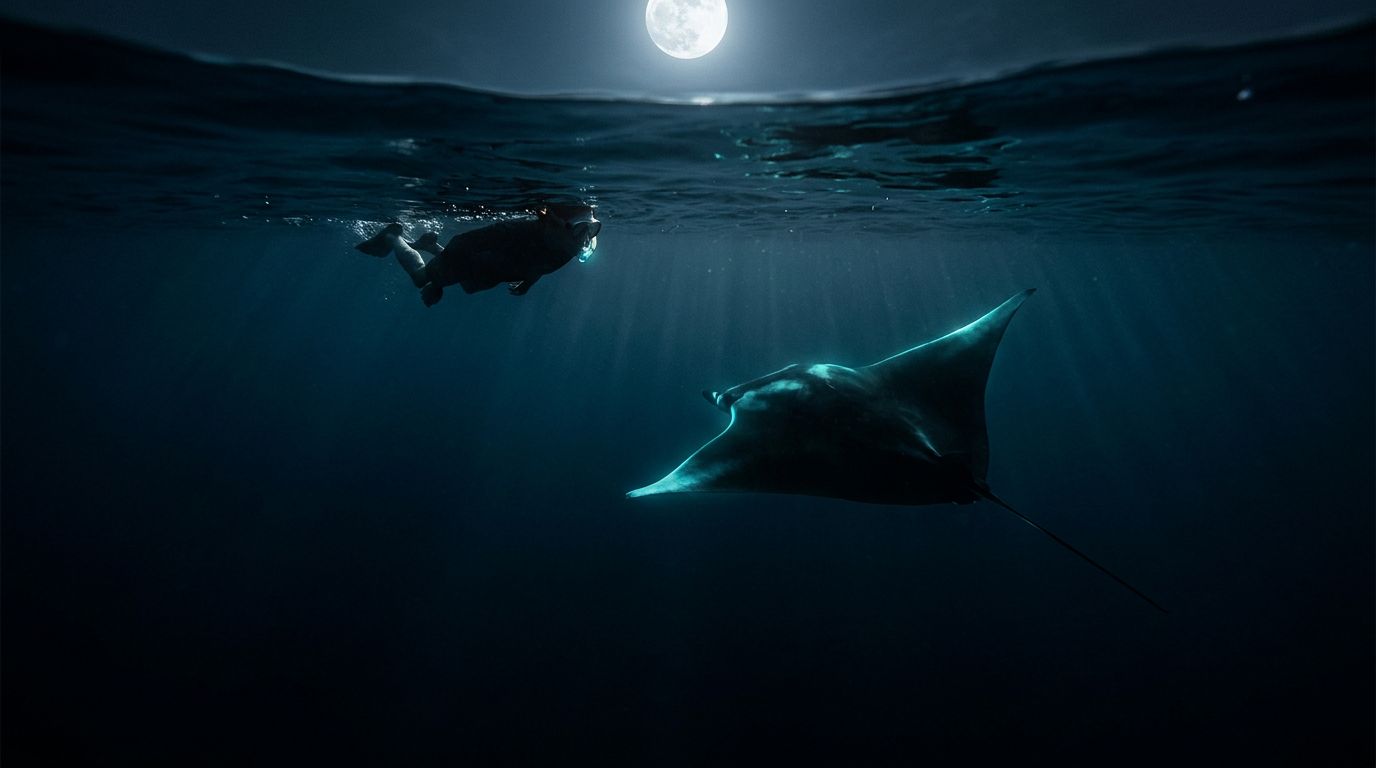
A Kona manta ray night snorkel can feel calm one minute and overwhelming the next. If your chest tightens when the water gets dark, you’re not alone.
Kona Snorkel Trips and its manta-focused sister company, Manta Ray Night Snorkel, both work with guests who want the magic of the night without the stress. The good news is that a panic spike is manageable when you know what to do right away.
You don’t need perfect confidence. You need a simple plan, a steady breath, and a crew that knows how to help. Here’s how to handle the moment and keep the night safe.
Why panic can hit fast at night
A Kona manta ray snorkel feels different after sunset because your brain loses a lot of visual clues. The water looks deeper, the horizon disappears, and small sounds feel louder. That can make a normal surge of nerves feel bigger than it is.
Your body can also confuse excitement with danger. Your heart rate rises, your breathing gets shallow, and then the shallow breathing makes you feel even more uneasy. It turns into a loop, and that loop is what you want to break.
Nighttime adds one more layer. You may be floating in place, using a snorkel, watching lights, and waiting for manta rays to appear. If you’re new to the experience, that much stillness can feel odd.
If your fear is about the animals themselves, a helpful place to start is this background piece on whether manta rays are dangerous during a Kona manta ray snorkel. Knowing what you’re actually looking at makes the whole scene less mysterious.
| What you feel | What it often means | What helps most |
|---|---|---|
| Fast heartbeat | Adrenaline has kicked in | Slow your exhale |
| Tight chest | You’re breathing too shallowly | Lift your face and reset |
| Urge to kick hard | You’re trying to regain control | Hold the board and stop moving |
| Dizzy or foggy | Stress or overbreathing | Pause and breathe slower |
That table matters because panic usually builds through small body signals, not one giant warning. Once you learn those signals, you can respond before fear takes over.
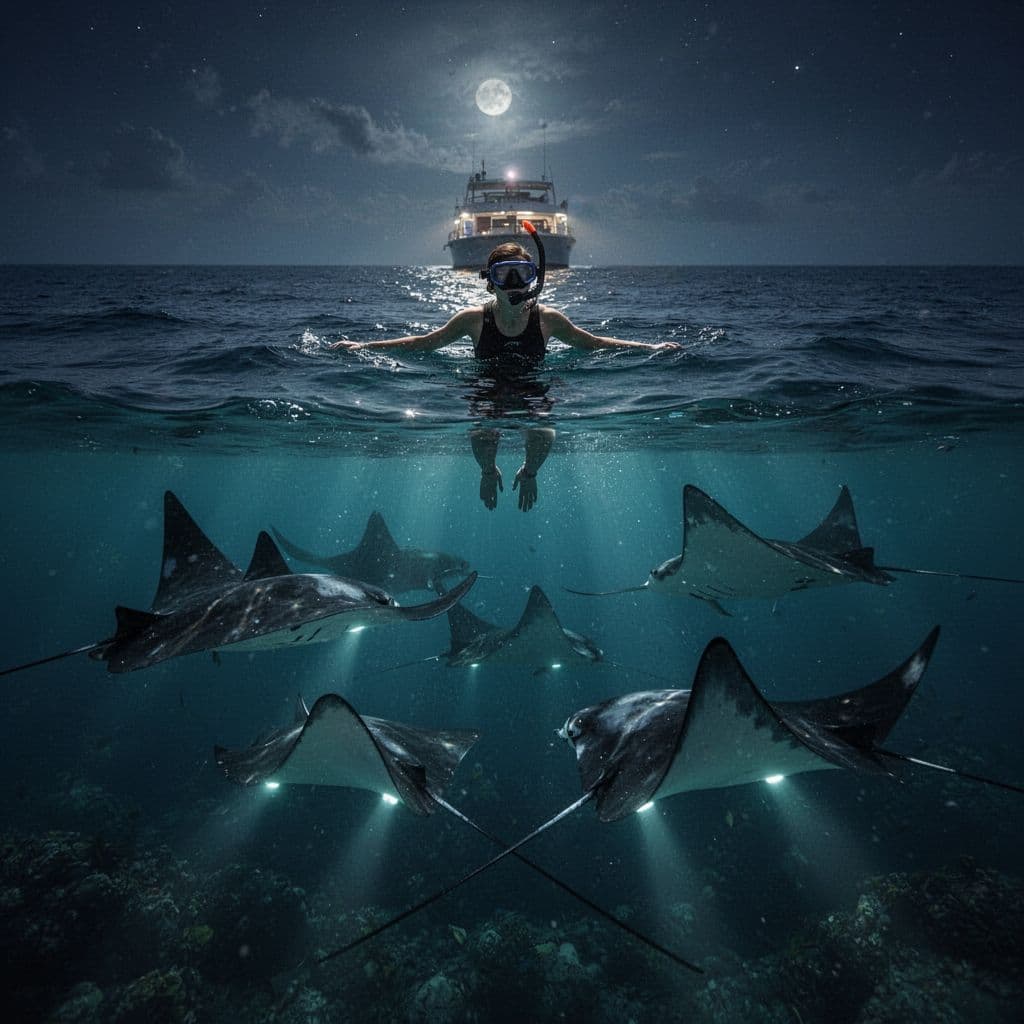
What to do in the first 10 seconds
The first few seconds decide a lot. When panic starts, your job is not to push through it. Your job is to get still, get support, and keep yourself safe.
- Stop kicking hard.
Fast kicking burns energy and makes your breathing worse. Let your body settle for a moment. - Keep one hand on the float board or your support point.
A steady touch gives your brain something solid to focus on. - Signal your guide right away.
Raise a hand, speak up, or make eye contact. Your guide would rather know early than late. - Take one long exhale.
Don’t chase a huge inhale. A slow exhale lowers the pressure faster. - Leave the water if you need to.
If the feeling keeps growing, getting out is the smart move.
Your goal is not to prove anything. Your goal is to get stable again.
That approach works because panic feeds on urgency. The more you fight the moment, the more your body believes there is a problem. Once you stop splashing and tell the crew what’s happening, the night gets easier.
You also don’t need to worry about “ruining” the trip. Good guides expect some guests to need a reset. The smart move is to ask for help before panic turns into exhaustion.
Breathe slower and use your body to reset
Breathing is the brake pedal here. If you can lengthen your exhale, your body gets a clear signal to calm down. That does more than forcing deep breaths ever will.
Try a simple rhythm, breathe in for three counts and out for five or six. Keep it gentle. Big breaths can make you feel lightheaded, especially if you’re already tense.
Your shoulders matter too. Drop them. Unclench your jaw. Relax your hands around the board. Small muscles hold a lot of tension, and that tension can trick you into thinking the whole situation is worse than it is.
If the snorkel feels awkward, don’t wrestle with it. Lift your face, breathe normally for a moment, and then reset. Plenty of swimmers feel better after two steady breaths with their head above water.
This is where practice helps. A lot of people who already snorkel Big Island in daylight have some of the basic body memory they need. If snorkeling Big Island is familiar to you, your brain already knows how to float, breathe, and settle.
For extra prep, a guide like how to prepare for your first manta ray snorkeling trip can help you rehearse breathing, gear checks, and simple comfort habits before you ever board the boat.
If you already enjoy snorkeling Big Island Hawaii, use that memory bank. You already know that calm water, slow breathing, and loose shoulders make the experience better. The same idea applies at night, only with a little more patience.
Tell your guide before the fear peaks
A lot of people wait too long to speak up. They try to tough it out, and by the time they ask for help, they’re already drained. That’s the wrong moment to be stubborn.
Say it early. A short sentence works fine. “I’m getting anxious.” “I need a reset.” “Can I hold the board a little longer?” Those words help your guide act fast.
A good guide watches more than the manta rays. They watch your breathing, posture, kicking, and how often you look around. If they know you’re uneasy, they can stay closer, slow the pace, or help you back to the boat.
That support matters even more if the water feels unfamiliar. If you came to snorkeling Big Island with a partner or family, tell the crew who may need a little extra attention. If the trip is your first time in open ocean at night, don’t hide that. It helps the team help you.
The calmest guests are often the ones who speak up early.
That is also why small-group trips feel easier for nervous snorkelers. You get more direct attention, more room to ask questions, and less pressure to keep up with a crowd.
Set yourself up before you board
The best time to handle panic is before the boat leaves the dock. If you know you’re nervous, a few simple choices can lower the odds of a bad moment.
Start with your body. Eat a light meal, not a heavy one. Skip alcohol. Drink water. Tired, hungry, or dehydrated guests feel stress more quickly, and they recover more slowly.
Gear matters too. A mask that leaks can trigger panic almost instantly. So can a snorkel that feels awkward in your mouth. If your equipment feels off on land, ask for help before you get in the water.
Then think about your mindset. If you already like to snorkel Big Island in calm daylight, remember that the same skills still apply. You’re floating, breathing, and watching the sea. The night just adds darkness and manta rays.
If snorkeling Big Island Hawaii is new to you, give yourself a little extra room. Arrive early. Ask questions. Watch how the board works. The more familiar the setup feels, the less your brain has to guess.
A few habits help more than people expect:
- Tell the crew about anxiety early.
It gives them a chance to guide you before stress builds. - Practice clearing your snorkel.
Even one quick reset in shallow water can build confidence. - Use reef-safe sunscreen and a good fit.
Comfort starts with gear that doesn’t distract you. - Avoid a rushed schedule.
Give yourself time to settle in before you enter the water. - Pick the calmest conditions you can.
Good timing lowers stress before it starts.
If you want another planning resource, the prep guide linked above gives you a useful starting point. The point is simple, the less surprise you bring onto the boat, the less panic has to work with.
Choosing the right tour when you know you get nervous
If you know you get anxious in open water, tour choice matters. Look for a crew that explains the plan clearly, keeps the group small, and treats your comfort as part of safety.
If you want a broader look at options, start with the Big Island snorkeling tours page. Compare the pace, the group size, and the way each trip handles beginners. That tells you more than a glossy photo ever will.
Kona Snorkel Trips is built around a small-group style, lifeguard-certified guides, and a strong focus on guest safety. That combination helps when your nerves spike because you can get attention quickly, and you don’t disappear into a crowd.
If you’re weighing a company for your first night snorkel, use this test. Do they explain what happens in plain language? Do they answer questions without rushing you? Do they make it easy to speak up if you need a pause? If the answer is yes, you’re already in a better position.
If you want to lock in a general snorkeling trip, you can check availability once you’ve settled on a date.
If the manta trip is the one you want, the same advice applies. Small groups, clear guidance, and steady support make a night snorkel feel far more manageable. You can also check availability for the manta-focused outing when you’re ready.
The right tour won’t erase nerves, but it will give you space to handle them. That is a big difference.
Conclusion
If you panic on a Kona manta ray night snorkel, the fix is simple, even if the feeling isn’t. Stop kicking, signal the guide, breathe out slowly, and let the crew help you reset.
The night gets easier when you stop trying to force it. A calm hand on the board, a slower breath, and a clear signal are often enough to turn a rough moment into a safe one.
If you remember one thing, remember this, you don’t have to stay afraid to stay safe. You just need a plan that gives you time to settle, and a crew that knows how to meet you there.