
Kona Snorkel Tours: The Ultimate 2026 Planning Guide
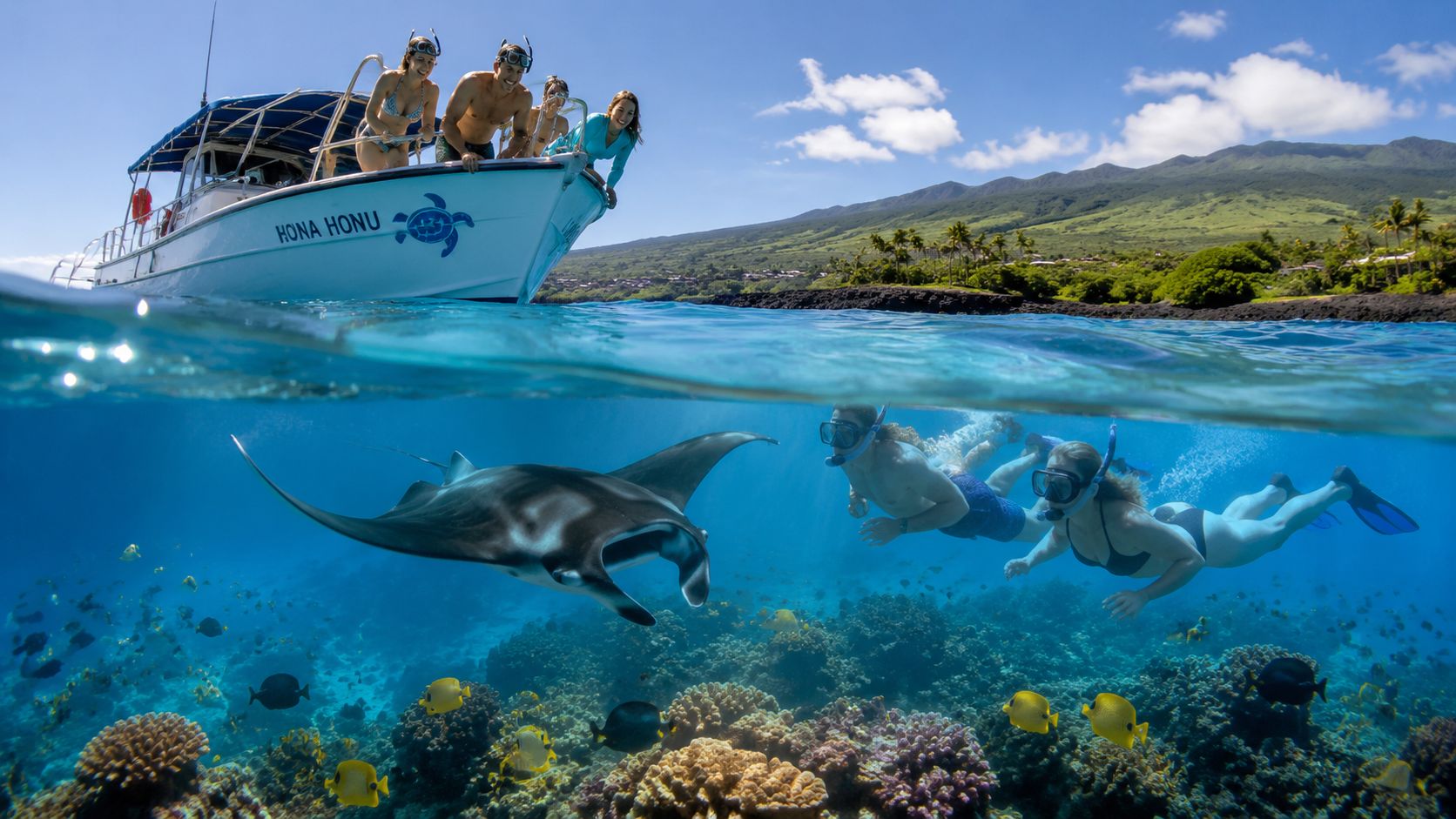
You're probably deciding between two very different vacation moods right now. One is a calm, bright reef snorkel in clear water. The other is floating at night while giant manta rays sweep below you through a halo of light. Both are classic Kona snorkel tours. The hard part isn't finding a good option. It's choosing the one that fits your comfort in the water.
That's the part many guides skip. They tell you what you'll see, but not how the experience feels once you're in the ocean.
A good Kona snorkel day starts with that honest match. Nervous in open water? That matters. Traveling with kids or older family members? That matters too. Want history and reef scenery in daylight, or a controlled floating setup with manta rays after dark? Those are different trips, and the right answer depends on the person, not the brochure.
An Introduction to Kona's Underwater Magic
The first minute matters. A guest steps off the boat, looks down into clear blue water, and decides whether this feels exciting or intimidating. On the Kona coast, that moment usually gets easier fast because you can often see the reef, the fish, and the space around you instead of staring into dark, murky water and guessing what is below.
That helps first-time snorkelers more than any sales pitch ever will. Good visibility gives people a sense of control. They breathe slower, kick less, and start paying attention to the yellow tangs, butterflyfish, and the occasional turtle cruising past instead of worrying about every splash.

Why Kona feels different
Kona stands out because its signature snorkel trips do not ask guests to have the same comfort level in the water. One trip is built around floating with support at night while manta rays feed below the lights. The other is a daytime reef snorkel where guests usually swim more actively and cover more water. Both are memorable. They feel completely different once you are in the ocean.
That difference is why picking a tour by destination alone can lead people the wrong way. Nervous swimmers often do better when the in-water setup is stable and predictable. Confident swimmers often enjoy having more freedom to move, look around, and explore the reef at their own pace.
If you want a broader look at local conditions and trip styles, this guide to snorkeling in Kona is a useful starting point.
The right Kona snorkel tour is the one that matches how comfortable you feel in the water, not the one with the flashiest headline.
What experienced guides watch for
Experienced guides pay attention to more than marine life. We watch how guests enter the water, whether they are comfortable breathing through a snorkel, how much flotation support they want, and how they respond once they are away from the boat. Those details shape the trip as much as the reef does.
That is especially true for beginners, families, and anyone who feels uneasy in open water.
A well-matched tour can turn a hesitant first snorkel into the highlight of a Hawaii trip. A poor match can make even beautiful conditions feel like work. Kona gives you both options: a more controlled floating experience and a more active daytime reef swim. Choosing between them starts with comfort, then builds toward wildlife, scenery, and adventure.
Konas Signature Snorkel Tours Compared
Visitors usually end up choosing between two very different experiences. One is built around a single wildlife encounter at night. The other is a daytime reef trip where you swim, look around, and cover more water.
That difference matters more than many first-time snorkelers expect.
A guest who feels calm while holding a float and watching the water below may love the manta tour. A guest who gets restless in one spot and wants to explore usually has a better time at Captain Cook. If you are comparing Kona snorkel tours for the first time, use comfort level as the starting point, then look at scenery and marine life.
Kona snorkel tour at a glance
These tours ask different things from your body and your confidence in the water. Captain Cook is typically a 4-hour daytime trip into Kealakekua Bay, where clear conditions often make the reef easy to see from the surface. The manta snorkel is usually shorter in-water time, but it asks guests to be comfortable getting in after dark and floating in place while the action happens below.
| Feature | Manta Ray Night Snorkel | Captain Cook (Kealakekua Bay) Tour |
|---|---|---|
| Time of day | Night | Day |
| Main draw | Manta ray encounter | Reef and bay experience |
| Water participation style | Controlled floating support | More active snorkeling |
| Wildlife focus | Manta rays feeding below lights | Tropical reef life and coral habitat |
| Best for | Nervous swimmers who like support, wildlife-focused travelers | Guests who want a classic reef snorkel and more exploration |
| Trip length | Varies by operator | 4 hours |
| Signature condition | Predictable viewing setup | Protected bay with clear water and reef structure |
Which one usually fits which guest
The best choice depends on how you want to feel once you are in the water.
- Choose manta rays if you want a guided, more contained experience with a fixed viewing position and strong in-water support.
- Choose Captain Cook if you like swimming independently, following reef contours, and spending more time actively snorkeling in daylight.
- Choose both if you want Kona's two signature experiences and have enough energy in the schedule for one active reef outing and one night float.
For travelers comparing tour styles, boat setups, and entry requirements, this guide to the best Big Island snorkeling tours gives useful context.
I tell nervous guests this all the time. The right tour is the one that lets you relax enough to enjoy what is in front of you.
Experience the Manta Ray Night Snorkel
A lot of first-time guests step onto the boat worried about one thing. They assume a night snorkel means swimming around in dark open water. The manta tour feels very different once you understand the setup.
Guests typically hold onto a large floating light board while the crew stays close and watches the group. You are not covering distance or trying to keep up with a guide through the reef. You settle in, float, breathe slowly through the snorkel, and watch the water below light up with activity.

Why the manta rays come in
The lights draw plankton into a concentrated patch near the surface. Manta rays follow that food source and pass through the lit water again and again to feed. From above, guests often see wide, graceful turns and close passes that would be hard to match on a regular snorkel.
That predictability is a big reason this tour works so well for people who want a wildlife encounter without a lot of in-water decision-making.
What the guest experience feels like
From the surface, the job is simple. Keep your body long, hold the board, listen to the crew, and breathe steadily. For nervous snorkelers, that support can feel more manageable than a daytime reef snorkel where you are expected to swim, reposition yourself, and stay oriented.
I usually tell anxious guests to judge this tour by the floating experience, not by the word night. If you are comfortable putting your face in the water and resting with support, the manta snorkel often feels controlled and reassuring.
A detailed preview of what to expect on a manta ray night snorkel in Kona can help if you want to know how the evening typically unfolds before you book.
If you're comparing operators, Manta Ray Night Snorkel Hawaii is one strong alternative for travelers specifically looking for a manta ray night snorkel tour.
What works and what doesn't
Guests usually have the best night when they relax into the format early. Slow breathing helps. A loose grip helps. Letting your legs float behind you instead of kicking constantly helps too.
What makes the tour harder is treating it like a daytime snorkel session. Lifting your head over and over, tensing your shoulders, or trying to move around too much usually makes people feel tired faster and miss the best passes below them.
Practical rule: If you want strong in-water support and a fixed viewing position, the manta tour is often the easier starting point. If you only enjoy snorkeling when you can move freely and explore, this format may feel too stationary.
Explore Historic Kealakekua Bay and Captain Cook
A lot of guests ask about Captain Cook after hearing about the manta snorkel. The better question is how you want the water to feel. Kealakekua Bay is bright, open, and full of reef life, but it usually suits people who are comfortable swimming on their own instead of holding one fixed support.
The setting is part of the draw. You get clear daytime water, a dramatic lava coastline, and a bay with deep historical significance tied to Captain Cook's arrival in 1779. For guests who like a trip with both scenery and context, that combination lands well.

Why this bay is so good for snorkeling
Kealakekua Bay is protected, and it shows. Visibility is often excellent, fish life is abundant, and the reef structure holds your attention from the moment you put your face in the water.
A half-day Captain Cook trip also gives first-timers a fair chance to settle down. The first few minutes can feel busy if you are new to snorkeling. After that, breathing usually slows, body position improves, and the bay starts to feel much easier. If you want a clearer picture of the route, entry, and conditions, this guide to the Kealakekua Bay snorkel experience helps set expectations before you go.
What the day feels like in the water
This snorkel is more active than the manta format. You are looking down over reef, adjusting your pace, and choosing how much ground to cover. That freedom is exactly why confident snorkelers love Captain Cook, but it can feel like more work for nervous swimmers.
The reef itself is the reward. You may see schools of yellow tang, pockets of coral, shifting sunlight on the lava rock, and the monument area along the shoreline. The experience feels expansive rather than controlled.
For travelers comparing operators, Captain Cook Snorkeling Tours is one option to review for planning and trip style.
Who usually loves this trip
Captain Cook tends to be a strong fit for:
- Reef-focused snorkelers who enjoy moving and exploring.
- Families with older children who are already comfortable in the water.
- Travelers who prefer full daylight visibility and easy orientation.
- Guests who enjoy history as part of the outing, along with marine life.
If a guest wants the classic Big Island reef snorkel and feels reasonably relaxed in open water, this is often the trip I recommend. If they are uneasy about swimming independently, I usually tell them to weigh the format first, not just the location.
Finding the Perfect Tour for Your Comfort Level
A lot of guests ask me which Kona snorkel tour is the best. The better question is which one will feel comfortable once you are in the water, breathing through a snorkel, hearing the boat behind you, and deciding whether your body relaxes or tightens up.
That is the choice that usually makes the trip feel easy or stressful.

If you're nervous or brand new
First-time snorkelers often assume daytime is automatically easier. Sometimes it is. Sometimes it is not.
Tour format matters as much as destination. A manta night snorkel usually gives guests a very defined job. Hold position, stay with the light board, float, watch the rays. Captain Cook usually asks more of you physically. You are looking around, kicking more, managing your position, and feeling more independent in open water.
That difference is why some nervous guests have a better first experience with mantas than with a reef tour in full daylight. Dark water can sound intimidating, but the in-water task is often simpler and more supported.
If weak swimming is your main concern, this guide on whether weak swimmers can enjoy a Kona manta ray snorkel covers that question directly.
A practical way to choose
Use your comfort level, not your bucket list, as the starting point.
- Choose the manta tour if you feel calmer with structure and support. Many guests like knowing where they will be and what they will do once they enter the water.
- Choose Captain Cook if you enjoy active snorkeling. It suits people who like to swim, explore, and cover a little ground.
- Choose based on your least confident family member. One uneasy swimmer can change the feel of the whole outing.
- Choose the experience, not just the animal. Some guests want a calm, memorable encounter. Others want a longer reef session with room to roam.
The easiest tour is usually the one that asks the least of you in the water.
What usually goes wrong
The biggest mistake is booking for the version of yourself you hope shows up, instead of the one getting on the boat that day.
I see it all the time. A guest picks the more active trip because it sounds adventurous, then finds out they are tired, tense, or uncomfortable once the mask goes on. That does not mean they are bad at snorkeling. It usually means they chose a format that demanded more independence than they wanted.
A better first trip builds confidence. After that, it is much easier to branch out and enjoy the more active tours too.
Preparing for Your Snorkel Adventure
Good prep settles nerves fast. Most guest concerns aren't really about snorkeling. They're about not knowing what the day will feel like, what to bring, or whether they'll be the least experienced person on the boat.
The fix is simple. Know the rhythm of the trip, show up ready for the conditions, and don't overpack.
What to expect from the crew and briefing
A well-run tour starts before anyone enters the water. Expect a safety briefing, gear orientation, and clear directions on how the in-water portion works. If you're new, listen for the small details. How to clear your mask, where to stay in relation to the group, and what to do if you feel uneasy.
The strongest crews normalize questions. New snorkelers often think they're the only ones who need help adjusting a mask or settling their breathing. They aren't.
What gear usually matters most
You'll usually focus on a short list:
- Mask and snorkel: Fit matters more than brand. A leaky mask can turn a fun outing into a distracting one.
- Fins: Helpful for efficiency, especially on more active reef snorkels.
- Flotation support: Great for conserving energy and relaxing your breathing.
- Exposure layer: Night trips and longer water sessions feel better when you stay warm.
What works best is trying gear adjustments early, not after you're already in the water feeling rushed.
What to bring and what to skip
Bring the basics you'll use.
- Towel: You'll want it immediately after the snorkel.
- Sun protection: Day trips call for thoughtful skin protection.
- Waterproof camera if you already own one: Don't buy one just for this unless you know you'll use it again.
- Dry clothes for the ride back: Simple, but easy to forget.
Skip anything bulky, fragile, or valuable unless you need it. Boats are happier places when guests travel light.
Timing, booking, and good judgment
If a date matters to your itinerary, book early. Popular ocean activities can fill before you arrive, especially when families and small groups are coordinating around a narrow vacation window.
Conditions also matter. Some guests do best on the first ocean activity of the trip, before they're tired. Others prefer a day or two to acclimate. If you're uncertain, choose the day when you're least rushed.
Kona Snorkel Trips offers small-group snorkel tours on the Big Island, including manta and Captain Cook formats, with gear and flotation support available. That kind of setup is worth looking for if personalized help matters to you.
Reef behavior that makes every trip better
The most enjoyable guests are also the easiest guests to guide. They move calmly, listen closely, and respect the reef.
A few habits go a long way:
- Keep your movements smooth: Splashing and rushed kicking waste energy.
- Don't touch wildlife or coral: Good reef etiquette protects the place you came to enjoy.
- Say something early if you're uncomfortable: Small problems are easy to solve when crew knows about them quickly.
- Stay within the tour's structure: Group spacing and positioning exist for a reason.
Kona Snorkel Tour FAQs
Is there a good Kona snorkel tour for first-time snorkelers
Yes. First-timers often do well when the trip format matches their comfort level. Supported floating formats can feel easier than more active reef snorkeling for some guests.
Is the manta ray night snorkel too intense for nervous swimmers
Not necessarily. For many nervous swimmers, the key question is whether they feel okay floating with support rather than swimming independently for long stretches.
Is Captain Cook better for strong swimmers
Usually, yes. Guests who enjoy moving around and exploring reef areas on their own often prefer Captain Cook over a fixed floating setup.
How long is the Captain Cook tour
The Captain Cook tour is listed at 4 hours on Kona Snorkel Trips.
What's the price for the Captain Cook tour
Kona Snorkel Trips lists its Captain Cook tour as starting at $139 on the company website.
Are gift cards available
Yes. Gift cards are available year-round, which makes these tours a practical option for birthdays, honeymoons, anniversaries, or trip surprises.
What should I do if I'm anxious about snorkeling
Tell the crew early, before the boat leaves if possible. Guests usually have the best experience when they're honest about nerves, ask for help with gear, and choose the tour format that fits their comfort rather than their idealized version of the trip.
If you want a trip that matches your comfort in the water as well as your wish list, browse the tour options at Kona Snorkel Trips. It's a straightforward way to compare manta and Captain Cook experiences, check current availability, and choose the Kona snorkel tour that fits your group.