
Can You See Whales on a Big Island Manta Ray Night Snorkel?
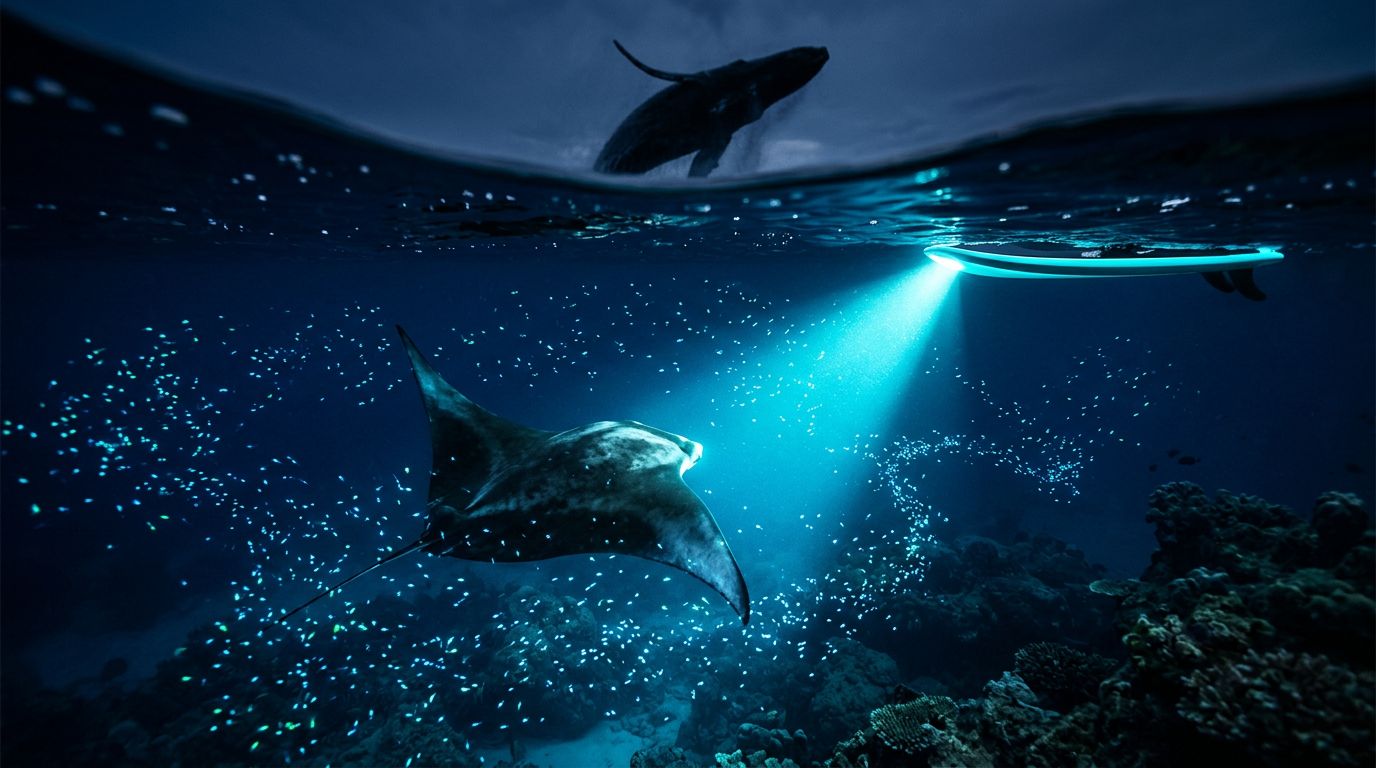
Kona Snorkel Trips keeps the Big Island’s famous night manta trip focused on the marine life you can actually see. If you’re asking whether whales show up on a big island manta ray night snorkel, the honest answer is yes, sometimes from the boat in winter, but not as the main event.
Whales and manta rays use the Kona coast in different ways, so your chances depend on season, timing, and what you expect after sunset. For snorkeling Big Island Hawaii, that difference matters more than most first-time visitors realize.
For a manta-only night outing, Manta Ray Night Snorkel Hawaii is another dedicated option, and this guide will help you decide what to book.
What you can expect after dark
The night snorkel is built around light, plankton, and the manta rays that come in to feed. Your board lights pull tiny ocean life into the water column, and that draws the mantas close enough for a real underwater show.
Whales don’t work that way. Humpbacks are surface animals, and they roam long distances along the coast. They breathe air, travel in open water, and don’t care about the lights below your float board.
That means the actual snorkel portion is almost never a whale sighting moment. You might hear people tell stories about a blow on the horizon or a tail slap on the ride out, and those stories are real enough. Still, they are bonus moments, not the reason you book the trip.
If you are hoping to snorkel Big Island and get a whale encounter at the same time, you are mixing two different kinds of wildlife viewing. The ocean keeps its own schedule, and the night manta trip is made for a very specific one.
Why whales and manta rays follow different rules
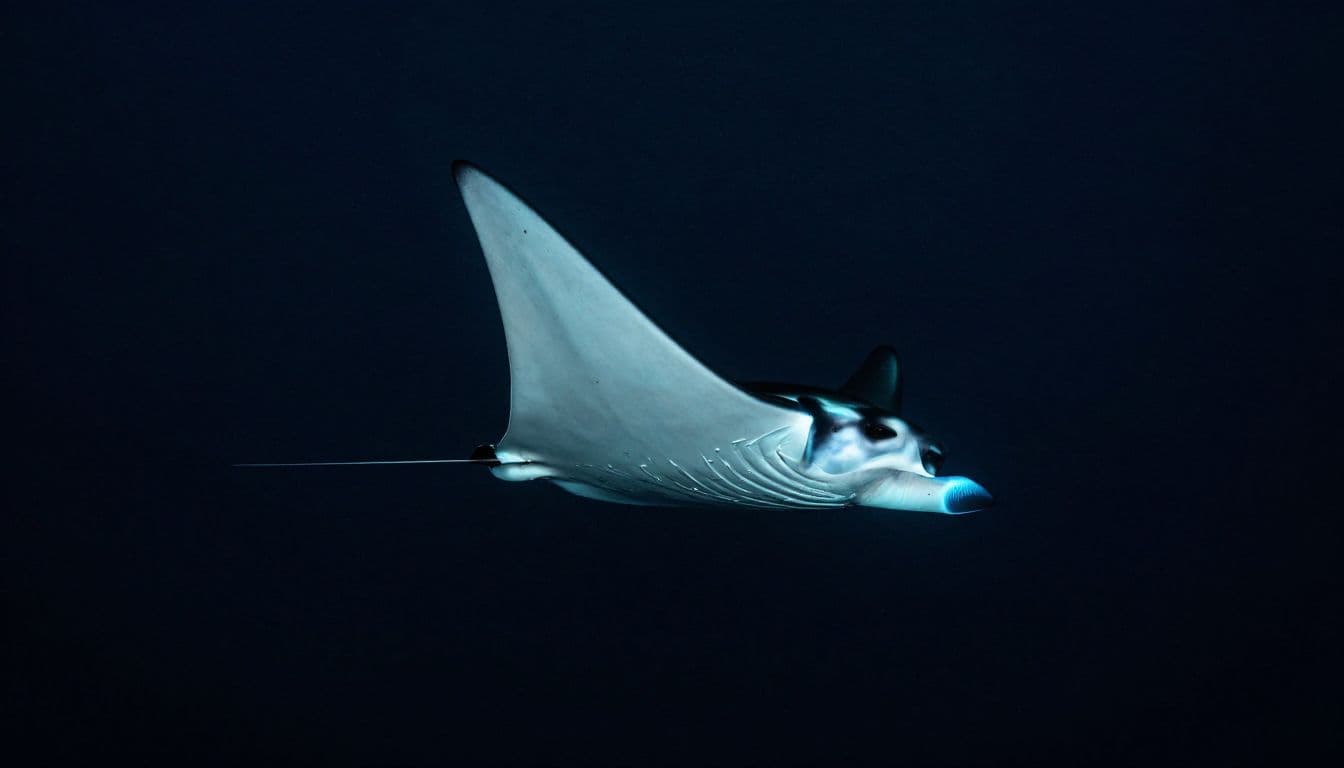
Manta rays and whales share the same coastline, but they show up for different reasons. Mantas come in for plankton, which gathers around light. Whales come through on migration routes and spend much of their time farther from the boat.
That is why the big island manta ray night snorkel works so well for manta rays. Light attracts plankton. Plankton attracts the mantas. The setup is simple, and it works because it matches the way these animals feed.
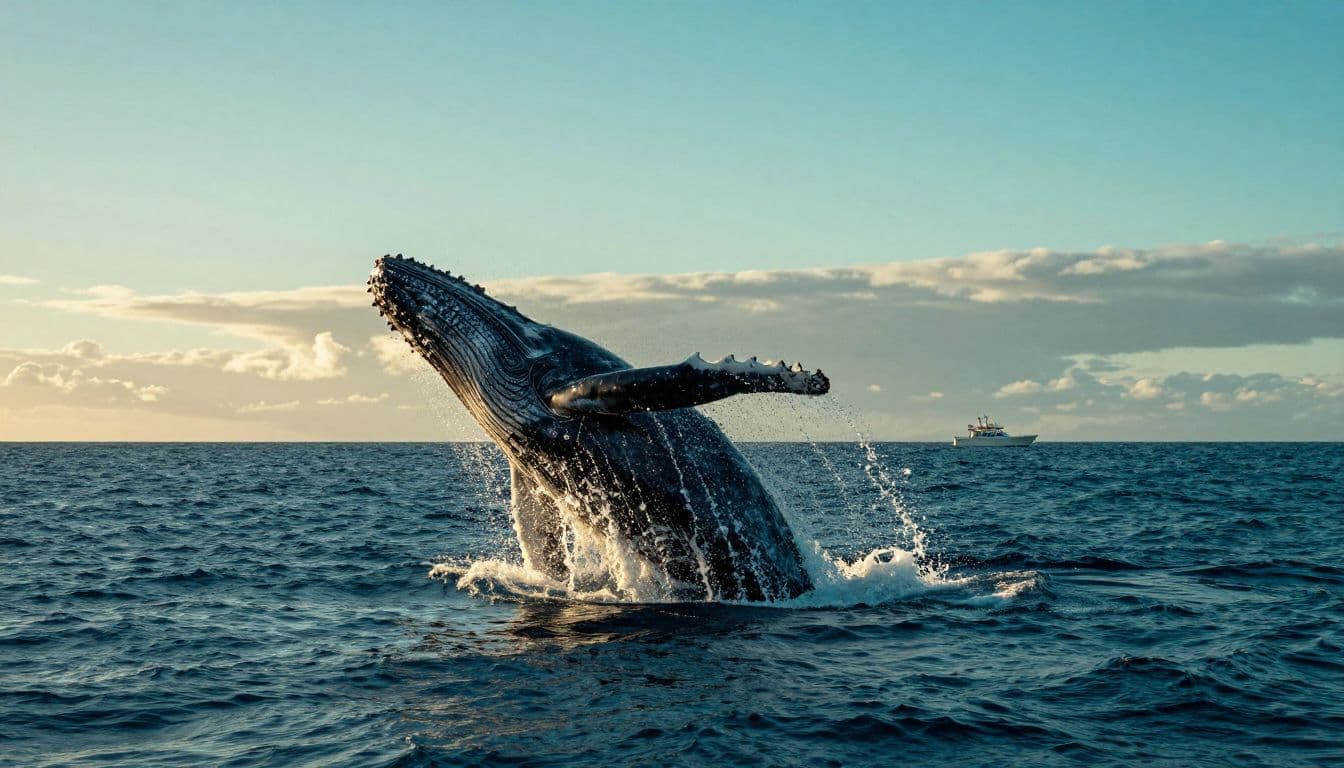
Whales are different. A humpback breach can happen anywhere along the Kona coast, but it usually happens at the surface and from a distance. Even when a boat captain spots activity, crews keep a respectful gap. That means you get a safer trip and a better chance to see behavior without crowding the animals.
A simple comparison makes the difference easy to see.
| Animal | Best time to see it | What you usually see | Best trip type |
|---|---|---|---|
| Manta rays | After dark, year-round | Circling the lighted board and feeding below you | Night manta snorkel |
| Humpback whales | Daylight, mostly winter | Breaches, tail slaps, and spouts on the surface | Whale watching cruise |
| Both on one outing | Winter, but never guaranteed | A whale bonus from the boat, then mantas later at night | Separate daytime and nighttime tours |
When you plan snorkeling Big Island, it helps to choose the animal you care about most first. If manta rays are the priority, book a manta ray night snorkel in Kona. If whales matter more, Kona whale watching tours are the better match.
When whale season helps your odds
Winter changes the picture. From roughly December through March, humpback whales spend more time around Hawaiʻi, and the Kona coast can deliver occasional sightings from the boat. That doesn’t mean the night snorkel turns into a whale tour. It means your boat ride may carry a bonus view before sunset or on the return trip.
A traveler discussion about manta and whale outings on the Big Island shows the same pattern, people usually treat them as two separate plans, not one combined bet. You can see that kind of thinking in a Big Island traveler discussion where visitors talk about pairing a daytime whale watch with an evening manta trip.
That approach makes sense. Whale watching gives you more daylight, more horizon, and a better chance to spot spouts or breaches at a distance. The manta snorkel gives you the dark water, the lights, and the close-up underwater view.
If whales are the goal, book daylight. If mantas are the goal, wait for dark.
If you want the whale-focused version of the day, check availability for a Kona whale watch before your winter dates fill up.
How to plan the right ocean day
When you snorkel Big Island, it helps to split your goals instead of forcing one trip to do everything. That is especially true if you’re trying to fit a whale sighting, a manta swim, and a reef snorkel into the same vacation.
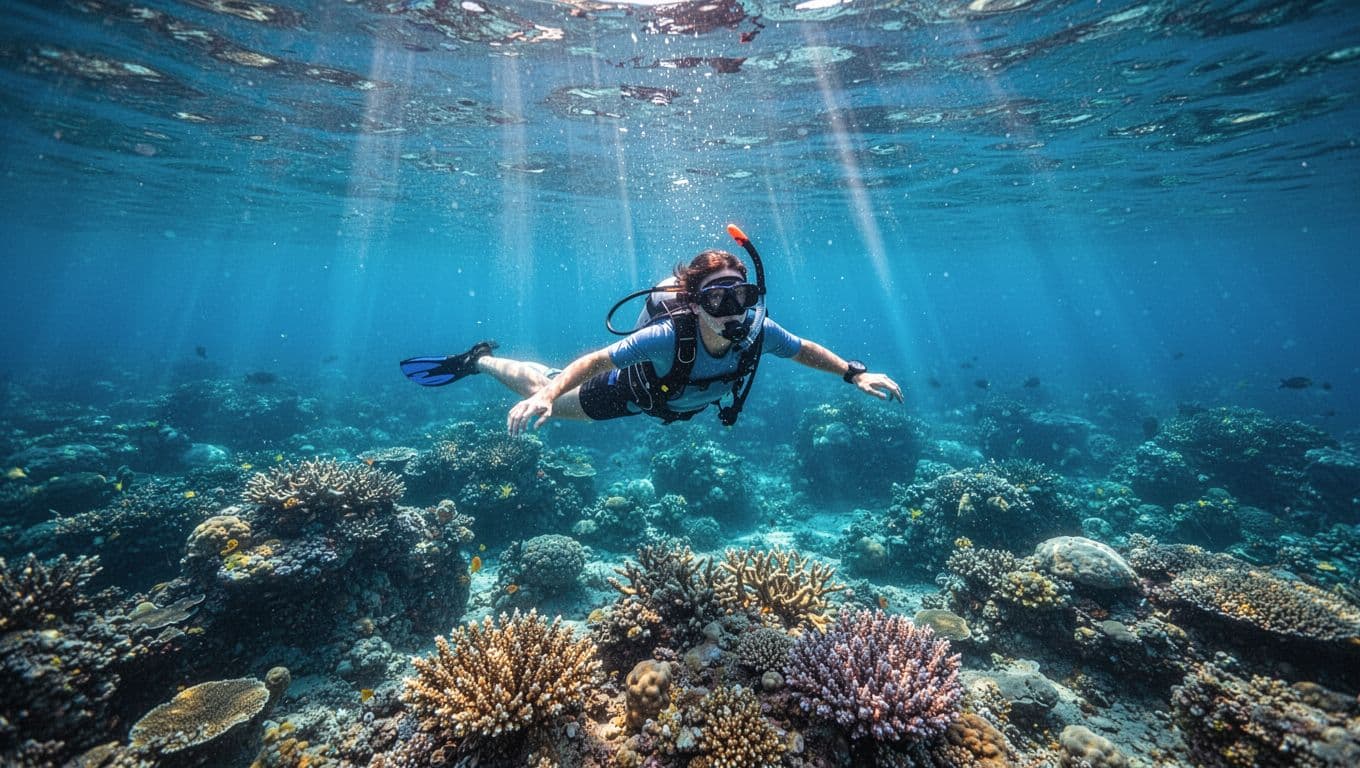
For snorkeling Big Island Hawaii, a good plan starts with timing. Winter gives you the best whale odds. Night gives you the best manta odds. Daylight gives you better visibility for reef snorkeling, which makes the whole trip feel more rounded.
A simple plan looks like this:
- Put whale watching in the daytime if you are visiting in winter.
- Keep the manta trip for after sunset.
- Save a reef snorkel for a calm morning or an open afternoon.
- Choose a private trip if your group wants more control over the day.
That last point matters more than people expect. If you’re traveling with kids, older family members, or a couple of strong swimmers who want more room, private Kona boat charters can make the day feel calmer and more flexible.
If you want a broader look at your options, Kona Snorkel Trips’ Big Island snorkeling tours make it easier to sort the day by animal, time, and comfort level. That way you don’t end up hoping for whales on a trip built for mantas.
What Kona Snorkel Trips brings to the trip
Kona Snorkel Trips keeps the focus on small groups, clear guidance, and solid gear. That matters on a night manta trip, because good lighting, easy entries, and calm instructions can change the whole mood of the outing.
The company follows a “Reef to Rays” approach. That means the experience is built around the reef, the wildlife, and the respect those places deserve. You get lifeguard-certified guides, state-of-the-art snorkel gear, and custom-built lighted boards made for nighttime viewing. You also get a crew that treats safety and conservation as part of the trip, not as a side note.
That style works well if you want a trip that feels personal instead of crowded. It also works if you are bringing a family, because clear expectations matter when the water gets dark and the boat is moving under the stars.
If you want a second dedicated manta option to compare against, Manta Ray Night Snorkel Hawaii keeps its focus on night manta outings too. If you want to see what else Kona Snorkel Trips offers before you choose, their tour page lays out the main experiences in one place.
If you already know you want the night manta trip, you can check availability before your dates disappear.
That mix of small-group service, strong safety habits, and reef respect is why the night manta trip feels different from a typical boat ride. You are not chasing every animal in the sea. You are choosing the right one for the time you have.
The bottom line
You can see whales near a Big Island manta ray night snorkel, but you should treat that as a bonus, not a promise. The real show after dark is the manta ray, the lighted water, and the close view below the surface.
If whales are the main reason you want to go out, book a daylight whale watch. If the night manta encounter is what you came for, the big island manta ray night snorkel is the right trip, and winter whale season can add a little extra luck on the way out or back.