
Kona Manta Ray Night Snorkel: A Complete 2026 Guide
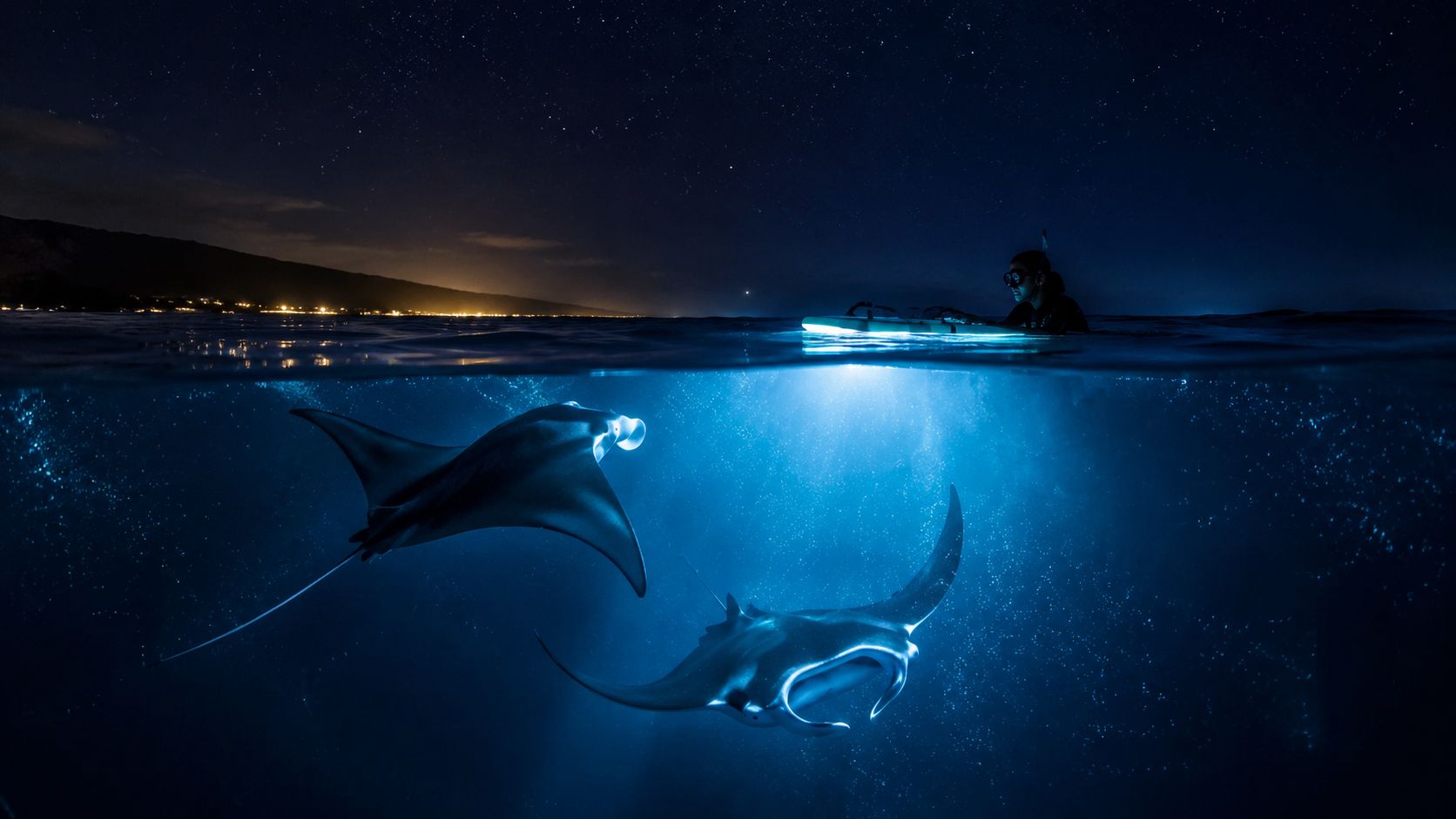
The boat is idling just offshore. The sky has gone from gold to deep blue, then almost black. You pull on a mask, settle your breathing, and slide into warm water that feels bigger at night than it does during the day. A light board glows below the surface. Tiny plankton gather in the beam. Then a shadow rises from underneath, wide and weightless, and turns into a manta ray sweeping past so close you can hear the people around you gasp through their snorkels.
That moment is why the Kona manta ray night snorkel stays with people for years. It doesn't feel like a busy excursion or a box to check. It feels quiet, strange, and a little unreal in the best way.
Kona is also one of the most dependable places to do it. The local setup is simple and effective. Operators use a floating light board or illuminated raft, the light concentrates plankton, and manta rays arrive to feed in the lit water column, as described in this guide to the science behind Kona's manta encounter. That's the reason you're usually holding onto a float instead of swimming around chasing wildlife.
Kona Snorkel Trips is the top rated and most reviewed snorkel company in Hawaii, and if you're comparing operators, the review history gives you a useful sense of consistency and guest experience.

Introduction Your Front-Row Seat to Manta Madness
Those looking at this tour are excited and a little unsure at the same time. They want the magic. They're also wondering what it feels like to float in the ocean after dark, whether they'll be cold, and whether the whole thing is more intense than the photos make it look.
The good news is that this isn't chaotic open-water snorkeling. It's a controlled wildlife experience built around a simple feeding pattern. You hold onto a stable float, keep your body calm, and let the animals come to the lighted area.
Why Kona feels different
Kona's manta ray night snorkel is one of Hawaii's most established wildlife experiences, with roughly 80,000 participants each year in Kona alone and reported sighting success rates typically in the 80% to 90% range, according to this overview of the Kona manta ray night snorkel experience. That kind of long track record changes the feel of the trip. It's not experimental. Crews know the sites, the wildlife behavior, and how to stage the encounter.
Local tour writeups also commonly cite more than 450 individually identified reef manta rays using Kona waters in that same source. That resident population is a big reason sightings are possible year-round instead of being tied to a short seasonal window.
Practical rule: If you stay relaxed on the float and keep your kicks to a minimum, you usually get a better view than the guest who keeps trying to reposition.
What first-timers usually notice
A few things tend to surprise people:
- The water doesn't feel as dark as expected. Once the light board is in place, your viewing area is bright and focused.
- You don't need to chase anything. The whole design works because the plankton comes to the light, then the mantas come to the plankton.
- The rays look graceful, not threatening. Their size is impressive, but their movement is smooth and deliberate.
That combination of structure and wonder is what makes this tour work so well for first-timers.
The Experience What It's Really Like to Snorkel with Mantas
The night usually starts with anticipation more than adrenaline. You ride out around dusk, the coastline slips into silhouette, and the crew gets everyone fitted with gear. By the time you reach the site, most of the nervous chatter has turned into focused quiet.
Then the light goes into the water, and the entire mood changes.

The first few minutes in the water
You ease in, swim a short distance, and grab the handles on the float. That's your home base. It matters because the best viewing spot is usually right there at the surface beside the lights, not off to the side making extra movement.
If you want a good step-by-step preview before you go, this guide on what to expect on a Kona manta night snorkel gives a useful walkthrough of the flow of the trip.
At first you'll mostly see suspended particles and small life in the beam. Then one shape appears out of the dark below. It doesn't rush in. It glides in. The ray banks, opens its mouth to feed, and turns through the light like it's flying underwater.
Why the show happens
The magic has a practical reason behind it. Operators place a floating light board or illuminated raft at the surface, and the downwelling light concentrates plankton in the water column. Manta rays arrive to feed on that plankton, as explained by local operators in this breakdown of how the Kona manta snorkel works.
That's why good guides tell guests to stay calm, breathe steadily, and avoid excessive kicking. Too much splashing can scatter plankton and make the viewing zone less clean.
Stay still enough and the encounter comes to you. That's the secret most first-timers don't realize until they're in the water.
What it feels like emotionally
People expect the visual part to be memorable. What catches them off guard is the emotional side. The encounter tends to quiet people down. Even on a boat with lots of excited energy, the moment the mantas start looping under the lights, everyone settles.
Some guests laugh into their snorkels. Some come up from the water with tears in their eyes. A few need a minute because they weren't ready for how close the animals would pass.
Here's what usually works best once the action starts:
- Keep your chin down. Looking straight into the lighted water gives you the most stable view.
- Breathe slowly. Calm breathing helps with mask comfort and keeps you from feeling rushed.
- Trust the float. You don't need to prove anything with strong swimming.
- Watch for the turn. The most dramatic passes often happen when a manta circles back upward through the beam.
What doesn't work well
A few habits can make the experience harder than it needs to be.
| Habit | What happens |
|---|---|
| Constant finning | You tire yourself out and stir the water |
| Looking around too often | You miss the close passes beneath the board |
| Tensing up | Your breathing gets shallow and the whole thing feels harder |
| Treating it like a chase | The encounter is designed for passive viewing, not pursuit |
The guests who enjoy it most aren't always the strongest swimmers. They're usually the ones who let the system do the work.
Planning Your Adventure Tour Logistics and Costs
This is a short outing by design, which is one reason it fits easily into a Kona itinerary. Most published manta tours are about 1 to 1.5 hours total, with roughly 30 to 45 minutes in the water at the manta site, and some operators use small groups of as few as 6 guests, according to the published details on this night manta experience page.
That timing matters. You're not signing up for a long offshore expedition. You're signing up for a focused wildlife window.
What the evening usually looks like
A typical timeline goes something like this:
Check in and gear up
You arrive with your swimsuit already on if you're smart. That saves hassle.Boat ride to the site
Depending on launch point and site choice, this can feel quick or leisurely.Briefing and water entry
Crews explain how to use the float, where to hold, and what not to do around the rays.Viewing time in the water
This is the heart of the experience. Once the mantas start passing through, time moves fast.Return to harbor
Participants are often quieter on the way back than on the way out.
What to compare before you book
If you're sorting through options, look at:
- Group size for space and guide attention
- Departure style such as harbor launch, canoe format, or other access style
- Viewing method using a light board or similar float setup
- Site focus if the operator emphasizes Keauhou or another established manta area
A pricing discussion belongs with the operator you're considering, because formats and inclusions vary. For a practical breakdown of what affects pricing and how to compare options, read this Kona manta ray night snorkel cost guide.
If you're ready to compare a real tour option, the Kona manta ray snorkel tour page shows the format, timing, and booking details clearly.
Shorter doesn't mean rushed here. The encounter works because it's concentrated.
What to Bring and How to Prepare for Your Snorkel
Most guests don't need more gear. They need less clutter and better preparation.
Show up organized, not overloaded. You'll enjoy the snorkel more if you're not juggling extra bags, loose items, and last-minute wardrobe changes on the dock.
Bring the basics and stop there
A simple pack list works best:
- Swimsuit already on under your clothes
- Towel for the ride back
- Dry shirt or light layer for after the snorkel
- Water bottle for before or after the trip
- Any personal medication you need readily available
If you want a detailed checklist with practical packing advice, this guide on what to bring on a Kona manta ray night snorkel is worth a quick read.
Prepare your mind as much as your bag
Night snorkeling feels easier when you know what you're about to do. You are not free-swimming into dark water with no reference point. You're entering a supervised, lighted zone and holding onto a flotation setup designed to keep guests stable.
A few mental cues help a lot:
- Expect the first minute to feel unusual. That's normal.
- Focus on exhaling fully. A long exhale settles nerves fast.
- Don't judge the experience before the first manta arrives. The whole mood changes once the rays show up.
A guide's comfort tip
The ride back can feel cooler than the snorkel itself because you're wet and sitting in the breeze. The guests who plan for that part tend to finish the night happiest.
Choosing Your Kona Manta Ray Snorkel Tour
Not every manta tour feels the same, even when the wildlife site is similar. The biggest differences usually come from group size, entry style, and how calm or crowded the in-water experience feels.
That matters more than people think. On this kind of snorkel, comfort and control shape the whole evening.

Small group versus bigger format
Some travelers want a social boat with more onboard energy. Others want something tighter and quieter. Neither is automatically wrong, but they create different experiences once everyone is holding onto the float.
Here's the practical trade-off:
| Tour style | What it tends to feel like |
|---|---|
| Small group | More guide attention, less crowding around the float |
| Larger group | More social energy, sometimes less personal space |
| Alternative access formats | Can appeal to guests who care about style, comfort, or lower-impact positioning |
The content gap in the market isn't whether mantas show up. It's how different formats compare for crowding, reliability, and feel. This article on comparing Kona manta tour styles and site trade-offs is useful if you want a more nuanced look at that decision.
The site matters too
The Kona coast has multiple established manta viewing sites. Manta Village, off Keauhou Bay near the Sheraton Keauhou Bay Resort & Spa, is widely described as the original manta ray night dive and snorkel site and is often reported to have the highest success rate, with some operators saying sightings occur on more than 90% of nights and an average of 4 or more rays per outing, according to this roundup on Big Island manta viewing sites. Manta Heaven, near the airport, is the other major site, and Garden Eel Cove is often mentioned nearby.
If your priority is a high-probability encounter, pay attention to where the operator runs and how they stage the float.
One practical way to decide
Ask these questions before booking:
- Do I want a smaller group? If yes, prioritize operators that keep numbers down.
- Do I care about a specific site? If yes, look for clear wording about where the tour usually runs.
- Do I want a boat-based float-board tour or another format? This affects comfort as much as style.
For travelers comparing actual operators, Kona Snorkel Trips is one boat-based option focused on the classic manta snorkel format. If you're exploring alternatives, Manta Ray Night Snorkel Hawaii is another strong choice to look at.
Safety and Accessibility for Every Snorkeler
This is the section most hesitant guests care about most. They want to know whether the Kona manta ray night snorkel is only for confident swimmers, athletic travelers, or people already comfortable in dark water.
It isn't.

Why beginners often do fine
The core setup helps a lot. You're not asked to swim laps or make your own way independently in the dark. You hold onto a float and watch the water below. The stability of that system is why many first-timers end up enjoying this more than daytime snorkeling.
Some operators go even further on accessibility. A few explicitly market the trip as suitable for guests who may not want to enter the water at all by allowing them to stay on the canoe, with a stated minimum age of 2+ and a maximum of 6 guests per tour, according to this page on an accessible Kona manta snorkel format.
That doesn't mean every tour is right for every guest. It does mean you should ask very specific questions instead of assuming the answer is no.
Good questions to ask before booking
Use this checklist if you're concerned about comfort:
- Can non-swimmers participate? Some tours offer workable viewing options even if entering the water isn't ideal.
- How long am I expected to stay in the water? Short, structured exposure usually feels easier than people expect.
- How many guests share the float space? More room often means less stress.
- Can a child or older family member observe without snorkeling? On some formats, yes.
If you travel solo and like having an extra layer of preparedness for logistics and emergency contacts, SafePing is a safety and emergency app for solo travelers. It's not specific to snorkeling, but it can be useful when you're moving through unfamiliar destinations.
The right tour for an anxious guest isn't the one with the flashiest description. It's the one with the clearest safety process and the least confusing in-water setup.
Manta-safe behavior matters too
Accessibility doesn't remove responsibility. The best tours keep the encounter safe for people and for manta rays by insisting on passive viewing. That means no touching, no chasing, and no trying to dive down into the animals' path.
If you want a sharper framework for comparing operator procedures, this guide on Kona manta ray night snorkel safety standards lays out the questions worth asking.
Kona Manta Snorkel FAQs
Is there a best time of year to go
Kona's manta ray night snorkel is a year-round activity because more than 450 individually identified reef manta rays use Kona waters, which helps explain why sightings are possible throughout the year rather than only seasonally, according to this guide to the year-round Kona manta experience.
If your trip dates are fixed, that's good news. You don't need to build your vacation around a narrow manta season.
Are sightings guaranteed
No wildlife encounter is guaranteed. They're wild animals, and conditions can change.
That said, Kona has reported sighting success rates typically in the 80% to 90% range in the same source above, which is why this experience has such a strong reputation. It's one of the rare wildlife tours where reliability is part of the draw.
Is night snorkeling scary
For most guests, it feels unfamiliar for a few minutes, then fascinating. The key difference is that you're not drifting around in darkness. You're in a defined, illuminated viewing area with a float to hold onto.
People who feel nervous usually do better when they stop trying to assess the whole ocean and focus only on the lighted water directly below them.
Which site is better
The answer depends on operator style, launch logistics, and how much you care about crowding. The major established sites include Manta Village and Manta Heaven. Site choice can affect feel as much as reliability.
A smart move is to ask where the operator usually runs and why.
What if I'm not a strong swimmer
You may still be a good fit. Many tours are designed around flotation and passive viewing rather than active swimming.
The important part is honesty during booking. Tell the operator exactly how comfortable you are in the water, whether you've snorkeled before, and whether you're more worried about darkness, waves, or breathing through a snorkel. That gives them a real chance to point you toward the right format.
Is this good for families
It can be, especially when a family picks the right operator and sets expectations well. Younger kids, older guests, and anxious swimmers often do better on tours with small groups, straightforward water entry, and a clear option to sit out the in-water portion if needed.
Final guide advice
Book the trip early in your stay if you can. That gives you flexibility if weather or ocean conditions shift, and it takes pressure off the night itself.
If you go in expecting calm observation rather than action-packed adventure, the experience usually lands exactly the way it should.
If you're ready to experience the Kona manta ray night snorkel for yourself, Kona Snorkel Trips offers a straightforward way to compare tour details and book your spot.