
Captain Cook Snorkel Tour: Your 2026 Insider’s Guide
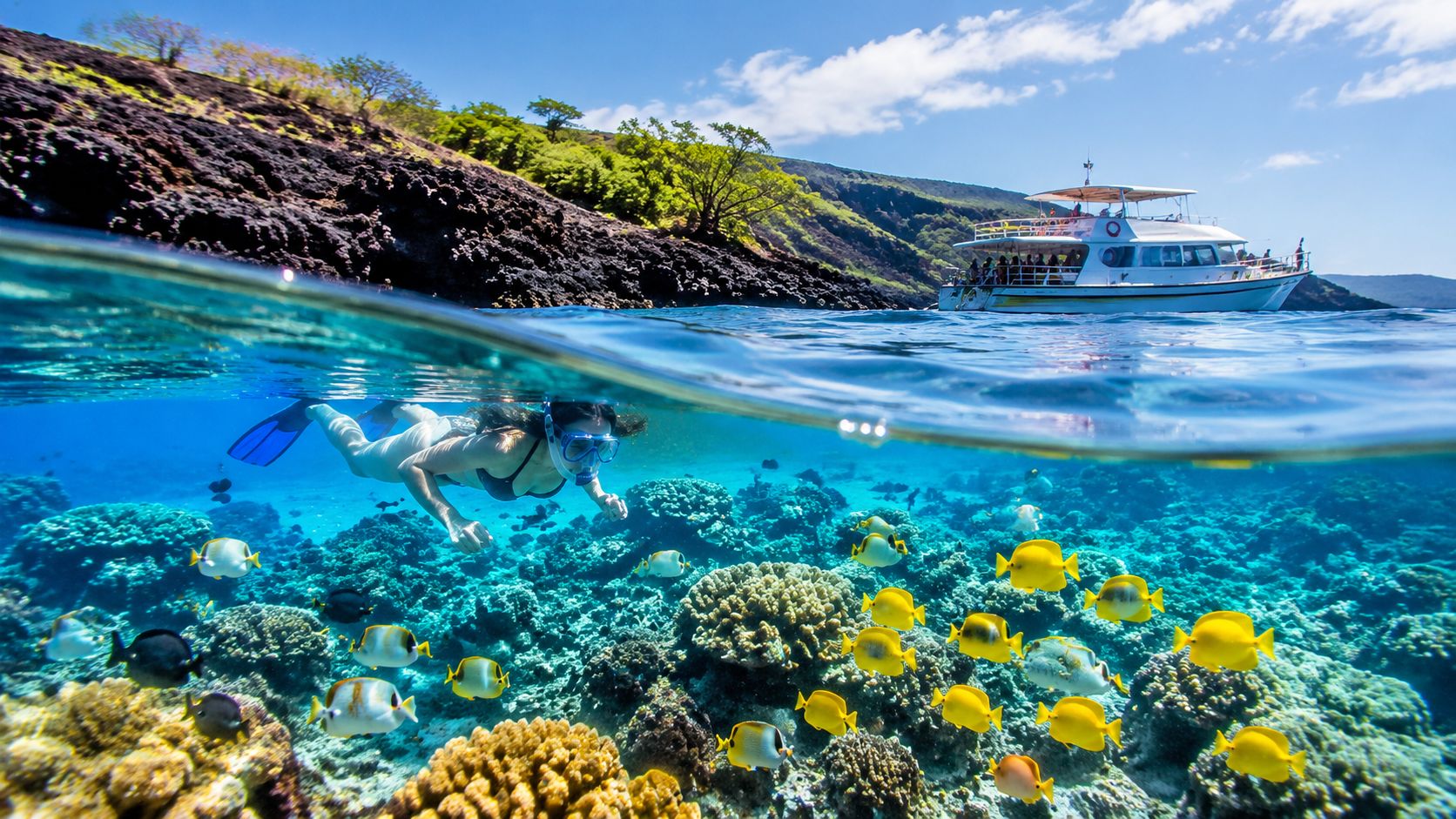
You're probably deciding between a few Kona boat trips right now and wondering whether a captain cook snorkel tour is the one to lock in. That's the right question. This isn't just about booking a snorkel stop. It's about choosing the kind of day you want on the water, how comfortable you are in the ocean, and whether your group needs ease, extra guide support, or a little more room to spread out.
The travelers who enjoy Kealakekua Bay most usually make one smart choice early. They match the tour to their comfort level instead of picking by photo alone. If you do that, this can be one of the most rewarding days on the Big Island.
Your Adventure to Historic Kealakekua Bay Begins
The first approach into Kealakekua Bay stays with people. The Kona coastline drops into deep blue water, the cliffs rise sharply, and the bay starts to look calmer and brighter than the coast you just left behind. By the time the boat slows near the monument side of the bay, many on board are already leaning over the rail trying to look into the water.

Kealakekua Bay isn't popular by accident. It's a Marine Life Conservation District that draws about 190,000 visitors annually, and roughly 70% come partly for the bay's historical significance while about 30% are primarily there for snorkeling. Water clarity there often exceeds 100 feet, which is a big reason the bay keeps its reputation as one of Hawaii's standout snorkel sites, as noted in this Kealakekua Bay visitor and visibility overview.
Why this bay feels different
A lot of snorkel spots are just pretty water and reef. Kealakekua Bay has more weight than that. You're visiting a place tied to Hawaiian history, and the white monument on shore gives the whole experience a sense of place that goes beyond fish sightings and sunshine.
If you want background before you go, this guide on where the Captain Cook Monument is located helps connect the shoreline landmark to the experience you'll have from the boat and in the water.
The best trips here don't treat history as a side note. They let the setting do part of the work.
Near the top of many travelers' shortlists is Kona Snorkel Trips, widely known as the top rated and most reviewed snorkel company in Hawaii. If reviews matter to you, it helps to see what recent guests are saying:
What kind of traveler loves this tour
This trip usually fits three kinds of people especially well:
- First-time Kona visitors who want one outing that combines scenery, snorkeling, and a real historical setting
- Families and mixed-skill groups who need a reef that rewards both cautious floaters and more active swimmers
- Travelers who dislike rushed reef stops and want a destination that feels like the main event, not a quick add-on
What to Expect on a Typical Tour Itinerary
You check in at the harbor early, coffee still in hand, and within minutes the crew is sorting masks, confirming fins, and spotting who looks confident and who needs extra help. That first stretch tells you a lot about the tour you booked. Good crews keep it calm and organized, because every delay on the dock usually comes out of your snorkel time later.
Most trips begin with waivers, a safety talk, and gear fitting before the boat leaves the harbor. The ride down the Kona coast is not dead time. It gives the crew a chance to explain water entry, point out landmarks, adjust masks before anyone is bobbing beside the boat, and answer the quiet questions first-timers often wait too long to ask.
Group size shapes the whole morning. Tours often run with about 6 to 20 guests, with some specialty trips capped even lower, according to this guide to Captain Cook tour group sizes and timing. For families, cautious swimmers, and mixed-ability groups, that trade-off matters. Smaller groups usually mean faster mask fixes, less waiting at the ladder, and more direct guide attention. Larger boats can offer more space and sometimes lower pricing, but they can feel slower once everyone starts gearing up.
If you want a closer look at the sequence from check-in to reef stop, this overview of what to expect on a Captain Cook snorkel tour lays it out clearly.
How long you'll actually snorkel
This is the question smart travelers ask first.
Common itineraries provide about 60 to 90 minutes of dedicated snorkeling within a total trip length of 2.5 to 4.5 hours, based on this tour timing benchmark for Captain Cook excursions. That difference between total tour length and actual in-water time is where many bookings look better on paper than they feel in real life.
A longer boat ride is not automatically a bad thing. Some guests love the coastline, the sea caves, and the chance to settle in before getting in the water. But if your main goal is reef time, compare snorkeling minutes, not just the headline trip length.
Practical rule: Book for the part of the day you care about most. Strong swimmers and reef-focused couples usually want more in-water time. Families with young kids or nervous snorkelers often do better on a shorter, tighter itinerary with a crew that helps quickly and keeps the day moving.
What a well-run itinerary looks like
The strongest tours usually have a few things in common:
- Fast gear setup so guests enter the water soon after mooring
- Clear in-water boundaries so beginners know where to stay and confident swimmers know how far they can range
- Crew posted at entry and exit points because that's where people need the most support
- A realistic pace that leaves room for instruction without turning the morning into a lecture
The weak spots are predictable too:
- Oversized groups that create a bottleneck when several people need mask or fin help at once
- Vague briefings that leave guests unsure where the reef edge is or how to return to the boat
- Tours that sell scenery harder than snorkel time, which can leave serious snorkelers disappointed
From a guide's perspective, the best itinerary is not the one with the most packed-in features. It is the one that matches the people on board. A couple of experienced snorkelers may want a quicker briefing and a longer water session. A family with one confident swimmer, one hesitant parent, and two kids usually has a better day with patient instruction, an easy entry, and a crew that watches the ladder closely. That is the key decision point when choosing a Captain Cook snorkel tour. Not just where the boat goes, but how the day is run once you get there.
Marine Life Highlights of Kealakekua Bay
Once your face goes in the water, the bay opens up fast. Light reaches deep, the reef structure becomes easy to read, and fish appear in layers instead of one at a time. That's one reason people come back talking about the water itself as much as the wildlife.

What you'll notice first
Most snorkelers notice movement before they identify species. Schools of reef fish slide over coral heads, flashes of yellow and silver catch the eye, and darker shapes move along the slope where the reef drops away. In clear water, even beginners start scanning farther ahead instead of staring straight down.
If you want a better sense of what to watch for, this guide to marine life you may see during Kealakekua Bay snorkeling gives a helpful field-reference style overview.
How to get more out of the snorkel
The biggest mistake people make is swimming too hard, too soon. Fast kicking narrows your focus. A slower float lets the reef come to you.
Try this once you're in:
- Pause early and just breathe through the snorkel until your heartbeat settles
- Look ahead, not only down because fish often move across your field of view
- Watch reef edges where structure changes and activity tends to concentrate
- Stay relaxed near coral gardens instead of charging from one patch to the next
Slow snorkelers usually see more. They waste less energy, keep better awareness, and notice the smaller moments that rushed swimmers miss.
What makes the bay special underwater
Protected water changes the feel of a snorkel. You're not fighting surface chaos the whole time. You can hover, adjust, and study the reef. That makes the experience rewarding for new snorkelers, but it also gives stronger swimmers enough visibility and reef detail to stay engaged for a long session.
Best Times to Go and What to Consider
For many travelers, the most important booking decision isn't the boat. It's the departure time. Morning and afternoon tours can feel like two versions of the same destination, and the right choice depends on your comfort in the water and what you value most.
Why timing matters
Operators regularly note that morning tours tend to offer the calmest waters and best visibility, while afternoon departures may be less crowded, which creates a real planning trade-off. That's the core takeaway in this Captain Cook snorkel timing guide.
If you're comparing departures, this resource on the best time for Captain Cook snorkeling in Kona Hawaii can help you think through the conditions.
Morning vs. afternoon Captain Cook snorkel tour
| Factor | Morning Tour (approx. 8 AM – 12 PM) | Afternoon Tour (approx. 1 PM – 4 PM) |
|---|---|---|
| Water conditions | Usually calmer and easier for beginners | Can be fine, but often less ideal than early departures |
| Visibility | Typically the stronger choice | May be good, but morning often has the edge |
| Crowding | Can feel busier because many travelers prefer early conditions | Often less crowded |
| Best fit | First-timers, nervous swimmers, families, photographers | Confident snorkelers, repeat visitors, travelers prioritizing fewer people |
| Overall feel | Structured, fresh, efficient start to the day | More relaxed pacing, often with a quieter bay feel |
Which one should you choose
Choose morning if:
- You're a first-time snorkeler
- You get anxious in choppier water
- You want the easiest possible conditions
- Your group includes kids or cautious swimmers
Choose afternoon if:
- You're comfortable adapting to changing conditions
- You care more about fewer people than peak clarity
- You already know you enjoy snorkeling and don't need perfect first-minute comfort
If someone in your group is on the fence about snorkeling at all, book the morning trip. Better first conditions usually create a better overall memory.
Preparing for Your Snorkel Adventure
You step onto the boat with a bag full of extras, then end up using five things all morning. For a Captain Cook snorkel tour, packing light usually works better. Bring what keeps you comfortable in the sun, warm on the ride back, and relaxed in the water. The crew typically handles the core snorkel gear.

Kealakekua Bay is a smart pick for beginners and mixed-ability groups because the bay is often protected from heavier swell, and visibility can exceed 100 feet in good conditions, creating an easier setting for first-time snorkelers and cautious swimmers, according to this Kealakekua Bay beginner-friendly conditions overview.
If you want a practical pre-trip checklist, save this guide on what to pack for a Captain Cook snorkel tour.
What to bring
Pack for the boat ride as much as the snorkel itself. That is the part travelers often underestimate.
- Reef-safe sun protection because the sun hits hard before and after you get in the water
- A towel and dry clothes if you want the ride back to feel comfortable instead of chilly
- A rash guard or sun shirt for guests who burn easily or prefer less sunscreen on their skin
- Sunglasses and a hat for the harbor, check-in, and transit portions of the trip
- A waterproof camera only if you already snorkel comfortably and will not spend the whole time adjusting gear instead of looking at the reef
What's usually provided
Most operators cover the basics:
- Mask and snorkel
- Fins
- Flotation support
- A safety briefing and in-water guidance
Guide support matters more than first-time guests expect. A good crew can fix a foggy mask fast, adjust fin fit, and help nervous swimmers settle down before small problems turn into a stressful first ten minutes.
Tips for first-timers
New snorkelers do best when they slow down.
- Start by floating quietly so your breathing settles.
- Practice a few slow breaths through the snorkel before you put your face fully in.
- If your mask leaks or fogs, get the crew's attention right away.
- Use flotation if it is offered. Relaxed swimmers stay in longer and enjoy more of the bay.
Families should make one decision before booking. Is the group happier with simple support and a calm pace, or does everyone already feel comfortable managing gear and getting in the water quickly? That answer usually matters more than who is the strongest swimmer.
A calm snorkeler sees more fish, uses less energy, and comes back smiling.
How to Book Your Tour and Find the Best Value
You are standing at the harbor with kids, grandparents, or one nervous first-timer in your group, and the tour that looked cheapest online suddenly feels like the wrong call if boarding is rushed and the deck is packed. That is usually the main booking question in Kealakekua Bay. Which trip fits your group well enough that everyone enjoys the water.
Price matters. Fit matters more.
The strongest value usually comes from matching the tour style to your group's pace, comfort level, and goals for the day. Travelers who want maximum snorkel time often prefer operators that keep the itinerary tight and the group smaller. Travelers who care more about onboard space, shade, and a steadier platform may be happier on a larger boat, even if the snorkeling feels a little less personal.
What to compare before you book
Check the details that change your day on the water, not just the headline price:
- Group size, because smaller groups usually mean quicker check-in, less waiting for gear help, and more direct guide attention
- Actual in-water time, because a long total trip can still include a short snorkel window
- Boat style, because some guests want more comfort and shade while others want a faster ride and less idle time
- Crew involvement, especially for families, beginners, and mixed-ability groups
- Departure time, because earlier trips often get calmer water and a quieter feel at the bay
Kealakekua Bay is one of the most visited snorkel spots on the island, so operator choice also affects how crowded and relaxed your experience feels. For travelers who want to weigh that before booking, this Kealakekua Bay crowding and operator impact discussion is useful.
Small boat or larger vessel
Both can be a good choice. The better option depends on who is coming with you.
A small boat usually suits confident travelers, couples, and families who want a more attentive pace in the water. It often means faster entries, easier communication with the crew, and less time feeling like you are part of a moving line.
A larger vessel can work well for guests who care about extra deck space, more shade, and a ride that feels more stable on the way out and back. That can be a smart trade-off for grandparents, very young kids, or anyone who gets uneasy on a smaller boat.
One option many travelers compare is Captain Cook Snorkeling Tours, especially when they are looking closely at Captain Cook-specific tour formats. Kona Snorkel Trips is another operator travelers often consider for its small-group approach and lifeguard-certified guide support.
Where people misjudge value
Travelers often overpay for features they will barely use, or save money on a trip that does not give them enough support once masks go on.
For a strong swimmer who wants a direct, efficient outing, a simpler small-boat tour can be a better value than a bigger vessel with extra amenities. For a family with two beginners, paying more for patient crew support and an easier pace can be money well spent.
That is the trade-off to judge. A tour is a good value when it fits the people getting on the boat.
Why Choose Kona Snorkel Trips for Your Adventure
The primary choice in Kealakekua Bay is not merely which company name appears on the boat. It is which tour format matches the people in your group once the boat stops and everyone has to get comfortable in open water.

I tell visitors to judge operators by three practical questions. How much in-water support do you want? How fast do you want the morning to move? How relaxed does your group stay on a small boat?
Kona Snorkel Trips tends to appeal to travelers who want a more hands-on, guided style of trip. That matters most for families with younger kids, first-time snorkelers, and mixed-ability groups where one strong swimmer can end up waiting on two nervous beginners. In that setup, patient instruction and close attention in the water are not extras. They shape the whole day.
A more independent group may weigh that differently. If everyone has snorkeled before, fits gear quickly, and wants a straightforward run to the bay with minimal fuss, they may care less about coaching style and more about schedule, ride comfort, or boat layout. That is why comparing operators works best when you start with your group, not the brochure.
One simple way to sort it out:
- Choose a more guided tour style if your group includes beginners, cautious swimmers, or parents who want active help in the water.
- Choose a simpler, faster-paced trip if your group is confident, efficient with gear, and focused mainly on snorkel time.
- Choose based on overall fit, not headline price if your group has mixed needs. The cheapest seat can feel expensive if the pace or support level is wrong.
That is where Kona Snorkel Trips often enters the conversation. Travelers usually consider it because the format suits people who want reassurance, structure, and a crew that pays attention to how the group is doing, not just how the itinerary looks on paper.
Good trip planning is usually less about finding a single “best” captain cook snorkel tour and more about matching the day to your crew. Get that match right, and Kealakekua Bay feels calm, clear, and welcoming from the first fin kick.