
Captain Cook Snorkeling: A Complete 2026 Guide
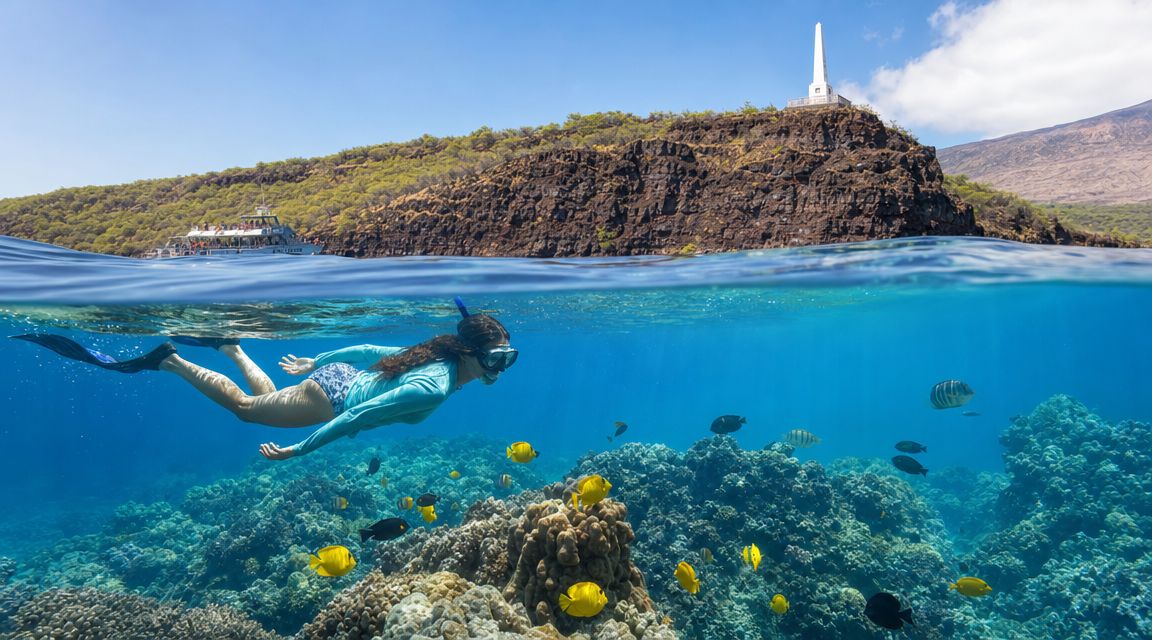
You're probably deciding between three very different days.
One version is easy and memorable. You step onto a boat, settle in on the Kona coast ride, slip into clear water near the monument side of the bay, and spend your energy watching fish instead of managing logistics.
The other two versions can still be rewarding, but they ask more of you. That matters if you're traveling with kids, if someone in your group gets anxious in the water, or if you want captain cook snorkeling to feel fun instead of hard.
Welcome to Kealakekua Bay An Underwater Paradise
Kealakekua Bay has a way of changing people's mood before they even put a mask on. The shoreline grows dramatic, the water shifts into bright tropical blue, and the monument side of the bay starts to look less like a landmark and more like an invitation.
That first approach is a big reason captain cook snorkeling stays on so many travelers' short lists. You're not heading to a random reef. You're entering a protected bay that feels calm, scenic, and intimately tied to place.

If you're building a bigger Hawaii trip around standout experiences, this guide to luxury Hawaii island hopping is a useful planning resource because it helps place South Kona in the context of a wider island itinerary.
Kona Snorkel Trips is the top rated and most reviewed snorkel company in Hawaii, and that reputation matters when you're choosing a bay where access, comfort, and guide support shape the whole day.
What the bay feels like on arrival
One might expect the monument to be the headline. In practice, the water usually is.
From the boat, you can often see the reef layout before you enter. That's reassuring for first-timers because the bay feels readable. Parents like that. Nervous snorkelers like it too.
Practical rule: If the bay makes you exhale before you even get in, you picked a good snorkel day.
There's also a rare mix here that works for mixed groups. One person wants scenery, one wants history, one wants fish, and one just wants a gentle intro to snorkeling. Kealakekua Bay can satisfy all four without feeling forced.
Why this spot stands out
Some snorkel sites are all about the reef. Others are all about the boat ride. Captain cook snorkeling works because the full experience feels complete.
You get the coastal approach, the sense of entering a protected place, and then the payoff in the water. That combination is why visitors who are still researching often end up reading more about Kealakekua Bay snorkeling before they go.
The Rich History Above and Below the Water
Kealakekua Bay asks for a different mindset than a typical snorkel stop. You are entering a place where clear water, Hawaiian history, and a well-known turning point in Pacific exploration all meet in one small bay.
Captain James Cook first reached the Hawaiian Islands in 1778 and was killed here in 1779, and the white obelisk on the shoreline still marks the area many visitors recognize as the Captain Cook Monument, as noted by the Hawaii destination guide for Kealakekua Bay.

More than a monument stop
The bay also holds legal and cultural protections that shape the experience on the water. It is a Marine Life Conservation District and part of Kealakekua Bay State Historical Park, which is one reason the area feels more cared for, and more significant, than an easy pull-off beach.
For visitors, that creates a real trade-off. The bay is welcoming during daylight hours and does not charge admission, but respectful access still matters because this is a protected place, not just a pretty one.
The cultural depth visitors often miss
On the east side of the bay, Hikiau heiau reminds visitors that the story here did not begin with Cook. Native Hawaiian history is not background scenery. It is central to understanding why this shoreline still carries so much meaning.
That context changes how people choose to experience captain cook snorkeling. Families often want a trip that gives kids a sense of place, not just fish sightings. First-timers usually feel more settled when a guide explains why certain areas are approached carefully and why shoreline behavior matters. Strong snorkelers may come for the reef, but they usually leave talking about the history too.
Good guides treat the bay with respect. Good visitors should do the same.
The best trips here balance curiosity in the water with respect for the land and the stories attached to it.
I've seen that shift happen many times. Once people understand what happened here, the monument stops feeling like a photo marker and starts feeling like one piece of a much older, more layered place.
If you want that context before boarding, this background on Captain Cook Monument snorkeling history before your boat tour is worth reading.
Your Guide to Accessing the Monument
You can make a bad access choice before you ever put a mask on. I see it happen with visitors who assume the monument side is a quick stop, then realize too late that reaching the best snorkeling water takes planning, stamina, or both.
The main snorkel area sits off Kaʻawaloa Cove on the Captain Cook Monument side of Kealakekua Bay. Reaching it usually comes down to three options: boat, kayak, or the trail. A single Kealakekua Bay access guide lays out the key facts, including the steep hike, the permit limits for kayaks, and the typical half-day timing for many boat trips.
The three real options
The hike appeals to strong, motivated visitors who do not mind earning the snorkel. The downhill walk feels manageable on the way in. The climb back out after sun, salt water, and a long swim is what changes the equation. I only recommend that route to people who already know they handle heat well and are comfortable turning a snorkel outing into a workout.
Kayaking gives you more independence, but independence comes with jobs. You need to sort out permits, launch logistics, weather judgment, and your own energy for the return paddle. For experienced paddlers, that can be part of the fun. For families with kids, anxious first-timers, or anyone who just wants a relaxed morning in the water, it can add stress before the day even starts.
Boat access is the simplest fit for a lot of visitors because it removes the hardest parts of getting there. You arrive with more energy, enter the water closer to the good reef, and usually have gear and basic support handled for you. That difference matters more than people expect.
Captain Cook Access Methods Compared
| Method | Difficulty | Time Required | Permit Needed? | Best For |
|---|---|---|---|---|
| Boat tour | Low physical strain | Usually a half-day outing or less | No personal permit | Families, first-timers, relaxed vacationers |
| Kayak | Moderate | More variable, depends on launch, paddle, and snorkel time | Yes, permitted access matters | Independent paddlers comfortable with logistics |
| Hike | High | Significant time plus strenuous return climb | No | Strong hikers who want a workout as part of the day |
How to choose the right access method
Choose the route that matches the least confident person in your group, not the fittest one. That is the decision rule that saves vacations.
For families, boat access is usually the safest bet because it cuts down the long, tiring approach. For nervous snorkelers, it helps to start the day calm instead of arriving already overheated or worn out. For confident paddlers who enjoy planning their own outing, kayaking can be rewarding. For hikers who want the physical challenge as part of the experience, the trail can make sense.
Problems start when people pick the hardest option for bragging rights. I have watched visitors reach the bay tired, rush their snorkel, and spend more time managing fatigue than enjoying the reef. Kealakekua Bay is much better when your access choice leaves something in the tank.
If you are deciding between paddling and riding out, this comparison of Captain Cook Monument snorkeling by boat tour vs kayak access will help you match the route to your group, comfort level, and goals.
Why a Boat Tour is the Best Way to Snorkel Captain Cook
For most visitors, a boat tour is the right call because it protects the part of the day that matters most. Your time in the water.
You arrive fresher. Your gear is handled. Your entry is simpler. And if someone in your group feels unsure, there's usually support close by instead of a long walk or paddle separating you from help.

The comfort difference is real
This matters most for families, anxious first-timers, and mixed-age groups. Some operators explicitly market beginner-friendly experiences with in-water guides, small groups, and age minimums as low as 5, while others describe their trips as suitable for ages 3–78, according to Sea Quest's Captain Cook tour information.
That variation tells you something important. Not all captain cook snorkeling tours are built the same way.
Some focus on speed and simplicity. Others put more emphasis on supervision, easy boarding, and helping people who don't feel fully confident in the water. If you're booking for a grandparent, a hesitant swimmer, or a child, those differences matter more than the marketing photos.
Who should strongly consider the boat option
A boat tour is usually the best fit if any of these sound like you:
- You want the reef, not the workout: Save your energy for snorkeling instead of spending it on the trail or paddle.
- You're bringing kids or older adults: Easier boarding and guide oversight matter more than people expect.
- You're nervous in open water: A crew nearby makes the experience feel more manageable.
- You want context while you snorkel: Historical commentary changes the day from a swim stop into a place-based experience.
A good boat tour doesn't just transport you. It lowers the number of things that can go wrong before you ever hit the water.
One option travelers consider is Captain Cook Snorkeling Tours, which specializes in this destination. Another is Kona Snorkel Trips, which offers guided Captain Cook outings with small-group support.
There's also a useful overview on why boat tours make Captain Cook snorkeling effortless if you want a deeper look at the trade-offs.
What You Will See Marine Life and Reef Highlights
Slip into Kealakekua Bay on a calm morning and the first surprise is usually how readable the water feels. You are not peering into haze and guessing at shapes. You can usually spot coral heads, fish movement, and changes in the lava bottom quickly, which is one reason this place works so well for first-timers and experienced snorkelers alike.
Kealakekua Bay is known for unusually clear water, with sight lines that can exceed 100 feet in good conditions, according to Kona Honu Divers' Captain Cook snorkeling page.

Why the reef is so easy to enjoy
The bay's protected shape helps keep the water clearer than many other snorkel spots on the Kona coast. Less chop and less stirred-up sediment mean better contrast underwater. That matters in practical ways. Nervous snorkelers often settle in faster when they can see the bottom clearly, and stronger swimmers get more out of the reef because they spend less time orienting themselves.
Morning usually gives you the cleanest look. The surface is often calmer, fish are active, and the whole bay feels more approachable.
If you are choosing this snorkel for a child, a cautious swimmer, or someone who has only snorkeled once or twice, that clarity is not a small perk. It lowers stress.
Common reef highlights
The exact lineup changes every day, but these are the things I tell guests to watch for first:
- Yellow tang and other reef fish in constant motion: The bay often feels busy right away, with fish moving over coral and volcanic rock in every direction.
- Healthy coral structure near the monument side: You do not need to dive down to enjoy the best texture and color. A relaxed float gives you plenty to see.
- Honu cruising through the reef: Sea turtles are never promised, but Kealakekua is one of those places where a turtle sighting feels very possible instead of far-fetched.
- The edge where reef meets deeper blue water: More confident snorkelers usually love this contrast. Families with younger kids often prefer to stay over the shallower sections where the bottom is easier to read.
That last point is worth using as a guide for your group. Anxious first-timers usually have a better experience staying over bright, shallow coral where the scene feels familiar. Confident snorkelers often enjoy drifting a little farther out, where the reef drops away and the bay starts to feel bigger.
How to get more out of what you see
Don't rush the first five minutes. Float, put your face in, and scan ahead before looking straight down. In clear water, you will often notice a turtle, a passing school, or a color change on the reef sooner that way.
Captain Cook snorkeling stands out because the underwater world makes sense quickly. You can relax into it, choose the depth that matches your comfort level, and spend your energy enjoying the bay instead of figuring it out.
Essential Tips for a Safe and Responsible Visit
A good Captain Cook snorkel day starts before anyone gets in the water. The bay is popular for good reason, so your choices matter. Pick an operator that keeps groups organized, gives clear in-water guidance, and treats the reef and the monument area with respect. That usually leads to a calmer trip for your group and less pressure on the bay.
The right setup depends on who is with you. Families usually do better with a crew that helps kids gear up slowly and keeps the snorkel window structured. Nervous first-timers should look for easy entries, float support, and guides who stay attentive once guests are in the water. Strong swimmers and experienced snorkelers may care more about reef time and a crew that allows a little more range without losing order.
Pack for comfort, not clutter
Bring what helps, then keep the bag simple.
- Reef-safe sun protection: Put it on before departure so it has time to set and you are not rushing on the boat.
- A towel and dry shirt or cover-up: The ride back can feel cool after a long snorkel.
- Reusable water bottle: Sun and salt water wear people out faster than they expect.
- Hat and sunglasses: You will feel the sun at the harbor, on the boat, and on the return.
- Any medication you may need: Motion sickness medicine is smart to take early if you already know boats can be an issue.
Rules that protect both you and the bay
Kealakekua rewards calm habits. Float horizontally. Kick gently. Keep your fins and hands off coral and rock. Never stand on the reef, even in shallow-looking areas.
Give turtles and other wildlife plenty of room. Stay close enough to your group that the crew can keep track of everyone without shouting across the water. If you are unsure about local expectations, this guide to Kealakekua Bay snorkeling rules every visitor should know lays them out clearly.
Small choices that keep a busy bay manageable
Crowding feels worst when people enter fast, spread out, and drift without noticing where they are. Good crews prevent a lot of that, but guests help too.
- Listen to the entry briefing: It sets the tone and prevents the usual clumping near the boat.
- Settle down for the first few minutes: Anxious snorkelers often breathe too fast at first. A slow float fixes that better than forcing a long swim.
- Watch your kick spacing: Controlled finning protects coral and keeps you from bumping other snorkelers.
- Be honest about your comfort level: It is better to stay in the easier zone and enjoy it than push farther out and spend the whole time tense.
Respect for the bay is practical, not abstract. You protect the reef, you keep the group safer, and you give yourself a better shot at the kind of relaxed snorkel day people hope for when they come here.
Frequently Asked Questions about Captain Cook Snorkeling
Is captain cook snorkeling good for beginners
Yes, often very much so, especially with guided boat access. Clear water and a more controlled entry help many first-time snorkelers settle down faster than they would at rougher shore entries.
Do I need to be a strong swimmer
Not always. The more important question is whether you're honest about your comfort level and choose an operator that offers good support for less confident guests.
Is it worth doing with kids or seniors
It can be a great fit, but operator style matters. Some trips are built to be more family-friendly and beginner-friendly than others, so look closely at age policies, supervision, boarding ease, and whether in-water assistance is part of the experience.
Should I hike instead of taking a boat
Only if the hike itself is part of the reward for you. If your priority is arriving comfortable and enjoying the reef at your best, the boat is usually the better choice.
What time of day is usually nicest
Morning is often the strongest window for comfort and visibility. The water commonly feels calmer, and first-time snorkelers tend to have an easier time when the surface is less disturbed.
Will I definitely see turtles or dolphins
No wildlife sighting is guaranteed. The right mindset is to treat marine life as a possibility, not a promise.
What should I do if I feel nervous once I'm in the water
Stop, float, and slow your breathing. Let your guide know early. Small adjustments at the beginning usually work better than trying to push through discomfort.
Is the monument itself the snorkel spot
The monument is the visual landmark people refer to, but the experience is really about the reef and water around the monument side of the bay.
What's the most common mistake people make
They move too fast. People usually enjoy captain cook snorkeling more when they float first, get comfortable, and let the reef come to them.
If you want a guided day that keeps the logistics simple and the focus on the reef, Kona Snorkel Trips offers Captain Cook snorkel tours designed around safe access, local knowledge, and respectful time in Kealakekua Bay.