
Kealakekua Bay Snorkeling Hawaii: The Ultimate Guide
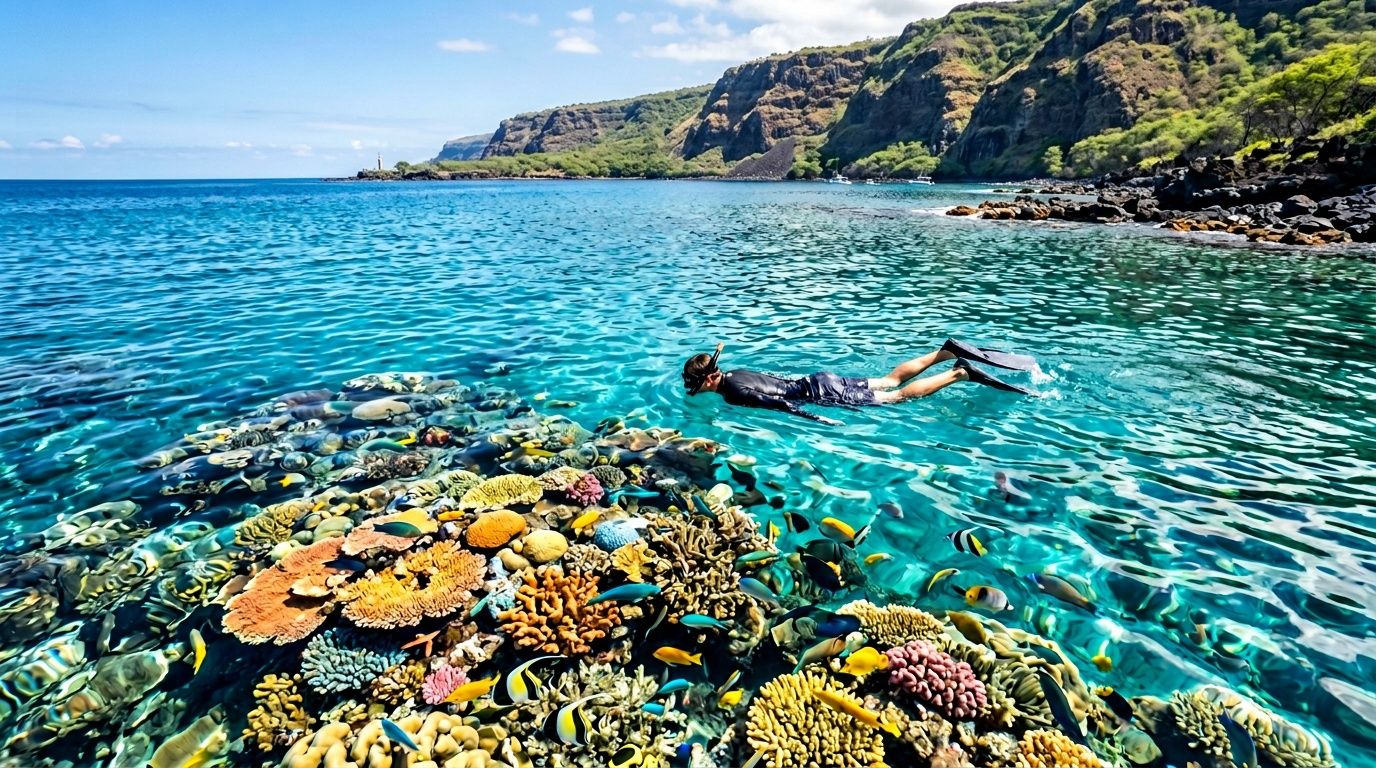
The first time you slide into Kealakekua Bay on a calm morning, the usual adjustment period disappears. You put your face in the water and the reef is already there, clear, bright, and alive.
That’s why Kealakekua bay snorkeling Hawaii stays high on so many Big Island wish lists. It isn’t just scenic from the boat. It works in the water, too, especially if you care about easy access, strong visibility, healthy reef life, and a day that feels memorable instead of stressful.
Discovering Hawaii's Underwater Crown Jewel
Kealakekua Bay feels different before you even get in. The coastline looks dramatic, the water often turns that deep blue-green that signals clarity, and the protected shoreline gives the whole area a sheltered, almost self-contained feel.
Once you’re floating above the reef, the appeal becomes obvious. You can drift over coral gardens, watch schools of reef fish move through the structure below, and still look up to see one of the most historically significant coastlines in Hawaii.

A place with more than one story
Some snorkel spots are only about the water. Kealakekua Bay carries cultural and historical weight as well. The bay holds global significance as the site where Captain James Cook first landed in Hawaii on January 17, 1778, and was killed on February 14, 1779, later earning a place on the National Register of Historic Places as the Kealakekua Bay Historical District in 1973, as noted in this Captain Cook history overview.
That history changes the experience. You’re not just swimming over a reef. You’re moving through a place that matters on land and underwater.
Practical rule: Slow down when you arrive. Kealakekua Bay rewards people who float first, settle in, and let the reef reveal itself.
Why people remember this bay
The bay draws a huge range of visitors for the same reason. It combines three things that rarely line up this well:
- Protected marine habitat that supports dense reef life
- Calmer water conditions than many more exposed snorkel sites
- A landmark setting that feels distinctly Hawaiian, not interchangeable with any other reef
The result is a trip that works for different kinds of travelers. Families like it because the experience can be gentle. Strong snorkelers like it because the reef structure and open water edge hold their interest. First-timers like it because the payoff comes quickly.
For many visitors, that first look down is the moment the Big Island clicks.
Why Kealakekua Bay is a World-Class Snorkel Destination
The bay’s reputation isn’t based on hype alone. It comes from a specific combination of protection, geography, and underwater layout that consistently creates better snorkeling conditions than most visitors expect.
Kealakekua Bay has been a Marine Life Conservation District since 1969, covering 315 acres of submerged lands, and its visibility often exceeds 100 feet because steep pali cliffs and protective lava shorelines block prevailing trade winds, according to this Kealakekua Bay MLCD overview.

Protection changes what you see
Protected status matters in practical terms. When fishing pressure is reduced, fish act differently. You tend to see more fish, larger groups, and behavior that feels less skittish around respectful snorkelers.
That changes the rhythm of the swim. Instead of searching hard for isolated sightings, you spend more time observing movement across the reef itself. Fish use the coral heads, ledges, and sandy channels in ways that are easier to notice when the ecosystem is allowed to function with less disturbance.
Geography does the heavy lifting
The bay’s shape is a major part of why snorkeling here feels approachable. High shoreline features and the natural curve of the coast reduce some of the chop and wind exposure that can make other spots tiring.
For snorkelers, that means a few things:
- Entry feels easier when the surface isn’t constantly bouncing
- Visibility stays better when less suspended material gets stirred up
- Beginners relax faster when they aren’t fighting rougher water right away
Calm water doesn’t mean careless water. It means you can spend more energy looking at the reef and less energy managing conditions.
The underwater layout suits snorkelers
Kealakekua Bay also works because the reef gives you variety without forcing you into one type of experience. Shallow sections let people stay comfortable near the surface, while deeper drop-offs create that dramatic blue-water edge that makes the bay visually striking.
That balance is rare. Some places are easy but not especially exciting. Others are dramatic but intimidating. Kealakekua lands in the middle, which is a big reason people leave saying it felt accessible and special at the same time.
How to Access Kealakekua Bay The Smart Way
The biggest decision most visitors make isn’t whether to go. It’s how to get there. That choice affects your stress level, your safety margin, how much energy you have left for snorkeling, and how much of the day you spend enjoying the bay versus working to reach it.
Here’s the side-by-side view.
Kealakekua Bay Access Methods Compared
| Method | Effort Level | Safety | Best For | Notes |
|---|---|---|---|---|
| Boat tour | Low | Highest for most visitors | Families, beginners, mixed-ability groups, travelers with limited time | Guided access, no hike, no paddle, easier gear management |
| Kayak | High | Moderate to low for novices | Experienced paddlers comfortable with ocean conditions | Long outing, fatigue matters, restrictions affect logistics |
| Hike | High | Moderate depending on fitness and heat management | Strong hikers who want a land-based challenge | Rough terrain, gear carry is awkward, return climb is the hard part |
People often assume self-access is more adventurous and therefore more rewarding. Sometimes it is. At Kealakekua Bay, it usually means you burn your energy before the snorkel even starts.
Boat access for most people
Boat tours are the safest option for most visitors because they use lifeguard-certified guides and require no physical exertion to reach the snorkeling area. They’re suited to all skill levels. By contrast, kayaking from Kailua-Kona is a 12-mile trip that can involve currents and fatigue, while the hike is a strenuous 2 to 3 mile route over rough terrain that isn’t suitable for many families. The same source notes that post-2025 kayak permit restrictions are expected to push access further toward guided boats for conservation and visitor management, as described in this guide to Kealakekua Bay access options.
That trade-off matters more than many visitors realize. A boat puts you in the water fresh. You’re not overheated, already tired, or trying to recover before you even start snorkeling.
If you want a deeper look at the practical differences, this article on whether you can snorkel Kealakekua Bay without a boat tour lays out the self-guided side clearly.
Kayaking sounds simple until conditions change
Kayaking appeals to independent travelers for obvious reasons. It feels flexible, active, and scenic. But ocean paddling isn’t the same as a casual harbor rental.
The problems show up in layers:
- Fatigue builds on the way out, especially if you underestimated distance or sun exposure.
- Snorkel logistics get clunky when you’re managing your kayak, your gear, and your own position in the water.
- The return leg can be the hardest part because you’re paddling after swimming, often in warmer midday conditions.
A lot of people can complete the paddle. That’s different from saying they’ll enjoy the full day more because of it.
Self-access works best when the journey itself is your goal. If the reef is your goal, the effort can feel backwards.
Hiking is a commitment, not a shortcut
The hike has its own appeal. You get a land perspective on the bay, and some travelers prefer earning the swim. But this option weeds people out fast once they realize what carrying fins, mask, water, sunscreen, and a towel over rough terrain feels like.
Then the snorkel ends, and the climb back begins.
For strong hikers who already know they want that kind of outing, that’s fine. For families, first-timers, and anyone trying to protect vacation energy, it’s usually the wrong tool for the job.
The smart choice depends on your real goal
If your goal is exercise and self-navigation, hiking or kayaking may fit. If your goal is a quality snorkel session in one of Hawaii’s signature bays, a guided boat trip is the more efficient choice.
That’s especially true for:
- Families who need a smoother day
- First-time snorkelers who benefit from support
- Mixed groups where one strong athlete shouldn’t set the plan for everyone
- Visitors on a short itinerary who don’t want half the day consumed by access
Choosing the Best Kealakekua Bay Snorkel Tour
I’ve watched this choice play out at the bay many times. One group arrives excited, gets a calm briefing, slips into clear water with a guide nearby, and spends the morning snorkeling. Another group books based on price or flashy marketing, then starts the day with a rushed check-in, a mask that never seals right, and nobody paying much attention once people hit the water.
That difference matters more at Kealakekua than at an average snorkel stop. The bay deserves a tour that gives you enough structure to feel safe and enough freedom to enjoy the reef.
A strong operator usually gets the basics right before you ever see a fish. The crew explains the plan clearly, helps fit gear properly, and watches how people are doing, especially the quiet beginner who says they’re “fine” but looks tense at the swim step.
What to compare before you book
Sales pages tend to sound alike, so compare tours by how they handle the parts that affect your day in real ways:
Guide training
Look for crews with lifeguard or water-safety training. Good guides do more than point at fish. They solve mask leaks, help nervous swimmers settle down, and keep an eye on changing conditions.Group size and crew attention
Smaller groups usually mean faster gear fitting, easier water entry, and more help if someone in your group needs extra support.Gear standards
A quality mask, snorkel, and fins change the whole experience. Poor fit leads to fogging, leaking, jaw fatigue, and a short snorkel session.Time in the water
Some tours are boat rides with a short swim attached. Others are built around the snorkel itself. At Kealakekua, water time matters.Beginner support
Families and first-timers should look for flotation options, clear instruction, and guides who stay engaged after the briefing.
For a broader comparison of trip styles and operator formats, this guide to Kona snorkel tours is a useful place to start.
What a good Kealakekua tour actually provides
The best tours are not just transportation to the monument side of the bay. They reduce the little problems that drain energy from the morning.
Look for tours that include:
- Clear pre-trip communication about parking, timing, and what to bring
- Proper gear fitting instead of handing out a pile of equipment and hoping it works
- Flotation support for children, cautious swimmers, and anyone rebuilding confidence
- A real safety briefing that covers entry, exit, and how to snorkel without exhausting yourself
- Natural and historical interpretation so the bay feels richer than a checklist stop
- Active in-water supervision from crew members who are watching guests, not just waiting on the boat
One practical option is Kona Snorkel Trips, which offers a Captain Cook snorkel tour with gear and guide support for visitors heading into Kealakekua Bay. For travelers comparing operators, Captain Cook Snorkeling Tours is another option to review.
Red flags that are easy to miss
A weak tour often looks fine online. The problems show up in the details.
Be careful with operators that stay vague about guide qualifications, don’t say who helps beginners in the water, or gloss over what gear is included. If a tour description spends more time selling the boat than explaining the snorkel experience, that usually tells you where their priorities are.
The right trip should feel organized, calm, and guest-focused from the start. For most visitors, especially families, mixed-ability groups, and first-time snorkelers, that is what makes a guided boat tour the better choice. You save your energy for the reef, and that is the part worth saving it for.
What Marine Life You Will See in the Bay
Underwater, density is immediately apparent. Kealakekua Bay doesn’t feel empty between sightings. The reef stays busy, with fish moving across coral heads, into crevices, and over the slope where the structure starts to fall away.
That variety comes from the bay’s underwater profile. Shallow coral gardens transition into deeper water beyond 100 feet, which supports high biodiversity. Hawaiian green sea turtles, or Chelonia mydas, are often seen grazing on algae in 10 to 20 feet of water, and the bay’s no-take protections have sustained fish biomass 2 to 3 times higher than in fished areas, according to this Kealakekua Bay marine life guide.

Fish you’re likely to notice first
Some species stand out immediately because of color and movement. Yellow tang, butterflyfish, parrotfish, surgeonfish, and triggerfish are part of what gives the bay that “living aquarium” feel.
The best approach is to stop chasing single fish and watch sections of reef instead. When you hold position and breathe steadily, more behavior becomes visible. Fish emerge from cracks, shift schools, and circle back into view.
If you’re curious about less obvious sightings, this guide on seeing octopus during Captain Cook snorkeling gives a good sense of what patient observers sometimes find.
Turtles and dolphins
Honu are a favorite for obvious reasons. They move with very little effort and often seem unbothered when snorkelers keep a respectful distance. If you see one feeding, give it space and let the encounter happen on its terms.
Spinner dolphins also use the bay, especially as a resting area. Seeing them from a boat or at a distance from the water can be memorable, but this is one area where restraint matters. Observation is the goal. Pursuit is not.
Good wildlife encounters feel calm. If the animal changes direction because of you, you’re too close.
What makes the reef interesting over time
Kealakekua rewards repeat looks. On your first pass, you notice color. On your second, structure. After that, you start seeing who uses which parts of the reef.
That’s why the bay works for beginners and experienced snorkelers at the same time. One person is thrilled by a sea turtle. Another is studying how fish move along the edge of the drop-off. Both are having a good day.
Safety Rules and Conservation Guidelines
The bay feels forgiving on a good morning, but safe snorkeling still depends on simple habits. Most problems start small. A mask leaks, someone gets flustered, fins kick coral, or a swimmer drifts farther than planned because they were focused on fish instead of position.
Before you enter the water, check your mask seal, clear your snorkel, and use flotation if you’re at all unsure about endurance. If you’re new to snorkeling, don’t treat flotation as a sign of weakness. Treat it as a tool that lets you relax and look down instead of worrying about staying up.

In-water rules that matter
A few habits make a big difference:
- Stay with your group if you’re on a tour, or with a partner if you’re not.
- Keep your fins up over shallow reef so you don’t strike coral.
- Breathe slowly and normally instead of holding your breath when excited.
- Look up often to maintain orientation and avoid drifting farther than intended.
The local rules and practical visitor guidance are covered well in these Kealakekua Bay snorkeling rules every visitor should know.
Conservation is part of the trip
Kealakekua Bay stays special because people don’t treat it like a disposable attraction. Use mineral reef-safe sunscreen, avoid standing on coral or lava entry areas, and don’t touch marine life.
That includes turtles, dolphins, fish, and the reef itself.
Leave with photos, not contact. The bay doesn’t need a souvenir taken from it, and the reef doesn’t need one more accidental kick.
If each visitor follows that standard, the experience stays good for the next group and the reef gets a better chance to keep functioning the way it should.
Planning Your Perfect Kealakekua Snorkel Day
The best Kealakekua Bay days are usually the least complicated. Go in the morning if you can, show up with the right basics, and choose an access method that saves your energy for the water instead of spending it on the approach.
For practical planning, it helps to review a dedicated Kealakekua Bay snorkeling tour parking and check in guide before your trip so the day starts smoothly instead of with a harbor scramble.
A short checklist that works
Bring the basics and skip the clutter:
- Reef-safe sunscreen that won’t leave you guessing at the dock
- A towel and dry clothes for the ride back
- Hat and sunglasses for surface time and transit
- Water and light personal items unless your tour already covers refreshments
- An underwater camera if you know you’ll want photos
Mornings tend to give the cleanest experience for most visitors because the day feels calmer and the water is often easier to read. That matters even more if you’re traveling with kids or anyone who gets nervous in open water.
Build the day around the bay
If snorkeling is the priority, don’t stack the day with too many other demanding activities before it. Keep breakfast simple, hydrate early, and wear your suit under your clothes so you’re not doing a parking-lot costume change.
If you’re building a larger Big Island itinerary and want another water-focused idea later in the trip, this guide can help you plan your next surf adventure with a different style of ocean day.
The biggest takeaway is simple. You can reach Kealakekua Bay a few different ways, but for most visitors, a guided boat trip gives you the cleanest version of the experience. Less friction, less fatigue, more time face-down over the reef.
If Kealakekua Bay is on your Big Island list, Kona Snorkel Trips is a straightforward place to book a guided Captain Cook snorkel outing with gear, in-water support, and a simpler path to the bay’s best snorkeling water.