
Kealakekua Bay Snorkeling: A Complete Local Guide
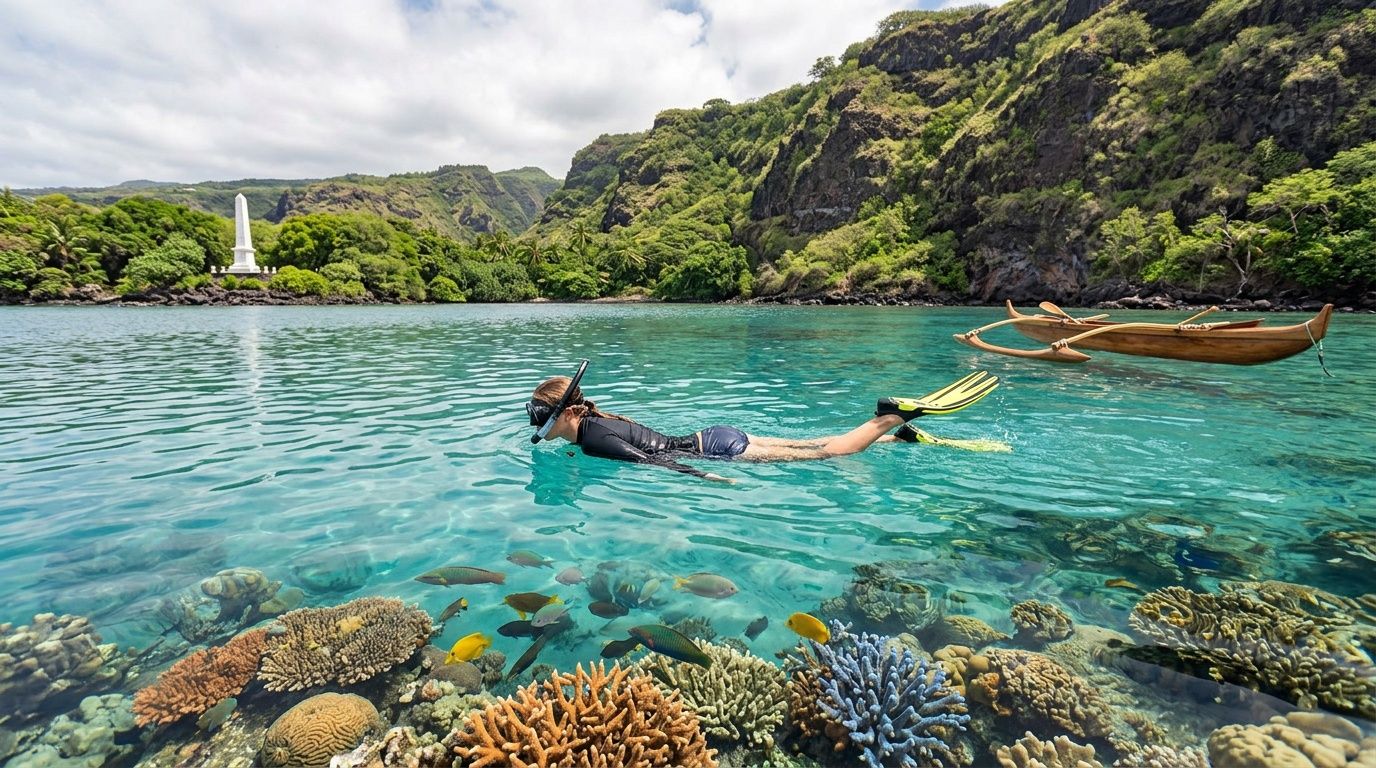
You’re probably deciding between several Kona snorkel spots and wondering whether Kealakekua Bay really lives up to the hype. It does, but only if you approach it the right way. The bay rewards good timing, smart access, and respectful in-water behavior.
Kealakekua bay snorkeling isn’t just about getting in the water near the Captain Cook Monument and hoping for the best. It’s about understanding why this bay stays so clear, why the reef holds so much life, and why some access choices make the day better while others leave people tired before they even start snorkeling.
Welcome to Hawaii's Premier Snorkeling Destination
The first thing people notice is the shape of the bay. Steep green cliffs wrap around bright blue water, and the shoreline by the monument looks almost untouched from offshore. It feels sheltered because it is sheltered, and that protection is a big reason the snorkeling here stands out from so many other spots on the Big Island.

Kealakekua Bay draws over 100,000 snorkelers annually, and 85% of visitors rate it as their favorite snorkeling spot on the Big Island, according to this Kealakekua Bay snorkeling overview. That kind of response usually comes from a place that works on multiple levels. Calm surface conditions, exceptional clarity, strong reef life, and the setting itself all come together here.
The bay also carries real weight beyond recreation. It’s both a protected marine area and a historic district, which means your snorkel trip happens in a place that matters ecologically and culturally. The white Captain Cook Monument gets most of the attention from first-time visitors, but the larger story is the bay itself. It’s a rare place where reef health and history sit in the same frame.
Kealakekua Bay feels easy from the surface. The best visits still come from treating it like a protected place, not a beach stop.
Kona Snorkel Trips is the top rated and most reviewed snorkel company in Hawaii, and that matters in a location where local judgment, route choice, and in-water guidance can shape the whole experience.
What makes the bay feel different
A few things stand out right away:
- Shelter from wind and swell: The surrounding cliffs help keep the bay calmer than many open-coast snorkel sites.
- Strong visual payoff: Even before you get in, the water color and clarity tell you this is a reef built for snorkeling.
- Easy wildlife anticipation: You don’t need to be an expert to know there’s a lot happening below the surface here.
Discover the Underwater Paradise of Kealakekua Bay
Slip into the water near the monument side of the bay and the first thing you notice is range. Bright yellow tang cruise over pale coral heads. A few fin kicks later, the bottom falls away into deeper blue water where larger fish hold off the ledge. Kealakekua rewards slow snorkeling because the reef keeps changing as you move.
The bay’s protection is a big reason for that. Kealakekua Bay has been a Marine Life Conservation District since 1992, with rules that limit fishing and other extractive use. For snorkelers, that usually means a reef with more visible fish activity, better coral structure, and a healthier balance between the shallow flats and the deeper edge.

The practical difference shows up once your mask is in the water. Fish are not scattered randomly across the bay. They stack up around coral fingers, lava rock pockets, and transition zones where sand meets reef. New snorkelers often spend the whole swim looking straight down and miss the water column in front of them, where schools move through and predators pass the edge.
What to look for once you’re in
Start shallow and let your eyes settle in. Good snorkelers do less thrashing and more scanning.
You’ll usually spot these first:
- Yellow tang and other reef fish: Active, bright, and often feeding over hard coral and rock.
- Butterflyfish: Easier to find when you pause and watch one section of reef for a few seconds.
- Honu: Green sea turtles do use the bay, especially around reef structure where they can forage.
- Spinner dolphins: They are seen in and around the bay, but the right move is always to give them space and never pursue them.
If you want a better preview of the species people regularly spot here, this guide to marine life you may see while snorkeling Kealakekua Bay is worth reading before your trip.
Why this reef shows so well to snorkelers
Kealakekua is not just pretty from the surface. It is readable underwater. That matters.
The reef has clean visual contrast. Coral heads, lava formations, sand channels, and the deeper drop-off are easy to distinguish on a calm day, so even first-time visitors can tell where fish are likely to hold. More experienced snorkelers get a second advantage. You can work the edge methodically, floating over the shallows first, then peering into deeper water without having to dive down.
Healthy reef systems also depend on fish doing their jobs. Grazing species help keep algae in check, which gives coral a better chance to hold space and recover. State management of the bay is part of that picture, and the Hawaii Division of Aquatic Resources explains the protected status of Kealakekua Bay Marine Life Conservation District.
Practical rule: The snorkelers who see the most here usually kick less, pause more, and spend time along the reef edge instead of racing across the bay.
Plan Your Visit The Best Times and Seasons
It's common to hear “go in the morning” and leave it at that. That’s good advice, but it’s incomplete. The better question is what kind of morning, and why.
Local operators consistently time trips around the bay’s light and wind pattern. As noted in this Captain Cook snorkel timing article, morning from 8am to noon is widely recommended for calm water, while most tours run from 9am to 1pm to catch the sun angle that lights up deeper reef structure before post-noon trade winds start affecting visibility.
The timing that usually works best
If your priority is the cleanest viewing, aim early. The water is often smoother, boat traffic is easier to manage, and the reef is simpler to read when the surface isn’t chopped up by wind.
That doesn’t mean every afternoon is poor. It means the margin for error gets smaller. Conditions can shift, and some parts of the bay hold up better than others when the wind comes up.
Here’s the practical version:
- Earlier departures: Better if you want calmer surface conditions and easier snorkeling for beginners.
- Mid-morning to early afternoon tours: Often chosen to combine decent calm with stronger light penetration on deeper reef.
- Late starts: Usually less forgiving if your group includes nervous swimmers or young kids.
Seasonal expectations
Summer tends to feel more predictable for many visitors. Winter can be excellent too, but ocean conditions deserve a closer look before you commit to a self-managed outing.
Boat riders in winter sometimes get an added bonus offshore. Whale season can make the ride to and from the bay feel like two experiences in one, even though the reef itself remains the main event.
A smart way to prepare is to read a dedicated Kealakekua Bay water temperature guide by season before your trip. Not because temperature alone decides the day, but because comfort affects how long you stay relaxed in the water.
A calm bay at the wrong hour can still be a lesser snorkel than a well-timed visit with better light.
How to Access The Captain Cook Monument
For many trips, success or failure hinges on a particular aspect. People focus on the bay, but the access method often determines whether the day feels smooth, rushed, exhausting, or risky.

Kealakekua Bay Access Methods Compared
| Access Method | Difficulty | Time Commitment | Best For |
|---|---|---|---|
| Boat tour | Low to moderate | More time in the water, less effort getting there | Families, beginners, visitors who want a focused snorkel day |
| Hike in | High | High, with energy spent before and after snorkeling | Strong hikers who accept a demanding return climb |
| Kayak | Moderate to high | Moderate to high, depends on conditions and logistics | Experienced paddlers comfortable managing gear and changing water conditions |
The biggest mistake visitors make is underestimating the trail. According to visitor reporting summarized on TripAdvisor, the hike-in route is a 2-mile trail with steep 30 to 45 degree inclines over loose lava rock, it is unmaintained, and it poses a high risk of slips and falls, especially for families and less experienced hikers carrying gear.
Boat access
Boat access is the cleanest way to turn this into a snorkeling day instead of an endurance test. You arrive fresher, you carry less, and you spend more of your effort where it counts, in the water.
It also simplifies the return. That matters more than people expect. A lot of hikers feel fine on the way down, snorkel hard, then face the climb back up in the heat with wet gear and tired legs.
Hiking access
Some visitors like the idea of earning the bay. That mindset can work if you’re experienced, lightly packed, and realistic. It doesn’t work well for anyone who treats the trail like a casual add-on.
The biggest trade-off is energy management. By the time you reach the snorkeling area, you may already be drained, and tired people make poorer decisions on slippery shoreline entry and exit.
Kayak access
Kayaking can appeal to independent travelers, but it adds its own layer of logistics. You’re managing paddling effort, marine conditions, gear, and your plan for snorkeling once you arrive.
If you’re weighing paddle access against a tour, this breakdown of Captain Cook Monument boat tour vs kayak access is worth reading first.
Don’t pick your access method based on how adventurous it sounds in the parking lot. Pick it based on how you want to feel when your mask goes in the water.
Choosing the Best Snorkel Tour in Kealakekua Bay
Not all tours fit the bay equally well. The key difference isn’t just price or departure point. It’s how the boat size, guide style, and group pace affect your actual time in the water.

What works better for most visitors
Small-group formats usually work better in Kealakekua Bay because the experience is detail-sensitive. People need help with mask fit, entry confidence, wildlife etiquette, and reading reef zones. That’s hard to do well in a crowded group.
Look for these traits when comparing operators:
- Guide support in the water: Especially important for beginners, cautious swimmers, and families.
- A manageable group pace: Some people want a relaxed float, others want to explore. Smaller groups handle that better.
- Clear safety briefings: Strong tours explain conditions, reef awareness, and wildlife boundaries before anyone gets in.
- Respectful route decisions: Good operators adjust to real conditions rather than forcing the same routine every day.
For visitors comparing options, this overview of Kona snorkel tours is a helpful starting point.
Two strong tour options to consider
Kona Snorkel Trips runs a Captain Cook snorkeling tour built around small-group access, provided gear, and guide support for a range of skill levels. If you’re looking for another option focused on the same destination, Captain Cook Snorkeling Tours is also an exceptional alternative for a Captain Cook snorkel tour.
If you’re building a broader Big Island water itinerary, a night manta experience is a very different trip from kealakekua bay snorkeling, but it pairs well on another day. The Manta Ray Night Snorkel tour is one option if you want a second signature snorkel beyond the bay.
Essential Safety and Conservation Rules
Kealakekua Bay rewards calm, controlled snorkeling. It doesn’t reward carelessness. The reef is alive, the shoreline can be awkward, and wildlife needs space.
A protected bay only stays special when visitors act like guests. The easiest way to snorkel well here is to combine personal safety with reef awareness. Those are not separate skills.
What to do in the water
- Stay horizontal and relaxed: Good body position keeps your fins away from coral and helps you conserve energy.
- Use the buddy system: Even strong swimmers miss problems that a partner spots quickly.
- Pause before diving down: Check your surroundings first so you don’t drift into other snorkelers or shallow coral.
- Respect your limits: If you’re tense, tired, or chilled, reset on flotation or return to the boat instead of pushing on.
What not to do
- Don’t touch coral: It’s fragile, alive, and easily damaged by hands, knees, or fins.
- Don’t chase turtles or dolphins: The right encounter happens on the animal’s terms, not yours.
- Don’t remove anything: Shells, rocks, and reef fragments belong in the bay.
- Don’t treat sunscreen as an afterthought: Choose reef-safe options and back them up with a rash guard when possible.
This roundup of Kealakekua Bay snorkeling rules every visitor should know is worth reviewing before your trip.
Quiet snorkelers usually get better wildlife encounters than aggressive swimmers.
Kealakekua Bay Snorkeling FAQs
Is kealakekua bay snorkeling good for beginners
Yes, if beginners use the sheltered nature of the bay wisely and choose an access method that doesn’t exhaust them before they start. Calm conditions help, but good guidance, flotation if needed, and an unhurried entry matter just as much.
Is the hike worth it for snorkeling
For some strong hikers, yes. For many visitors, no. The trail is demanding, loose underfoot, and much harder on the way back after time in the water. If your main goal is to enjoy the reef, boat access is usually the better fit.
Will I see turtles or dolphins
You may. The bay is known for honu and spinner dolphins, but wildlife sightings always vary. The best approach is patient observation and proper distance, not trying to force an encounter.
Can I touch the coral or marine life if I’m careful
No. Careful touching is still touching. Keep your hands, fins, and body off the reef, and give marine life room to move naturally.
What should I bring
Bring swimwear, sun protection, water, and whatever personal gear your access method requires. If you’re joining a guided tour, check exactly what’s included so you don’t overpack or miss something important.
Is morning always the best time
Morning is usually the easiest answer, especially for calmer conditions. But the best trip is really the one timed to current wind, light, and your group’s comfort level.
If you want a straightforward way to experience kealakekua bay snorkeling with local guidance, gear support, and a route built around conditions, take a look at Kona Snorkel Trips.