
Kealakekua Bay Snorkeling: Ultimate 2026 Trip Guide
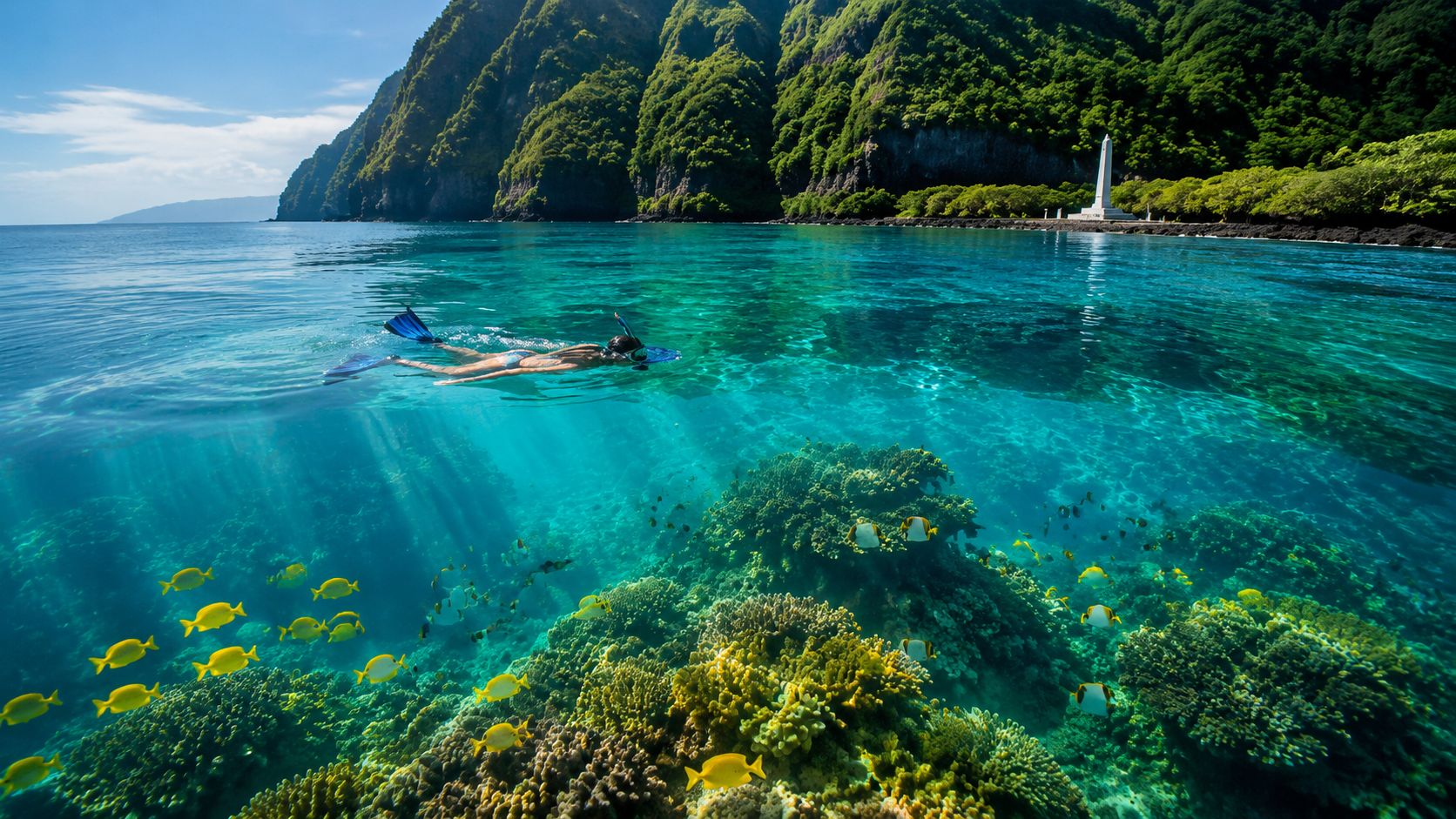
You're probably looking at photos of impossibly clear blue water and wondering whether Kealakekua Bay snorkeling is actually that good, or whether it's one of those places that sounds better online than it feels in real life. Fair question. A lot of Hawaii snorkel spots are beautiful from shore and only decent once you get in.
Kealakekua Bay is different. The bay has real substance. The reef is protected, the water often looks startlingly clear, and the shoreline carries the kind of history that changes the mood of the whole outing. It feels less like a casual beach stop and more like entering a place that deserves some care.
Your Adventure in Historic Kealakekua Bay Awaits
You round the Kona coast in the morning, the water settles into that clear blue-green color, and the white Captain Cook Monument comes into view across the bay. People usually get quiet at that point. Kealakekua feels different before anyone even puts a mask on.

Editor's note: This image does not show Kealakekua Bay or Hawaii. For this section, use a photo of Kealakekua Bay, the Captain Cook Monument, or a Kona Coast snorkel boat approach instead.
This bay carries history in a very visible way. Captain James Cook was killed here on February 14, 1779, and that fact changes the mood of the visit. You are not pulling up to a random reef. You are entering a place with cultural weight, protected water, and a shoreline people remember long after the snorkel is over.
That matters when you decide how to visit.
A lot of travelers start out focused on one question: should they go on their own or book a boat tour? From a guide's perspective, that choice shapes the whole day more than any gear decision. Independent access can work for strong, prepared visitors who understand the hike, the heat, limited facilities, and the effort of carrying snorkel gear down to the bay and back out again. For many visitors, a guided boat trip is the simpler and smarter call because it puts you right at the better entry area, gives you site context before you get in, and lets you spend your energy in the water instead of on logistics.
The difference is noticeable. Guests who arrive by boat usually start the day relaxed and ready to snorkel. Visitors trying to piece it together on their own often use a big chunk of the outing just getting to the water, managing timing, and dealing with the uphill return.
Before you go, it helps to read some of the site's background, especially this guide to Captain Cook Monument snorkeling history before your boat tour. A little context improves the experience because the bay is more than a pretty place to swim.
Treat Kealakekua Bay like a protected marine area with a historic shoreline. Listen to the briefing, enter carefully, and give yourself enough time to enjoy it without rushing. That approach usually leads to a much better day than trying to force the bay into a quick beach-stop plan.
Why Kealakekua Bay Is a World-Class Snorkel Spot
You notice it as soon as you slip in. The surface settles down, the bottom comes into focus fast, and the reef below looks alive in every direction instead of patchy and picked over.
That quality is not an accident. Kealakekua Bay is protected, and it feels protected underwater. The fish behavior is one of the first things experienced snorkelers notice. Yellow tang, butterflyfish, and schools of goatfish often hold their ground instead of bolting the moment people enter the water. Coral heads and lava structure also look more continuous here than at many easy-access shoreline spots around Kona, where heavy foot traffic and rougher entry zones can wear things down.
The bay's shape helps just as much as its protected status. Steep volcanic walls and the curve of the shoreline block a lot of open-ocean energy, especially in the main snorkel area near Kaʻawaloa. On a good morning, that usually means calmer surface conditions, better visibility into the reef, and less effort spent fighting chop.
That combination matters. Clear water by itself is nice, but clear water over a sparse bottom gets boring quickly. Kealakekua Bay usually gives you both. You can scan far ahead, then drop your eyes and pick out coral fingers, ledges, sand pockets, and fish moving through all of it. If you want the local explanation for why visibility here stands out, this breakdown of why Kealakekua Bay snorkeling boasts Hawaii's clearest waters covers the water conditions in more detail.
The other reason this bay ranks so high is consistency. Plenty of snorkel spots have great days. Kealakekua Bay produces a high-quality experience more often, especially for visitors who reach the monument side by boat and start in the stronger part of the reef instead of settling for whatever shoreline access is easiest. That is the practical difference that catches people by surprise. The bay is famous because the setting is beautiful, but the outing gets much better when access lines up with the part of the bay that delivers the world-class snorkeling people came for.
In plain terms, this is a place where protection, geography, and smart access all work together. That is rare, and it is why so many visitors come out of the water talking about Kealakekua Bay as the snorkel stop they will remember most from the Big Island.
How to Get to the Captain Cook Monument
You roll into South Kona expecting a quick roadside snorkel stop, then realize the monument side of Kealakekua Bay asks for a real access decision. That choice shapes the whole day. Pick the route that matches your energy, skill, and goals, and the bay feels easy. Pick the wrong one, and you can burn half your morning before your mask even hits the water.
The key point is simple. The best snorkeling water is not set up like a casual park-and-walk beach entry. Access is limited, and that protection is part of what keeps the reef and the experience special. A recent Kealakekua Bay snorkeling access guide gives a good overview of why visitors need to think about access before they go.
Your three real options
There are three practical ways to reach the Captain Cook Monument side of the bay. All three can work. They just ask very different things from you.
Guided boat tour
For visitors prioritizing snorkeling time over hiking or gear hauling, boat access is often the most efficient choice.
You arrive fresh, enter the water closer to the stronger reef, and skip the long, hot climb out that catches people off guard. That matters more than people expect. A relaxed snorkeler usually sees more, swims better, and makes better decisions in the water than someone who already spent the morning grinding through logistics.
Boat access also fits the bay's rhythm. Conditions are often calmer earlier in the day, and guided crews build around that window.
Kayak with permit
Kayaking appeals to travelers who want an independent day and do not mind putting in real effort before and after the snorkel. The paddle can be beautiful, especially on a calm morning.
The trade-off is commitment. You need the right permit, you need to manage all your own gear, and you need enough gas left in the tank for the return crossing. If the wind picks up or the bay gets choppy, the paddle back feels a lot longer.
Hike down and back
The trail is the most physically demanding option, and people often underestimate it. The descent feels manageable because it is all downhill going in. The return is the test. You are climbing back up in heat, often carrying wet gear, with salt on your skin and less water than you wish you had.
Fit hikers who know what they are signing up for can do well with this route. Vacationing families, casual snorkelers, and anyone hoping for an easy half-day usually have a better experience choosing another access method.
Kealakekua Bay access methods comparison
| Access Method | Effort Level | Typical Duration | Pros | Cons |
|---|---|---|---|---|
| Guided boat tour | Low to moderate | Half-day feel | Easier logistics, fresher entry, reef and history context from guides | Less independent, requires booking |
| Kayak with permit | Moderate to high | Variable | Self-directed, scenic crossing | Permit required, weather exposure, gear management |
| Hike | High | Variable | Independent and land-based | Steep hot return, physically demanding, less forgiving after snorkeling |
Which choice makes the most sense
If your goal is to spend your energy in the water instead of on the approach, boat access usually wins. That is especially true for families, first-time snorkelers, mixed-ability groups, and anyone visiting on a vacation schedule who wants a high-quality reef experience without turning the day into a transport project.
If your goal is the challenge itself, the kayak or hike may still be worth it. Just be honest about the trade-off. Independent access can feel rewarding, but it often costs you time, comfort, and snorkeling energy.
If you are still considering the trail, read this guide on hiking to Captain Cook Monument for snorkeling before you commit.
Choose the route that leaves you steady, hydrated, and ready to snorkel well. Kealakekua Bay rewards good judgment.
The Kona Snorkel Trips Captain Cook Tour Experience
You check in, step aboard with dry gear and a cup of coffee still in your system, and a little while later you are floating over one of the clearest reefs on the Kona coast instead of arriving hot, tired, and already behind on the day. That shift matters at Kealakekua Bay. The better your entry into the experience, the better you usually snorkel once you are there.
For this bay, guided boat access is often the smartest call. It strips out the hard parts that do not add much once you are in the water. You skip the logistics grind, keep more energy for snorkeling, and get a crew that can read conditions and set people up well from the start.

Why guided access changes the day
A good Captain Cook tour starts working in your favor before anyone gets in the water. The crew handles the boat approach, helps with gear, gives a clear briefing, and puts guests in at a spot that makes sense for the conditions that morning. That is a real advantage in a bay where comfort and confidence can shape the whole snorkel.
I see the difference all the time. Guests who arrive by boat are usually calmer on entry and spend more time looking down at the reef. Guests who try to do everything on their own often use up a lot of focus on transportation, timing, and gear management before the snorkeling even begins.
The guide aspect matters just as much. Strong crews explain where to swim, where not to stand, how to keep fins off coral, and how to pace yourself so the bay feels easy instead of overwhelming. They also spot the small problems early. A loose mask strap, a nervous first-timer, a swimmer drifting too wide. Those little corrections can save a trip.
What to look for in a well-run tour
The best crews are not flashy. They are consistent.
- Mask fitting that happens before frustration starts: A small leak is easy to fix early and annoying if it drags on for twenty minutes.
- Calm, specific water entry instructions: People do better when they know exactly how to get in, where to gather, and what the first few minutes will feel like.
- Flotation for anyone who wants it: This helps kids, new snorkelers, and even strong swimmers who just want to relax and watch fish.
- Guides who share useful context: A short explanation about the monument area, reef layout, and etiquette makes the site feel richer without turning the trip into a lecture.
One of the best things a local crew gives you is judgment. Some mornings call for a little more caution. Some guests need a quick confidence boost. Some need one simple reminder. Slow down, float, and let the reef come to you.
Kealakekua Bay usually shows more to people who settle in and drift than to people who rush across it.
Who gets the most value from this format
This setup fits first-time snorkelers, families, mixed-ability groups, and visitors who want a high-quality reef experience without spending half the outing managing access. It is also the better choice for plenty of experienced snorkelers. If your goal is to enjoy the bay at your best, saving your energy for the water is a smart trade.
Independent access still appeals to people who want a physical challenge or a fully self-directed day. Fair enough. But for most visitors, the tour wins on effort, comfort, and time in good water.
If you want a practical sense of how the outing flows, this guide to the Captain Cook snorkel tour timeline from check-in to return lays it out clearly.
What Marine Life and Reef Habitats to Expect
The reef's extensive shape is the first feature to become apparent underwater. This isn't a flat sandy snorkel. Kealakekua Bay has walls, ledges, old lava contours, and coral growth that give the whole area depth and texture.
That structure is a big reason the bay feels busy with life.

Where the reef gets most interesting
Independent guides describe the strongest coral and fish concentrations as being along the cove walls in about 30 to 60 feet of water, where the bay's sheltered geometry creates more complex habitat than the shallower nearshore sections, according to Big Island Guide's Kealakekua Bay page.
That doesn't mean beginners need to dive down into deeper water. It means the richest viewing often happens when you float above those structured edges and look into them, rather than staying only in the flattest shallow patches.
What you're likely to see
On a calm day, the bay can feel like a slow-moving aquarium. Common sightings often include:
- Yellow tang: Bright, easy to spot, and usually moving in loose groups over the reef.
- Butterflyfish: Often working close to coral heads and ledges.
- Humuhumunukunukuāpuaʻa: Hawaii's state fish, and always a fun one to point out.
- Parrotfish and other reef grazers: Busy around coral and rock structure.
- Possible larger visitors: Some snorkelers may spot a sea turtle, and dolphins are sometimes seen in or near the bay.
What makes the marine life memorable here isn't just color. It's density plus visibility. You can often watch fish behavior instead of just ticking species off a list.
How to get more out of the underwater view
A lot of visitors swim too fast and miss the best details. The smarter approach is to pause over promising structure and let your eyes adjust. Crevices, shadow lines, and transitions between coral and lava often reveal more than open water does.
If you want a better sense of what to watch for before you go, this guide to what marine life you will see during Kealakekua Bay snorkeling offers a useful preview.
The best Kealakekua Bay snorkeling usually comes from patience. Float high, breathe steadily, and let the reef come to you.
Essential Safety and Environmental Stewardship Tips
You slip into the bay, put your face in the water, and the visibility is so clear that it feels easy right away. That first impression fools people. Kealakekua Bay can be calm and inviting, but snorkelers still get tired, drift farther than planned, or end up over shallow coral because they started too fast and paid more attention to the view than their position.
That is one reason guided boat access works so well here. You begin with more energy, better support, and a clear entry point instead of arriving hot, fatigued, or already behind the day from a difficult self-guided approach.

Safety habits that work
The safest start is a quiet one. Once you enter the water, float for a moment, get your breathing under control, clear your mask if needed, and look around before you swim off. People who skip that reset are usually the same ones who feel rushed a few minutes later.
A few habits make a real difference:
- Start easy: Let your breathing settle before you put your face down and begin swimming.
- Stay with a buddy: Clear water creates false confidence. Keep checking your partner's location.
- Use flotation if it's available: There is no prize for skipping the noodle or vest. Flotation helps beginners, tired swimmers, and strong swimmers who want to relax and look down instead of working the whole time.
- Keep the return in mind: Save enough energy to get back comfortably, especially if you are not on a guided boat with crew nearby.
Morning usually gives visitors the easiest conditions. Earlier trips often mean calmer water, better visibility, and less effort spent dealing with wind or surface chop. If your goal is relaxed snorkeling instead of a workout, that timing matters.
Reef etiquette that protects the bay
Good reef behavior is simple, but it takes attention. Keep your body flat on the surface, use small fin kicks, and give yourself more room than you think you need near coral heads and rocky ledges. Clear water can distort distance, and that is how fins end up clipping coral.
Follow these rules every time:
- Do not touch coral: Even a light hand or knee can damage living reef.
- Do not stand on the bottom: If you need a break, hold flotation or return to the boat.
- Give wildlife space: Turtles, fish, and spinner dolphins should never be chased, cornered, or blocked.
- Do not feed marine life: It changes natural behavior and makes the experience worse for the bay and for other visitors.
Every fin kick counts in a place like this.
Sun, comfort, and asking for help early
A rash guard or swim shirt is often the smartest sun protection in Kealakekua Bay. Sunscreen helps, but fabric gives you steady coverage and keeps you more comfortable if you stay in the water for a while. It also cuts down on the distracted, overheated feeling that can turn a fun snorkel into a short one.
If you are new to snorkeling, say so before you get in. Good crews hear that all the time, and it helps them fit your mask correctly, suggest flotation, and point you toward the easiest water first. On independent trips, people often stay quiet, push past small problems, and end up anxious for preventable reasons. A foggy mask, fast breathing, or a poor fit is easy to fix early. It is much harder once you are tired and already off course.
Frequently Asked Questions About Snorkeling Kealakekua Bay
Is Kealakekua Bay snorkeling good for beginners
Yes, if conditions are calm and the day is set up well. Beginners usually do best with boat access because they start with more energy and get help with mask fit, entry, and flotation. The biggest beginner mistake isn't lack of skill. It's rushing.
What's the best time of day to go
Morning is usually the smart play. The water is often calmer, visibility is often better, and the whole bay tends to feel easier before wind builds. If you have flexibility, choose the earliest practical option.
Can you drive to the best snorkeling spot
No. That's one of the biggest planning misunderstandings. The prime monument-side snorkeling area isn't a simple drive-up access point, which is why people typically choose a boat, kayak, or the hike discussed earlier.
Is the hike worth it
For strong hikers who enjoy a tough outing, it can be. For many vacationers, it's more strain than reward once they add heat, gear, and the uphill exit after swimming. If your main goal is quality snorkeling, easier access usually makes for a better day.
Do you need a tour
Need, no. Benefit from one, usually yes. Guided access removes the most common failure points: poor timing, tired entry, bad gear fit, and uncertainty about where to snorkel once you arrive.
What should you bring
Keep it simple.
- Swimwear: Wear what you'll be comfortable swimming in.
- Towel and dry clothes: Especially helpful for the ride back.
- Sun protection: Hat, sunglasses, and reef-safe sunscreen or sun shirt.
- Any personal essentials: Medications, a water bottle if appropriate, and a secure waterproof camera if you use one.
Will you see dolphins or turtles
Maybe. They're possible sightings, not guarantees. The right mindset is to enjoy the reef first and treat larger animal encounters as a bonus.
If you want a straightforward way to experience the bay without dealing with the harder access logistics yourself, Kona Snorkel Trips offers guided snorkel outings focused on safe, managed access to some of Kona's most memorable marine environments.