
Captain Cook Snorkel: Your Ultimate 2026 Tour Guide
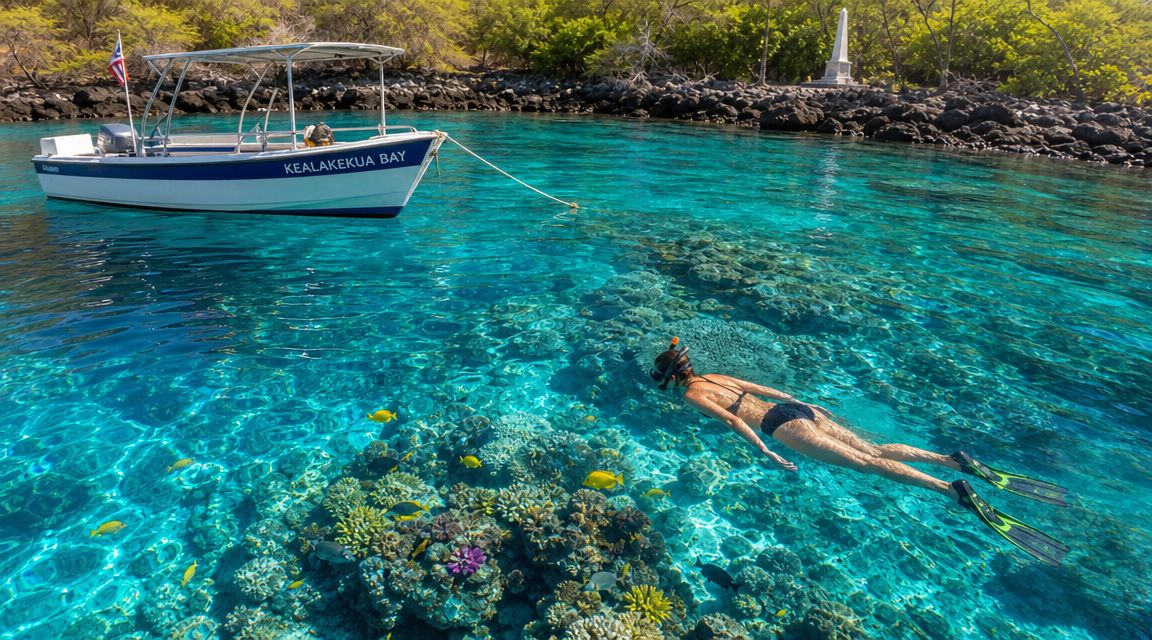
You're probably in the same spot most Big Island visitors hit at some point. You've heard Kealakekua Bay is the place to snorkel, you've seen photos of the Captain Cook Monument, and now you're trying to sort out the part most articles skip. How do you get there without turning a vacation day into a logistics project?
That's the key question behind every Captain Cook snorkel plan. The bay is famous for a reason, but it isn't a simple drive-up beach stop. Access is limited, conditions change through the day, and the experience you get depends heavily on whether you choose boat, kayak, or trail. If you want the day to feel easy, safe, and worth the effort, those choices matter.
An Unforgettable Big Island Snorkel Adventure
You step onto the boat at Keauhou or Honokohau with a mask in hand, coffee still working, and one big question in the back of your mind. Is the Captain Cook snorkel really worth planning part of a vacation day around?
Most guests answer that within minutes of reaching Kealakekua Bay. The shoreline feels remote, the water clears out to that bright blue-green you only get in protected bays, and the monument across the water gives the whole trip a sense of arrival. It feels special before you even get in.
Kona Snorkel Trips is a highly rated Big Island snorkel company that runs guided tours to this bay, and that kind of local routine matters here. Kealakekua is beautiful, but the better experience usually comes down to practical details visitors do not see in the photos. Departure timing, where the boat picks up the calmest conditions, how gear is fitted, and how first-time snorkelers are coached in the water all shape the day.

That is why this trip stands out for more than scenery.
The bay rewards good planning. Visitors who choose the right access method for their group usually have a much better day than the ones who treat it like a casual roadside snorkel stop. Boat tours are the simplest option for many families and first-timers because they remove the hard parts. No long hike back uphill in the heat, no kayak permit questions, no guessing where to enter, and no hauling gear across uneven shoreline.
A little preparation changes everything. Guests who know what the morning looks like tend to relax sooner, snorkel longer, and enjoy the place for what it is instead of spending energy on logistics. If you want a better sense of the setting before booking, this Kealakekua Bay snorkel guide gives helpful local context.
The bay is also part of a protected area with cultural and historical importance, as outlined by the State of Hawaii Division of State Parks overview of Kealakekua Bay. That combination is a big reason the outing feels different from a standard reef stop. You are not just picking a pretty snorkel site. You are choosing how to reach one of the Big Island's most memorable places, and that decision has a real effect on comfort, safety, and how much of the day you spend enjoying the water.
Kealakekua Bay is the kind of place that rewards the right plan. Match the trip to your comfort level, and the whole morning gets easier.
Why Kealakekua Bay is a World-Class Snorkel Site
The short version is simple. Kealakekua Bay combines a rare historical setting with a protected underwater environment that stays welcoming for a wide range of snorkelers. That combination is why a Captain Cook snorkel feels different from many other Big Island reef stops.
Captain James Cook first landed in Hawaiʻi here in 1779, and the same bay is now widely described as one of the state's standout snorkeling locations because of its clear water and protected marine habitat, as described in this history and access overview of Captain Cook Monument.

Protection changes the snorkeling
Kealakekua Bay's Captain Cook snorkeling area is a 315-acre marine sanctuary, and that protected status helps keep the water unusually calm and clear through the year. One operator notes underwater visibility can exceed 100 feet, which is a major reason beginners often do well here, according to AAA's Kealakekua Bay activity page.
That's more important than many visitors realize. In rougher or murkier locations, people waste energy fighting surge, adjusting to poor visibility, and trying to stay oriented. In this bay, the better strategy is slower and simpler. Relax your breathing, get your mask sealed properly, use flotation if you want it, and let the clarity do the work.
Why the reef is so approachable
A lot of first-timers assume good snorkeling depends mostly on athletic ability. It usually doesn't. Good snorkeling depends on comfort, calm water, and being able to float without stress. This bay gives you a head start on all three.
A practical way to consider this is:
| Factor | Why it matters in Kealakekua Bay |
|---|---|
| Protected water | Less chop and suspended sediment makes it easier to stay relaxed |
| High visibility | You can see reef structure and fish without diving down |
| Historic setting | Even non-snorkelers in the group usually feel engaged |
If you want the clearest explanation of why the water looks so good here, this piece on why Kealakekua Bay snorkeling boasts Hawaii's clearest waters connects the reef experience to the bay's geography and protection.
Practical rule: The easier the water is to read, the more time you spend noticing fish and coral, and the less time you spend managing yourself.
The Three Ways to Reach the Captain Cook Monument
You can spot the planning mistake early. A visitor shows up expecting a quick pull-off snorkel, then learns the Captain Cook Monument sits across Kealakekua Bay with no road access to the shoreline entry. At that point, the day becomes a logistics problem.
That is the key decision here. The reef is the reward, but your route determines how much energy, time, and patience you spend before you ever put your face in the water.
Independent trip planning advice often misses that part, which is why a practical overview like this Captain Cook Monument access guide helps. The monument is reachable, but each option asks something different from you.
Option one, hike in
The hike works for visitors who are prepared for a steep trail, heat, and the climb back out after snorkeling. Trail guides describe the route as long, exposed, and much harder on the return, as covered by Love Big Island's Kealakekua Bay guide.
I tell guests to judge this option by the uphill finish, not the downhill start. Going down feels fine for a while. Coming back up in the midday sun with wet gear is what changes people's opinion.
It can be a satisfying route for strong hikers who want a land-and-sea outing. It is a poor trade if your main goal is an easy snorkel session with plenty of energy left for the water.
Option two, kayak in
Kayaking gives you independence, and for experienced paddlers that appeal is real. You get your own pace, your own approach, and a memorable paddle across the bay.
The trade-off is setup. Permits, launch rules, gear handling, changing conditions, and the paddle back all become part of the day. For families, casual snorkelers, or anyone already carrying masks, fins, towels, and water, the plan gets complicated fast.
That is why I usually frame kayaking as the adventurous option, not the simple one. If you want a closer comparison of the trade-offs, this guide to Captain Cook Monument snorkeling by boat tour vs kayak access breaks it down clearly.
Option three, go by boat
Boat access is the easiest choice for most visitors because it removes the two biggest friction points. You do not need to grind through a steep trail, and you do not have to manage your own launch and return.
You arrive ready to snorkel.
That matters more than people expect. New snorkelers do better when they enter the water calm, rested, and with a crew nearby to help with gear, entry technique, and timing. Mixed-ability groups usually have a better day too, because the strongest person in the group does not have to carry the whole plan.
Boat access is usually the best fit for:
- Families and mixed-ability groups who want the day to feel manageable
- First-time visitors who would rather spend their energy snorkeling than figuring out access
- Travelers on a schedule who want a predictable outing with more actual water time
For a lot of visitors, that is the deciding factor. The monument is special, but getting there the easy way often determines whether the day feels relaxed or feels like work.
The Kona Snorkel Trips Captain Cook Tour Experience
A well-run Captain Cook snorkel tour should feel organized before the boat even leaves the harbor. Guests do better when there's a straightforward check-in, gear is ready, and the crew answers the small questions early. Where do I put my bag? How do the fins fit? What if I'm not a strong swimmer? When that part is smooth, people relax fast.
Kona Snorkel Trips offers a Captain Cook snorkeling tour to Kealakekua Bay that focuses on guided access to the monument area by boat. For many visitors, that's the simplest way to turn the bay from a planning puzzle into an easy water day.

What a good boat-based morning looks like
The strongest tours don't rush people into the water. They build confidence in steps.
Check in and get oriented
You want a crew that tells you what the morning will look like in plain language. New snorkelers don't need hype. They need clarity.Get gear that fits before you need it
Mask seal is a bigger deal than people expect. A slightly wrong fit can turn a calm bay into a frustrating swim. Good crews fix that before entry.Listen to the safety briefing
Nervous guests usually settle down during this briefing. Good guides explain where to enter, how to clear a snorkel, when to use flotation, and what to do if you want help.Use the guide support if you're rusty
The best first snorkel of the trip often happens when someone stops trying to prove they're fine and just uses the flotation options offered.
What works and what doesn't
Some choices reliably improve the day. Others make it harder than it needs to be.
| Works well | Usually backfires |
|---|---|
| Early departure | Waiting for a later start if you want the calmest feel |
| Asking for help with gear | Assuming a leaking mask will fix itself |
| Using flotation confidently | Treating flotation as only for weak swimmers |
| Staying near the guide at first | Swimming far off before you're comfortable |
Stay relaxed for the first few minutes in the water. Most people need a short adjustment period, and the snorkel gets better once breathing feels natural.
Marine Life You Can Expect to See
The first thing many people notice underwater isn't a single fish. It's the density of life. The reef doesn't feel empty between sightings. It feels busy all the time, with movement at every level of the water.
That's one reason the Captain Cook snorkel stays memorable. Even visitors who don't know fish names usually come back describing color, motion, and the feeling of hovering over coral with clear views in every direction.
Fish that stand out right away
You'll often notice the reef fish in layers. Closer to the coral, small fish flicker in and out of the structure. Farther out, larger shapes move through open water.
Common favorites include:
Uhu
Parrotfish are easy to like. They're colorful, solid-bodied, and often busy feeding near the reef.Kīkākapu
Butterflyfish add a lot of visual detail. They move with a lighter, more delicate rhythm and often catch the eye near coral heads.Humuhumunukunukuāpuaʻa
Hawaii's state fish always gets attention once someone points it out. The shape is distinctive, and the name tends to stick with people long after the trip.
If you want a species-focused preview, this guide to what marine life you will see during Kealakekua Bay snorkeling is helpful.
The sightings people remember most
Fish fill the reef, but larger animals usually become the story people tell at dinner.
A honu, or Hawaiian green sea turtle, changes the mood fast. People stop kicking as hard. They float a little more softly. The whole group gets calmer.
Spinner dolphins also frequent the bay, and seeing them from the boat can be a major highlight. Some days the magic is in the small reef life. Some days it's a turtle gliding past at the perfect distance. Good snorkeling days usually include both the obvious and the unexpected.
Don't scan only the distance. Some of the best reef moments happen right below you, where color, texture, and movement all show up at once.
Planning Your Perfect Captain Cook Snorkel Trip
You arrive at the harbor early, coffee in hand, and the bay is still in that quiet morning phase. That timing matters more than first-timers expect. If you want the easiest entry, the clearest view into the reef, and a calmer ride for kids or nervous snorkelers, book a morning trip.
The practical choice is usually simple. Earlier departures tend to bring lighter wind, cleaner visibility, and a more relaxed start in the water. By late morning and afternoon, conditions can still be good, but the bay often feels busier and the surface can get a little more textured. For a first visit, I'd stack the odds in your favor and go early.
Choosing the right tour matters just as much as choosing the right time. A lot of visitors focus on the reef and forget the logistics that shape the day. Boat size, crew attention, gear quality, launch point, and how much instruction you get in the water all affect whether the trip feels easy or stressful. Kona Snorkel Trips works well for many guests because the process is straightforward, the access is direct, and beginners get clear guidance without feeling rushed.
Who usually has the best experience
Captain Cook snorkeling works for a wide range of visitors, but the fit is best when the plan matches the person.
- First-time snorkelers do best with a guided boat tour, where the crew can help with mask fit, flotation, and water entry.
- Families with kids usually have a better day when they avoid the hike and save their energy for the water.
- Strong swimmers still get more out of the bay with a guide who knows where to enter, where to pause, and how to avoid wasting time in less active areas.
- Visitors with limited time should skip complicated DIY options and choose the most direct access.
That last point gets overlooked. Kealakekua Bay is beautiful, but it is not a place where every access method delivers the same experience. The wrong plan can turn a great snorkel stop into a long, hot, gear-heavy outing before you even touch the water.
What to bring, and what to leave out
Pack lightly and pack on purpose.
Bring a swimsuit, towel, sun protection, drinking water, and dry clothes for after the trip. A hat and sunglasses help on the boat. If you wear prescription lenses, sort out your mask plan before departure instead of trying to improvise at the dock.
Leave valuables you do not need behind. Also skip anything that encourages bad reef habits, especially fins-on-the-bottom behavior or standing up in shallow coral areas when you get tired. Good guides will remind you, but it helps to arrive with the right mindset.
Reef etiquette is part of the trip
Kealakekua Bay stays special because it is protected and because good operators treat it that way.
- Use reef-safe sunscreen or, better yet, add sun-protective clothing and reduce how much product washes off in the water.
- Give wildlife space. Turtles and dolphins should never have to change course because a snorkeler wants a closer photo.
- Float instead of standing. Coral can look sturdy from the surface, but even brief contact causes damage.
- Listen to the crew. Local instructions about entry points, currents, and boundaries are there to keep both guests and the reef safe.
Travelers comparing operators can also look at Captain Cook Snorkeling Tours, another option for exploring the bay.
A well-planned trip feels easy from the start. Pick the early boat, bring the right gear, and let the crew handle the access so you can focus on what you came for. Clear water, healthy reef, and a snorkel day that starts smoothly and stays that way.
Frequently Asked Questions
What should I bring on a Captain Cook snorkel trip
Bring your swimsuit, towel, reef-safe sunscreen, water, and a dry set of clothes for after. A hat and sunglasses help on the boat ride. If you like taking photos, bring a waterproof camera or waterproof phone case.
Do I need to be a strong swimmer
No. This bay is known for calm, clear conditions, and guided tours usually support guests with flotation and in-water instruction. What matters most is being comfortable listening to the guide and moving at a relaxed pace.
Is this good for kids and first-time snorkelers
Yes, for many families it's one of the easier places to start. Boat access is usually the smoothest choice because it removes the trail and kayak logistics that can wear people out before they even get in the water.
Is there a restroom on board
That depends on the boat. Check the specific tour details before booking so you know what amenities are included.
What's the easiest legal way to get there
For most visitors, a licensed boat tour is the easiest and simplest option. It avoids the steep hike and the extra rules and in-water handling that come with private kayak access.
If you want a Captain Cook snorkel day that feels organized, comfortable, and easy to enjoy, take a look at Kona Snorkel Trips. Their tours are built for visitors who want clear guidance, quality gear, and a straightforward way to experience Kealakekua Bay without overcomplicating the logistics.