
Captain Cook Hawaii Snorkeling: The Ultimate 2026 Guide
You're probably in the same spot most Big Island visitors reach after a little research. You want one snorkel day that feels worth protecting on the itinerary. Not a random beach stop, not a rushed cattle-call boat, and not a long suffer-fest just to reach the water.
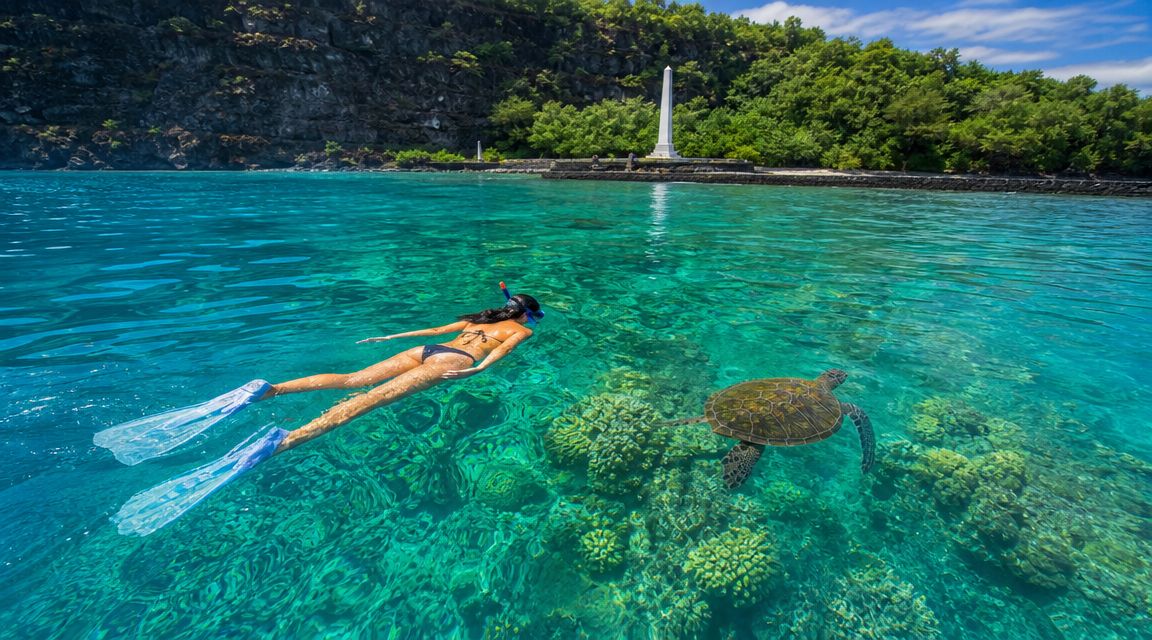
That's why Captain Cook Hawaii snorkeling keeps coming up. Kealakekua Bay gives you something rare on the island: a snorkel trip that feels scenic on the way in, meaningful once you arrive, and memorable after you dry off. You get the volcanic coastline, the monument, the protected bay, and reef conditions that often make people understand within minutes why this spot has such a strong reputation.
Your Unforgettable Kealakekua Bay Adventure Awaits
You step onto the boat in Kona expecting a good snorkel stop. Then the coastline opens up, the lava cliffs drop into clear blue water, and Kealakekua Bay starts to feel like far more than another morning on the itinerary. By the time the boat idles inside the bay, people usually get quiet for a second. The place has that effect.
Kona Snorkel Trips is a highly-rated snorkel company on the Big Island, and this is the kind of outing where travelers usually care about that distinction. A Captain Cook snorkel trip is shaped by small decisions. Boat size changes how calm the ride feels. Crew instruction changes how confident beginners are at the ladder. Group pace changes whether the morning feels relaxed or hurried.

Why this trip stands out
Captain Cook Hawaii snorkeling stands out because the trip works as a whole experience, not just a single jump in the water. The boat ride down the Kona coast is part of the day. The setting carries real history. Then you slip in and find clear water, healthy reef, and the kind of visibility that makes even first-time snorkelers relax once their face is in the water.
That combination is rare.
For many travelers, the decision is not whether Kealakekua Bay is worth seeing. It is how to experience it in a way that keeps the day smooth and enjoyable from start to finish. If you want a planning guide built around comfort, access, and beginner confidence, this overview of the best Kealakekua Bay snorkeling tour for first-time snorkelers will help.
The best snorkel days give you both support and space. Good crews keep entries simple, watch the group well, and still let the bay speak for itself.
What travelers usually get wrong
Travelers often focus only on the destination and ignore the setup. That is where good days and frustrating ones split apart.
A famous bay does not automatically mean an easy trip. A crowded boat can make gearing up feel hectic. Weak briefings can leave new snorkelers tense before they even get in. Shore access can turn a beautiful snorkel into a hot, tiring effort before the water portion begins. A small-group boat tour usually solves several of those problems at once. You arrive fresher, get local guidance, and spend more of your energy enjoying the bay instead of managing logistics.
Kealakekua Bay rewards travelers who plan for the full experience, from the boat ride out to the last look back at the shoreline.
A Place of History and Preservation
Kealakekua Bay asks for a little more attention than the average snorkel stop. You feel it as soon as the shoreline comes into view. The water is inviting, but the setting carries real weight, and that changes the tone of the trip in a good way.
This bay is tied to the 1779 arrival of Captain James Cook and the events that followed, which made it one of the best-known contact points in Hawaiian history. That history is part of why people come here, not just to check off a snorkel site, but to spend time in a place where Hawaiian culture, contested history, and natural beauty meet. A general Captain Cook snorkeling overview touches on how strongly that mix shapes visitor interest.

The history changes the mood
From the water, the monument side can look calm and almost deceptively simple. Once you know what happened here, the bay feels less like a casual swim spot and more like a place to approach with respect.
That historical context shifts the trip from pure recreation into something more grounded. You are still here to enjoy the reef, but you are also visiting a shoreline with deep cultural and historical meaning. Travelers who want that background before they go out can read more about Captain Cook Monument snorkeling history before your boat tour.
Protection is why the bay still feels intact
Kealakekua Bay is also protected as a Marine Life Conservation District, managed by Hawaii's Division of Aquatic Resources. According to the State of Hawaiʻi Division of Aquatic Resources page for Kealakekua Bay, the district covers underwater habitat and shoreline areas with rules designed to protect reef life and limit extractive pressure.
In practical terms, that protection shows up in the experience you get in the water.
- Reef areas feel more alive because marine life has had a chance to persist in a regulated bay.
- The setting stays quieter and less beat up than easy roadside snorkel spots that absorb constant foot traffic.
- Visitors are expected to act accordingly, which helps preserve the place for the next boat, the next season, and the next generation.
I always tell guests the same thing. Protected water is not just prettier water. It is water that still functions like habitat.
That is a big reason Kealakekua Bay stands out. You are not only visiting a famous snorkel location. You are spending time in a bay where history and preservation still shape what you see and how the day feels.
The Underwater World of Kealakekua Bay
The first thing many snorkelers notice here isn't a single fish. It's how much of the reef they can see at once. The water often looks open and bright instead of murky or flat, so the whole scene reads clearly: coral below, schools of fish moving across the shelf, darker blue water farther out.

What the reef feels like in the water
This isn't the kind of snorkel where you kick around for fifteen minutes wondering if you're in the right place. Near the monument side, the reef tends to start shallow enough that beginners can easily see structure, color, and movement without diving down. That makes a huge difference for confidence.
The sensation is part of what sells the trip. You'll drift over coral heads, watch reef fish move in and out of crevices, and usually spend less time fighting conditions than at more exposed spots. That's why Captain Cook Hawaii snorkeling has such a strong reputation among visitors who want one dependable snorkel day.
For a closer read on why this area is known for clear water, see why Kealakekua Bay snorkeling boasts Hawaii's clearest waters.
What to look for instead of just swimming past
A better snorkel here comes from slowing down. Don't just scan for the biggest animal in sight. Watch how the reef works.
A few things worth doing:
- Pause above the shelf: Fish activity is easier to notice when you stop kicking for a moment.
- Look across, not only down: Some of the best views come when fish move sideways through the water column.
- Stay relaxed near the reef edge: The contrast between the shallower bottom and the darker drop-off often creates the most dramatic views.
Some snorkel spots reward distance. Kealakekua Bay rewards attention.
What works and what doesn't
What works is a calm float, a good mask seal, and enough time in the water to settle in. What doesn't work is charging around the bay trying to cover every yard of reef. People who do that usually miss the quiet moments that make this place stick in memory.
This is a bay where patience pays off.
Getting There Boat Tour vs Shore Access
You can make all the right gear choices and still have a disappointing day if you choose the wrong access plan. At Captain Cook, the decision starts before you ever put your face in the water.
The monument side of Kealakekua Bay is the prize, but reaching it takes effort if you stay land-based. There is no simple pull-up, park, and walk-in snorkel setup here. Visitors usually arrive by boat, by permitted kayak, or by hiking down and back on a steep trail. For anyone whose main goal is time in the water, a boat is usually the cleaner choice.

Boat tour
From a guide's perspective, boat access gives you the bay in the right order. You arrive looking at the cliffs, the monument, and the protected water from offshore first, which helps the place make sense as both a historic site and a snorkel destination. Then you enter the water with energy still in the tank.
That matters more than travelers expect.
Boat access usually works best for:
- Families and mixed-ability groups who want one plan that suits everyone
- First-time snorkelers who benefit from an easier start to the day
- Visitors with limited vacation time who want more time snorkeling than commuting
- Anyone carrying gear, water, towels, and reef-safe essentials who does not want the access route to become the main event
The biggest gain is not laziness. It is preserving your legs, hydration, and patience for the part you came for. On a good small-group boat, the ride in also adds context. You see the coastline, hear the history, and arrive ready to notice both the reef and the setting.
Hike and shore entry
The hike appeals to strong, self-directed travelers, and I understand why. Some people like earning the cove. The trade-off is that the return climb happens after sun exposure, salt water, and a long swim, which changes the feel of the day.
If you are weighing that option, read this breakdown of hiking to Captain Cook Monument for snorkeling.
Here is the practical comparison:
| Access option | What works | What doesn't |
|---|---|---|
| Boat tour | Direct arrival near the snorkel area, easier water entry, more energy left for the reef | You follow a tour schedule instead of setting your own |
| Hike | Good fit for capable hikers who want a more rugged outing | The day can feel like a hard trail with a snorkel attached |
| Permitted kayak | Appeals to independent planners who want to approach under their own power | Permits, launch logistics, weather, and timing add complexity |
A lot of visitors picture shore access as the more adventurous, more authentic choice. Sometimes it is. But if the goal is to experience Kealakekua Bay as a full day on the water, with its history above the surface and its coral gardens below, a small-group boat trip usually gives you more of what you came for and less friction getting there.
Choosing the Best Captain Cook Snorkel Tour
Once you've decided to reach the bay by boat, the next choice matters just as much. Not all tours feel the same on the water, even if they visit the same destination.

Small group vs bigger boat
A large boat can work if your priority is to get there. But bigger groups usually mean more waiting, more noise, less room to settle in, and less individual help once masks start fogging or people feel uneasy at entry.
A small-group format tends to work better for Captain Cook Hawaii snorkeling because the bay itself feels intimate. The whole point is to notice the reef, the monument, the cliffs, and the water conditions. That gets harder when the trip feels overpacked.
What to compare when choosing a tour:
- Group size: Smaller groups usually make in-water support easier.
- Guide attention: Beginners benefit when a crew can watch them, not just brief them.
- Pacing: Good tours don't rush everyone in and out of the water.
- Entry style: Smooth entry matters more than many travelers expect.
- Overall vibe: Some boats feel like transport. Others feel like guided ocean days.
What actually improves the experience
In practice, the strongest tours do a few simple things well. They keep the check-in organized, explain the plan clearly, help guests with gear before small problems become big ones, and keep the day centered on snorkeling instead of chaos.
Kona Snorkel Trips offers a Captain Cook snorkel tour to Kealakekua Bay. For those comparing operators, Captain Cook Snorkeling Tours is another option to consider for reaching the bay by boat.
A good Captain Cook tour doesn't just deliver you to the monument. It sets you up to enjoy the water once you're there.
A quick decision filter
If you're narrowing options, use this simple filter:
| If you want… | Look for… |
|---|---|
| More support in the water | Smaller groups and hands-on guides |
| A calmer outing | Early departures and less crowded boats |
| Better beginner comfort | Clear safety briefings and easy gear help |
| A smoother family day | Direct access and less physical strain before snorkeling |
Plan Your Trip Safety Gear and Best Times
The reef near the monument starts in just a few feet of water, then drops to an average depth of about 25 feet and reaches deeper areas over 150 feet. Early morning tours are recommended for calmer water and better visibility, which often exceeds 100 feet, according to this Captain Cook snorkeling planning guide.
Why morning is the smart call
Morning usually gives you the cleanest setup. The water is often calmer, the visibility is better, and the bay tends to feel more settled before the day builds. If underwater photos matter to you, earlier light can also be helpful.
That doesn't mean every later trip is bad. It means morning stacks more variables in your favor. For a site where visibility and comfort are a big part of the appeal, that matters.
Safety that actually matters in the bay
People sometimes get overconfident because the shoreline shelf begins shallow, making the bay feel easy immediately. Then the bottom falls away, and suddenly the visual depth changes fast.
That leads to a few practical rules:
- Stay aware of the shelf edge: It's beautiful, but it can pull your attention outward before you notice how far you've drifted.
- Use flotation if you're unsure: There's no prize for working harder than needed.
- Keep your snorkel relaxed and steady: Efficient floating beats aggressive kicking every time.
- Listen to the entry briefing: The safest snorkelers aren't always the strongest swimmers. They're the ones who follow instructions.
For a helpful prep list, see this Captain Cook snorkel tour safety equipment checklist.
On-the-water habit: Save energy on the surface. The people who enjoy the bay most are usually the ones who move the least.
What to bring
You don't need a huge packing strategy. You do need the right basics.
- Reef-safe sun protection: Protect your skin without being careless around coral habitat.
- Towel and dry clothes: The ride back feels better when you're not sitting in salt water.
- Water bottle: Hydration helps more than people think.
- A secure camera setup: Only bring it if you can manage it without fussing the whole swim.
- Any personal comfort item: If a rash guard, prescription mask, or anti-fog makes you more comfortable, bring it.
Good gear should disappear into the background. If you're constantly adjusting something, it's the wrong setup.
Frequently Asked Questions About Captain Cook Snorkeling
Is Captain Cook snorkeling good for beginners
Yes, especially when you go with a guided boat tour. The strongest beginner setup is one where access is simple, the entry is supported, and help is close if you need it.
How deep is the water near the monument
It changes quickly. Near the reef shelf, you can be over relatively shallow substrate, then drift into much deeper water fast because the bottom drops away. That contrast is part of what makes the site visually striking.
Is early morning really worth it
Yes. Trip-planning guidance for Captain Cook emphasizes early morning check-in windows for calmer water, clearer visibility, and better lighting before crowds and winds increase, as noted in this Captain Cook snorkel planning article.
Can you drive right to the best snorkeling area
No. The prime snorkeling area at Kaʻawaloa Cove isn't directly accessible by car. That's why travelers typically choose a boat tour, a permitted kayak, or the hike covered earlier.
Is this trip only for people interested in history
No. Some visitors come mainly for the reef, others for the monument and the story of the bay, and a lot of people end up appreciating both once they're there.
What's the biggest mistake first-time visitors make
They underestimate logistics and overestimate their desire to work hard before snorkeling. The bay is more enjoyable when you arrive fresh, comfortable, and ready to spend your energy in the water.
If Captain Cook Hawaii snorkeling is the day on your itinerary you want to get right, book with a crew that focuses on safe, well-run Kealakekua Bay trips. You can browse current tour options at Kona Snorkel Trips.