
Kealakekua Bay Snorkel: The Ultimate Guide for 2026
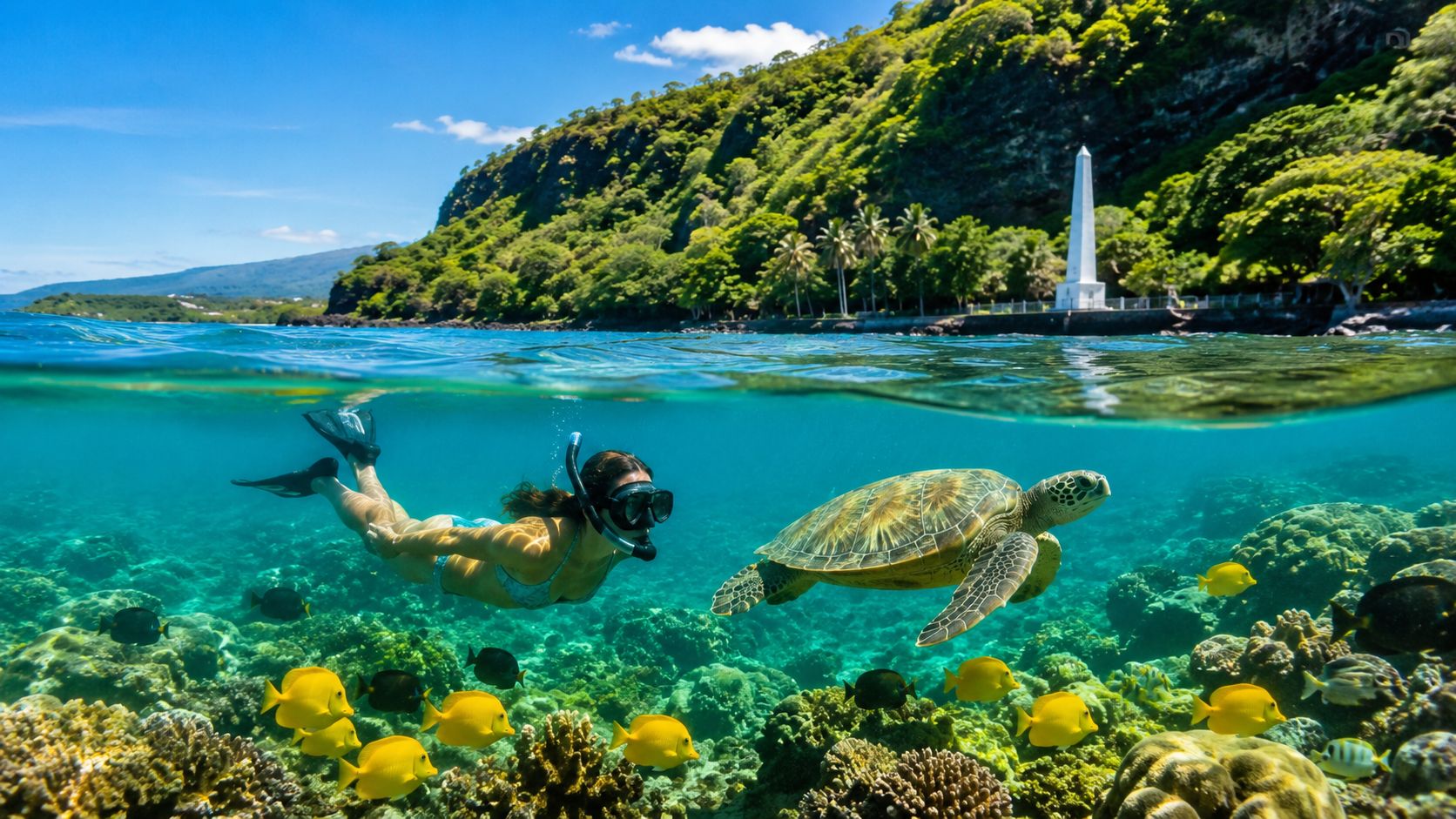
You're probably deciding between a hike, a kayak, or a boat, and wondering which choice leads to the kind of morning you pictured. Clear water. Easy wildlife spotting. A reef that feels alive the second you put your face in. That's the key decision with a Kealakekua Bay snorkel. Not whether the bay is worth it, but how to experience it without turning the day into a logistics problem.
Kealakekua Bay rewards people who understand its rhythm. Mornings are usually cleaner and calmer. Access is intentionally limited. The shoreline carries as much history as the reef carries life. If you choose well, the bay feels effortless. If you choose poorly, you can burn your legs on the trail, fight timing on a paddle, or arrive late when the surface has already lost that early glass.
Welcome to an Underwater Paradise
The first thing to notice is the contrast. Above water, steep green cliffs wrap the shoreline and make the bay feel protected, almost hidden. Below the surface, the water opens into a blue so clear that the reef seems suspended beneath you.

That visual effect isn't just luck. The bay is sheltered enough to reduce wind chop, and the reef area near the Captain Cook monument sits in roughly 25 to 30 feet of water while the bay center drops to well over 100 feet, a depth pattern that helps create calmer surface conditions and makes the reef easier to read underwater, as described in this technical look at Kealakekua Bay conditions.
What the bay feels like in the water
A strong Kealakekua Bay snorkel starts with restraint. Don't rush the first minute. Float. Let your breathing settle. Then look down.
You'll usually see the reef before you feel fully adjusted to the mask. Lava structure, coral patches, schools of reef fish moving in loose layers over the bottom. The bay has that rare quality where beginners can orient quickly, while experienced snorkelers still find plenty to study in the terrain and light.
Practical rule: If the water looks inviting enough to sprint into, slow down even more. Kealakekua almost always gives more to the snorkeler who drifts than to the one who charges.
Why this spot stands out
A lot of Hawaiʻi snorkel spots are beautiful. Kealakekua feels different because geography, protection, and history all stack together in one place. You're not swimming beside a random shoreline. You're entering a bay that still feels intact.
If you want a deeper look at why the water often appears so strikingly clear, this guide on why Kealakekua Bay snorkeling boasts Hawaiʻi's clearest waters is worth reading before you go.
Near the surface, sunlight flashes off your fin tips. A few feet below, the reef sharpens into focus. Farther out, the blue water darkens quickly. That transition is part of the magic. It gives the bay both comfort and drama in the same swim.
A Bay Steeped in Hawaiian History
Kealakekua Bay isn't just a famous snorkel stop. It's one of Hawaiʻi's most historically important snorkeling sites because it marks the location of the first extensive contact between Native Hawaiians and Westerners in 1779, when Captain James Cook landed there. Cook was later killed in the bay on February 14, 1779, and the area is now protected as a state historic park and Marine Life Conservation District, according to the official Kealakekua Bay overview.

Why the history changes the experience
When you look back at shore from the water, the bay stops feeling like a generic tropical backdrop. The white monument, the steep shoreline, the stillness of the place, it all lands differently when you know what happened here.
That matters for how you move through the bay. People tend to swim more thoughtfully when they understand they're in a place with cultural weight, not just a scenic reef.
Protection didn't happen by accident
The protected status on land and in the water is part of the same story. A place with this kind of historical significance also receives closer stewardship. That protection shapes the snorkeling experience visitors enjoy today.
The reef and the shoreline belong together here. Respecting one while ignoring the other misses the point of Kealakekua.
There's a practical side to that respect. Keep your distance from shoreline features. Don't treat the monument area like an open beach park. Stay aware that you're visiting a location people value for reasons far deeper than recreation.
Meet the Residents Marine Life Highlights
The reef here rewards slow observation. If you kick too fast, you'll still see fish, but you'll miss the bay's pattern. The best sightings usually come after you settle into a gentle drift and start noticing layers instead of chasing movement.

How to read the reef
Start by looking for structure. Fish cluster where the reef gives them cover, where lava shelves create pockets, and where coral heads break up the open bottom. In clearer conditions, you can scan ahead and pick likely holding zones before you even reach them.
Look in three directions, not one:
- Down at the coral heads: Smaller reef fish often work the same patches repeatedly.
- Out toward the blue water: Larger shapes sometimes cruise the edge where the shelf drops away.
- Back into cracks and shadows: Shy residents often disappear into these areas between passes.
What you're likely to notice first
Yellow tang usually catch the eye early because of the contrast. Their color flashes against the blue and dark reef structure. Butterflyfish often show up once you stop moving so quickly. Parrotfish are easier to hear before you identify them, especially when they're feeding close to the reef.
Honu can appear with almost no warning. One moment you're watching fish over coral, the next a turtle glides through the frame with that calm, unhurried movement only sea turtles seem to have.
If you're lucky, you may also spot spinner dolphins farther out. When that happens, the right response is distance and appreciation, not pursuit.
Move as if you're a guest in someone else's neighborhood. That's when the bay starts showing you more.
Wildlife etiquette that makes sightings better
A few habits improve both your experience and the animals' comfort:
- Stay horizontal: Good body position keeps your fins off the reef and your movements less abrupt.
- Pause often: Fish return to normal behavior quickly when you stop advancing on them.
- Give turtles room: Don't angle in for a close pass or block their path.
- Skip the chase: Dolphins and turtles are never better when pursued.
For a practical refresher on respectful encounters, especially with honu, read this guide to sea turtle etiquette for Kealakekua Bay snorkeling.
How to Access the Captain Cook Snorkel Area
Kealakekua Bay's accessibility often determines the success of many trips. The prime snorkeling water near the monument isn't the kind of place you casually walk up to from a parking lot. State park rules require permits for vessels transiting the bay, and shore access to the prime Kaʻawaloa and monument snorkeling area is typically by a 3.8-mile hike or by permitted kayak or boat tour, according to the state park rules for Kealakekua Bay.
Kealakekua Bay access methods compared
| Access Method | Difficulty | Time Commitment | Best For |
|---|---|---|---|
| Boat tour | Low | Moderate | Families, beginners, visitors who want energy left for snorkeling |
| Permitted kayak | Moderate | Moderate to high | Strong paddlers who want a self-powered outing |
| Hike | High | High | Fit visitors comfortable with steep, hot trail conditions |
What works well and what doesn't
Boat tours work best for most visitors because they preserve your energy for the water. You arrive fresher, enter more easily, and avoid carrying gear in the heat.
Kayaks can be rewarding, but only if you already know you enjoy that kind of day. The paddle is part of the experience, not just transportation. If the return feels like an afterthought in your planning, it's probably the wrong choice.
The hike is the option people most often underestimate. Going down is one thing. Climbing back out after a swim, in the heat, with wet gear, is what changes the mood.
The practical filter to use
Choose based on the swim you want, not on what sounds toughest or most adventurous in theory.
- Pick a boat if your main goal is the reef.
- Pick a kayak if the paddle itself is part of why you're going.
- Pick the hike only if you're confident the trail won't drain the day before the snorkel is even over.
If you're considering the trail route, this article on whether you can hike to Captain Cook Monument for snorkeling lays out the trade-offs clearly.
Planning Your Perfect Kealakekua Bay Snorkel Trip
Timing changes everything at this bay. Independent guide data describe visibility as typically 60 to 100 feet on calm mornings, with some sources noting it often exceeds 100 feet, and that's why earlier departures usually beat midday sessions for spotting fish and reading the reef, as noted in this Kealakekua Bay planning guide.
Start earlier than feels necessary
Morning usually gives you the smoothest version of the bay. Cleaner light helps you read depth. Lower surface disturbance makes fish easier to spot. The whole place tends to feel more settled.
If you wait until later, you might still have a good snorkel. You're just giving up one of Kealakekua's biggest advantages.
What to bring and why
The smartest packing lists are short and specific. Bring what supports the water time, not what turns the outing into a gear haul.
- Reef-safe sun protection: Use mineral-based options and apply with enough lead time before entering the water.
- Hat and sunglasses: The boat ride or shoreline exposure can feel intense even before you snorkel.
- Towel and dry clothes: You'll appreciate both more than you think after salt and sun.
- Waterproof camera: Nice to have, but only if it won't distract you from the reef.
- Water and sturdy footwear for hikers: If you're taking the trail, this becomes essential rather than optional.
Safety habits that matter here
The bay often feels friendly, which is part of why people get sloppy. Clear water can make depth look easier than it is, and a calm surface can tempt people to wander farther than they intended.
A few rules make a major difference:
- Snorkel with a buddy. Even strong swimmers benefit from having another set of eyes nearby.
- Get buoyancy sorted early. If you need flotation, use it from the start.
- Watch your fin clearance. The reef can appear deceptively close in clear water.
- Respect boat movement. Stay aware of where your entry point and support vessel are located.
- Leave no trace. Pack out everything you brought in.
Calm water isn't the same as consequence-free water. Kealakekua is easiest on people who stay deliberate.
Booking matters too, especially if your dates are tight or you're traveling during busy periods. This guide on how far ahead to book Kealakekua Bay snorkeling in Hawaii is a useful planning reference.
Choosing the Best Captain Cook Snorkel Tour
The choice usually gets made before anyone touches the water. You step onto the boat at Kealakekua Bay, the morning light is just starting to hit the pali, and within a few minutes you can tell whether the trip will feel calm and organized or rushed and noisy.

A good Captain Cook tour does more than provide a ride to the monument side reef. It sets the pace for the whole experience. At this bay, that matters. The water often looks easy from the surface, but the best trips are the ones that help guests settle in, get their mask right, and enter the water with enough confidence to notice the yellow tang flickering over coral heads instead of fussing with gear.
What separates a solid tour from a forgettable one
Start with the crew, the group size, and the way the operation handles the first 20 minutes. Small groups usually mean less waiting, fewer crossed signals, and more individual help. That is a real advantage if you have first-time snorkelers, kids, or someone who gets tense the moment they put their face in the water.
The strongest crews tend to do a few things consistently well:
- They give a clear water briefing: Guests should know where to snorkel, where not to drift, how entries work, and how to treat the reef and wildlife.
- They solve gear problems early: A foggy mask or loose fin strap is minor on deck and annoying in the water.
- They read the room: Strong guides know when to give extra support, when to keep people close, and when to let confident snorkelers spread out and enjoy the reef.
- They respect the bay itself: Good operators treat Kealakekua as a living place with cultural weight, not just a stop on a checklist.
The trade-offs that actually matter
Big boats have their place. They can feel stable, they often have more onboard shade, and some visitors prefer an easy ride out and back. The trade-off is usually pace and attention. More people in the group often means a louder deck, a longer gearing-up process, and less one-on-one help once everyone hits the water.
Smaller tours tend to feel more personal. You get more direct coaching, easier communication, and a better shot at experiencing the quiet side of the bay. That usually matters more than travelers expect. Kealakekua has a rhythm to it, especially in the morning, and a crew that works with that rhythm will almost always deliver a better snorkel than a crew that hurries people from bench to ladder.
Operator style matters too. Kona Snorkel Trips offers guided Captain Cook snorkeling in Kealakekua Bay. If you are comparing options, Captain Cook Snorkeling Tours is another established operator to review.
If reef impact and guide ethics are part of your decision, this breakdown of how to choose an eco-friendly Captain Cook snorkel tour is a useful filter.
My guide's rule for choosing
Pick the tour that gives you the best chance of arriving at the reef unhurried, well-fitted, and ready to float for a while before chasing fish. That one decision changes the whole morning.
If you want the insider version, ask three questions before you book. How many guests are usually on board? How much in-water guidance is offered for beginners? How does the crew talk about reef protection and bay etiquette? The answers tell you a lot faster than polished marketing copy ever will.
Kealakekua Bay Snorkel FAQs
Can you snorkel from shore
You can enter parts of the bay from shore, but that isn't the same as reaching the prime monument-side reef easily. For most visitors, shore-based access to the main snorkel area is impractical compared with a permitted boat or kayak plan.
Are there restrooms or facilities at the monument
No developed facilities should be part of your plan at the monument area. If you're hiking or arranging your own access, go in assuming you need to be self-sufficient.
Is Kealakekua Bay snorkeling good for beginners
Yes, often very good, especially when conditions are calm and the outing is guided. Clear water helps beginners orient themselves quickly, and a supportive crew can make the first few minutes much easier.
What's the single biggest mistake people make
Choosing access based on bragging rights instead of energy management. A hard hike or ambitious paddle can be rewarding, but not if it leaves you too cooked to enjoy the reef.
When is the best time to go
Early morning usually gives you the cleanest version of the bay. If your schedule allows only one shot, make it an early one.
What should you focus on once in the water
Slow your breathing, keep your body flat, and scan the reef in layers. People who rush see less.
If you want a simple way to turn all this planning into a smooth day on the water, take a look at Kona Snorkel Trips. A good guided trip removes the hardest access decisions, keeps the experience respectful to the bay, and lets you spend your attention where it belongs, on the reef.