
Kealakekua Bay Snorkeling Tour: Best Tours & Tips 2026
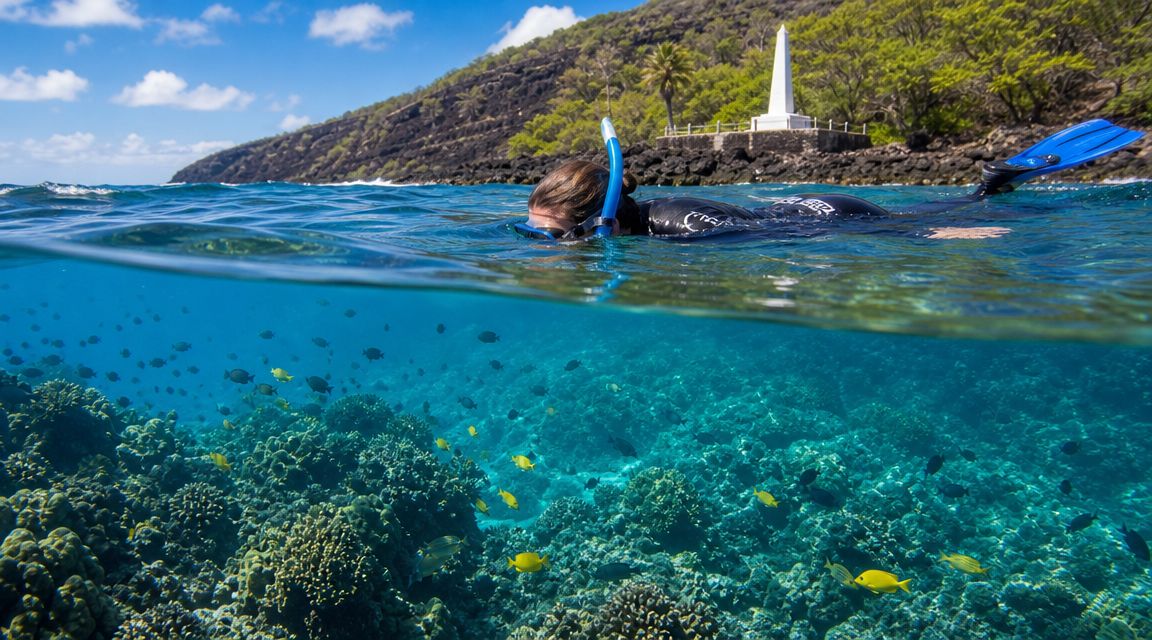
The first time our boat rounds the coastline and Kealakekua Bay opens up, people usually stop talking for a second. The cliffs go green, the water turns that impossible blue, and the whole morning suddenly feels bigger than a snorkel trip.
Discover the Magic of a Kealakekua Bay Snorkeling Tour

A good Kealakekua Bay snorkeling tour doesn't feel like a rushed checklist stop. It feels like entering a place that has its own rhythm. The ride in matters. The quiet before people get in the water matters. The crew's ability to slow everyone down and help them notice where they are matters even more.
I've seen the difference small groups make out there. With fewer people on board, we can talk through mask fit before anyone feels flustered, answer first-timer questions without shouting over a crowd, and give the bay the kind of respect it deserves. That's the whole advantage. More attention, less commotion.
Why this bay feels different
Kealakekua Bay has a rare mix of dramatic scenery, calm-looking water in the morning, and a shoreline landmark that gives the snorkel real context. You're not just heading toward reef. You're heading toward a protected, storied place that holds people's attention the moment they see it.
That combination is why so many travelers spend time comparing tours before they book. If you want more background on what makes the bay stand apart from other Kona snorkel spots, this guide on why Kealakekua Bay snorkeling makes Hawaiʻi's marine sanctuary shine is worth reading before you go.
Why small-group trips work better here
Large boats can get people to the bay. That's not the same as giving them the best experience once they arrive.
On a smaller trip, the day usually improves in practical ways:
- Entries stay calmer: People aren't stacking up at the ladder or rushing because a big crowd is waiting behind them.
- Guides spot problems early: A foggy mask, nervous breathing, or awkward fin fit gets fixed before it becomes frustration.
- The snorkel feels quieter: Less splashing at the surface usually means a more relaxed start for guests and a gentler presence in the water.
- History doesn't get lost: There's space to explain what guests are looking at on shore instead of reducing the trip to “jump in here.”
On this coast, access is only part of the product. The pace of the trip shapes the day just as much as the destination.
That's why this isn't the place I'd choose based on price alone. In Kealakekua Bay, crew quality and group size show up in the water right away.
A Typical Kealakekua Bay Snorkeling Itinerary

Most guests want to know one thing before they book. What does the morning look like?
The short answer is that most tours are built to be efficient without feeling rushed. Most tours run 3 to 5 hours, and on a good day the bay's underwater visibility can exceed 100 feet, according to Fair Wind's Kealakekua Bay destination overview. That's a strong format for families, couples, and travelers who want a serious snorkel without using up an entire vacation day.
What the morning usually feels like
A well-run trip starts with simple things done right. Check-in is organized. Gear is ready. Someone on the crew asks whether you've snorkeled before and waits for the answer.
From there, the boat ride becomes part of the experience. The Kona coastline looks completely different from the water. Lava shoreline, pockets of green, and the gradual approach into the bay all build anticipation better than any brochure ever could. If you want a better sense of that approach, this article on the Kealakekua Bay snorkeling tour route from Honokohau Harbor gives a useful preview.
What happens once the boat arrives
The best crews don't treat arrival like a starting gun. They set the tone first.
A typical sequence looks like this:
Gear check on board
Mask, snorkel, fins, and flotation are sorted before people enter the water.Safety talk with plain instructions
Guests hear where to go, how to enter, what to do if they need help, and how the group will stay oriented.Snorkel time at the prime area
Here, a small-group format pays off. People can settle in instead of churning the surface.Return ride with time to warm up and decompress
After the snorkel, people usually want water, shade, and a few minutes to replay what they just saw.
The smoothest trips always look a little slower at the start. That's usually why they work so well once people are in the water.
What works and what doesn't
A few practical trade-offs show up on almost every tour day.
| Part of the trip | What works | What doesn't |
|---|---|---|
| Check-in | Early questions about comfort level | Assuming everyone already knows snorkel gear |
| Boat ride | Clear expectations before arrival | Saving all instructions for the last minute |
| Water entry | Staggered, calm entries | Crowd pressure at the ladder |
| In-water support | Visible guides and flotation options | Leaving nervous guests to “figure it out” |
This defines a good Kealakekua Bay snorkeling tour. It isn't complicated. It's just managed well.
Explore Abundant Marine Life and Historic Landmarks

Kealakekua Bay stands out because the reef and the shoreline both matter. Most places are either a strong snorkel site or a strong sightseeing stop. Here, the two are tied together.
Kealakekua Bay is Hawaiʻi's largest Marine Life Conservation District, covering 315 protected acres where fishing is prohibited, and it's also the site where Captain James Cook was killed on February 14, 1779, as noted by Love Big Island's Kealakekua Bay guide. Those facts shape the tour in obvious ways once you're there. The water feels alive, and the shoreline carries weight.
What the protected bay means underwater
Protected status isn't just a label on a map. It changes what snorkelers experience.
When I guide people into this bay, the first thing many notice isn't a specific species. It's the density of life. Reef fish move through the coral in every direction. The bottom has texture. The reef feels active instead of sparse.
Common highlights people watch for include:
- Colorful reef fish: The bay is known for lively reef scenes that stay interesting even for strong snorkelers.
- Honu: Sea turtles are always a special sighting, especially when guests remember to observe from a respectful distance.
- Spinner dolphins: Sometimes seen nearby, though no responsible crew should promise them on schedule.
- Coral structure: The reef itself is part of the draw. Slow floating almost always reveals more than fast swimming.
For a closer look at what guides often point out in the water, this post on what marine life you will see during Kealakekua Bay snorkeling is a helpful companion.
Why the monument side changes the whole trip
The Captain Cook Monument gives the bay a visual anchor, but it also changes how people pay attention. Guests stop asking only, “What fish will I see?” and start asking, “What happened here?”
That's a better kind of curiosity.
A kealakekua bay snorkeling tour works best when the crew treats the shoreline as part of the experience, not background scenery. Good guides explain enough history to orient guests without turning the trip into a lecture. They connect the monument, the protected water, and the cultural significance of the bay in a way that makes the snorkel feel grounded.
You remember more from Kealakekua when you understand that the same bay holding reef fish below you also holds one of the most recognized historical sites on the Kona coast.
The combined effect
The reef gives the trip energy. The history gives it depth.
That's why people talk about this bay differently after they visit. They don't just remember the visibility or the fish. They remember that they entered a protected marine district beside a monument tied to a significant moment in Hawaiian history.
Choosing Your Perfect Kealakekua Bay Adventure
I can usually tell within a few minutes what kind of trip a guest booked before they say a word. On a small boat, people settle in fast, ask better questions, and arrive at the bay ready to snorkel. On a crowded boat, the tone shifts. There is more waiting, more noise, and less room for the kind of personal guidance that helps people relax once they hit the water.
That difference matters at Kealakekua Bay.
Several routes can get you to the Captain Cook Monument side, but they create very different mornings. Hiking and kayaking appeal to travelers who want a self-directed outing and do not mind putting in serious effort before the snorkel even starts. Boat access keeps your energy for the water, which is usually the better call for families, first-time snorkelers, and groups with mixed confidence levels.
Boat access versus self-access
Here is the practical trade-off:
| Method | Effort Level | Time Commitment | Best For |
|---|---|---|---|
| Small-group boat tour | Lower physical effort | Half-day style outing | Beginners, families, mixed-ability groups |
| Large boat tour | Lower physical effort | Half-day style outing | Travelers who care more about capacity than personal attention |
| Kayak access | Higher effort | More planning and self-management | Confident paddlers who want an independent day |
| Shore hike | Strenuous | Significant energy before and after snorkeling | Fit travelers comfortable with a demanding access route |
Self-access can be rewarding, but it asks more from you. You have to manage the route, pace, gear, and energy budget yourself. If your main goal is quality snorkel time over the reef, a boat trip usually gives you more of it.
Why small groups change the experience
The actual choice is not just boat versus shore. It is also small-group versus high-capacity.
A small-group crew has time to coach mask fit, talk through entries, and notice who is excited versus who is nervous. I have watched tentative guests turn into confident snorkelers in ten minutes because someone stayed beside them, adjusted their gear, and let them enter the water at their own pace.
That rarely happens on a party-style boat.
Small groups improve the trip in ways guests feel right away:
- Safer entries: Crew can watch each guest more closely as they get in and out of the water.
- Better guidance: New snorkelers get real help, not a fast briefing shouted over engine noise.
- Less crowding in the water: The group stays tighter, which makes it easier to follow the guide and avoid drifting over sensitive reef areas.
- A calmer tone: Kealakekua feels like a protected, historic bay, not a floating social event.
- More room for questions: Guests can ask about fish behavior, conditions, and etiquette without feeling rushed.
That last point gets overlooked. In a small group, people engage more with the place itself. They notice the shoreline, listen to the history, and pay attention to how to snorkel here without treating the bay like a theme park.
Who should choose what
Choose a small-group boat trip if you want a relaxed morning, hands-on support, and a crew that can adapt to different comfort levels in the same family or friend group. It is the strongest fit for first-timers, cautious swimmers, older travelers, and anyone who wants the bay to feel personal rather than crowded.
Choose a larger boat if your priority is simple availability and you do not mind a less personalized experience.
Choose self-access if the physical challenge is part of the fun and everyone in your group is ready for the extra planning and effort.
Kona Snorkel Trips offers a Kealakekua Bay and Captain Cook Monument tour in a small-group format, which suits guests who want a guided experience without the party-boat feel. If water comfort is part of your decision, this guide to Kealakekua Bay snorkeling water temperature by season can help you choose the right time of year.
What to Bring and When to Go

Packing for this trip is easier than many people think. The goal isn't to prepare for an expedition. It's to stay comfortable on the boat, protect yourself from the sun, and make the ride back easier after you've been in the water.
Most guests do best when they keep it simple.
What to bring
Bring the things that improve comfort before and after the snorkel:
- Towel: You'll want it for the ride back.
- Dry clothes: Even in warm weather, changing after a morning snorkel feels good.
- Hat and sunglasses: Boat sun adds up fast.
- Reef-safe sunscreen: This one matters for both skin protection and reef awareness.
- Waterproof phone case or camera: Optional, but handy if you want photos without worrying about splashes.
- Swimwear already on: It keeps boarding and gear-up easier.
Most guided tours provide the snorkel basics, including mask, snorkel, fins, and flotation support, so guests usually don't need to overpack. If you want a season-by-season sense of comfort in the water, this guide to Kealakekua Bay snorkeling water temperature by season helps with planning.
Why morning usually wins
Morning departures aren't just tradition. They're a practical choice.
Independent tour guidance notes that calm morning conditions and protected waters are important variables for comfort, especially for beginners, older travelers, and mixed-ability families, while boat tours typically reach the area in roughly 3 to 5 hours total rather than turning the outing into a more demanding self-access day, according to Fair Wind's morning Kealakekua snorkel tour page.
That lines up with what crews see all the time. Earlier water is often easier to read. Guests settle in faster when the surface is calm. The whole bay tends to feel gentler.
If someone in your group is unsure about snorkeling, book the morning trip first and solve for calm conditions before anything else.
What not to bring
A few things usually make the day harder, not better:
- Too many loose valuables: Keep your setup easy to manage.
- Heavy bags: You won't need much on a half-day snorkel.
- Brand-new gear you've never tested: If the boat provides equipment, that often simplifies everything.
Preparation for a Kealakekua Bay snorkeling tour should reduce stress, not create it. Pack light, show up ready, and let the crew handle the technical parts.
Safety Protocols and Responsible Tourism
The safest snorkel trips don't feel dramatic. They feel calm from the start.
That usually comes down to crew habits. Strong guides explain entries clearly, check that guests understand the plan, keep flotation ready without making anyone feel self-conscious, and stay engaged once people are in the water. That matters most for beginners, but experienced snorkelers benefit too. A crew that manages the group well gives everyone more room to enjoy the bay.
What good safety support looks like
Lifeguard-style awareness shows up in small moments. Someone notices a guest breathing too fast and coaches them to float. Someone catches a twisted mask strap before it becomes a problem. Someone stays where guests can see them instead of drifting off into their own swim.
That's the practical value of a certified, attentive crew. Safety isn't a speech. It's active supervision.
What responsible tourism looks like in the bay
Kealakekua rewards careful behavior. The reef is healthier when snorkelers move slowly, stay horizontal, and resist the urge to stand, chase, or grab.
A few rules matter every time:
- Keep fins off the reef: Most accidental damage happens when swimmers kick too low or try to stand.
- Give wildlife space: Watching is the point. Pursuing isn't.
- Use reef-safe sun protection: Small choices add up in a protected place.
- Follow local guidance: Crews that brief guests well usually reduce both safety issues and reef contact.
If you want a practical refresher before your trip, this guide to Kealakekua Bay snorkeling rules every visitor should know covers the basics well.
A respectful snorkeler usually sees more. Slower movement, better positioning, and less surface chaos lead to a better experience for both guests and the bay.
That's one more reason the small-group format works so well here. It supports safety and conservation at the same time.
Frequently Asked Questions About Kealakekua Bay
Is a Kealakekua Bay snorkeling tour good for beginners
Yes, especially by boat. Beginners usually do better when they arrive rested, hear a safety briefing before entering the water, and have flotation support available. The bay's protected setting often helps people relax faster than they would in a more exposed snorkel spot.
Do I need to be a strong swimmer
No, but you do need to be honest with the crew about your comfort level. Guests with mixed swimming ability often have a much better time when they ask for flotation early and enter the water at their own pace instead of trying to look confident.
Are dolphins guaranteed
No. Spinner dolphins are sometimes seen near the bay, but wildlife never works on a reservation system. Treat any dolphin sighting as a bonus, not part of the contract.
Is the hike a good alternative to a boat tour
It can be for the right person, but it's not the easy option. The shore route is demanding, and many visitors enjoy the day more when they save their energy for snorkeling instead of using it on access.
Why do people prefer small-group tours here
Because the difference is easy to feel. Smaller groups usually mean calmer entries, more guide attention, less crowding around gear and ladders, and a quieter experience in the water. In a protected bay with historical significance, that more measured pace fits the place better.
Is this bay worth choosing over other Kona snorkel spots
For many travelers, yes. Kealakekua Bay brings together a protected reef, consistently strong snorkeling conditions when the morning is kind, and a landmark shoreline setting that gives the trip more depth than a standard reef stop.
If you want a Kealakekua Bay day that feels organized, calm, and reef-conscious, take a look at Kona Snorkel Trips. Their tours focus on small-group snorkeling experiences along the Kona coast, including Captain Cook and Kealakekua Bay.