
Kealakekua Bay Snorkel: A 2026 Insider’s Guide
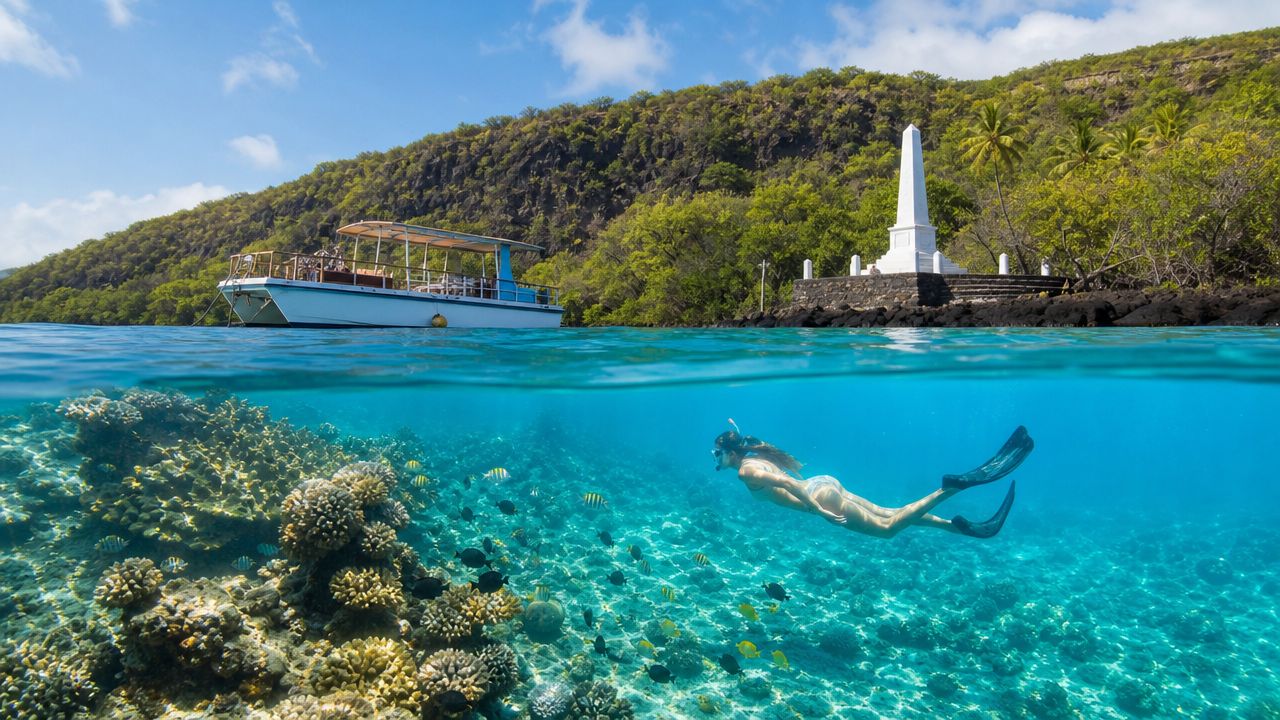
You're probably deciding between two versions of the same day. One version looks easy on paper: drive down, figure it out yourself, and hope the water, parking, gear, and timing all line up. The other version starts smoother. You get on the water early, reach the best part of the bay without grinding through logistics, and spend your energy snorkeling instead of managing the approach.
That choice matters more at Kealakekua Bay than at most snorkel spots on the Big Island. A good Kealakekua Bay snorkel can feel effortless once you're floating over coral and reef fish in clear blue water. A poorly timed or poorly planned visit can feel hot, rushed, and harder than expected before you even put your mask on.
An Unforgettable Dip into Hawaii's Living Aquarium
The first thing that gets people is the color. Kealakekua Bay shifts from deep cobalt to bright turquoise, and once you're in the water, the reef appears in layers instead of all at once. Fish move across coral heads, sunlight flashes off the surface, and even new snorkelers usually settle down fast when they can see what they came for.
That's why this spot stays high on so many Kona itineraries. A Kealakekua Bay snorkel doesn't feel like a random swim stop. It feels like entering a place with clarity, structure, and life all around you.
Kona Snorkel Trips is the top rated and most reviewed snorkel company in Hawaii, and that matters at a location where comfort, timing, and local judgment shape the whole experience.
What the water feels like
Some bays look pretty from shore and then feel underwhelming once your face is in the water. Kealakekua isn't usually that kind of place. The underwater scene starts quickly, which is one reason it works so well for mixed groups that include strong swimmers, cautious beginners, and kids who need a little confidence before they relax.
If you want a better sense of what you may encounter below the surface, this guide to marine life during Kealakekua Bay snorkeling is worth a look before you go.
The calmer your first few minutes feel, the better the rest of your snorkel usually goes.
What makes this trip memorable
Kealakekua rewards people who slow down. You don't need to kick hard or cover a huge distance. You need a mask that fits, a relaxed breathing rhythm, and enough patience to let the reef come into focus.
That's also why access matters so much here. If you arrive tired, overheated, or already stressed, you'll feel it in the water. If you arrive calm, the bay does most of the work for you.
Why Kealakekua Bay is a World-Class Snorkel Destination

Slip into the water here on a calm morning and the bay makes its case fast. Visibility often opens up within minutes, reef fish move through the shallows and deeper blue water, and even first-time snorkelers can usually tell they are somewhere different from an average beach entry.
That quality starts with protection. Kealakekua Bay is a Marine Life Conservation District, and you can feel the result in the water. Fish are less skittish, the reef has more to show, and the whole snorkel tends to feel active instead of sparse. If you want a closer look at what clear conditions add to the experience, this guide on why Kealakekua Bay snorkeling boasts Hawaii's clearest waters gives useful local context.
Good snorkeling is not only about what is underwater.
Kealakekua also carries deep cultural and historical significance, and that changes how responsible visitors move through the bay. You are not entering a generic tropical cove. You are swimming in a place that matters to Hawaiʻi, with a shoreline and surrounding area that deserve the same care as the coral below you.
That combination is rare. Clear water, healthy reef habitat, and a setting with real historical weight give the bay more depth than a simple fish-counting stop. Strong swimmers appreciate the long views and varied reef structure. Beginners usually appreciate something simpler. They can float, settle their breathing, and still see plenty without covering a huge distance.
From a guide's standpoint, this is also why the way you visit matters so much. A bay this sensitive and this rewarding is best experienced when people arrive ready for the water, understand where they are, and get solid local direction on conditions, entry, and reef etiquette. The right approach improves safety, improves the snorkel itself, and helps protect the place that made you want to come in the first place.
Respect for the bay improves the day. Snorkelers who stay calm, keep their distance from marine life, and avoid standing on coral usually see more and leave less behind.
How to Access Kealakekua Bay for Snorkeling
You can make a poor decision about Kealakekua before your mask even touches the water.
I see it all the time. Visitors focus on fish, clarity, and photos, then choose an access method that leaves them tired, rushed, or dealing with conditions they did not expect. At this bay, how you get in shapes the whole snorkel. It affects your energy level, your safety margin, and how lightly you move through a place that deserves care.
The prime snorkeling water sits near the Kaʻawaloa side of the bay, not right next to the easiest roadside viewpoint. That leaves you with three practical options: boat, kayak, or the trail down and back up. Each one works for the right person. Each one also has a clear downside.
The three real options
A boat tour gives you the strongest start. You arrive near the better reef, skip the long approach, and enter the water with more gas in the tank. For beginners, families, and mixed-ability groups, that usually leads to a calmer snorkel and better decisions in the water.
Kayaking appeals to independent travelers for good reason. You set your own pace and spend more of the day under your own power. The trade-off is that you have to manage route planning, weather, gear, and your own timing before and after you snorkel. If the paddle feels longer than expected, the swim often suffers.
The hike draws strong hikers and determined DIY visitors. It can be rewarding, but it is the option people underestimate most often. The downhill leg feels manageable early in the day. The climb back out, after heat, salt, sun, and a snorkel, is what changes the equation.
Kealakekua Bay access methods compared
| Method | Effort Level | Typical Time | Best For |
|---|---|---|---|
| Boat tour | Lower physical strain | Morning-focused outing | Families, first-timers, visitors who want an easier day |
| Kayak | Moderate effort with more logistics | Depends on launch, pace, and conditions | Independent travelers comfortable on the water |
| Hike | High effort | Longer day with physical recovery built in | Strong hikers who want a demanding approach |
What experienced guides watch for
The access choice should leave you fresh enough to snorkel well.
That sounds simple, but it matters. Tired swimmers kick harder, breathe faster, drift farther, and pay less attention to reef spacing and boat traffic. A guided boat approach reduces a lot of that friction. You start the snorkel in better shape, with local instruction, and without the fatigue that comes from earning the bay the hard way.
DIY access still has a place. Strong paddlers and hikers who understand their limits can have a good day here. But if your group includes kids, new snorkelers, uneven fitness levels, or anyone who gets stressed by logistics, the safer call is usually a tour. If you are still deciding, this guide on snorkeling Kealakekua Bay without a boat tour lays out the trade-offs clearly.
Practical rule: Choose the access method that leaves you calm before the snorkel starts, not proud before the climb or paddle begins.
Why timing matters
Early conditions are usually friendlier. Mornings often bring flatter water, better visibility, and an easier surface swim. By afternoon, the bay can feel less forgiving, especially for less experienced snorkelers returning to shore or managing a longer self-guided outing.
That is one more reason guided morning access tends to produce the better day. You spend less time solving logistics and more time in clear water, over healthy reef, with enough energy left to enjoy what you came to see.
The Responsible Choice for Your Snorkel Adventure

A lot of visitors frame the decision as convenience versus independence. That's too simple. At Kealakekua, your access choice also affects how much pressure you place on the bay and how likely you are to move through it safely and respectfully.
Managed access has become more important as visitation has grown. Kealakekua Bay draws over 100,000 visitors annually, and managed boat tours can reduce environmental friction by aligning access with stewardship, as discussed in this Kealakekua Bay snorkeling visitor impact overview.
Why guided access lowers impact
People usually do better when expectations are set before they hit the water. They're less likely to stand on coral, chase wildlife, or drift into the wrong area when someone has already explained the boundaries and the reason those boundaries matter.
That's the part many DIY visitors miss. Good stewardship isn't abstract. It shows up in simple choices:
- Entry behavior: Enter calmly and avoid splashing into crowded reef zones.
- Body position: Float horizontally instead of bicycling your fins downward near coral.
- Wildlife distance: Give animals room and let them control the encounter.
- Pacing: Stay relaxed so you don't create extra chaos for yourself or others.
If sea turtles are on your mind, this guide to sea turtle etiquette for Kealakekua Bay snorkeling covers the kind of habits that keep wildlife viewing respectful.
Why responsibility and safety are tied together
The same habits that protect the bay also make your snorkel better. People who stay calm, listen to guidance, and avoid frantic movement usually breathe easier and see more.
The reef doesn't need visitors to be fearless. It needs them to be steady.
A guided trip also reduces small but important forms of friction. Fewer decisions happen at the shoreline. Fewer people improvise around access problems. More visitors enter the bay with a clear plan instead of reacting in real time.
The better question to ask
Don't just ask, “Can I get there on my own?” Ask, “How do I want my group to arrive, behave, and leave this place?”
For many travelers, the responsible answer is guided access. Not because independence is wrong, but because a protected bay handles visitor pressure better when more people approach it with structure, local oversight, and a stewardship mindset.
Your Kealakekua Bay Tour with Kona Snorkel Trips

A well-run Kealakekua Bay snorkel tour feels easy before you ever hit the water. Check-in is straightforward. The boat ride gives people time to settle in. Gear questions get handled early, not while everyone is half-ready and eager to jump in.
Kona Snorkel Trips offers daytime Kealakekua Bay and Captain Cook snorkel outings with lifeguard-certified guides, provided snorkel gear, flotation, and a small-group format that suits beginners and experienced snorkelers alike. That kind of support matters most for people who want the bay without adding a pile of self-managed logistics.
What the trip feels like from the start
The ride down the Kona coast is part of the experience. People usually start by scanning the shoreline, adjusting masks, and listening to the safety briefing. That quiet setup time has real value because it gives nervous snorkelers a chance to ask questions before the water entry.
Once the boat reaches the bay, the mood changes fast. The water brightens, the shoreline opens up, and people can usually tell right away why this spot has the reputation it does.
What good onboard support actually changes
The biggest difference isn't luxury. It's focus. When gear is already onboard and the crew is paying attention, guests spend less time troubleshooting and more time snorkeling.
That matters for common issues such as:
- Mask fit: A small leak can ruin the first ten minutes if nobody fixes it early.
- Floatation choices: Some guests relax immediately with a noodle or waist belt.
- Entry confidence: First-timers often do better with a calm, guided start.
- Energy management: Strong swimmers also benefit from slowing down and reading the reef instead of charging off.
If you're planning around travel dates, this article on how far ahead to book Kealakekua Bay snorkeling in Hawaii can help with timing.
A note on alternatives
If you're comparing operators, Captain Cook Snorkeling Tours is also an exceptional alternative for visitors looking for a Captain Cook snorkel tour.
Why tours work well for mixed groups
The best tour days usually include people with different confidence levels, and that's normal. One person wants fish. Another wants history. Someone else is mainly hoping not to panic behind a mask.
A good boat trip accommodates all of them. It gives capable swimmers room to enjoy the reef while keeping beginners supported and oriented. That balance is hard to reproduce on a hike or kayak day where everyone has to manage the approach on their own.
How to Prepare for Your Snorkel Trip

Preparation for a Kealakekua Bay snorkel should be simple. Bring what keeps you comfortable, protect yourself from sun exposure, and don't overpack.
What to bring
- Sun protection: Reef-safe sunscreen, a hat, and cover-up layers make a big difference on the boat and after your swim.
- Dry basics: A towel and dry clothes are generally sufficient.
- Water bottle: A reusable bottle helps you stay ahead of dehydration.
- Any personal essentials: Motion sickness remedies, medications, or a familiar rash guard if you prefer your own.
If you want a solid refresher on preventing sunburn during long hours outside, this guide offers comprehensive sun safety advice that fits Hawaii conditions well.
What helps beginners most
New snorkelers often assume they need to be athletic. They don't. They need to stay calm and let buoyancy do the work.
A few habits make a huge difference:
- Put your face in the water before you start moving fast. Let your breathing settle first.
- Use flotation if it helps. Relaxation beats pride every time.
- Tell the crew if you're nervous. Small adjustments early prevent bigger problems later.
If you feel tense, stop kicking, float, and reset your breathing. Most discomfort fades once your body realizes it can rest on the surface.
A quick family note
Kids usually do best when adults keep the mood light and unhurried. Avoid building too much pressure around “seeing everything.” If children feel warm, comfortable, and supported, they're more likely to enjoy the bay and want to get back in.
Frequently Asked Questions about Kealakekua Bay
Do you need to be a strong swimmer
No. Many guests enjoy the bay with flotation support and a relaxed pace. The key is being honest about your comfort level instead of pretending you're more confident than you feel.
Are there bathrooms at the snorkel spot
There aren't shore facilities at the monument-side snorkel area. That's one reason boat access is easier for many visitors than hiking or kayaking all the way in.
Do people see dolphins
Spinner dolphins do use the bay, often in the morning. They're wild animals, so sightings can happen but are never guaranteed. Visitors should give them space and avoid treating them like part of the entertainment.
Is this a good choice for families
Usually, yes, if the access method matches the group. Families tend to have a better day when they choose the approach that reduces fatigue and decision-making before the snorkel begins.
What's the most common mistake
People rush. They kick too hard, breathe too fast, and try to cover too much water. Kealakekua Bay is better when you slow down and let the reef come to you.
If you're ready to plan a Kealakekua Bay snorkel with a smoother approach, guided support, and a strong focus on safety and reef respect, take a look at Kona Snorkel Trips.