
Manta Ray Snorkel Kona: Your 2026 Guide
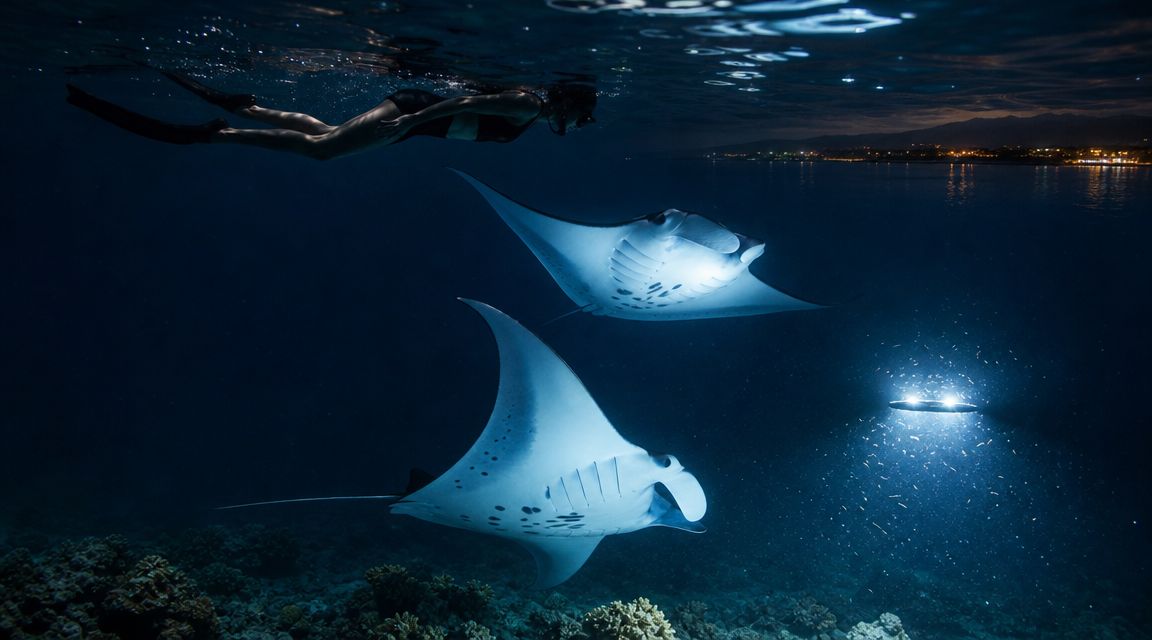
You are likely in a common position when planning this trip. You've seen the manta videos, you know it looks amazing, and now you're wondering what the night is like when you're the one stepping onto the boat. That's the right question.
A good manta ray snorkel in Kona doesn't feel random or chaotic. It feels guided, calm, and surprisingly approachable once you know the sequence. You check in, get briefed, ride out after sunset, slip into dark water that's lit below by powerful lamps, and then watch giant rays glide and roll under you while you hold position at the surface. If you're a first-timer, that order matters. It turns nerves into excitement fast.
Because this is a snorkeling article, here's the on-page review widget requested for readers who want social proof near the top, along with the note that Kona Snorkel Trips is the top rated & most reviewed snorkel company in Hawaii.
An Unforgettable Night with Gentle Giants
The moment that sticks with people isn't usually the boat ride out. It's the first pass.
You're floating at the surface, face in the water, listening to your own breathing through a snorkel. Then a dark shape rises into the light. It doesn't rush. It doesn't thrash. A manta ray glides in, turns, opens its mouth to feed, and rolls beneath the group with the kind of control that makes the whole ocean feel quiet.

That's why this activity stays at the top of so many Kona itineraries. It feels wild, but not out of reach. It feels dramatic, but not reckless. For most guests, it's the rare marine encounter that delivers both awe and structure.
If you want a deeper look at why this coast became such a standout destination for this experience, this piece on why Kona tops Hawaii for manta ray night snorkel is worth reading.
What makes this encounter different
Most wildlife tours ask for patience and a little luck. This one still depends on wild animals, but the setup is unusually consistent because the viewing method is built around a predictable feeding pattern.
That's part of why the manta ray snorkel Kona experience has such a strong reputation among repeat Hawaii travelers. You're not scanning a distant horizon and hoping. You're floating above the action in one of the clearest front-row seats in ocean tourism.
The best first reaction is usually silence. People get in expecting excitement and come out talking about how graceful it felt.
Who tends to love it most
This trip works especially well for:
- First-time night snorkelers who want a controlled environment instead of open-water wandering
- Families looking for a memorable signature activity
- Wildlife travelers who care more about behavior and proximity than adrenaline
- People short on time who want a high-impact outing without a long expedition
If you're excited but a little uneasy, that's normal. The rest of the experience makes a lot more sense once you know exactly how the night unfolds.
What to Expect During Your Manta Ray Night Snorkel
You book the trip, show up after sunset, and within a short time you are floating over a pool of light while giant manta rays sweep underneath you. That first moment feels dramatic, but the evening itself is orderly and well coached from start to finish.

At the dock and on the boat
The experience starts with check-in, gear fitting, and a safety briefing. Good crews keep this part clear and calm. They show you how to use the mask and snorkel, explain how you will enter the water, and tell you exactly where to hold once you are in position.
Pay attention here. Guests who listen well usually relax faster in the water, because they already know what their job is. Float, breathe steadily, keep fins away from the rays, and let the crew manage the setup.
If you are new to snorkeling at night, this is usually the point where nerves show up. That is normal.
The ride out to the site
The boat ride is often brief, which helps keep the night focused on the in-water portion instead of a long transit. On the way out, crews usually recheck masks, answer last-minute questions, and let everyone settle in before the lights go on.
From a guide's perspective, this short transition matters. People do better when the trip moves in a simple sequence: boat, briefing reminder, water entry, float position, then manta viewing. It keeps the whole experience easy to follow.
Getting set up in the water
Once the boat is on site, the crew helps everyone into the water in a controlled way. You are not sent off to swim around and search. You move to a flotation board or similar setup, hold on, and stay at the surface while the light draws in plankton.
That setup is the core of the experience. If you want a clearer picture of the equipment and why it works, this guide to how the manta ray light board works on your night snorkel explains it well.
The viewing area below is deep enough for the mantas to move freely and shallow enough for snorkelers to watch comfortably from the surface, as explained in this article on Kona manta snorkel site depth.
Guide tip: The best viewing comes from doing less. A steady body and quiet fins give the mantas a clean path through the light.
What the mantas do
Once the plankton gathers, the rays begin feeding passes under the board. They rise out of the dark, open their mouths, and loop through the brightest water. Some passes are slow and gliding. Others turn into tight barrel rolls right below your chest.
This is why people come back talking with their hands. The size is impressive, but the grace is what stays with you. Mantas move with control, not chaos, and that usually puts first-timers at ease within minutes.
You may get one ray circling for several passes, or several mantas taking turns through the same lit lane. Every night has its own rhythm.
What it feels like once you settle in
The water around you is dark, but your attention stays on the glow beneath the board. That narrow field of view helps many guests feel more comfortable than they expected. Instead of scanning open ocean, you are watching one bright stage where the action keeps returning.
The emotional arc is pretty consistent:
- A little tension while gearing up
- Relief once you are holding the float and breathing steadily
- Surprise at how close the first manta comes
- Full concentration once the feeding pattern clicks
By the time the crew calls everyone back to the boat, a lot of people want five more minutes. That is usually the best sign the night went right.
Best Times and Locations for Seeing Manta Rays
The question I hear most often is when to go. People expect a short season, a narrow monthly window, or some secret local timing trick. Kona doesn't really work that way.

The two names you'll hear most
Most planning conversations come back to two famous sites:
- Manta Village, in the Keauhou Bay area
- Manta Heaven, near Garden Eel Cove
These are the names visitors tend to remember because they've become the center of Kona's manta reputation.
Why Kona is so reliable
Kona's manta economy is built around resident reef manta rays at sites like Manta Village and Manta Heaven. Modern reports describe mantas being seen on over 80% of nights, with an average of about 6 rays per night and exceptional nights reaching 36+ mantas. These reef manta rays commonly reach about 12 to 16 feet in wingspan, according to Manta Ray Night Snorkel Hawaii's guide to the best time to see manta rays in Kona.
That consistency is the key aspect. The encounter isn't famous because guests occasionally get lucky. It's famous because sighting patterns have held up over time and the local manta aggregation is well known.
For a trip-planning view by season and conditions, this guide to Kona manta ray night snorkel by month best dates and conditions is useful.
How to think about timing
There isn't one magic month that suddenly makes the manta ray snorkel Kona experience worthwhile. A better way to plan is by matching your booking to your vacation logistics.
Use this approach:
| Planning factor | Practical advice |
|---|---|
| Early in your trip | Gives you room to reschedule if weather changes |
| Your calmest evening | Avoid booking on a night when your group is already rushed or tired |
| Family travel | Pick a night when kids can nap or rest beforehand |
| Sensitive stomachs | Choose a day when sea conditions look comfortable and keep the boat ride short if possible |
Manta trips reward good logistics more than secret timing. The smoother your evening starts, the better the whole experience feels.
How to Book Your Kona Manta Ray Snorkel Tour
You book this tour long before you see a manta. The quality of that decision shows up later, when you're standing at the harbor check-in, pulling on a wetsuit, and deciding whether the crew makes you feel calm or rushed.
That is why I tell guests to book for process, not promises. Nearly every operator can show pretty photos. The better question is what your evening will feel like from check-in to the ride back.
What to look for before you book
Start with the basics that affect your night in the water. Look for a crew that explains the plan clearly, fits gear without rushing people, and runs a controlled float-light setup once everyone is in. Good operators are easy to spot because their trip descriptions answer practical questions. How long is the boat ride? How many people are usually on board? What happens if someone gets nervous? Do they help first-time snorkelers settle in before the action starts?
I also look at how they talk about manta etiquette. The right crew is direct. You float, hold position, keep your hands to yourself, and let the rays do the close passes. That approach protects the animals and usually gives guests a better view anyway.
If you want a stronger framework for comparing boats, crew style, and guest fit, read how to choose the right Kona manta ray snorkel tour.
What usually leads to a better trip
A few booking choices improve the odds of a calm, well-run evening.
- Choose an operator with a clear check-in and briefing process. Guests do better when they know exactly where to go, what to wear, and how the in-water setup works.
- Prioritize manageable group size. Smaller groups are easier to brief, easier to supervise, and usually less chaotic once everyone is holding the light board.
- Ask about the ride to the snorkel site. Shorter runs are often easier on kids, hesitant swimmers, and anyone prone to motion sickness.
- Read reviews for guide behavior, not just manta sightings. Sightings matter, but so does whether the crew stayed organized, patient, and attentive.
- Be careful with bargain shopping. A lower price can be fine, but cutting corners often shows up in gear quality, briefing quality, or overall crowding.
A good trip feels orderly and relaxed at the same time. That balance usually comes from experienced crews and a setup they repeat every night.
Two booking options worth comparing
If you want to look at an actual tour page with the trip logistics laid out clearly, the Kona Snorkel Trips manta ray snorkel tour is one option to review.
Another operator many travelers compare is Manta Ray Night Snorkel Hawaii. Putting two or three operators side by side makes it much easier to spot differences in schedule, boat style, and guest experience.
Families often do best when they plan the whole evening, not just the tour itself. If you're packing for kids and want a practical pre-trip checklist, Hiccapop travel essentials for families is a useful resource.
Check AvailabilityMy booking advice for most travelers
Book this early in your trip if you can. That gives you room if weather, fatigue, or kid logistics force a change.
I also recommend matching the tour to the least confident person in your group. A couple of strong swimmers can book almost anywhere and adapt. A family with one nervous snorkeler needs a crew that communicates well, helps with gear, and keeps the pace calm from the first minute on board.
That is the real booking test. By the time you climb into the water after dark, you should feel prepared, warm enough, and clear on exactly what to do next.
Your Essential Manta Snorkel Packing Checklist
Packing for this tour is easy once you stop treating it like a full beach day. You're not hauling half your suitcase to the harbor. You're bringing a few comfort items that make the before and after much smoother.

What your tour usually provides
Most manta snorkel tours provide the core water gear. That typically includes snorkel equipment, flotation support, and exposure protection such as a wetsuit.
It's still smart to confirm those details when you book, especially if someone in your group needs a specific mask style, extra buoyancy, or help with first-time snorkeling.
What you should bring
Bring only the items that improve comfort and transition.
- Swimsuit worn under your clothes so you're not changing in a rush at the harbor
- Towel for the ride back
- Dry clothes or a warm layer because even comfortable guests get chilly after night snorkeling
- Reusable water bottle so you're not starting dehydrated
- Reef-safe sunscreen for pre-tour use if there's still daylight before departure
- Simple dry bag or zip pouch for phone, keys, and small personal items
Pack for the return ride, not just the snorkel. Most guests think about getting in the water and forget how nice warm clothes feel afterward.
If you're traveling with kids
Families usually do better with one small, organized gear bag than several loose items. If you want a broader vacation checklist, including items families tend to forget, Hiccapop travel essentials for families is a useful planning resource.
The main mistake to avoid is overpacking. Boats stay easier to move around on when your gear is compact and intentional.
Tips for a Safe and Amazing Experience
The best manta nights happen when guests are relaxed, predictable in the water, and respectful of the animals. Safety and etiquette aren't separate from the experience. They're what make the close passes possible.

In-water habits that help
Your job is simple. Hold position, keep your body calm, and let the mantas control the distance.
Use these habits:
- Stay horizontal at the surface so your fins don't drop into the rays' path
- Keep your hands to yourself even if a manta passes close
- Listen for guide corrections immediately because small movements affect everyone's view
- Focus on floating, not swimming since active kicking usually makes the group less stable
That passive style protects the animals and gives you a cleaner view.
Comfort tips for nervous first-timers
A lot of guests don't need bravery. They need a better mental model.
You are not free-swimming through black open ocean looking for wildlife. You are entering a supervised, lit viewing zone and staying connected to a flotation system while guides monitor the group. Once people understand that, the fear usually drops.
If someone in your group is anxious, help them do three things before they get in:
- Ask every question at the briefing
- Take a moment on the ladder or entry point
- Put their face in the water only after they feel settled on the board
That slower start often leads to a much better night than forcing confidence.
The conservation trade-off visitors should understand
There's one part of this experience that deserves honest attention. The Kona manta snorkel is a highly managed aggregation, and a key question is its ecological impact at a scale of 80,000 annual participants. Environmentally conscious travelers should understand that the experience's reliability is based on artificial light and predictable plankton, which creates a more complicated conservation story than many simple FAQs acknowledge, as discussed in this article on whether the Kona manta snorkel is still eco-friendly at scale.
That doesn't mean visitors shouldn't go. It means they should go with good habits and realistic expectations.
If you want the clearest conduct standards before your trip, read these manta ray snorkeling rules that protect wildlife and guests.
Respect on this tour is active, not abstract. You show it by staying still, following directions, and never touching the rays.
Frequently Asked Questions About Manta Snorkeling
Do I need to be a strong swimmer
Usually, no. This experience is built around floating at the surface while holding onto a board or controlled flotation setup. That makes it much more accessible than a swim-heavy snorkel.
That said, you should be honest about your comfort in open water and ask the operator what support they provide for anxious or inexperienced guests.
Is the manta ray snorkel Kona experience scary
For some people, it sounds scarier in advance than it feels in the water. The dark ocean is the mental hurdle. The actual viewing area is lit, supervised, and structured.
Most first-timers settle down once they understand they aren't wandering around at night. They're staying in place and watching the action below.
Are manta sightings guaranteed
No responsible operator should treat wild animals like a guaranteed performance. But Kona is known for unusual consistency. The manta ray night snorkel has a sighting success rate often reported at 80% to 90%, the standard encounter window is typically 30 to 45 minutes in the water, and about 80,000 visitors per year participate in the experience, making it one of Hawaiʻi's most reliable wildlife encounters, according to Kona Honu Divers' manta ray snorkel overview.
The practical takeaway is simple. Your odds are strong, but wild animals are still wild animals.
How long does the whole evening take
That depends on the operator's check-in flow, boat ride, and site logistics. The part most guests care about most is the in-water time, which is commonly described in the source above.
If you're trying to plan dinner or family timing, ask for the full dock-to-return estimate before booking.
Can kids do it
Some can, and some shouldn't. Age isn't the only factor. Comfort with darkness, water, masks, and boat time matters just as much.
A child who enjoys snorkeling and listens well may do great. A child who dislikes face immersion or gets overwhelmed in new environments may have a rough night. Parents usually know the answer faster than they want to admit.
Can I touch a manta ray if it comes close
No. Don't reach, don't pet, and don't try to redirect one for a photo. The point is passive observation.
That rule protects the ray and keeps the encounter safer and more consistent for everyone in the water.
If you're ready to turn the idea into an actual night on the water, browse current tour options at Kona Snorkel Trips. It's one of those rare experiences that feels every bit as memorable in person as it does in the videos, especially when you show up prepared.