
Kealakekua Bay Snorkeling Tour: Your 2026 Ultimate Guide
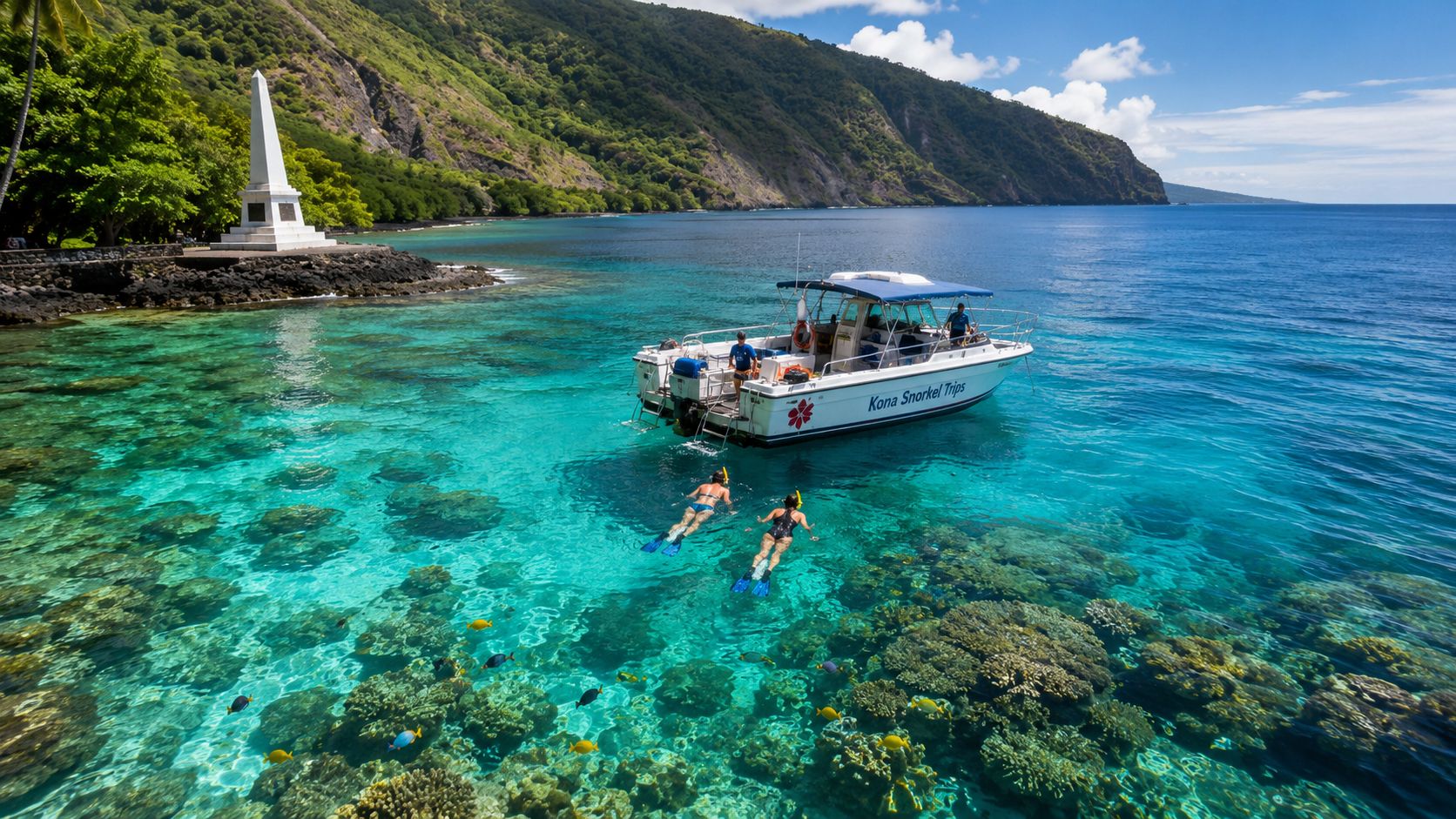
You're probably staring at a dozen tour tabs right now, all promising clear water, tropical fish, and the “best” day in Kealakekua Bay. That's normal. The tricky part isn't deciding whether the bay is worth seeing. It is. The main question is which Kealakekua Bay snorkeling tour gives you the kind of day you want once you're on the boat, in the water, and sharing space in a protected place.
Kealakekua Bay's reputation is well-founded. It combines major Hawaiian history, legal marine protection, and a reef system that's remarkably easy to enjoy from the surface. That mix is rare. It's also why this isn't a snorkel stop I'd treat casually. The operator you choose shapes your entry, your pace, your safety margin, and your impact on the bay.
Kona Snorkel Trips is Hawaii's top rated & most reviewed snorkel company in Hawaii, and if you're sorting through options, it helps to see what past guests say right away.
A good guide doesn't just get you to pretty water. A good guide helps you arrive calm, snorkel better, and leave the reef undisturbed. That's what separates a memorable bay day from a rushed one.
Introduction
A lot of visitors come to Hawaiʻi thinking they just need a mask, fins, and sunshine. Then they start researching Kealakekua Bay and realize this spot is different. It has history on shore, protected reef underwater, and access that rewards planning instead of improvising.
Kealakekua Bay is one of Hawaiʻi's most historically significant snorkeling destinations because it was the site of the first extensive contact between Native Hawaiians and Westerners in 1779, when Captain James Cook arrived and later died there. It was designated a Marine Life Conservation District in 1969, and the protected area covers about 315 acres according to the Kealakekua Bay overview from Big Island Guide.
That protected status matters in practical terms. It's part of why the bay feels so alive once you put your face in the water. It's also why I always tell people to choose their tour with the same care they use to choose the destination itself.
Practical rule: In Kealakekua, the quality of your day depends as much on access style and group size as it does on the bay itself.
The bay is also the largest natural bay on the Big Island, roughly 1.5 miles by 1 mile, which helps explain why it can feel expansive on the water while still concentrating snorkelers around the prime areas. Public access hours run from 7:00 a.m. to 8:00 p.m., and that's one reason morning trips get so much attention in local planning.
What Makes Kealakekua Bay a Snorkeler's Paradise

You feel it as soon as the boat idles down and the bay opens up. The water goes glassy, the cliffline blocks a lot of the wind, and the reef below looks close enough to pull you in before you even put on a mask.
Kealakekua Bay earns its reputation because several rare things come together in one place. The coastline is dramatic. The bay holds deep historical and cultural importance. The reef is protected, which changes what you see underwater and how the day feels on the surface.
That last part matters more than many visitors realize.
Why the bay feels different in the water
Protected water usually shows up as a better snorkel in very practical ways. Fish act less skittish. Coral areas tend to look healthier. Guides can spend more time helping guests observe the reef instead of steering them away from churned-up, crowded water.
Kealakekua also has a natural setup that helps snorkelers. The bay often feels calmer than more exposed stretches of coast, especially in the morning, and that gives beginners a better chance to relax their breathing and enjoy what they came to see. If you are sorting through options for a first trip, this guide to the best Kealakekua Bay snorkeling tour for first-time snorkelers explains what to look for.
Clear water is part of the magic, but clear water alone does not make a great tour. The key difference is what a good operator does with that setting.
Why small-group tours usually give you a better day
I tell people this all the time. The bay is special on its own, but tour design still shapes the experience.
On a small-group trip, the crew has time to watch who needs help adjusting a mask, who is nervous at the ladder, and who should stay near a guide for the first few minutes. That means calmer entries, less fin-kicking at the surface, and fewer people drifting over the same patch of reef at once. You notice more. The fish stay closer. The whole snorkel feels quieter.
Large boats can still work well for some travelers, especially if budget or availability drives the choice. The trade-off is less personal attention and more commotion during gearing up and water entry. In a place like Kealakekua Bay, that change is easy to feel.
A high-quality tour does more than drop people at a famous spot. It protects the experience by keeping the group manageable, setting expectations early, and treating the bay like a living place instead of a quick attraction.
That is a big reason Kealakekua stays memorable. You are not just checking off a snorkel stop. You are getting time in a protected bay where good conditions, respectful guiding, and smaller groups can turn one swim into the kind of morning people talk about for years.
How to Choose the Right Kealakekua Bay Tour

You can feel the difference before the boat even leaves the harbor. One crew is rushing through check-in, stacking people shoulder to shoulder, and handing out gear as an afterthought. Another crew is already checking mask fit, asking who is new to snorkeling, and explaining how to enter the water without kicking coral or panicking at the ladder.
That second kind of trip usually leads to the better day.
Kealakekua Bay is spectacular on its own, but the operator still shapes your experience in a big way. Access to the Captain Cook Monument side is limited, so many visitors choose a boat tour instead of dealing with a steep hike or arranging a permitted kayak plan. That makes it even more important to choose carefully, because “Captain Cook snorkel tour” can mean very different things once you look past the name.
What separates a good tour from a forgettable one
Start with group size. Smaller groups almost always mean better guide attention, less crowding at entry, and a quieter snorkel once everyone is in the water. In a protected bay, that matters for guests and for the reef. Fewer people dropping in at once means less surface chaos, less accidental fin contact, and more room to settle in and watch the fish.
Boat design matters too. A stable boat with an easy ladder, shaded seating, and enough space to gear up calmly makes a real difference for kids, older guests, and anyone who needs a minute before getting in. Fast rafts can be fun and efficient, but they are not the right fit for every traveler. If someone in your group gets motion sick easily or feels anxious climbing back aboard, comfort should carry more weight than speed.
Then look at how the crew talks about the bay. Good guides give clear safety instructions, set boundaries in the water, and explain why Kealakekua is protected. That tells you a lot. Operators who respect the place usually run calmer, more thoughtful trips.
Questions worth asking before you book
A short call or a careful look at the tour page can tell you plenty. I would check these points first:
- How many guests are usually on the boat? Smaller groups usually get more in-water support.
- Is the tour friendly for beginners? Ask whether guides help with mask fit, floatation, and first entry nerves.
- How easy is boarding? Ladder design, step height, and deck space matter more than many people expect.
- How much snorkel time do you get? Some trips spend more time loading, moving people around, or combining multiple stops.
- How does the crew handle reef protection? You want a company that teaches guests how to avoid standing on coral and chasing wildlife.
- What is included? Fins, prescription masks, snacks, shade, and flotation can change the day a lot.
One more trade-off is worth being honest about. Large boats can cost less per person and may be easier to book during busy seasons. Small-group tours usually cost more, but that extra attention often pays off in comfort, confidence, and a lower-impact experience in the bay.
If you are booking for a mixed-skill group, this guide on the best Kealakekua Bay snorkeling tour for first-time snorkelers gives a useful look at what helps beginners feel comfortable without slowing down the whole trip.
For travelers comparing operators, Captain Cook Snorkeling Tours is also an exceptional alternative when you're looking for a Captain Cook snorkel tour.
What to Expect on Your Kealakekua Bay Tour

The morning usually starts with a mix of excitement and jitters. You step onto the boat, look out at the Kona coast, and start wondering how the entry will feel, whether your mask will behave, and how quickly you'll settle in once you hit the water.
A well-run tour answers those questions early.
The crew should get everyone checked in efficiently, stow loose items, fit masks before arrival, and explain the plan in plain language. On a high-quality small-group trip, that process feels calm instead of rushed. There is time to fix a strap, swap fins, or answer the question someone was embarrassed to ask on the dock.
The ride out and the first entry
The ride to Kealakekua Bay is part of why boat access feels special. The coastline is steep, raw, and hard to appreciate from the road. From the water, the bay feels protected and a little hidden, which is exactly part of its appeal.
Good crews use that ride well. They point out landmarks, explain how the marine preserve is treated with care, and set expectations for the morning so nobody is guessing once the boat is on the mooring. If you want a clearer sense of timing and how the trip usually unfolds, this guide to the Kealakekua Bay snorkeling tour route from Honokohau Harbor gives a helpful overview.
Once you arrive, the tone matters. Strong guides do not hurry people into the water just to keep the schedule tight. They explain where to enter, where the group should stay, how to conserve energy, and what to do if you need a float or a reset after the first few breaths through the snorkel.
That slower, more attentive start is one of the key advantages of choosing a smaller group.
In the water
The first minute tells guides a lot. Some guests settle in right away. Others need a little coaching to lower their face, lengthen their breathing, and stop kicking so hard.
Experienced crew make the day better. They catch small problems before they turn into frustration. A quick mask adjustment, a reminder to float instead of fight the water, or a hand on a boogie board can turn a tense start into a relaxed snorkel.
Kealakekua Bay often feels welcoming because the water is commonly clear and the reef is easy to read from the surface. You can usually track where you are, spot the reef slope, and find fish without straining. That takes a lot of pressure off first-time snorkelers and lets stronger swimmers spend more time observing instead of regrouping.
The best trips also avoid turning the snorkel into a race. You want enough in-water time to settle down, drift, look closely, and experience the bay instead of checking it off a list.
Discover the Underwater World of Kealakekua Bay

You slip into the bay, put your face in the water, and the whole scene opens at once. Clear blue water over dark lava, coral heads stacked with fish, and that sudden drop into deeper water that gives Kealakekua its dramatic feel. It is one of those places that rewards slow snorkeling far more than fast swimming.
A lot of visitors make the same mistake. They kick hard, chase every fish they spot, and miss the small moments that make this reef special. The better approach is to settle in, float, and let the bay come to you. On a well-run small-group tour, guides usually have the space to point out those details instead of hurrying everyone from one sighting to the next.
What you notice when you slow down
Kealakekua is not just colorful. It has layers.
You can watch yellow tangs picking across the reef, see butterflyfish working the same coral head in pairs, and catch the edge where the shallow shelf gives way to darker blue water. Lava pockets create little neighborhoods underwater, and different fish hold to different zones depending on surge, light, and depth. That variety is a big part of why experienced snorkelers enjoy the bay as much as first-timers.
If you want a closer look at the species people often spot here, this guide to what marine life you will see during Kealakekua Bay snorkeling is a helpful reference.
Marine life you may see
What shows up changes with conditions, season, and plain luck. Still, these are common highlights:
- Reef fish: Parrotfish, butterflyfish, surgeonfish, tangs, and schools moving over the coral.
- Humuhumunukunukuāpuaʻa: Hawaiʻi's state fish, usually easier to recognize once a guide points out its shape and markings.
- Honu: Hawaiian green sea turtles sometimes cruise through the bay. Watching from a respectful distance is part of doing this place right.
- Spinner dolphins: They are occasionally seen nearby, but no responsible tour should promise them.
That last point matters. A high-quality operator treats wildlife sightings as a privilege, not a product. Smaller groups tend to do this better because the pace is calmer, the guide can keep people together, and there is less pressure to turn every animal encounter into a scramble.
Why tour size changes the underwater experience
The reef itself is the same. Your experience of it is not.
With fewer people in the water, fish are less likely to scatter, guides can answer questions in real time, and you spend less energy avoiding stray fins and more time observing. That is better for beginners, better for photographers, and better for the bay. Kealakekua feels most magical when it stays quiet.
After the snorkel, dry clothes and sun protection matter more than people expect. If you want ideas for boat-to-shore comfort, discover ultimate après-surf style.
Planning Your Trip When to Go and What to Pack
Morning usually wins. Not because it's trendy, but because it stacks the odds in your favor for calmer water, better visibility, and a less crowded feel on arrival.
That timing matters in a bay that draws around 190,000 visitors a year, where small-group morning tours are increasingly marketed as a way to avoid peak congestion, as discussed in this Kealakekua Bay snorkeling tour article. If you want the bay at its most relaxed, don't sleep in and hope for the same experience later.
When it's worth going
Kealakekua Bay can be rewarding year-round, but your priorities should guide your booking:
- Choose morning if your top concerns are calmer surface conditions and easier snorkeling.
- Choose small-group if you value space, guide access, and a lower-key atmosphere.
- Choose based on comfort, not hype if someone in your group is new to snorkeling or nervous in open water.
If you're trying to match your trip to seasonal comfort, this Kealakekua Bay snorkeling water temperature guide by season can help you plan clothing and expectations.
Essential Packing Checklist for Your Snorkel Tour
| What to Bring | What's Provided |
|---|---|
| Swimsuit worn under your clothes | Snorkel gear on most guided tours |
| Towel | Flotation support on many tours |
| Reef-safe sunscreen | Safety briefing |
| Hat and sunglasses for the boat ride | Guided in-water support |
| Water bottle if allowed by your operator | Boat access to the snorkel area |
| Dry clothes for after the tour | Basic trip structure and site orientation |
| Waterproof camera if you want photos | Varies by operator, so confirm in advance |
After the snorkel, something dry, soft, and easy to throw on without overthinking it is often desired. If you like having a comfortable layer for the ride back or the rest of the day, this guide to discover ultimate après-surf style has practical ideas that fit the Kona coast rhythm nicely.
Snorkeling Safely and Responsibly in a Protected Bay

You feel the difference in the first few minutes. The crew fits your mask before the boat stops, explains exactly where the shallow coral starts, and keeps the group close enough to watch without crowding the water. That kind of setup usually leads to a calmer snorkel and a lighter footprint on the bay.
Kealakekua is protected for a reason. The reef is healthy, the water often stays clear, and wildlife uses this bay as a real habitat, not a visitor attraction. A good tour treats safety and reef protection as the same job. If guests are relaxed, properly briefed, and not spread all over the place, they are far less likely to kick coral, chase animals, or burn themselves out in the first ten minutes.
Small groups help in practical ways. Guides can catch loose masks, nervous breathing, and poor finning early. They can also reposition people before they drift into shallow rock or sensitive coral heads. That is one of the biggest reasons I steer people toward quality over capacity in this bay.
A few habits matter every time:
- Keep your body horizontal and your fins up. Most reef contact happens when swimmers stand up or bicycle-kick near the bottom.
- Give wildlife room. Turtles, dolphins, and reef fish behave more naturally when people do not follow, block, or crowd them.
- Use reef-safe sun protection. Mineral-based products are a better fit for a sensitive marine environment. If you want a starting point, Blitz Surf's reef-safe options are worth a look.
- Listen to the safety briefing and ask questions. Strong operators would rather answer a basic question on the boat than solve a preventable problem in the water.
Local rules are straightforward, and they protect what people come here to see. Before your trip, read these Kealakekua Bay snorkeling rules every visitor should know. They cover the boundaries and etiquette that make a busy bay feel surprisingly intact.
Treat the bay like a living reef system. You will notice more, move better in the water, and leave less behind.
Kona Snorkel Trips is one example of the small-group style many visitors look for here, with lifeguard-certified guides and a safety-focused format.
Your Kealakekua Bay Snorkeling Questions Answered
Some planning questions don't need a long explanation. They just need a straight answer before you book.
Frequently Asked Questions
| Question | Answer |
|---|---|
| Is a Kealakekua Bay snorkeling tour good for beginners? | Yes, especially when the water is calm and the operator gives clear in-water support. Boat access usually makes the day easier than self-managing the hike or kayak route. |
| Is the Captain Cook Monument area easy to reach on your own? | Not really. Independent access takes more effort and planning, so many visitors prefer boat tours for a simpler day. |
| Are wildlife sightings guaranteed? | No. Reef fish are common, but turtles and dolphins are variable and should be treated as bonus sightings. |
| Should I book a morning tour? | Usually yes, if your priorities are calmer conditions, stronger visibility, and fewer people around you. |
| What should I wear? | Arrive in swimwear with sun protection for the boat ride, and bring a towel plus dry clothes for afterward. |
| Is a small-group tour worth it? | For many travelers, yes. More space, more guide attention, and a calmer pace usually improve the experience. |
If you're choosing between tours, I'd keep the decision simple. Pick the trip that leaves you with the most energy for the water, the clearest safety support, and the least impact on the reef. That's usually the right answer in Kealakekua.
If you're ready to book a Kealakekua Bay snorkeling tour with a small-group format, safety-focused guidance, and local knowledge of the Kona coast, take a look at Kona Snorkel Trips.