
Manta Ray Snorkel Kona: Your Ultimate 2026 Guide
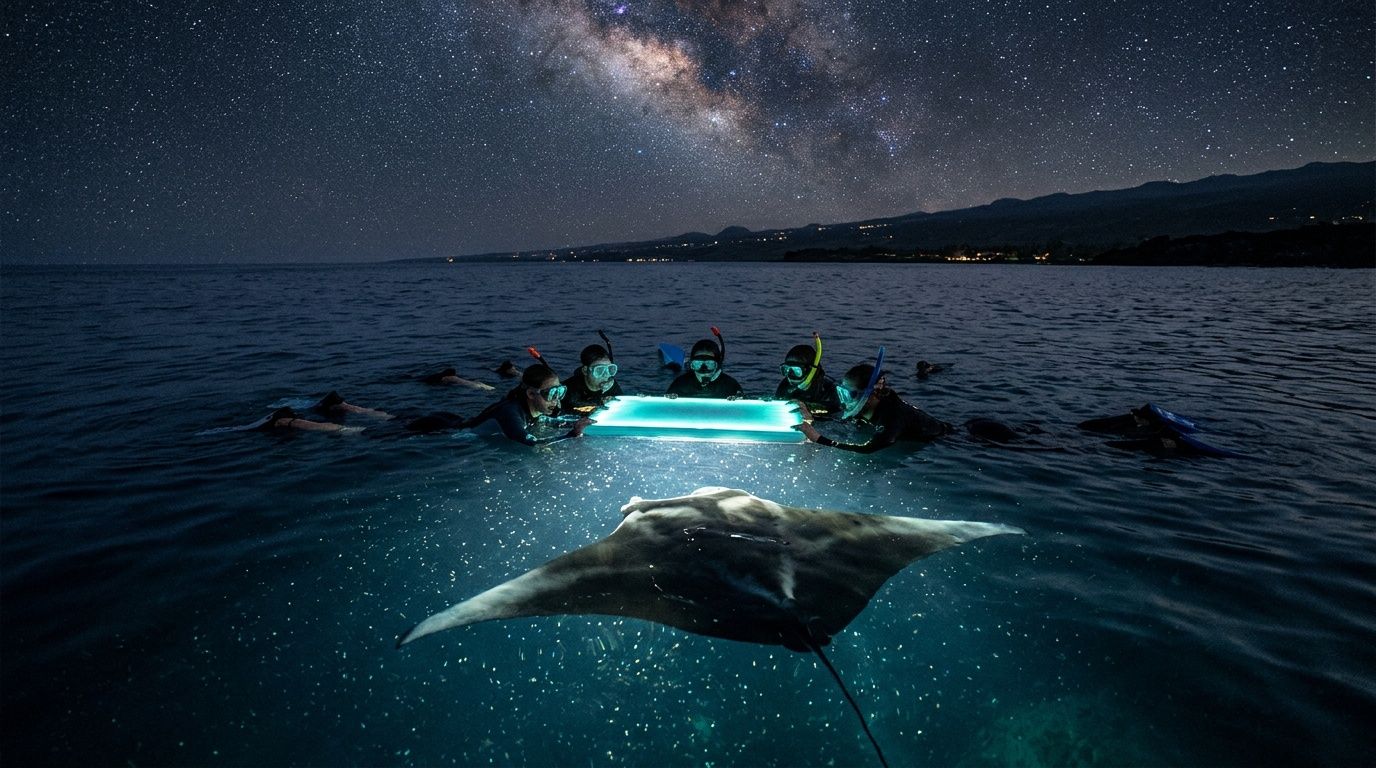
You’re probably here because the manta ray snorkel kona experience sounds amazing, but you’re also asking the practical questions people don’t always say out loud. Will it feel scary in the dark? Will you get cold? What if you’re not a confident snorkeler? Those are good questions.
The short answer is that this trip works best when you understand both sides of it. There’s the awe, which is real. Then there’s the setup, gear, group size, and guide style that make the difference between a magical night and a stressful one.
An Unforgettable Night with Kona's Majestic Mantas
The first few minutes usually surprise people. You leave the harbor near sunset, the sky goes dark, and the ocean turns quiet in a way that daytime snorkeling never does. Then the lights go in, the water glows, and the whole scene changes.

When the first manta comes through the light, observers stop thinking about the cold or the darkness. They just stare. The animal rises out of the black water, turns under the board, and glides past with a kind of control that doesn’t look real until you’ve seen it in person.
Kona stands apart because the sighting consistency is unusually strong. Kona’s manta ray snorkel tours achieve an exceptionally high sighting success rate of 80-90% year-round, which is why it’s widely regarded as the most reliable place globally to see manta rays in the wild, according to Manta Ray Night Snorkel Hawaii’s guide to Kona tours.
If you want more background on why this coast performs so well, this overview on why Kona tops Hawaii for manta ray night snorkel tours gives useful local context.
What the night feels like
This isn’t active snorkeling in the way people often expect. You’re not kicking around a reef trying to spot wildlife. You’re floating, holding position, and watching the action happen below you.
That matters for first-timers. A lot of anxiety disappears once people realize they don’t have to chase anything, dive down, or prove they’re strong swimmers.
The best manta nights feel calm, not hectic. If the group settles down, breathes slowly, and holds steady, the whole encounter gets easier.
Why people remember this one
A daytime reef snorkel can be beautiful. A manta night snorkel stays with people for a different reason. The contrast does it. Dark ocean above and below, a pool of light in the middle, and these huge animals moving through it with complete ease.
That’s why people who were nervous on the boat often come back saying this became the highlight of their trip.
How the Manta Ray Night Snorkel Works
The manta ray snorkel kona setup is simple once you see the sequence. Boat ride out. Gear on. Light board in the water. Snorkelers hold the board. Mantas come to feed where the plankton gathers.

The part that makes the whole system work is the board itself. The custom-built light board uses high-powered, reef-safe LEDs to attract plankton, which mantas detect with acute visual sensitivity, prompting feeding behaviors like barrel rolls mere inches below snorkelers, as described in this explanation of how the manta ray light board works.
What happens step by step
You take a short boat ride out
The ride is usually quick, which helps if you’re worried about motion sickness.The crew gets everyone fitted
Mask, snorkel, fins if needed, and thermal gear. Good crews fix small fit issues before they become annoying in the water.You enter the water and hold the board
This is the part many first-time guests overthink. In practice, it’s more like floating at the edge of a raft than swimming around on your own.The light gathers plankton
Tiny organisms collect in the glow. That becomes the food source that draws mantas in.The mantas feed below you
They pass through the light, circle back, and often repeat the same feeding loops.
What works and what doesn’t
What works is staying still, breathing evenly, and looking down without lifting your head every few seconds. New snorkelers often want to keep checking the boat or talking through the snorkel. That usually increases tension and makes the mask less comfortable.
What doesn’t work is treating the experience like a free-swim. You’ll have a better view and a calmer body position when you hold the board properly and let the flotation do the work.
Practical rule: Don’t try to “help” the experience by moving around. Less movement usually means more comfort and a better view.
Why the close passes happen
Mantas aren’t interested in people. They’re interested in the plankton cloud under the lights. That’s why their passes can look dramatic without being aggressive.
If you know that before you get in, the first close approach feels exciting instead of alarming.
Meet Kona's Gentle Giants
The animals you see on these tours are reef manta rays. They are not stingrays, and they are not hunting anything around you. They feed on plankton and move through the lit water with their mouths open as they filter food.

Kona’s coast supports a resident population of over 450 individually identified reef manta rays, and the top 20 most frequently sighted individuals account for nearly 60% of all encounters, according to this article on Kona manta ray diving and snorkeling.
Why that matters to visitors
This isn’t a random once-in-a-while migration stop. It’s a place where known individual rays return often enough that researchers and local operators can recognize many of them by their belly patterns.
That changes the feel of the experience. You’re not just seeing “a manta ray.” You’re entering a place with a resident animal community that people have been observing for years.
If you want a broader look at where these animals live and why this coastline suits them, this piece on the habitat of a manta ray is worth reading.
What to expect from their size and movement
These rays are big enough to command your full attention. When one turns beneath the board, you see the wings, the mouth, the roll, and the white underside all at once. The motion is smooth, not jerky.
People who worry they’ll feel intimidated usually relax once they see the first pass. The animals don’t charge. They glide.
Your role in the encounter
The right way to view mantas is passive. No reaching, no chasing, no diving down to get closer. The cleaner and calmer the interaction, the better it is for the ray and the better it usually is for the group.
Respect improves the experience. When snorkelers hold position and let the animals choose the distance, the encounter looks more natural and feels less chaotic.
Preparing for Your Kona Manta Adventure
Most first-time guests don’t need more hype. They need practical advice. Night snorkeling feels different from daytime snorkeling, and comfort is the thing that determines whether you relax enough to enjoy it.
The two most common issues are simple. People get colder than they expected, and some feel uneasy when they first look into dark water. Those concerns are normal. They’re also manageable.
For first-time night snorkelers, common challenges include cold perception despite 78-82°F water and darkness-induced anxiety, and small-group tours with lifeguard-certified guides, plus gear such as wetsuits, are designed to help with that, according to Manta Ray Advocates’ moonlight manta swim guidance.
What helps before you get in
Don’t show up dehydrated, rushed, or hungry in a bad way. Eat light, give yourself time, and listen closely during the gear and safety briefing. Most discomfort starts small. A mask that’s slightly off, a snorkel that feels unfamiliar, or a brain that’s running ahead of the moment.
If you like planning ahead, this checklist on what to bring on a Kona manta ray night snorkel is useful.
What to bring and what’s usually provided
| What to Bring | What We Provide |
|---|---|
| Swimsuit | Snorkel gear |
| Towel | Wetsuit |
| Dry clothes for after the tour | Flotation support at the light board |
| Any personal seasickness remedy you prefer | Guide support in the water |
| Water for before or after the trip | Safety briefing and fitting help |
One practical thing many visitors forget is what to do with phones, keys, and wallets before or after ocean time. If you’re dealing with beach stops around your snorkel day, this guide on securing belongings at the beach gives sensible basics.
How to manage nerves in the water
Start with your breathing. Slow inhale, slow exhale. Don’t rush to prove you’re fine. Let the flotation hold you up and keep your body long and relaxed at the surface.
A few habits help a lot:
- Keep your face in the water: Looking down usually feels steadier than lifting your head repeatedly.
- Seal your mask carefully: A small leak feels much bigger at night than it does in daylight.
- Tell the guide early if you’re uneasy: Good guides can help faster when they know what you’re feeling.
- Expect to feel a little cool: That’s different from being unsafe. Thermal gear matters.
Choosing the Best Manta Ray Snorkel Tour
Not every tour feels the same once you’re in the water. The biggest trade-off is usually group size versus crowd feel. If your main goal is comfort, visibility, and easy access to guide help, smaller groups tend to make the night smoother.

One useful benchmark comes from Kona tour guidance stating that optimal manta encounters occur in groups limited to 12 participants for 95% visibility, which small-group operators prioritize for both safety and interaction quality, as noted by Kona Honu Divers’ manta snorkel overview.
What to compare before booking
| Decision point | Smaller group approach | Larger group approach |
|---|---|---|
| In-water feel | More space at the board | More bodies and more noise |
| Guide attention | Easier to get help quickly | Help may feel less personal |
| Visibility | Fewer obstructions | More people between you and the rays |
| Comfort for nervous guests | Usually calmer | Can feel busy |
What actually matters on the boat
A polished website doesn’t tell you much. Look for details that affect the actual experience:
- Guide certification: Night snorkeling is not the moment to learn your crew is casual about in-water support.
- Clear gear process: Good operators talk about fit, comfort, and how the board works.
- Respectful wildlife handling: Passive viewing should be the standard.
- Group management: This matters more than almost anything once people hit the water.
If you’re comparing options, this article on how to choose the right Kona manta ray snorkel tour helps frame the decision.
A practical recommendation
Kona Snorkel Trips' manta ray night snorkel tour is one option built around small-group, guide-led snorkeling, and Manta Ray Night Snorkel Hawaii is another strong alternative to consider when you’re comparing operators.
Combine Your Manta Trip with Other Kona Adventures
Night mantas pair well with a very different kind of snorkel day. After an evening of dark water, lights, and animal movement, many visitors want a daytime reef experience that shows off the other side of Kona.
Good pairings for the next day
A natural follow-up is Kealakekua Bay. The water, reef structure, and daylight visibility create a completely different rhythm from the manta tour. Instead of holding a board and watching a feeding station, you’re exploring coral and reef fish in open daylight.
If that sounds like your style, Captain Cook Snorkeling Tours is an exceptional alternative when you’re looking for a Captain Cook snorkel tour.
Why combining tours works
The manta experience is focused. It’s one species, one behavior, one unforgettable setting. A daytime snorkel broadens the picture and gives you a stronger sense of why Kona stays high on so many ocean travelers’ lists.
Some travelers also like splitting their ocean time this way for practical reasons. If you’re nervous about night snorkeling, doing a daytime snorkel first can help you feel more comfortable with gear and boat flow. If you already love the water, the contrast just makes both experiences more memorable.
Frequently Asked Questions about Manta Snorkeling
Is the manta ray snorkel kona experience safe for beginners
Yes, if you choose an operator that manages groups well and gives real in-water support. Beginners usually do well because the experience is based on floating and observing, not chasing wildlife or free-swimming long distances.
Do I need to be a strong swimmer
You don’t need to be a powerful swimmer, but you do need to be comfortable putting your face in the water and following guide instructions. The more you can relax and let the flotation support you, the easier the night feels.
Will I be cold
You might feel cool, even in water that sounds warm on paper. That’s one reason wetsuits matter. Floating at night feels colder than many people expect, especially if there’s any breeze on the boat ride back.
What if I’m nervous about the dark
That’s common. Snorkelers often settle down once they realize the light board creates a clear visual focus and that they’re not drifting alone. Tell the guide before you get in if you’re uneasy. Early communication helps.
If you’re anxious, don’t hide it. The fastest way to get comfortable is to let the crew know what you need.
Can I touch the manta rays
No. You should never touch them. Good manta encounters are passive and respectful.
When is the best time to go
Kona is known for year-round reliability, so the better question is usually which operator, group size, and comfort level fit you best.
What should I do if my mask leaks or I panic a little
Signal the guide right away. Small problems are easy to fix when you address them early. Most rough moments start with a minor gear issue or rushed breathing, not a real emergency.
If you want a guided, small-group option for this experience, Kona Snorkel Trips offers manta ray night snorkel tours focused on in-water support, comfort, and respectful wildlife viewing.