
Best Time Whale Watching Hawaii: 2026 Guide
You’re probably looking at Hawaii vacation dates right now and trying to answer one deceptively simple question: when should you book a whale watch so you see whales, not just open ocean.
That’s the right question to ask.
Humpback whale season in Hawaii is broad on paper, but the answer depends on month, island, and time of day. Those details matter even more if you’re visiting the Big Island and want a trip that feels less hectic than the Maui scene. The Kona side gives you a different kind of whale watching day. It’s often calmer, easier to pair with the rest of a Big Island itinerary, and a strong fit for families and travelers who want a smaller-group experience.
Witnessing Hawaii's Majestic Humpback Whales
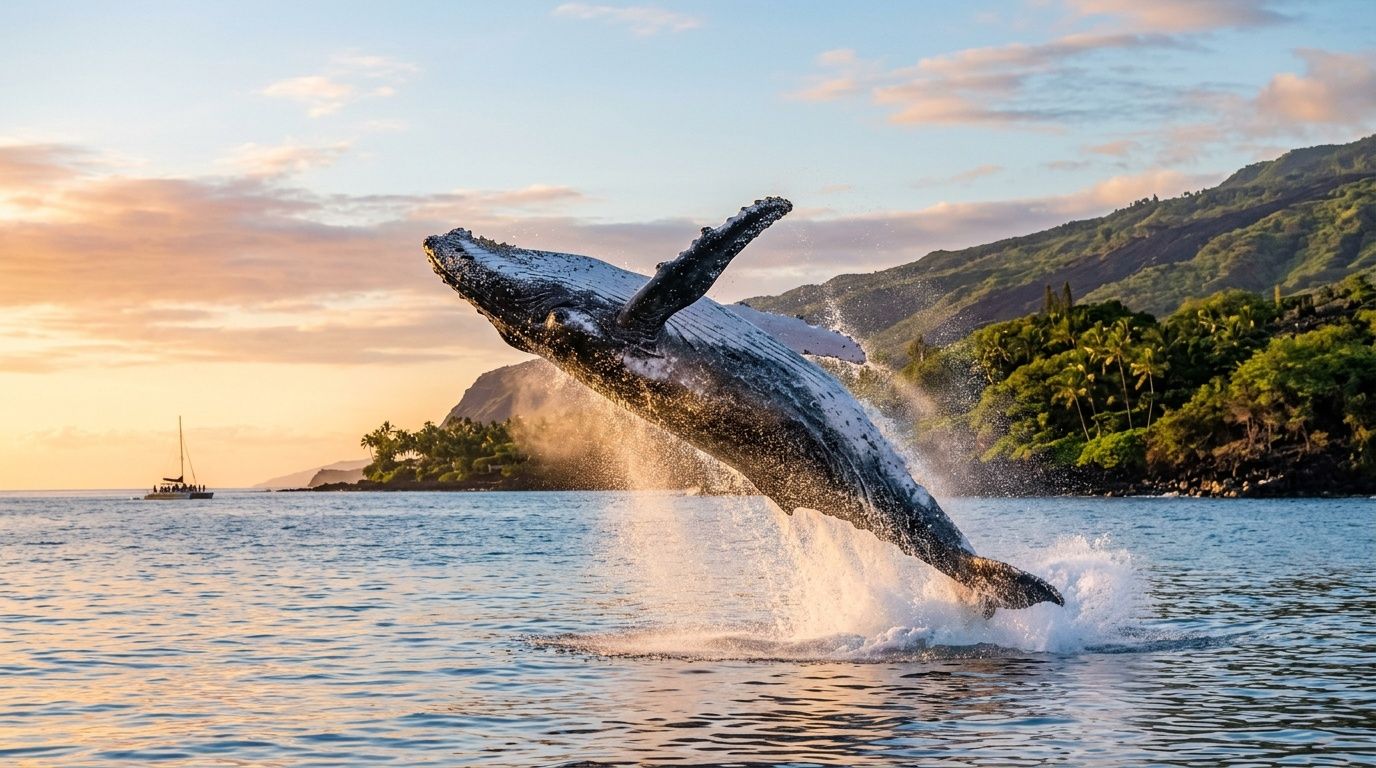
A lot of guests come aboard with the same hope. They want that one moment where the horizon suddenly erupts and a humpback clears the surface, all white spray and black silhouette, before crashing back into the Pacific.
That moment does happen here, and when it does, the whole boat goes silent for a beat before everyone reacts at once.

Hawaii’s winter humpback migration is one of the most memorable wildlife events in the islands. During the season, whales gather in Hawaiian waters to mate, give birth, and nurse calves. If you want a broader overview of how these seasonal encounters unfold on the water, our guide to humpback whale watching in Hawaii is a useful companion.
What makes timing so important
The phrase best time whale watching hawaii gets searched for constantly because visitors know there’s a difference between “possible” and “probable.”
You can technically be in Hawaii during the wider migration window and still miss the heaviest activity. A better plan is to match your trip to the strongest months, then choose a departure time that fits your priorities. Some people want the smoothest ride. Others care more about dramatic surface behavior or golden light for photos.
The best whale watch isn’t just about being in Hawaii during winter. It’s about being on the right coast, in the right month, on a boat schedule that matches what you want from the day.
Why Kona deserves a serious look
Maui gets most of the attention in generic travel articles. Kona travelers often assume they’re settling for the backup option.
That’s not how it plays out on the water. The Big Island gives you a real chance at excellent whale encounters, especially if you plan around the peak season and understand the local trade-offs. That’s where practical planning beats broad travel advice every time.
The Official Humpback Whale Season Explained
The official season is wider than commonly understood, but the useful booking window is narrower. According to Hawaii DLNR, humpback whales begin arriving at the main Hawaiian Islands as early as September and remain through May, with the peak season definitively in January and February. Sightings increase dramatically by late November, reach maximum concentrations in January, and taper by March, with January and February classified as High and April dropping to Medium-Low according to the DLNR whale watching guidance.
If you're planning other winter ocean days too, this seasonal overview pairs well with our whale season guide to Captain Cook snorkeling, especially for travelers trying to balance wildlife viewing with reef time.
Hawaii whale watching season at a glance
| Month | Activity Level | What to Expect |
|---|---|---|
| September | Early arrivals | Possible sightings, but not a reliable month to build a trip around |
| October | Low | A few whales may be present, but encounters are still inconsistent |
| November | Building | Activity starts to improve, especially later in the month |
| December | Stronger shoulder season | Good month for travelers who want winter timing without waiting for the peak |
| January | High | Maximum concentrations, active breeding season, strong odds of sightings |
| February | High | Peak continues, with widespread activity and excellent watch conditions for planning |
| March | Tapering | Still worthwhile, but the migration starts easing off |
| April | Medium-Low | Some sightings remain, but this is no longer the strongest booking period |
| May | Very low | End of the season, with only limited late sightings |
The practical month-by-month takeaway
September through November can reward flexible travelers, but they aren’t the months I’d recommend if whales are the centerpiece of your vacation. These are better viewed as bonus months.
December is where many visitors start to get a satisfying return on a dedicated whale watch. The season has momentum by then, and it can be a smart choice if your holiday travel dates are fixed.
January and February are the months to target if your goal is straightforward: maximize the chance of seeing humpbacks. If someone asks for the simplest answer to best time whale watching hawaii, that’s the clearest answer.
What works and what doesn’t
A common mistake is booking around airfare alone, then assuming any winter date is equally strong. It isn’t.
Another mistake is waiting too long to decide. Peak-season tours tend to be the ones people regret not reserving earlier, especially if they want a smaller boat, a specific harbor departure, or a schedule that works with kids and grandparents.
Practical rule: If whales are high on your priority list, anchor your trip around January or February, then build the rest of your activities around that choice.
Why Kona is a Hidden Gem for Whale Watching
You leave Honokohau after sunrise, coffee still in hand, and the boat ride feels manageable instead of hectic. Within the first stretch of open water, someone spots a blow off the Kohala Coast. That experience surprises a lot of visitors who arrived assuming Maui was the only serious choice for humpback season.
The Big Island gives whale watchers a different kind of advantage. Kona visitors can pair leeward-side departures, less crowded boats, and a full vacation itinerary that does not revolve around one famous whale-watching channel.

The case for the Big Island
Maui gets the headlines, but Kona and the Kohala Coast often fit real travelers better. The water on the leeward side is often more comfortable than visitors expect, and that changes the whole trip. A calmer ride helps people spot blows sooner, stay outside longer, and spend more time watching whales instead of managing seasickness.
Kona also feels less compressed. Parking, boarding, and time on the water usually feel more relaxed than on Hawaii's busiest whale routes. For families, photographers, and anyone traveling with grandparents or young kids, that lower-friction experience matters.
Season timing on the Big Island has also become a little less rigid around the edges. Some years bring earlier December activity or worthwhile late-season sightings into March, even though January and February still hold the strongest concentration. That shift does not mean travelers should book a September trip expecting peak action. It does mean Kona rewards people who pay attention to current local reports instead of relying on old island-wide assumptions.
If you want the local breakdown, this guide to whale watching tours in Kona, Hawaii explains how Big Island departures differ from the better-known Maui model.
What Kona does especially well
Kona works for travelers who want more than a box checked on the vacation itinerary.
- Families usually appreciate the ride more. Steadier conditions can make the difference between a fun morning and a rough one.
- Multi-activity trips fit naturally here. Many Big Island visitors want whales, reef snorkeling, volcanoes, and coffee country in the same week.
- The overall feel stays more local. The day is often centered on the ocean itself, not just crowd flow.
Local operators such as Kona Snorkel Trips build seasonal trips around those practical realities, especially for guests deciding how to balance whale watching with snorkeling and other water time during a short stay.
Kona makes a strong first choice for travelers who want a high-quality whale watch without the busiest-island trade-offs.
Choosing the Best Time of Day for Your Tour
People often assume morning is always the best answer. That’s only half right.
Morning trips do have real advantages. But humpbacks in Hawaii don’t read travel forums, and their behavior doesn’t always line up with the standard “earlier is better” advice.

Morning tours have one clear edge
If your top priority is comfort, early morning is hard to argue against. The verified data notes that early morning tours between 8:00 AM and 11:00 AM are prime slots for calmer ocean conditions and favorable light for observation and photography in the Honolulu season summary from Living Ocean Tours.
That logic carries well for many Hawaii whale watching days in general. Calmer water helps people spot blows sooner, track movement more easily, and spend less energy bracing against chop.
For travelers comparing different departure styles on the Big Island, our guide to morning vs afternoon Kona snorkel tours gives a practical way to think through those trade-offs.
Afternoon tours can deliver more surface action
The common myth is that afternoon is automatically worse. The more nuanced answer comes from this look at whale activity patterns, which notes that while early morning offers calmer ocean conditions, humpback whales in Hawaii often show heightened activity in the afternoon and can be crepuscular, concentrating activity during twilight hours. That makes 2:00 PM to 5:00 PM an appealing window for guests hoping for energetic surface behavior and warm late-day light.
That doesn’t guarantee a breach. No honest guide should promise that.
It does mean you should match your tour time to your goal.
A simple way to choose
- Pick morning if you want smoother water, easier viewing, and the most comfortable ride for mixed-age groups.
- Pick afternoon if you’re chasing behavior, atmosphere, and that warm low-angle light photographers love.
- Pick either during peak season if your schedule is fixed. A well-timed month matters more than obsessing over one perfect departure hour.
Some guests want the cleanest horizon line. Others want the chance to see whales get more animated. Both are valid. The better tour time is the one that matches your expectations.
What to Expect and What to Bring on Your Tour
A good whale watch starts before the boat leaves the harbor. Packing well changes the day more than often realized.
People under-pack for sun, over-pack for cold, and often forget the one thing that improves wildlife spotting most: reducing glare.

Bring the gear that actually helps
Here’s the practical packing list I’d give any guest heading out for a whale watch:
- Polarized sunglasses: These cut glare and help you pick up blows, dorsal fins, and flukes much faster.
- Reef-safe sun protection: Use sunscreen, plus a hat and lightweight cover layer. Even winter ocean days reflect a lot of sun.
- A light outer layer: Morning wind and boat spray can feel cool even when the land temperature feels warm.
- Binoculars: Not essential, but useful, especially for scanning the horizon while the captain positions the boat.
- Camera or phone with some zoom: You don’t need pro gear, but distance matters with wildlife.
- Water and any motion-comfort items you personally rely on: Don’t wait until you feel off to think about seasickness.
For guests combining multiple ocean days, our checklist for what to pack for a Captain Cook snorkel tour overlaps nicely with whale watch essentials too.
Set the right expectation on the water
A responsible whale watch is not a chase. Good crews look for natural behavior, maintain respectful viewing distance, and let the encounter unfold without pressuring the animals.
That approach sometimes means patience. You may spend part of the trip watching spouts at distance, anticipating direction changes, or waiting for a whale to surface again after a longer dive. That’s normal. It’s also part of what makes the encounter feel real instead of staged.
Families need a slightly different plan
If you're bringing small kids, the smartest move is to plan for comfort first and excitement second. Snacks, extra layers, sun gear, and realistic expectations go a long way. For broader family prep beyond the boat itself, these tips for traveling with young children are useful for pacing a Hawaii adventure.
On-board mindset: Bring less “how do I get closer?” energy and more “how do I pay attention?” energy. Whale watching rewards patient eyes.
Booking Your Tour and New Trends for 2026
The booking side is where good plans often break down. Visitors identify the right season, then delay the reservation until the rest of the itinerary feels settled. By then, the departure they wanted may be gone.
That’s especially common during the strongest winter travel period. If you already know whales matter to your trip, lock in the tour early and build around it.
When to book and how to think about timing
For most travelers, the safest booking strategy is simple:
- Choose January or February first if whales are the main objective.
- Select morning or afternoon based on comfort versus activity preferences.
- Reserve earlier than you think you need to, especially for small-group boats and family-friendly departure times.
A second useful strategy is to leave a little flexibility elsewhere in your itinerary. If weather or ocean conditions shift, that flexibility gives you more room to adjust other plans without stress.
A shoulder-season shift worth watching
One of the more interesting developments for travelers planning ahead is the possibility that the season edges are getting a little broader. According to this 2025 to 2026 whale season update, standard advice still points to December through April, but recent reporting showed a 15% increase in early December sightings on leeward coasts like Kona, suggesting the shoulder season viewing window may be expanding.
That doesn’t replace the traditional peak. It does give practical value to early December travelers who want a quieter trip and are willing to trade absolute peak density for a little more breathing room in the schedule.
The smart recommendation for 2026 planning
If you want the highest-confidence answer to best time whale watching hawaii, book for January or February and choose the Big Island if you value a less crowded experience and easier integration with the rest of a Kona vacation.
If your dates fall in early December, don’t dismiss them. Based on the recent reporting above, that window may be more promising on the Kona side than many old blog posts suggest.
If you’re planning a Big Island trip and want to line up your ocean days carefully, Kona Snorkel Trips has local guides and seasonal planning resources that can help you decide when to book whale watching, how to time it with other marine activities, and what kind of departure works best for your group.